

THREAD: Biden's new chip export controls are a huge blow to the CCP's science and technology ambitions.
And Xi's Party Congress speech over the weekend explains why.
And Xi's Party Congress speech over the weekend explains why.
In brief, America's new regs:
- prevent US firms from exporting their highest-end AI chips to China;
- prohibit firms and US persons from helping Chinese fabs develop leading-edge manufacturing capabilities for logic and memory chips.
- prevent US firms from exporting their highest-end AI chips to China;
- prohibit firms and US persons from helping Chinese fabs develop leading-edge manufacturing capabilities for logic and memory chips.
Regardless of how much Washington may want American firms to continue working with Chinese companies on lagging-edge chips, Beijing will see the decision to try to freeze Chinese domestic manufacturing above a defined level of technological advancement as deeply provocative.
@Scholars_Stage elaborates:
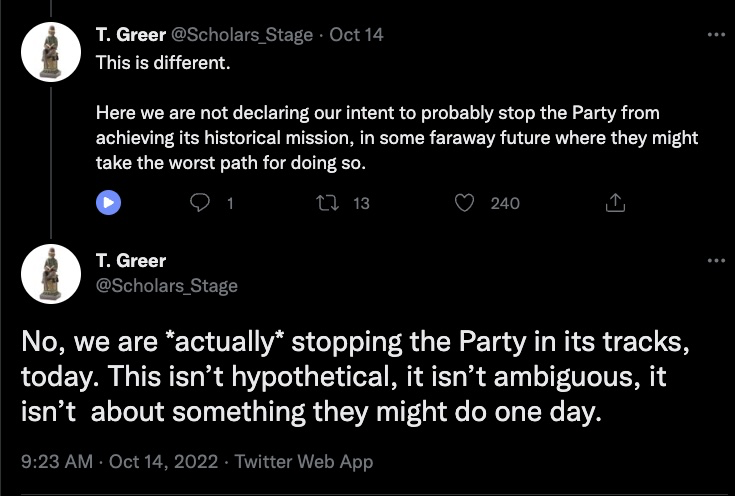
By taking aim at semiconductors, the most high-profile strategic technology, Beijing will see it as throwing down a gauntlet.
Forcing China to rely on foreign production and BIS’ goodwill for the latest and greatest chips plays exactly into Xi’s fear of “technological vassaldom.” These regulations hit directly at a CCP neuralgic point.
Another factor coloring Beijing's view of American intentions is the timing: even though the Biden admin may not have consciously timed the rollout of these regulations to the opening of the Party Congress, Chinese officials will assume they were trying to ruin the party.
That said, Xi and the rest of the CCP probably already had already baked into their worldview, that America for a long time now was set on keeping China tech down, thanks to his experiences with Huawei and ZTE.
The historical case of Khrushchev pulling tech support during the Sino-Soviet split, forcing Mao to ultimately go it alone when putting the finishing touches on China's nuclear bomb, is a memory that weighs heavily here.
Now, coming to Xi's Party Congress speech on Sunday. It was full of emphasis on the importance of innovation.
For instance:
"To meet China's strategic needs, we will concentrate resources on original and pioneering scientific and technological research to achieve breakthroughs in core technologies in key fields."
"To meet China's strategic needs, we will concentrate resources on original and pioneering scientific and technological research to achieve breakthroughs in core technologies in key fields."
This is not a new thing for Xi. For his entire time as Premier he has been "laser focused" on China becoming a "high-end, self-reliant innovation power." That's a quote from USCD's Tai Ming Cheung, who wrote the book on how the CCP looks at technology (amazon.com)
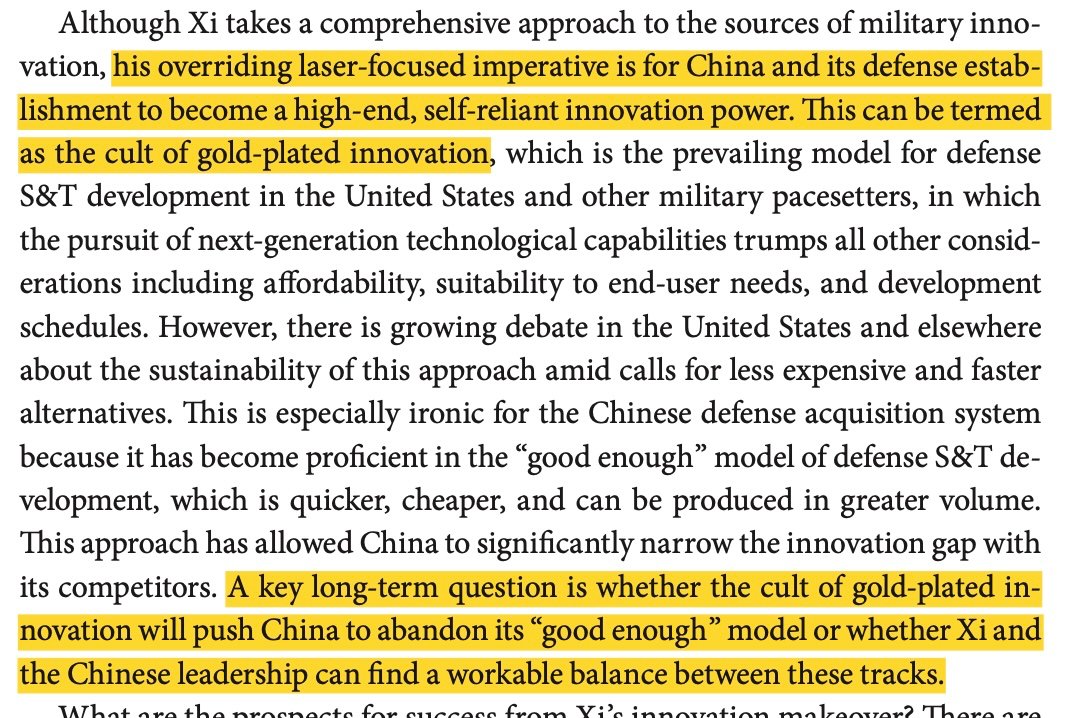
Key goals of his techno-security state:
1. "seamless fusion across the entire civilian-national security spectrum"
2. Moving from absorption-based to self-reliant innovation;
1. "seamless fusion across the entire civilian-national security spectrum"
2. Moving from absorption-based to self-reliant innovation;
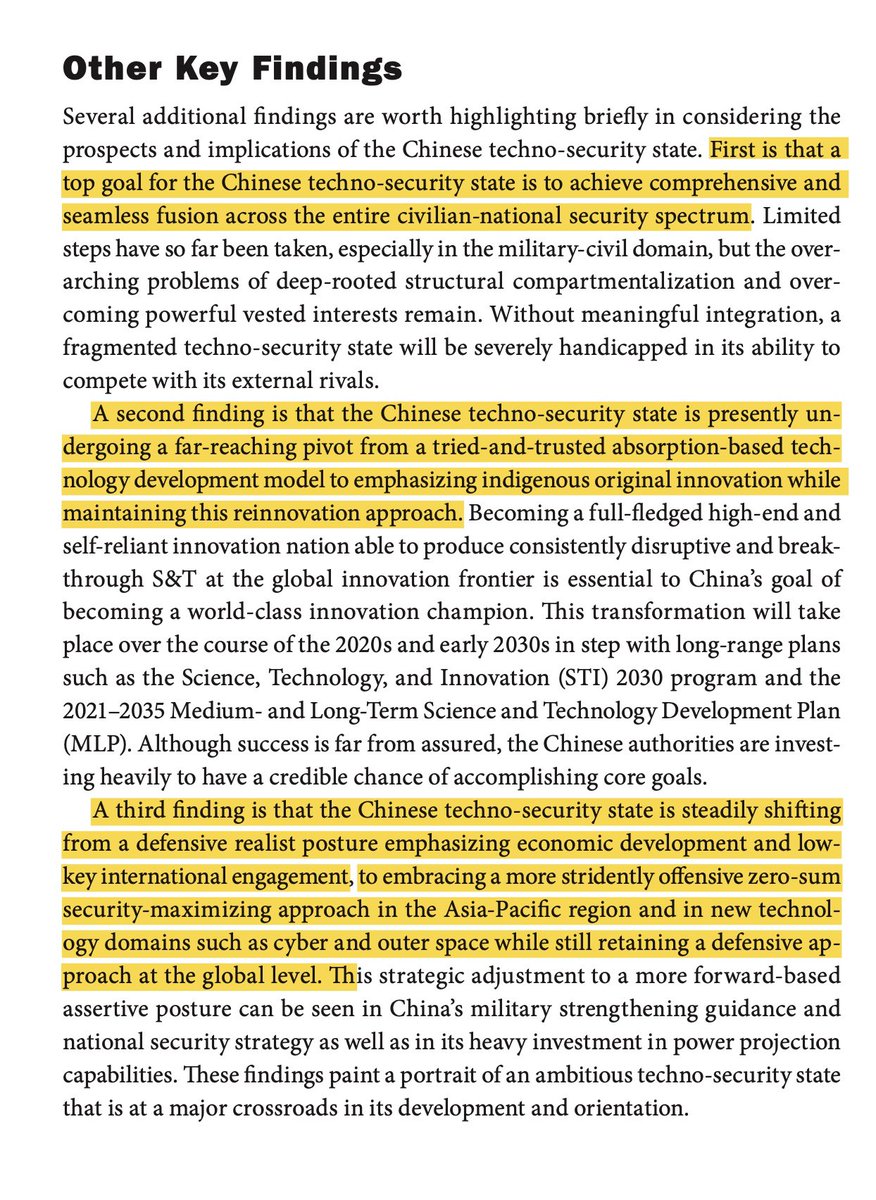
3. Adopting "more stridently offensive zero sum security-maximizing" approach in its regional posture and towards new technologies.
Prof Cheung also has a nice riff comparing Cold War and US-Japan geoeconomic competition to what's facing America today.
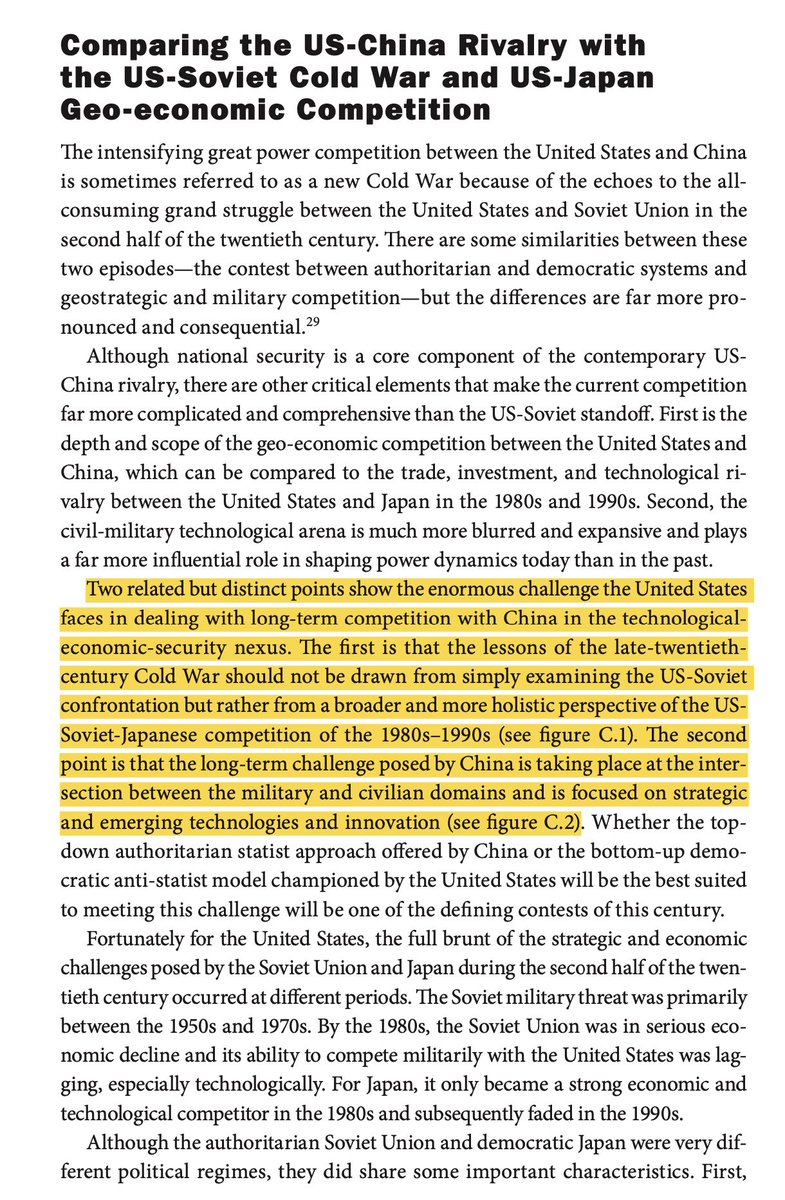
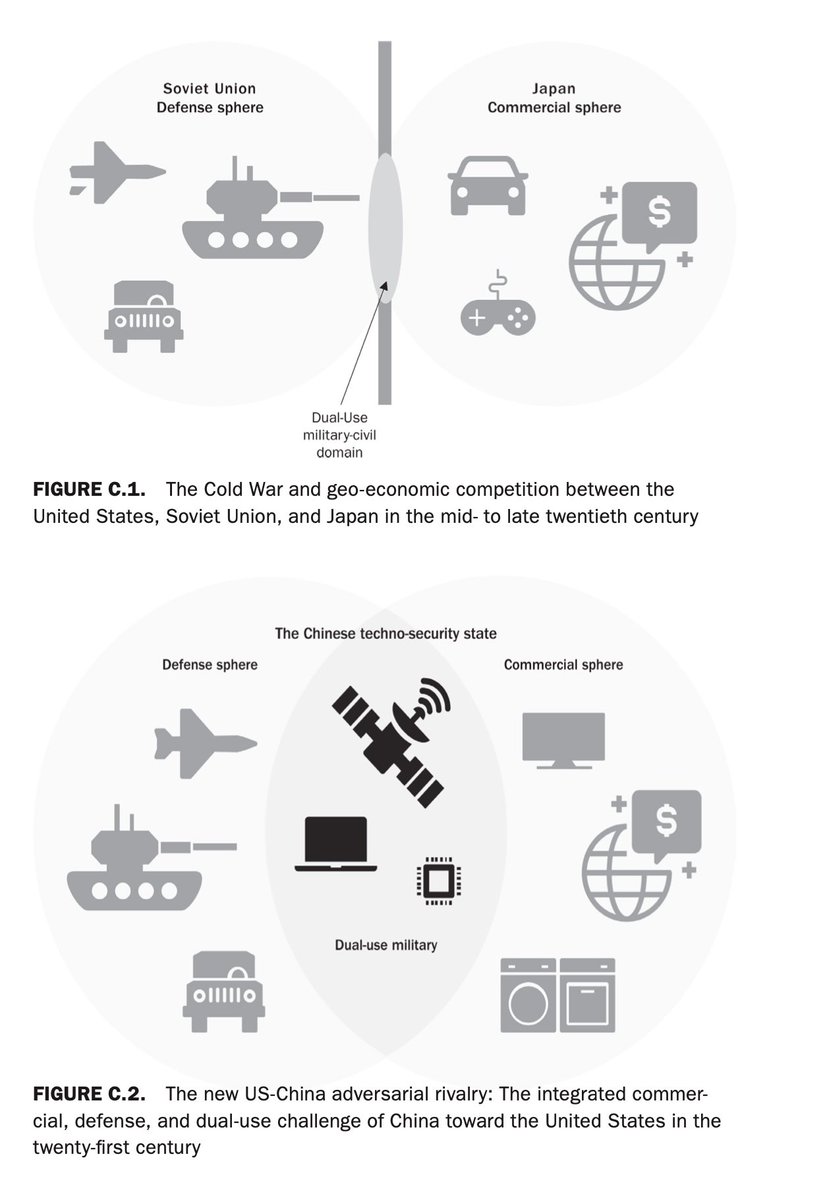
He closes by emphasizing that the US because "profound technological changes were underway." The passive voice is the wrong framing though.
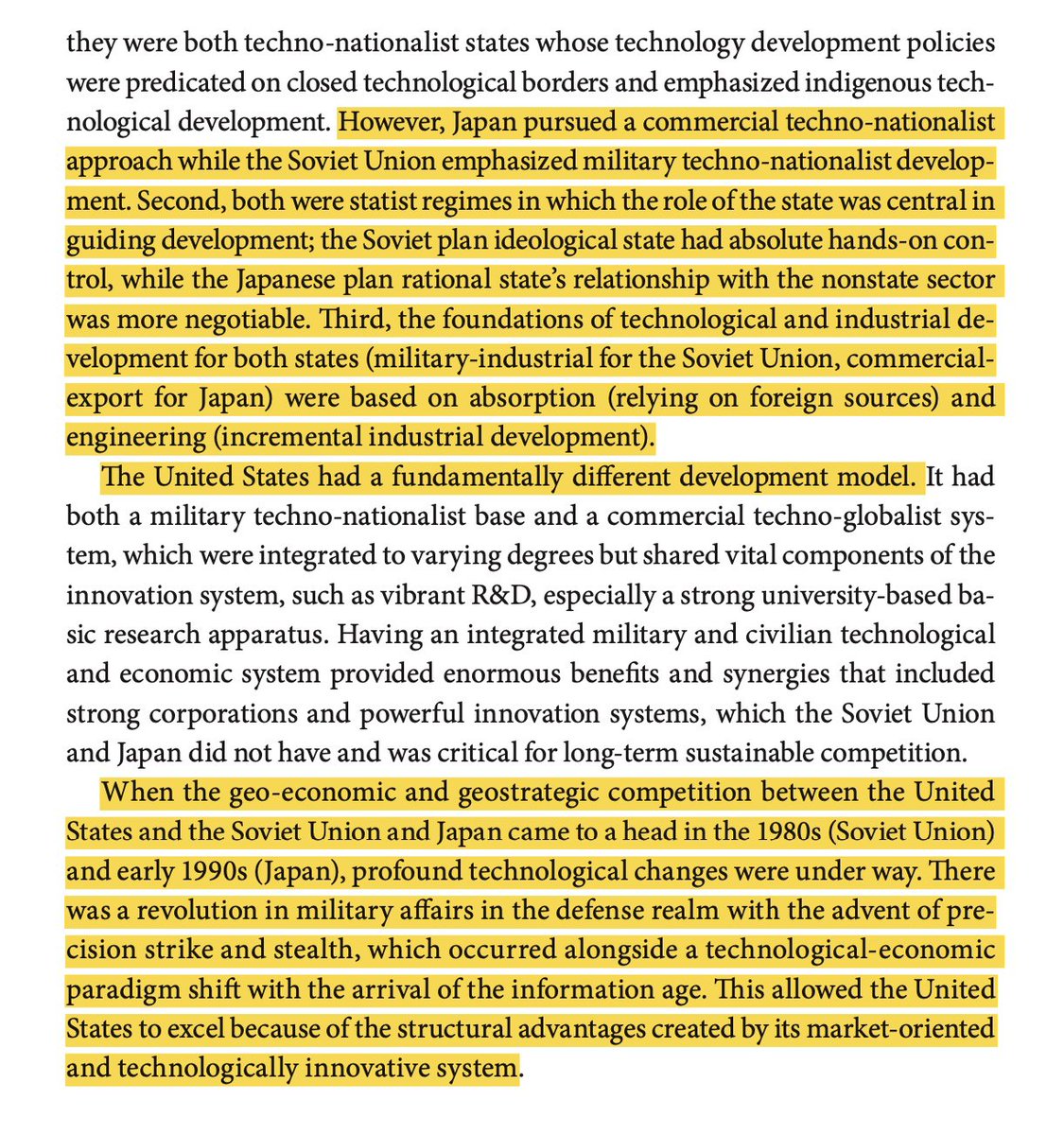
The US defense establishment was the first mover in many of these areas, including stealth and percision strike. DoD also funded the creation of the internet!
The key question now is, as the world is potentially on the verge of more tech paradigm shifts in AI, bio and beyond, which nation will reap the benefits from an economic, technological, and military perspective?
See Holden Karnofsky's blogpost series: cold-takes.com
See Holden Karnofsky's blogpost series: cold-takes.com
With these regulatory moves and investments like the Chips and Science Act, the US is trying to tip the scales.
But the PRC won't go down without a fight.
But the PRC won't go down without a fight.
Whether Biden's policy will ultimately be successful is too hard to judge. I'll close with 6 questions, the answers to which will ultimately be the measure of its effectiveness.
1. How will Beijing respond (both in S&T policy and via economic coercion towards US firms) as Biden throws dirt in China's S&T gears?
Could this move kickoff a tit-for-tat that impacts inflation and flagship US companies like Apple and Tesla that are dependent on China?
Could this move kickoff a tit-for-tat that impacts inflation and flagship US companies like Apple and Tesla that are dependent on China?
2. Just how important are the specific technologies redlined in the regulations to the balance of military power across the Taiwan strait?
3. Will USG be able to effectively enforce these new regulations? This is a huge lift for Commerce. See former BIS official Kevin Wolf's take here on a recent edition of my podcast ChinaTalk. chinatalk.media
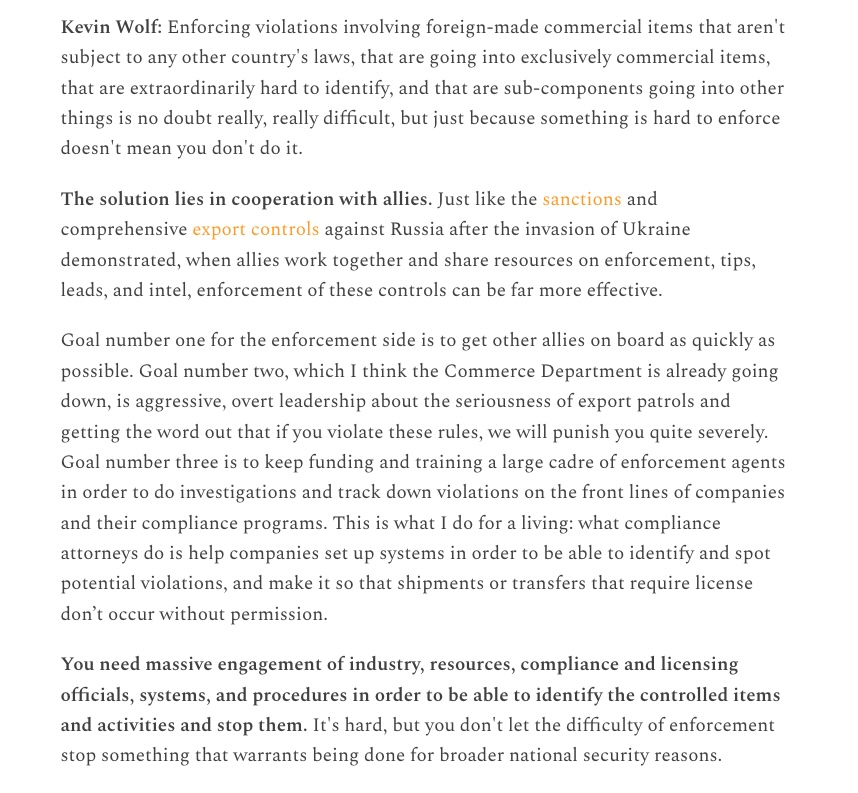
4. Can China innovate out US tech and develop these semiconductor manufacturing, and ultimately military, capabilities? On what timeline, at what cost and with what tradeoffs? Will JP, KR, TW and European companies help them?
Example from space industry: cset.georgetown.edu
Example from space industry: cset.georgetown.edu
5. Are investments through CHIPS giving America the best chance to run faster? Is more or smarter investment necessary to “maintain as large of a lead as possible” in “force multipliers”?
Have we really identified all of the critical force multipliers in the first place anyway?
Have we really identified all of the critical force multipliers in the first place anyway?
6. Does the ‘Sullivan Tech Doctrine’ ultimately raise or lower the chances and severity of conflict in Taiwan?
chinatalk.media
chinatalk.media
These questions are too important to be left just to random twitter threads to address. But as Carnegie Mellon's Erica Fuchs argues, right now academia, think tanks, and USG are dropping the ball.
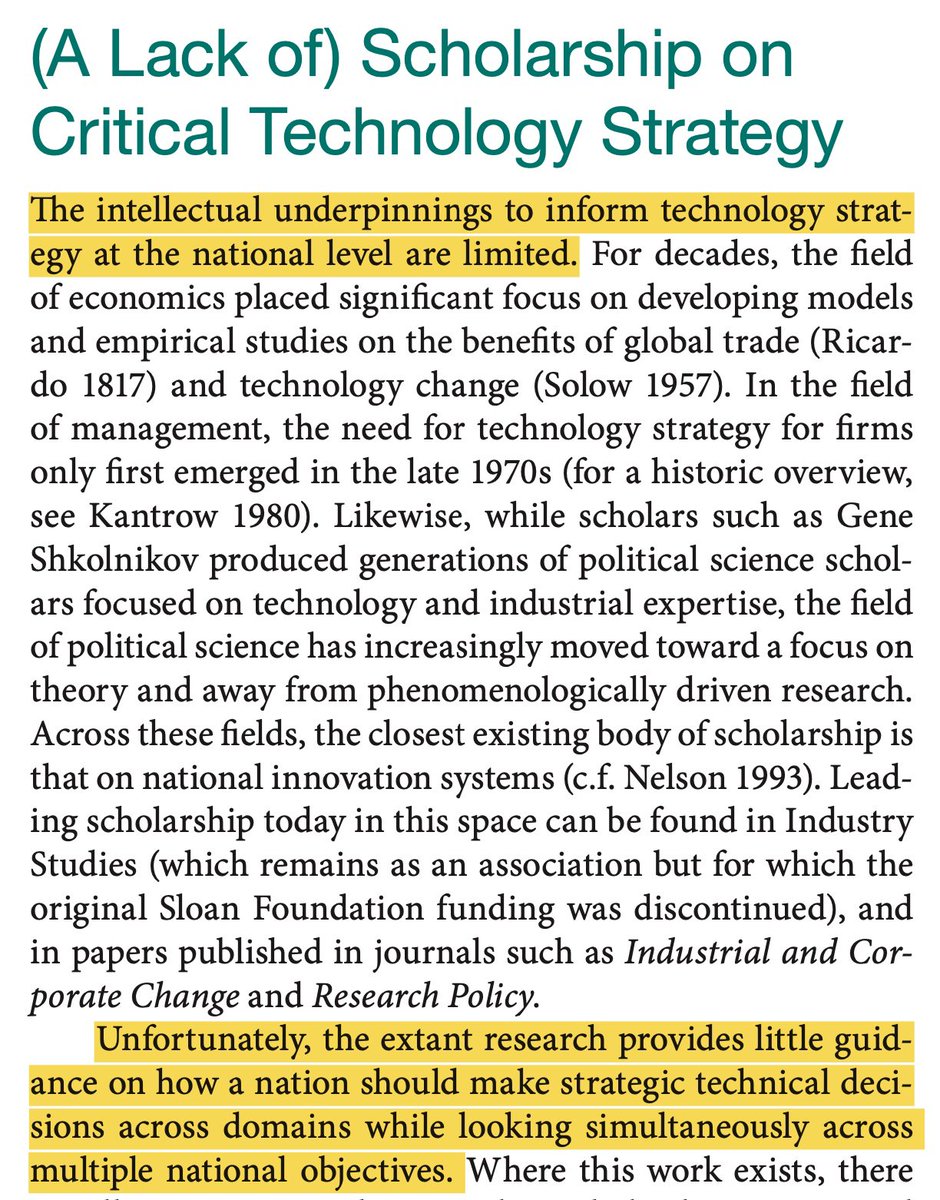
State of the art research on innovation does not help policymakers figure out what to do.
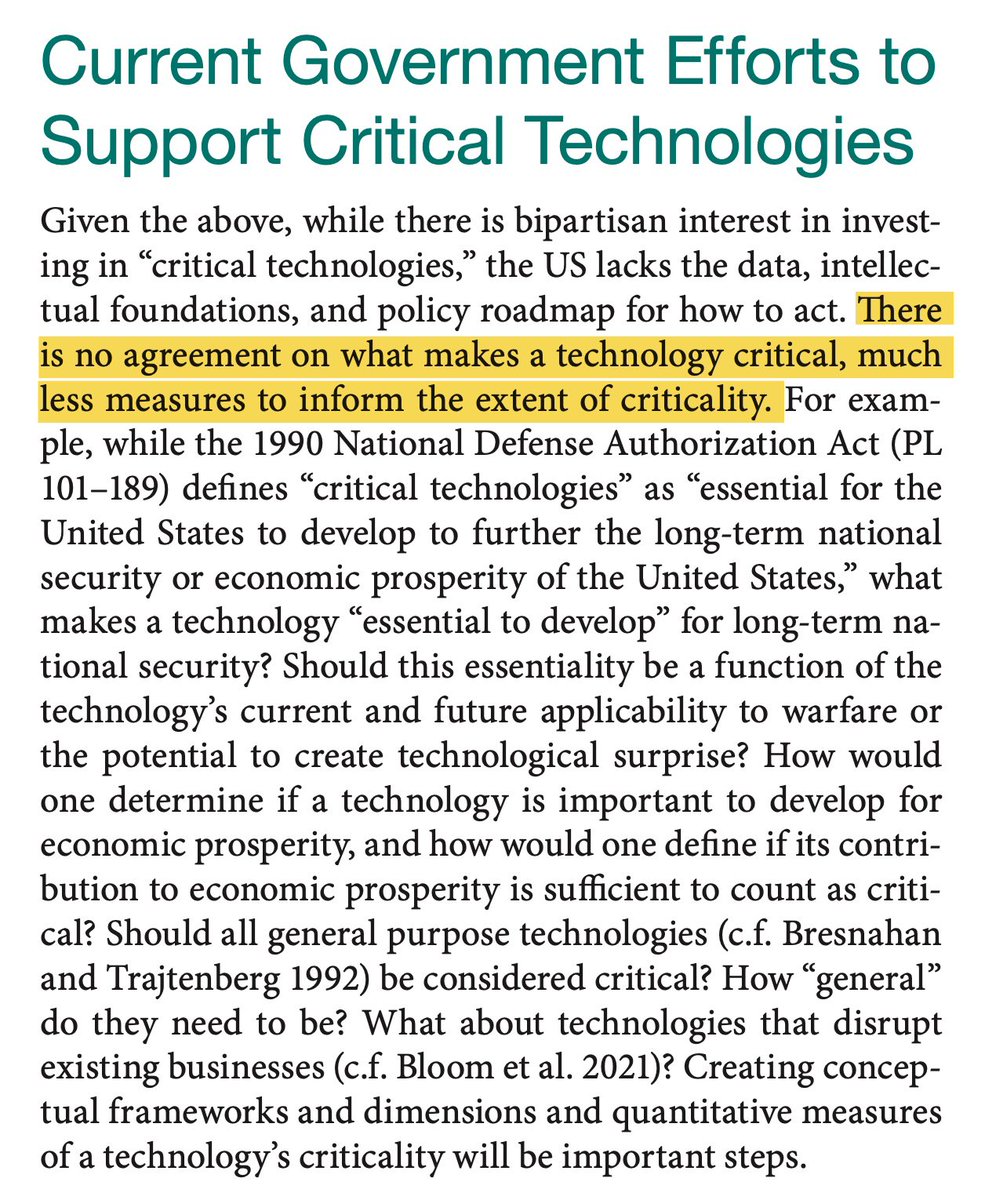
Folks haven't even settled on a definition for what critical technologies even are!
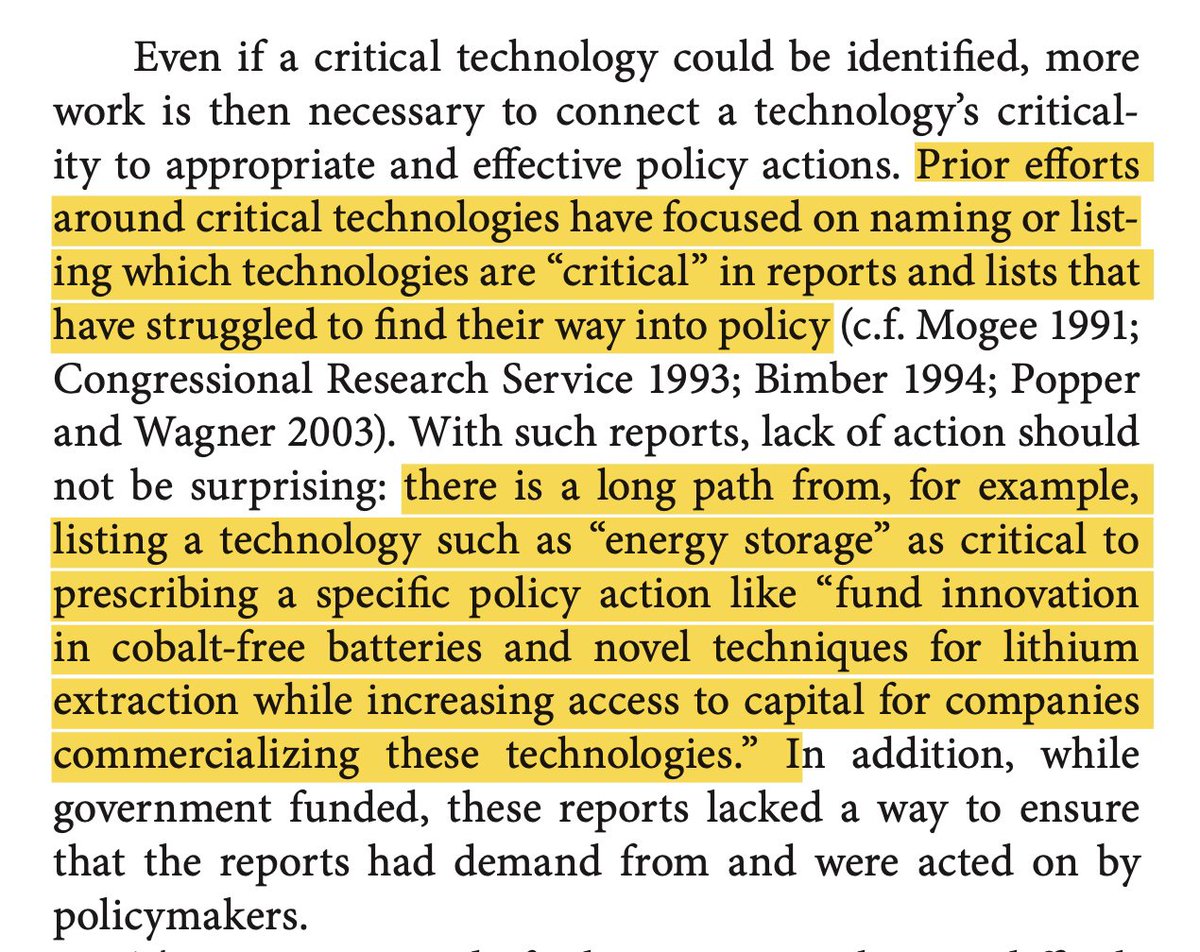
And, it's one thing to declare a technology critical, but quite another to figure out what to do about it.
How do we upgrade the analysis feeding into these decisions?
Take a look at Carnegie Mellon professor Erica Fuchs’ paper on ‘Building the analytic capacity to support critical technology strategy’...
brookings.edu
Take a look at Carnegie Mellon professor Erica Fuchs’ paper on ‘Building the analytic capacity to support critical technology strategy’...
brookings.edu
... and my essay for the EA Forum on the need for more investment in China Studies.
forum.effectivealtruism.org
forum.effectivealtruism.org
For more, check out my podcast where I interview experts on US-China tech relations link.chtbl.com
I also write a weekly newsletter!
chinatalk.media
chinatalk.media
Loading suggestions...