

As @michaelxpettis has noted, there is an emerging consensus that China's state banks do in fact help the PBOC manage the yuan.
Both Michael and I have been banging on and on about this for some time --
Why? The net foreign asset position of the state commercial banks.
1/
Both Michael and I have been banging on and on about this for some time --
Why? The net foreign asset position of the state commercial banks.
1/

The state banks added $300b to their foreign assets between the end of 2019 and mid 2021 --
and that position started to fall in the last few months.
all while the official PBOC balance sheet was flat
2/
and that position started to fall in the last few months.
all while the official PBOC balance sheet was flat
2/
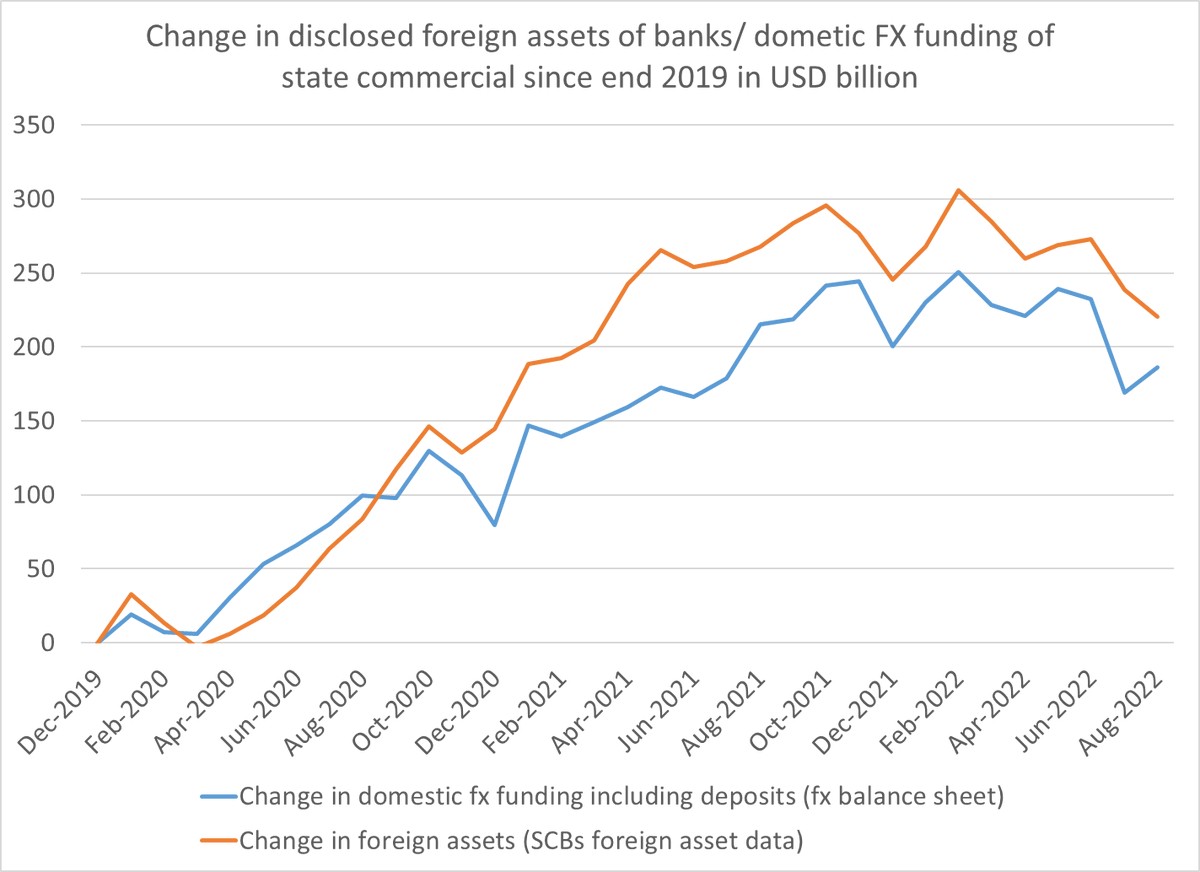
The most parsimonious explanation for the evolution of the state banks balance sheet even before the current strong depreciation pressure emerged is that they were helping to do the PBOC's dirty work.
3/
3/
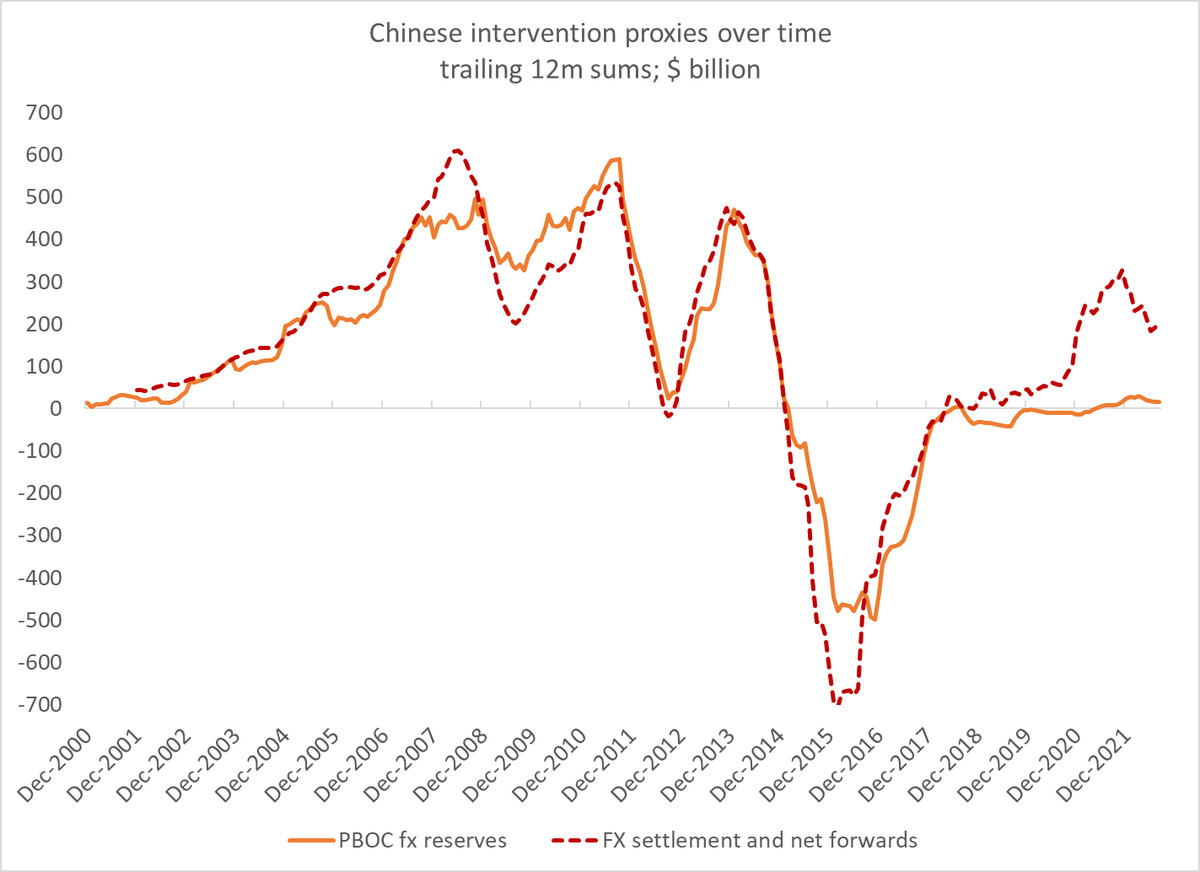
Why does past history matter, given all that has happened now?
Simple -- because the state banking data and the BoP data all told the same story through q2 2022, namely that the state banks have WAY more external assets than liabilities.
4/
Simple -- because the state banking data and the BoP data all told the same story through q2 2022, namely that the state banks have WAY more external assets than liabilities.
4/
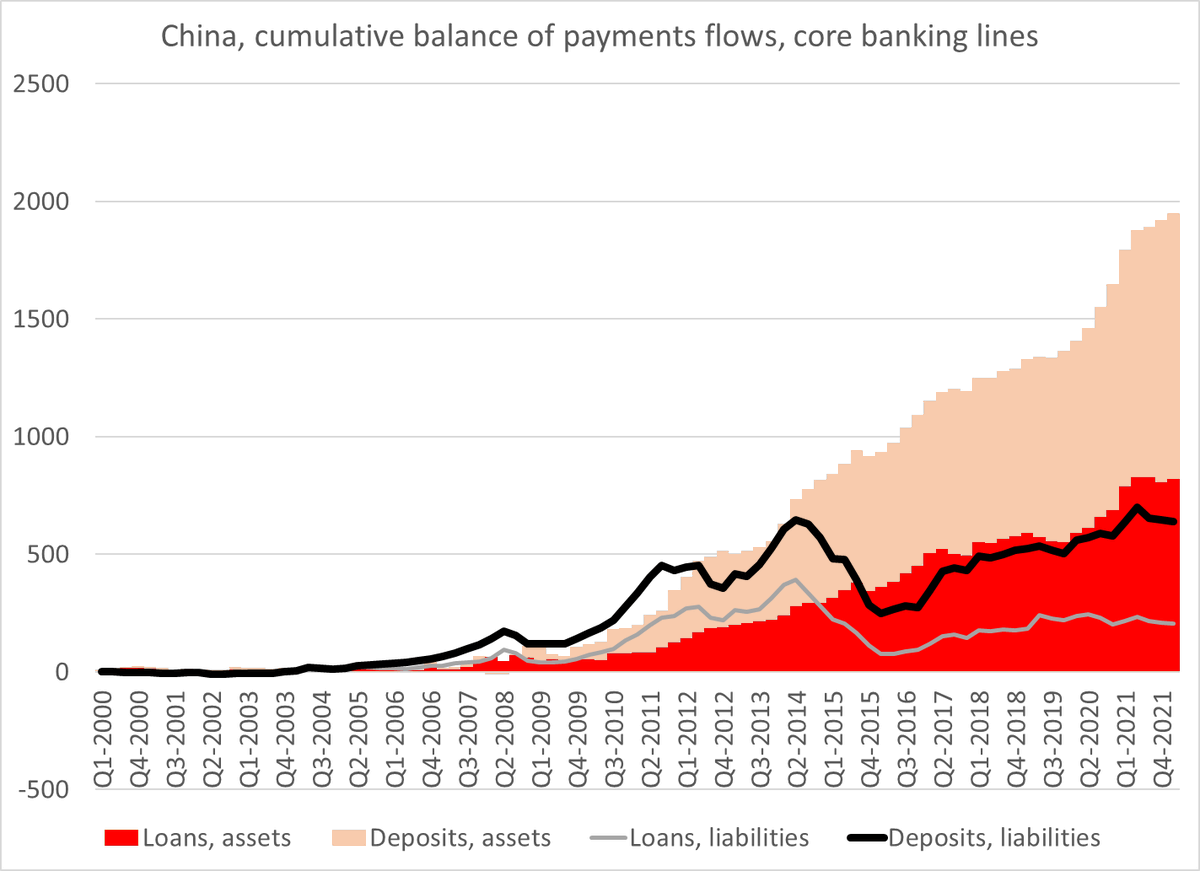
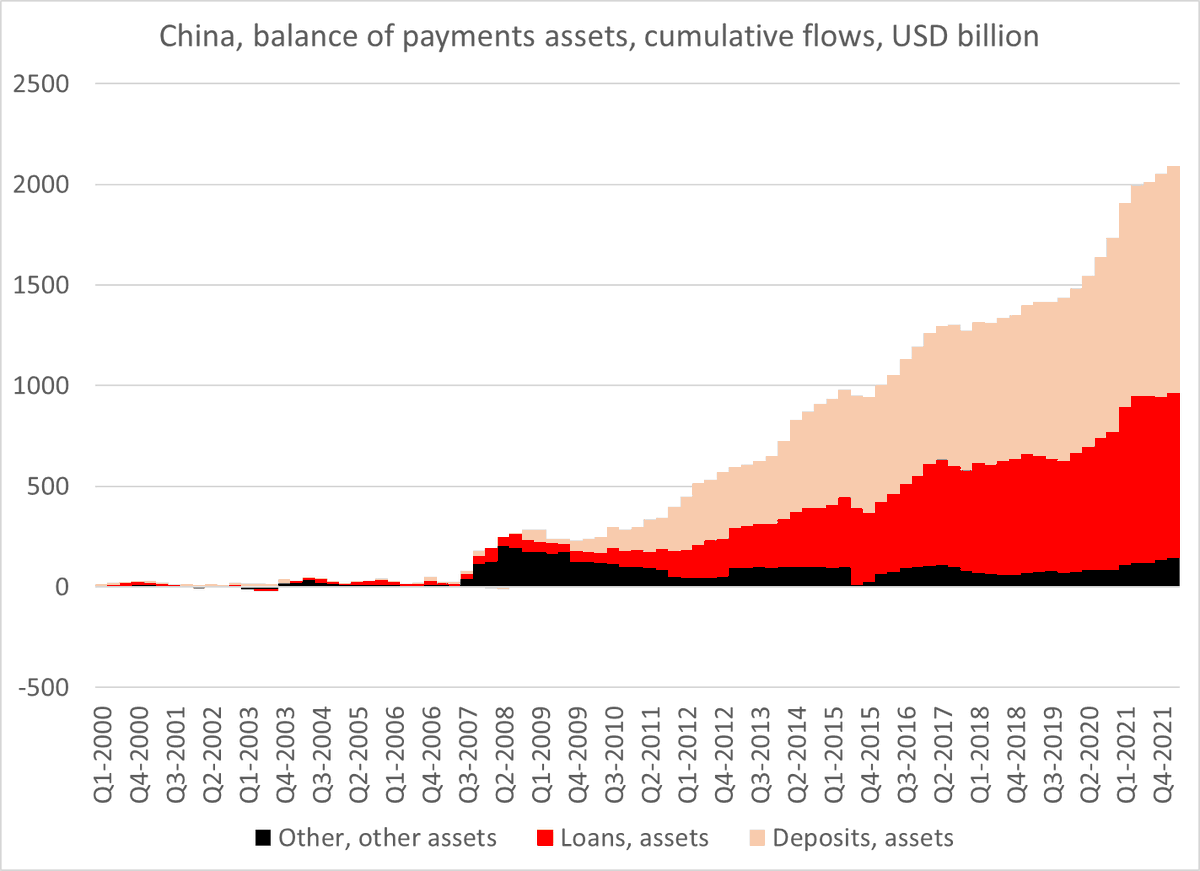
The massive asset position of the state banking system (the BoP data implies total assets of close to $2 trillion, more than the assets of the SCBs -- which makes sense given the size of the policy banks) gives China a ton of options for fx management ...
5/
5/
The details here are of course enormously interesting.
I am fascinated by the state banks' reported use of swaps to raise dollars to cover their fx sales on Monday -- all the more so b/c the state banks aren't obviously lacking in fx assets.
reuters.com
I am fascinated by the state banks' reported use of swaps to raise dollars to cover their fx sales on Monday -- all the more so b/c the state banks aren't obviously lacking in fx assets.
reuters.com
But the big picture is simple -- all the interesting changes in the China's external balance sheet have been happening in the state banks for several years now. And the state banks clearly have accumulated a ton of foreign assets over the last 10ys.
7/
7/
It isn't that surprising the state banks now are recognized to be a part of China's system of fx management. They clearly are in a position to help the PBOC manage depreciation pressure; some of us have also long thought that they also helped managed appreciation pressure.
8/8
8/8
p.s. I am a bit worried that China's decision not to publish economic data for Sept/ q3 will extend to the state banking data ... it was hard enough to try to figure out what China is doing with the traditional data sets.
Loading suggestions...