

We must restore the voice of the scholar-historian in the ongoing battle for the soul of imperial history, now dominated by ‘writers’ who package slogans – the Raj was ‘violent’ ‘corrupt’ ‘despotic’ – in entertaining but shallow books. This history deserves more depth.
One scholarship that risks drowning in the noise is that of 18th-century transition to empire. Chris Bayly, Peter Marshall, and David Washbrook are crucial contributors. Their style was to write closely researched narratives. Students find them heavy going. What is their point?
Marshall, who did the most significant work on the passage of empires, writes ‘at every stage, accommodations between British and Indian interests were crucial to the rise of British ascendancy.’ Rise of British power was based on alliances, land ceded under deals, not conquest.
A twist: alliance is not friendship nor arm-twisting, but perception of shared advantage (often economic) or threat. To work, alliances need to draw on legal tradition, have guarantor, and be credible. Clara Kemme explores ideological roots. Mandar Oak and Anand Swamy credibility
Bayly wrote: ‘incoming colonial power succeeded when they were able to entice intermediate groups.’ States need skilled people to collect data, advise policy, and influence taxpayers. Indian middle class found the EI Company a more enlightened and useful employer than the princes
A second key theme in Bayly is the evolution of EIC from militaristic to governing power as it began thinking about public goods and institution-building. The transition happened from the 1820s (‘Imperial Meridian’). No statement about EIC is sensible unless it specifies the time
Washbrook was a 19th c expert, but wrote a great piece on the 18th century, stressing the rift between the interior state system and the seaboard. The 2007 essay did not follow up the idea, staying with the seaboard to show India’s enlarging role in the world economy.

Where does the political economy scholarship stand now? Except for Prasannan Parthasarathi, most recent 18th c studies are a cultural history medley. I have taken the idea of the indigenous and economic root of the Raj further.
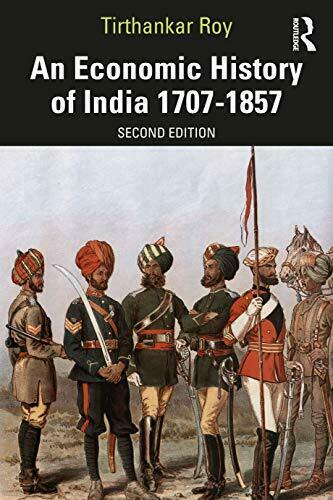
Thesis: Company tax policy and 18th c. wars made the interior-seaboard rift wider. The seaboard overpowered interior states (a first in Indian history), thanks to fiscal capacity and by pulling Indian capitalists to its side - two things that saved regime from extinction in 1857.
The Raj emerged from a faultline in India’s history. In turn, colonialism bridged that gap more than past regimes - with military power and market integration. It did not try to bridge the gap using healthcare, education, roads, and agricultural technology, its chief failing.
Loading suggestions...