

3 tips and ideas to make your outpatient clinic experience more efficient, enjoyable, and meaningful. Its my 5th year of clinic (3 in IM, 1 in Chief Year, and 1st in Cardiology) so would love to hear any recommendations!
#Medtwitter #Cardiotwitter
-thread 🧵-
#Medtwitter #Cardiotwitter
-thread 🧵-
1) Preparation: This is the key to success in the outpatient setting. You will likely be working in a busy clinical setting with multiple residents and fellows who are staffing with limited attendings. The work you do before clinic is the first important step!
Before clinic, I spend around 15 minutes per patient reviewing the clinical chart.
Prep your notes! This improves learning (opportunities to look up pathology, medications, treatment plans beforehand). Also, this saves time (you don't want to write all notes after clinic!)
Prep your notes! This improves learning (opportunities to look up pathology, medications, treatment plans beforehand). Also, this saves time (you don't want to write all notes after clinic!)
In my opinion, the feeling of deleting a progress note if a patient no-shows >> the feeling of scrambling between staffing patients to look up a patient you haven't prepared for.
With prepping notes, you can have the whole note done before clinic (besides subjective).
With prepping notes, you can have the whole note done before clinic (besides subjective).
Note-Prepping:
- You can prep the entire note (except subjective), with copy-pasting the relevant imaging results and writing the assessment and plan.
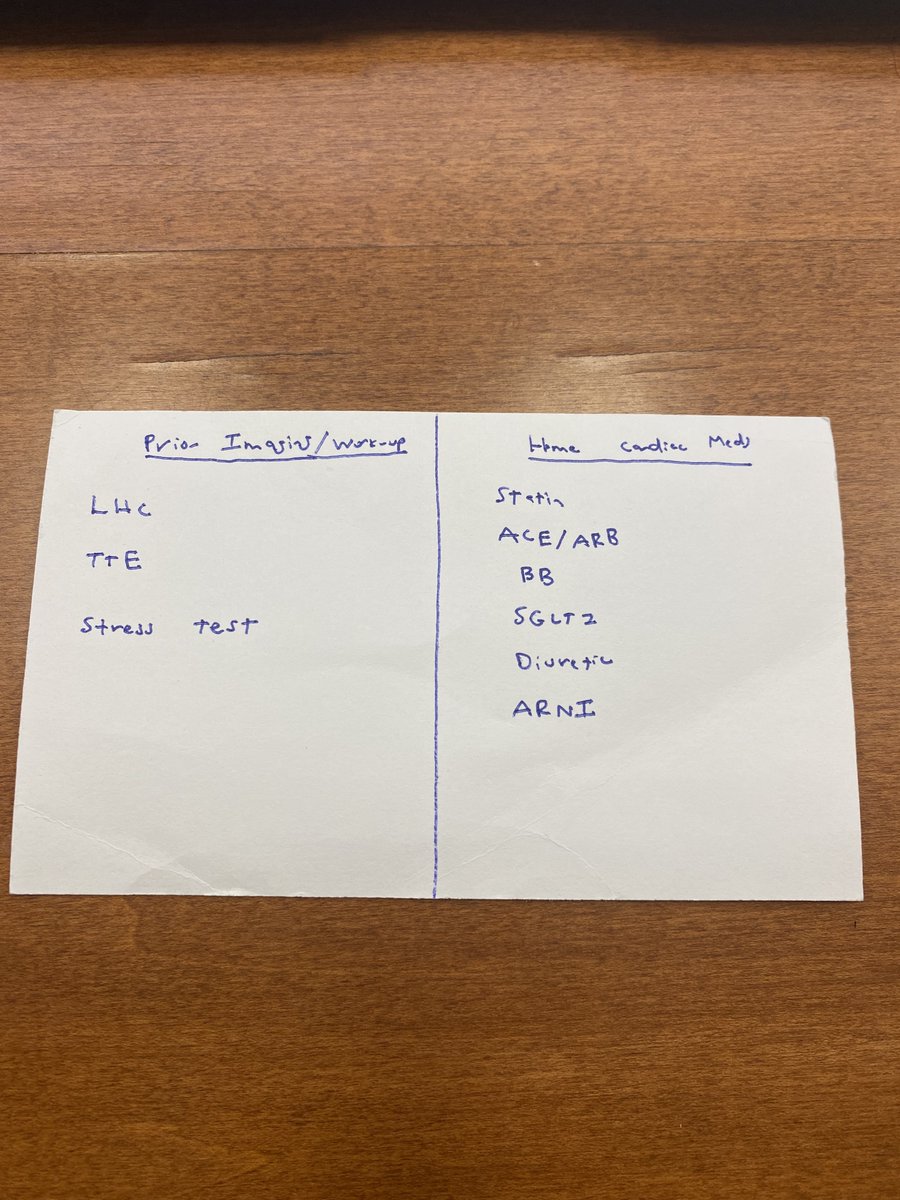
- I use the a notecard approach as seen in the image. This is a tool I use for presenting and organizing my thoughts.
- You can prep the entire note (except subjective), with copy-pasting the relevant imaging results and writing the assessment and plan.
- I use the a notecard approach as seen in the image. This is a tool I use for presenting and organizing my thoughts.

2) Communication: Outpatient clinic is a team-sport and you will be working alongside the same residents/fellows and staff for years.
- Develop a good relationship with your medical assistant! They will be the one who will be checking in patients, obtaining VS, and drawing labs
- Develop a good relationship with your medical assistant! They will be the one who will be checking in patients, obtaining VS, and drawing labs
- If you have a few no-show appointments and your co-residents/co-fellows are falling behind, offer to see their patient. They will 100% help you in the future.
- Ask your attendings questions! Find out their thoughts. If you have prepped before, this is easier to do.
- Ask your attendings questions! Find out their thoughts. If you have prepped before, this is easier to do.
The outpatient cardiology clinic is a busy and exciting experience. At IU, we have 11 patients/ fellow on a half-day clinic. Between 5 fellows and 2 attendings, we see up to 55 patients per day.
Communication in the outpatient setting is more informal and dynamic than wards.
Communication in the outpatient setting is more informal and dynamic than wards.
3) Patient interactions: Remember, patients have been waiting weeks (or even months) to see you in your primary care or sub-specialty clinic.
Patients probably marked this appointment on their calendar or made special arrangements to come to this appointment.
Patients probably marked this appointment on their calendar or made special arrangements to come to this appointment.
I think one of the best things you can do in the first few minutes is communicate your preparation and attention to detail.
I like to refresh the events of their last clinic appointment. I also like to verbally communicate their previous work-up (imaging, labs) or pending tests
I like to refresh the events of their last clinic appointment. I also like to verbally communicate their previous work-up (imaging, labs) or pending tests
This often reassures patients that as their physician, you have taken time to review their unique stories and documentation. This builds a sense of trust and reassurance for the patient.
Ask them their chief concerns and don't interrupt! Review their home meds / refill status.
Ask them their chief concerns and don't interrupt! Review their home meds / refill status.
The combination of these 3 skills: Preparation, Communication, and Patient Interactions is an art and takes time to master.
They are all inter-related and work harmoniously. It can be challenging to deliver effective care in 15-20 minute time slots. I hope this is helpful!
They are all inter-related and work harmoniously. It can be challenging to deliver effective care in 15-20 minute time slots. I hope this is helpful!
Loading suggestions...