

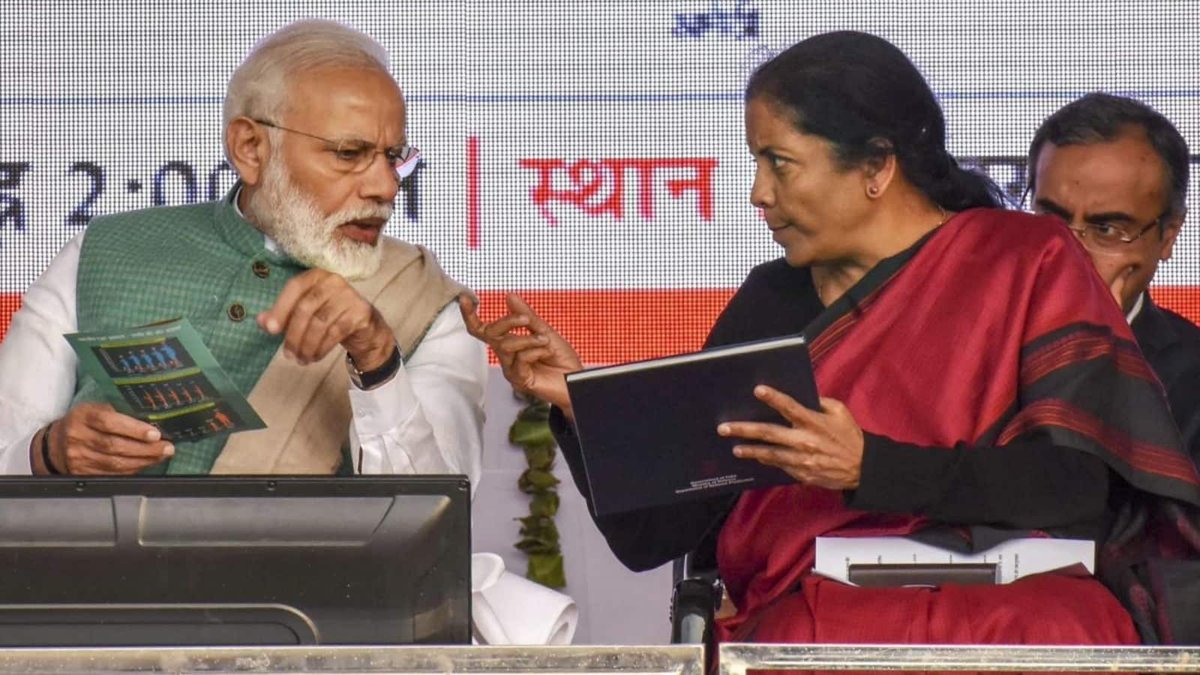
Nirmala Sitharaman said "It’s not rupee sliding but dollar strengthening."
But when everyone is calling it a golden period for the Indian Economy, why is the Rupee falling?
Are they all lying to us?
Here’s the truth about India’s economic situation:
But when everyone is calling it a golden period for the Indian Economy, why is the Rupee falling?
Are they all lying to us?
Here’s the truth about India’s economic situation:
The great fall continues: the rupee has been falling continuously for the past few months.
What does this mean for the Indian economy? Let’s understand this shortly and sweetly!
Let’s begin with understanding What exactly the exchange rate is.
What does this mean for the Indian economy? Let’s understand this shortly and sweetly!
Let’s begin with understanding What exactly the exchange rate is.
An exchange rate is a rate at which one currency will be exchanged for another currency.
It simply means how much rupees you need if you want to buy one dollar.
This is called the rupee-dollar exchange rate.
It simply means how much rupees you need if you want to buy one dollar.
This is called the rupee-dollar exchange rate.
We have two types of exchange rates
1. Fixed exchange rate
2. Free or floating exchange rate
Until 1993 India used to follow the concept of a fixed exchange rate, the value of INR was pegged to the dollar and pound sterling.
1. Fixed exchange rate
2. Free or floating exchange rate
Until 1993 India used to follow the concept of a fixed exchange rate, the value of INR was pegged to the dollar and pound sterling.
Countries like Saudi Arabia and Oman still follow this system.
After the Liberalization policy, India opened its market to foreign investors and dollars started kicking in. This made the exchange rate float.
After the Liberalization policy, India opened its market to foreign investors and dollars started kicking in. This made the exchange rate float.
Now the value of INR is defined according to the basic rule of demand and supply.
Foreign investments lead to increased demand for the rupee while increasing exports lead to an increased supply of dollars.
Foreign investments lead to increased demand for the rupee while increasing exports lead to an increased supply of dollars.
Both of these factors are responsible for strengthening the rupee.
The rising imports and foreign investors' exit from the Indian stock market is the reason the rupee takes a plunge.
And lately, we have seen many FIIs have exited their investment from Indian markets.
The rising imports and foreign investors' exit from the Indian stock market is the reason the rupee takes a plunge.
And lately, we have seen many FIIs have exited their investment from Indian markets.
Why is this happening all of a sudden?
The fall of currency is often influenced due to many factors both internal and external. Although this fall is linked to external factors.
The fall of currency is often influenced due to many factors both internal and external. Although this fall is linked to external factors.
Right now the whole world is facing huge inflation, many developed economies are suffering from rising oil and goods prices.
This has created a vicious cycle and the world is heading toward a global slowdown.
This has created a vicious cycle and the world is heading toward a global slowdown.
The two major reasons behind this rising inflation are-
1. Economic stimulus
2. Supply chain disruptions
Post covid all the countries released big economic packages for their people to curb the effects of covid.
1. Economic stimulus
2. Supply chain disruptions
Post covid all the countries released big economic packages for their people to curb the effects of covid.
Feds in the US raised their interest rates which attracted investors to take out their money from India and invest back at home.
These economic packages increased the supply of money in the market but the supply chain was still under treatment.
These economic packages increased the supply of money in the market but the supply chain was still under treatment.
So people had money to buy goods but the products were not available. This created the classic demand and supply situation.
“Too much money in the market but not enough goods available.”
“Too much money in the market but not enough goods available.”
The situation further deteriorated due to the Russia-Ukraine war, which led to the disruption of the global gas supply chain.
Europe has to face the major brunt of it.
Europe has to face the major brunt of it.
How is inflation linked with the fall of the rupee?
It’s simple when the country goes into a phase of slowdown or a recession, investors pull out their money and start investing in safe zones like govt bonds and gold.
It’s simple when the country goes into a phase of slowdown or a recession, investors pull out their money and start investing in safe zones like govt bonds and gold.
As discussed above, when Foreign investors are not bringing their dollars to India, that increases the supply of the rupee and thus depreciates its value.
The dollar has found its way back home and is now feeling comfortable in the hands of Uncle Sam.
The dollar has found its way back home and is now feeling comfortable in the hands of Uncle Sam.
This has decreased the supply of dollars thus increasing its value.
We cannot ignore the domestic factors too. Even before Covid, the rate of inflation was on a rise in India.
Both the retail and wholesale prices of goods and services were increasing rapidly.
We cannot ignore the domestic factors too. Even before Covid, the rate of inflation was on a rise in India.
Both the retail and wholesale prices of goods and services were increasing rapidly.
This was affecting the exports of the country and when the country is not able to match their exports and imports then there’s a negative effect on the economy.
After covid, we saw a huge demand in the market.
After covid, we saw a huge demand in the market.
People were ready to come out and spend as much as they wanted.
Some experts named it revenge buying. This increased demand led to an increase in imports.
And we are already aware that if a country wants to import products from other nations they need dollars.
Some experts named it revenge buying. This increased demand led to an increase in imports.
And we are already aware that if a country wants to import products from other nations they need dollars.
This scenario increased the demand for the dollar and the value of the rupee took a nosedive.
In the next thread, we will talk about how the fall of the rupee and inflation is not as bad as we think.
In the next thread, we will talk about how the fall of the rupee and inflation is not as bad as we think.
Get part 2 before everyone else. Join the 4271 WhatsApp Newsletter community members who receive content regularly:
chat.whatsapp.com
chat.whatsapp.com
Loading suggestions...