
@Gopalee67 Not a “practice” in the sense that it is common. But in our own TN & in fact at Kāñcipuram itself, there is a beautiful Siddhāntāgama Temple & Pāḍal Peṭṛa Sthalam for TirumēṭraLīśvara (திருமேற்றளீஶ்வரர்), where we have two Liṅgas. 1st is Paramaśiva. 2nd is Viṣṇu only.
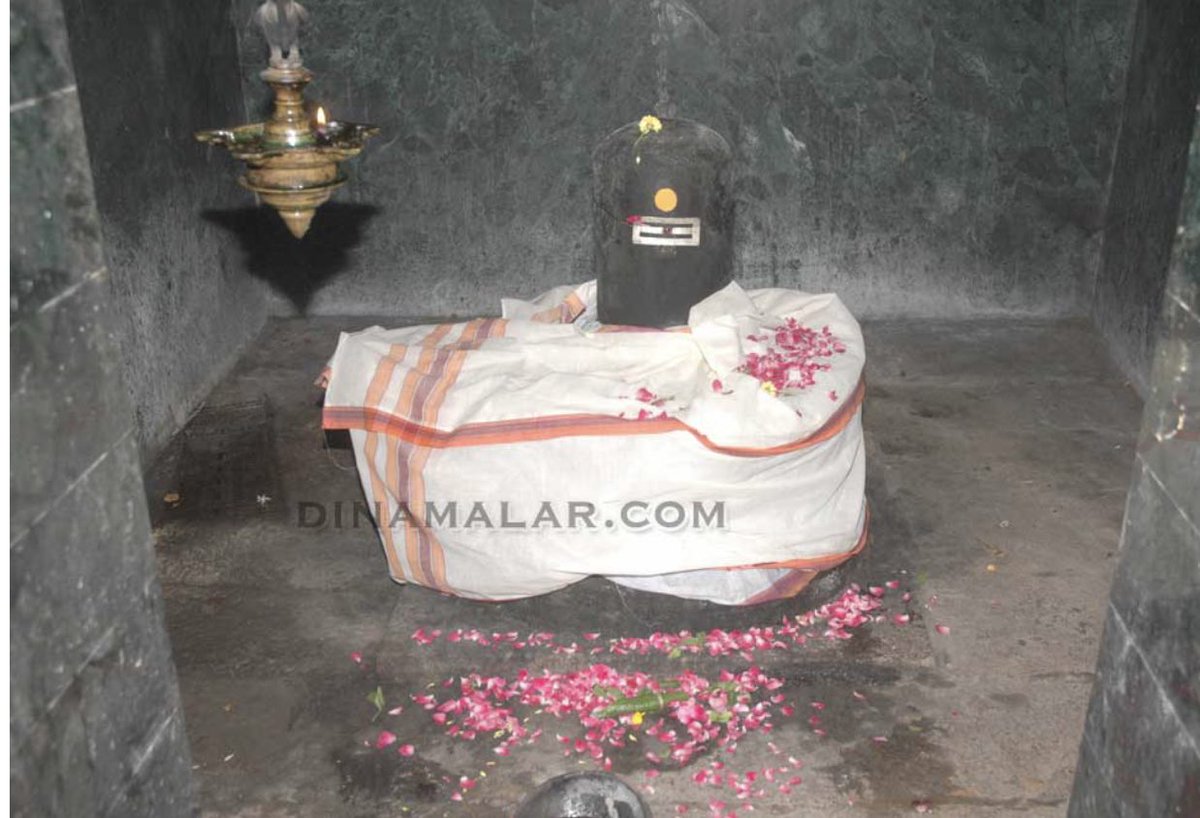
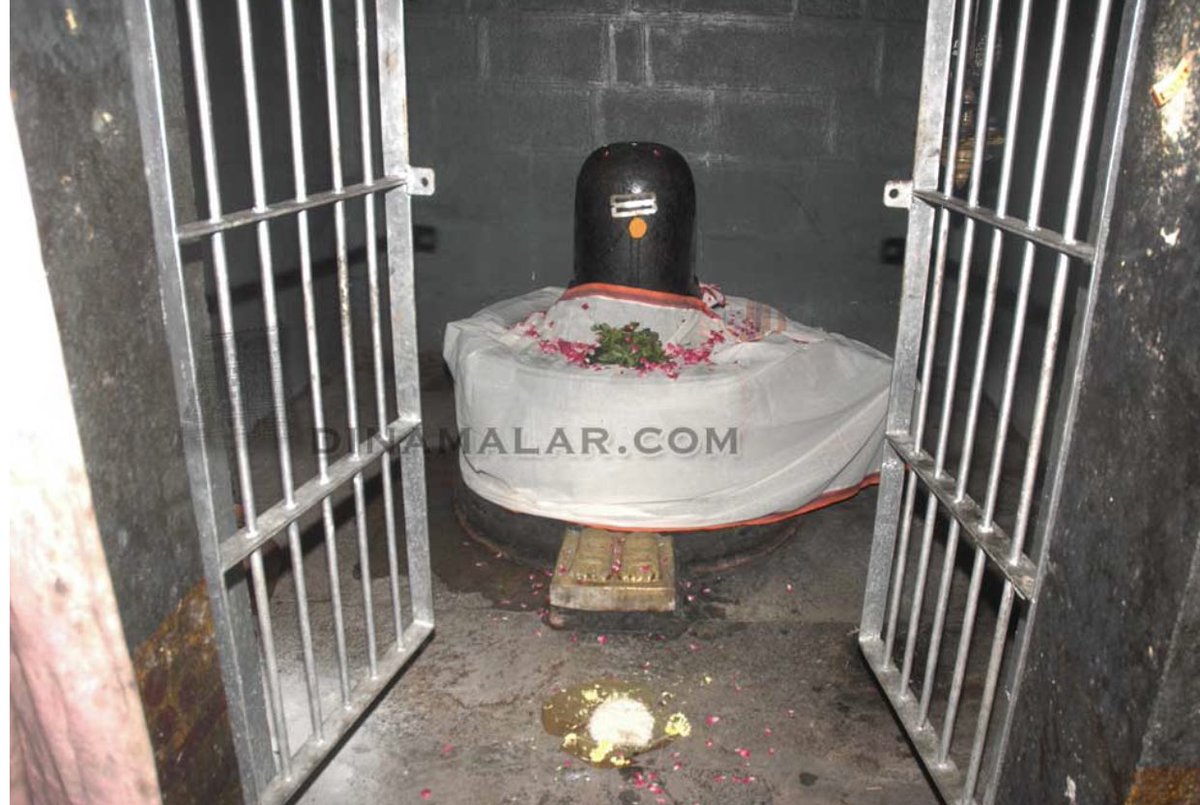
@Gopalee67 Viṣṇu did tapas at this Kṣetra to acquire Liṇga Rūpa here. This was finally completed when Jñānasambandhar visited the temple and recited His pathigam, which was so unearthly in its beauty that Viṣṇu’s Māyeya body started melting away.
@Gopalee67 Before the feet could melt away, Tirujñānasambandhar finished His decad & Viṣṇu attained Śivasāmya & Liṅgarūpa. The remainder, ethereal feet of Viṣṇu is commemorated here as you can see in the 2nd pic.
@Gopalee67 It is this Liṅgarūpa-Śivasāmya-Mukta-Viṣṇu, known as Tiru-Ōda-Urugīśar (திரு-ஓத-உருகீஶர்), He who melted as [Sambandhar] Recited [His Decads], who is housed in the Rājagopura, not TirumēṭraLīśvarar, who is Pradhāna-Svāmī of the temple.
@Gopalee67 It is to the Vṛṣabha in front of Tiru-Ōda-Urugīśar, that the Vṛṣabha-Arcana in Pradośa pūjās are done.
@Gopalee67 Now, this is a particular Sthalapurāṇam. Is there a textual basis for a wider application as far as Siddhānta is concerned? There potentially could be though I cannot definitely issue a determination.
@Gopalee67 In Bhaktapratiṣṭhāvidhi, Kāmikāgama allows Bhaktas to be worshiped as Śivaliṇga or as Skanda, Nandī ityādi or in their own forms (the Bhakta’s form), as may be appropriate.
@Gopalee67 Since the term Bhakta does not have to be limited to humans and Viṣṇu is a Śivabhakta in Siddhānta, he can be installed as a Śivaliṇga.
@Gopalee67 Finally, in the Pāñcarātra system (which is Vaiṣṇavāgama), in Sanatkumāra Sam̐hitā, there is a vidhi for installing Viṣṇu in a Liṅga of certain prescribed measurements.
@Gopalee67 I guess it’s safe to say that as far as temples are concerned, the three main players (Siddhānta, Vaikhānasa & Pāñcarātra) will be able to offer you the best possible precedents.
Loading suggestions...