

Unlike the Heliopolitan and Hermopolitan, which dwell on different aspects of the premanifest Godhead, the Memphite cosmogony emphasizes the creative deeds of the Absolute Spirit as Ptah, and thereafter affirms the immanence of the supreme deity in all earthly creation. [THREAD]
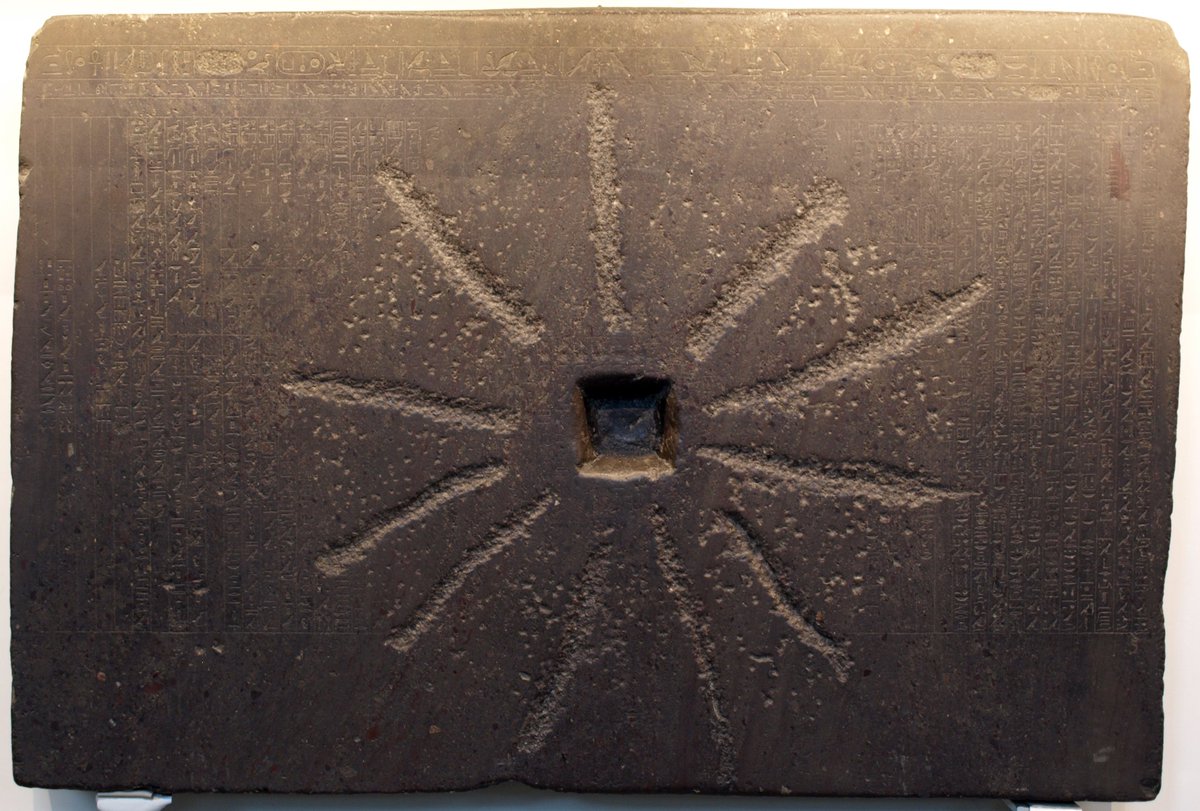
Although possibly formulated comparatively soon after the Heliopolitan cosmogony, in the Old Kingdom, we know the Memphite cosmogony from a 25th Dynasty granite block, onto which was inscribed an earlier text (probably dating from the 19th Dynasty) on the orders of King Shabaka.
The Heliopolitan cosmogony had carefully distinguished different phases in the outpouring of the divine substance, each phase indicating a further distancing of the creative process from the supreme Godhead.
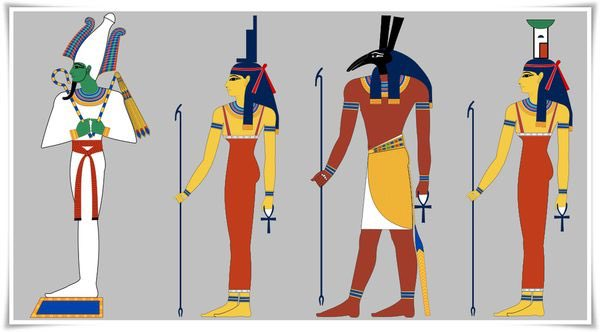
The end of this process was the creation of the quaternity of gods: Osiris, Isis, Seth, and Nephthys.
The Hermopolitan cosmogony had stressed the premanifest qualities of divinity in the Ogdoad of primeval beings, which Thoth first brought into existence and then, in his role as orderer of the universe, transmuted into the foundations of the manifest cosmos.
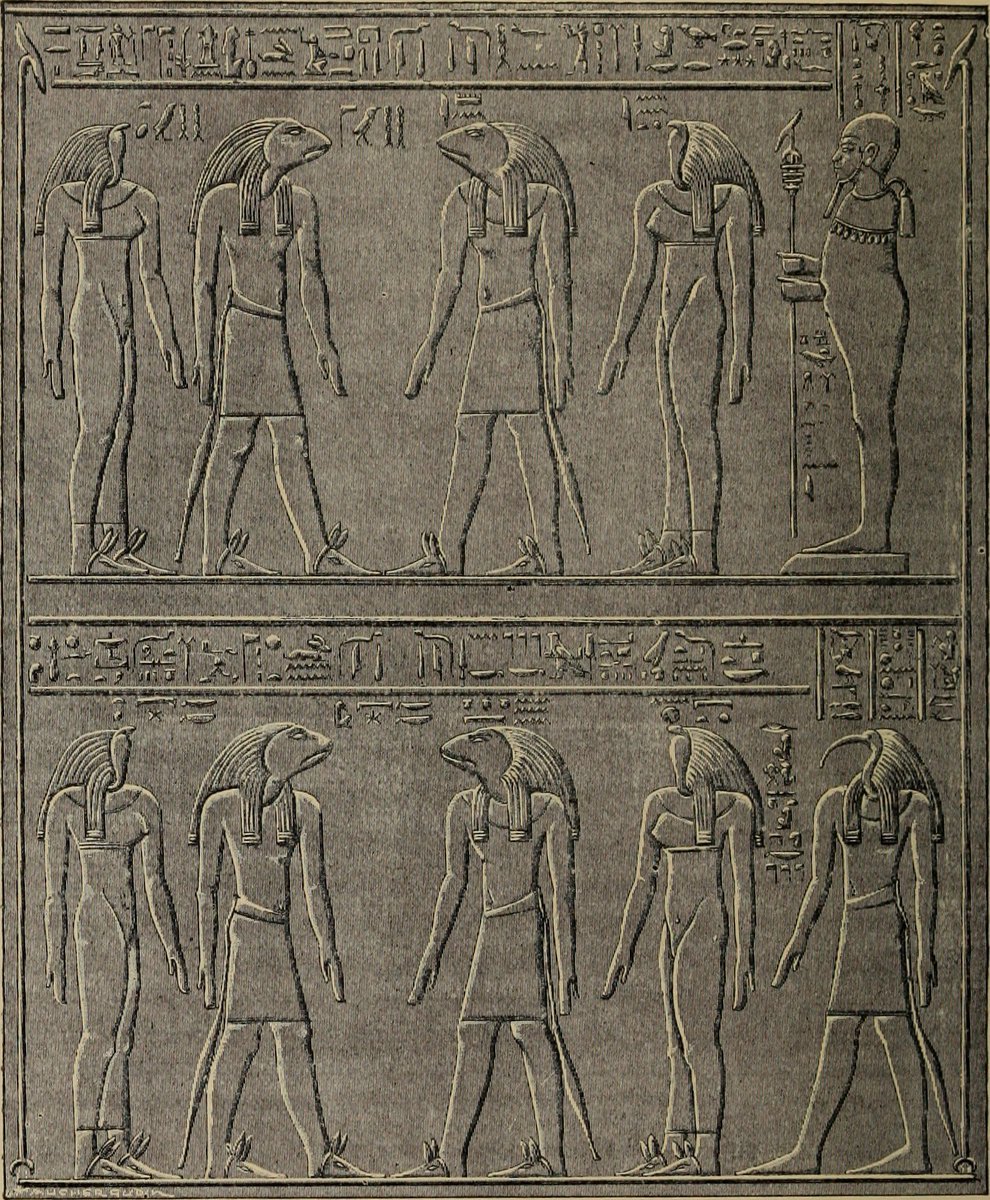
In the Memphite cosmogony, the emphasis is shifted further toward the active involvement of the Godhead in the creation of the universe, for Ptah is personally engaged in creation right down to the emergence of “people, beasts, crawling creatures, and whatever else lives.”
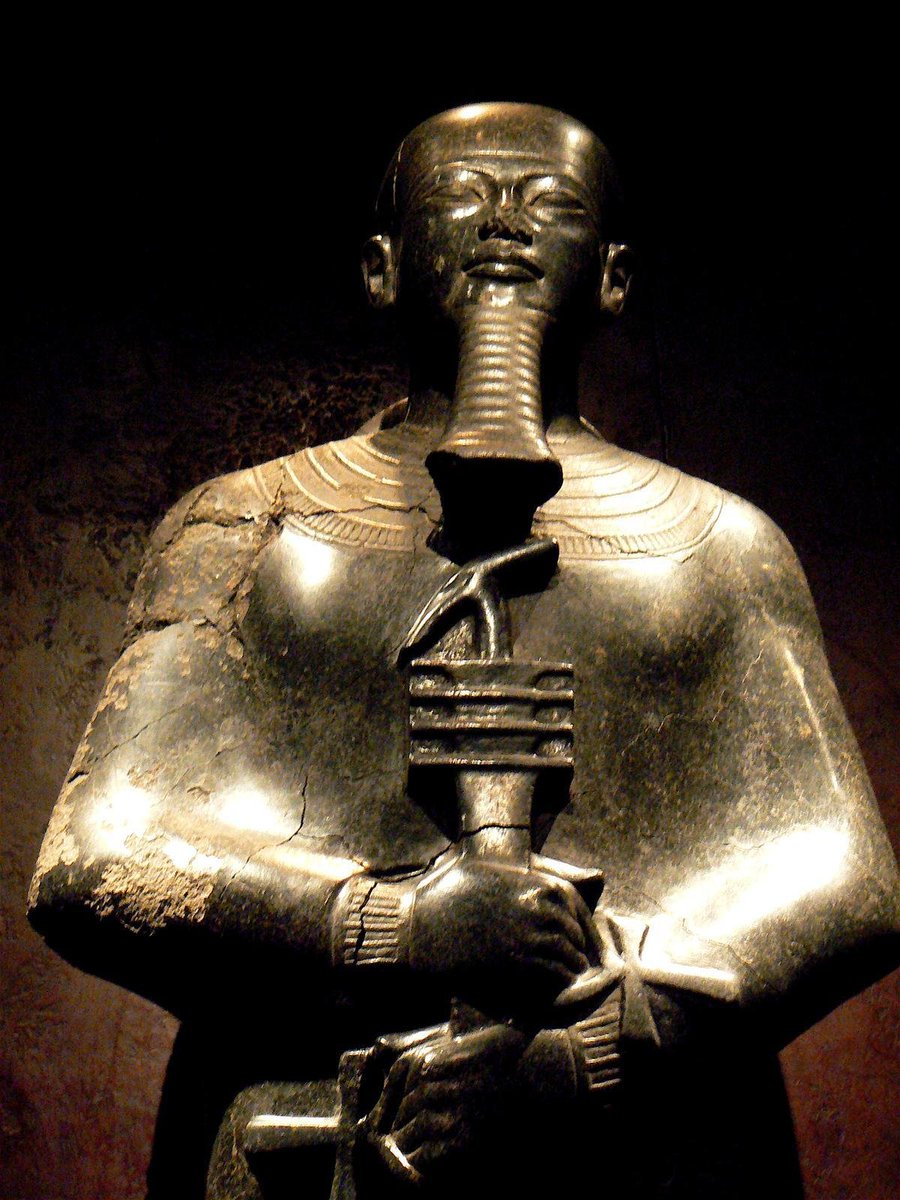
Ptah is the Godhead conceived as formgiver or shaper of the material world. For this reason he was the chief god of craftsmen and all workers in metal and stone, and was later to be identified by the Greeks as the blacksmith god, Hephaistos.
The name Ptah probably means “sculptor” or “engraver,” and so we may picture Ptah as God at work in the world, giving to all creatures their forms.
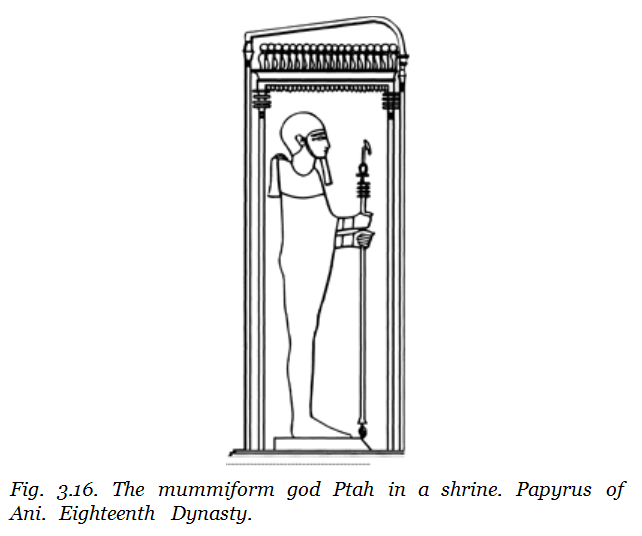
He is usually depicted wearing the skullcap of the craftsman, as in figure 3.16. Here he also stands on a chisel-shaped plinth, which is the special symbol of the goddess Maat, of whom Ptah was said to be the lord.
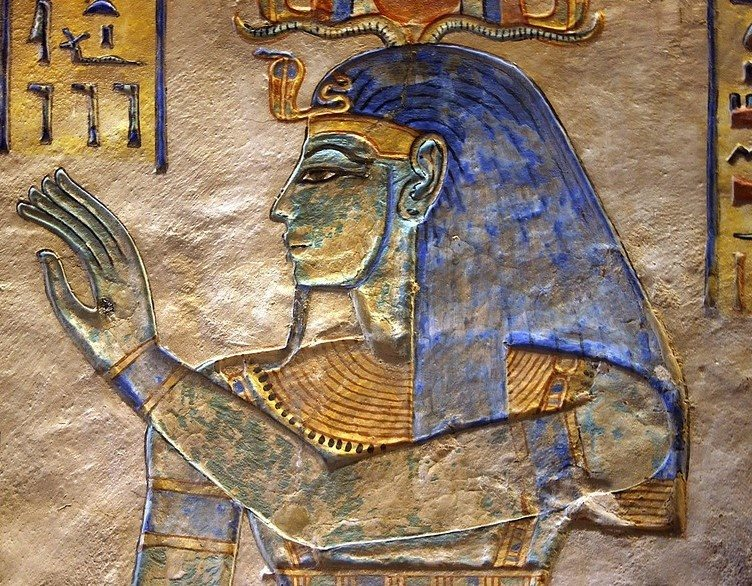
The connection of Ptah with the material world is to be seen especially in his aspect as Ptah-Tatenen, which literally means “risen (or exalted) earth,” a reference perhaps to the Primordial Hill.
Tatenen was comparable in many respects to Geb & often—like Geb—was painted with a green face & limbs. Conjoined with Ptah, Tatenen becomes a creator god, concerned specifically with the final phase of the outpouring of the Absolute into the inert but living matter of the earth.
In a hymn to Ptah-Tatenen, we read:
Thou didst knit together the earth,
thou didst gather together thy members,
thou didst embrace thy limbs,
and thou didst find thyself
in the condition of the One who made his seat,
and who fashioned the Two Lands.
Thou didst knit together the earth,
thou didst gather together thy members,
thou didst embrace thy limbs,
and thou didst find thyself
in the condition of the One who made his seat,
and who fashioned the Two Lands.
It is significant that Ptah is usually represented as a mummiform god, like Osiris, with whom he eventually became identified. Much of the Shabaka Text concerns the relationship of Osiris to Ptah.
But Ptah was linked not only to Osiris but also to Sokar, the god who presided over the very deepest regions of the Underworld.
The Memphite theology thus relates to that aspect of the divine that is most involved in matter, the aspect that has sacrificed a purely spiritual mode of being in order to become crystallized in materiality.
The identification of Ptah with the supreme Godhead is an assumption explicitly made in the Shabaka Text.
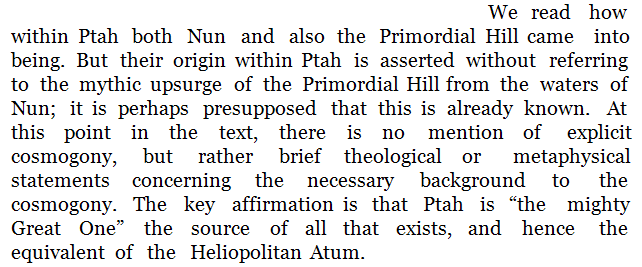
The cosmogony as such begins with these words: “There came into being as the heart and there came into being as the tongue something in the form of Atum.” This can also be translated thus: “In the form of Atum there came into being heart and there came into being tongue.”
Before this “moment,” Ptah is wholly identified with the Absolute Spirit. It is thus in the first emanation of the Absolute Spirit that Ptah assumes the form of Atum. It is as Atum that Ptah becomes creative by bringing into existence the 2 organs of creativity: heart and tongue.
The heart is the organ of thought, the tongue is the organ of speech. As we have seen, these organs were attributed to Thoth in the Hermopolitan cosmogony. In the Shabaka Text, only the tongue is associated with Thoth, the heart belongs to Horus.
It is thus as the trinity Atum-Horus-Thoth that Ptah sets about the work of creation:
The mighty Great One is Ptah,
who transmitted life to all gods,
as well as to their kas,
through this heart, by which Horus became Ptah,
and through this tongue, by which Thoth became Ptah.
The mighty Great One is Ptah,
who transmitted life to all gods,
as well as to their kas,
through this heart, by which Horus became Ptah,
and through this tongue, by which Thoth became Ptah.
The first beings brought into existence by this trinitarian Ptah are the company of gods that, the text states, are to be regarded as the teeth and lips of Ptah:
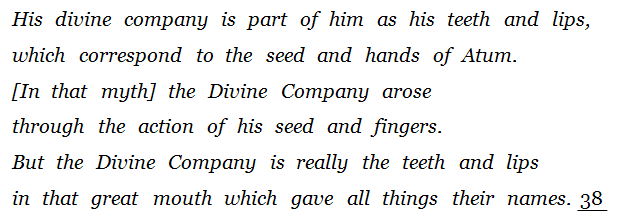
The Divine Company, or Ennead, is in this way distinguished from the Heliopolitan Ennead. For the Heliopolitan Ennead arose as a result of Atum’s act of procreation, whereas the Memphite Divine Company is identified with the act of procreation.
Just as Horus and Thoth are assimilated into the being of Ptah, so also is the whole company of gods. The spiritual world of gods is grouped together as one with Ptah the world creator. They are all instruments of the one supreme god’s creative thought and deed.
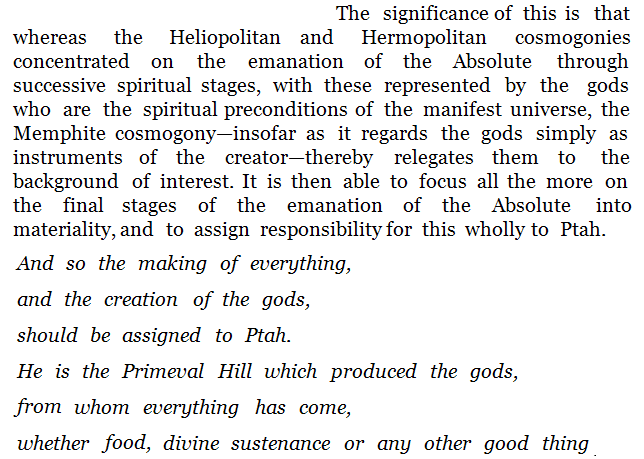
It is precisely because the gods, who in the other 2 cosmogonies stood as intermediaries between the supreme Godhead & creation, are here assimilated into the Godhead that stress is laid on the immanence of the Godhead in creation. God is the “heart” and “tongue” of all creation:
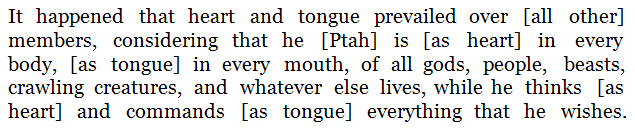
Since it is “in the form of Atum” that “there came into being heart and there came into being tongue,” it can be seen that from the Memphite perspective Atum (or Ptah in the form of Atum) is brought down to earth, and regarded as immanent within all creation.
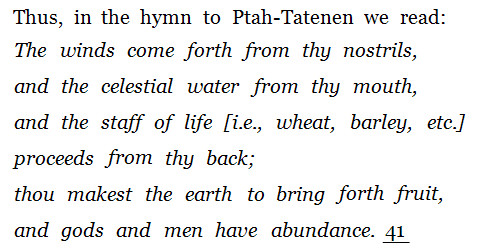
The emphasis on the immanence of Ptah extends beyond the natural world to the realm of human conduct. The Shabaka Text states:
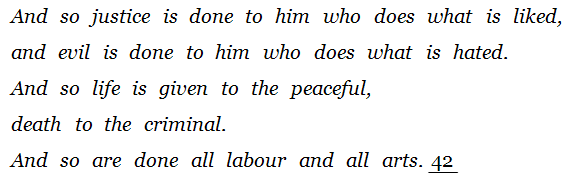
Ptah’s involvement in the material world ramifies into the details also of religious life, down to the determining of the shapes in which the gods are to be worshipped, and the materials from which their statues are to be made, since these “grow” upon him as the earth god:
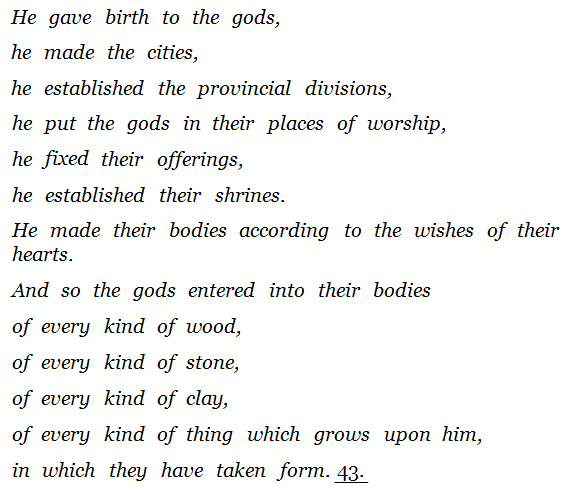
This kind of attention to detail is the special prerogative of Ptah, who is lovingly involved with the material world. The Memphite cosmogony presents us with the fulfilment of the divine creative process, the final embodiment of the divine substance in material form.
Viewed in this light, the cosmogonies of Heliopolis, Hermopolis, and Memphis do not appear as rivals so much as complementary aspects of a greater cosmogonic scheme in which different phases of the emanation of the divine into material manifestation are given emphasis.
Loading suggestions...