

1. Fathers, Sons and Fireworks on #Diwali
Fireworks are ancient. In one form or another, they have always been present to signal our enthusiasm to the big wide world on a happy occasion. We have industry made fireworks now but in one way or another they have always been with us.
Fireworks are ancient. In one form or another, they have always been present to signal our enthusiasm to the big wide world on a happy occasion. We have industry made fireworks now but in one way or another they have always been with us.

2. Fireworks is my first memory of Diwali. It is what I used to wait for. We did not have a tradition for buying new clothes on Diwali and children as young as me were seldom interested in clothes. Food was also something in which I was hardly interested. Fireworks were my focus.
3. In those days, the cracker shops would open almost a month before Diwali. And we would gather them over the period of the month. It was scarcely possible for buying them in one go. The excitement was palpable all over the colony.
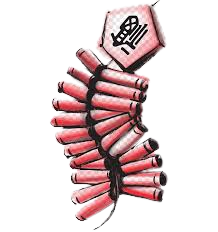
4. Everyone would be proud of his collection and would view with envy and jealousy the growing collections of our neighbours. We would carefully scan everyone’s collection to decide what we were missing.

5. There was that Anar Bomb, which exploded after the Anar was done with its fireworks. It was a new addition in my childhood and it was the envy of the colony whoever got it first.

6. The fireworks had to be properly dried in the Sun otherwise they wouldn’t go off well. It was also an opportunity to show them off to the neighbours. In times before multi-storey apartments everyone had terraces and everyone displayed them on the terraces.
7. The day would approach us children with an excruciatingly slow pace. Of course we were patient enough to hold off the lighting of the crackers till the grand day.
8. We would light off a few on the two preceding day but Diwali was the grand day. We would wait impatiently while the worship was going on and as soon as it was over we would go off on the terraces to light off our stuff.
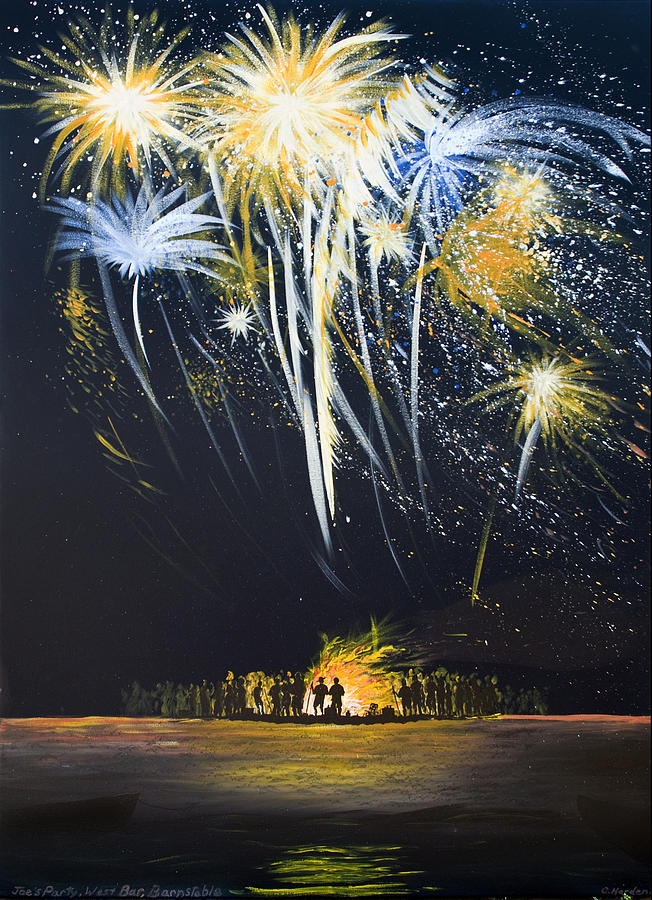
9. It wouldn’t last for more than half an hour. The individual stuff. But after our fireworks were over, the rest of the city’s wre ours. In an age where scarcely any building was more than two storeys, we would sit on our terraces and witness the Diwali of the entire city.

10. Those wonderful skyshots which would shoot off into the sky for the entire city to see in multiple colors was the crown jewel of the night. We would scream in pleasant terror over every exploding star in the sky, not wanting to miss one as if we had paid for them ourselves.

11. The feeling that we got to witness it all for free was the most pleasant, for in those days children weren’t shielded from the financial condition of their families. What could be best to have the most wonderful spectacle in the sky without having to spend any money on it!

12. There was one big guy in every colony who would spend thousands upon thousands of rupees to buy and fire off multiple of these skyshots. We held him in a mixture of admiration and ridicule.

13. How rich he must be to buy all that stuff and how stupid he must be to buy all that stuff! After all after lighting the match, it was all the same in the sky! How did it matter who lit the match?

14. The class, the elite was necessary to buy the stuff and it bestowed the privilege of lighting the match. But up there in the sky all that elitism would dissolve and explode into the most wonderful display of democracy that we had an experience of.

15. Down here on the stratified earth, we were elite and mass; up there in the democracy of the sky, all was same. Once the firework, woke up and reached the sky, it differentiated between no one, offering its splendour to all equally!
16. The next morning, the children were the first to be up and about, running off to terraces and streets looking for unburst crackers. Oh the sheer joy of finding a scarcely burst cracker, almost intact! And we wouldn’t just look for those.
17. The partially burnt and the almost burnt crackers would also be harvested for the raw ‘barood’ in them. We will collect them and make small firecrackers of our own by packing them in various covers.
Even at such a young age, on Diwali, recycling was something we understood.
Even at such a young age, on Diwali, recycling was something we understood.
18. Fireworks were our entry into the wonderful world of Hindu festivals. It was the children’s way of waking up to a festival, to its importance in our lives. It was our way of understanding that some days are more important than others.
19. And in everyone’s life, it was twice that the fireworks would become important for us. Once when we were children and then again when a young boy became a man, married and had children.
20. For a young father nothing brought greater joy than leading his 2.5 or 3 years old kid to light his first firecrackers, to light the first sparkler, to light the first bomb.
21. It was a rite of passage and every father was as absolutely thrilled for the occasion when he would be able to guide his son into an age of relative maturity and adventure into the wonder that is life.
22. It was actually one of the first moments of bonding between the father and son, a beginning of a lifelong relationship. It was one of the first things that sons did exclusively with fathers, in our region.
23. Poverty didn’t matter. Even the poorest of kids had some firecrackers. There were those 100 firecrackers for 4 rupees which a family would buy and the children would love them. The ritual was considered so important no one would even think of not having firecrackers.
24. But it makes me sad that so many fathers won’t have that chance this Diwali. That so many fathers will state with sadness after Diwali Pujan to their sons, that they were unable to procure fireworks anywhere.
25. It feels suffocating and emasculating to think that in our own country, in our own cities, in our own homes, we aren’t allowed to lead our sons into a beautiful rite of passage, on the most important Hindu festival...
26. We have come a long way indeed. The effect of decades of de-Hinduization has resulted in a generation of barely nominal Hindus who don’t even make a murmur when attacks like these take place on his customs and traditions and his festivals.
27. But hope is never lost. It is never completely dark. Evil is never finally victorious. For that is not the Nature of the Universe. And life...
Many states have proudly proclaimed that burning firecrackers is a great tradition and Hindus shall go ahead with it.
Many states have proudly proclaimed that burning firecrackers is a great tradition and Hindus shall go ahead with it.
28. Contrasting this with the condition two decades back when this campaign actually started and all political leaders of all political parties would lend their hand to a ‘quiet Diwali’, this is a good sign.
29. We have to rise. We have to show our Hinduness. We have to show we care for our rituals, our traditions, our festivals, our lifestyle. And once we do that, even our enemies will be scared in attacking us and our rituals.
30. Procure fireworks wherever you can if you are in a state which bans them. Initiate your sons and daughters in this ritual. Tell them that this is for a reason, to make a stand.
And one day, we shall, by Rama krupa, will be living in a Hindu country.
And one day, we shall, by Rama krupa, will be living in a Hindu country.
31. And hope there is, for Shri Rama returns to his capital once again after the longest Vanavasa he ever had. We are making the grand Rama temple! It can’t be without meaning, hope, and good tidings. Shri Rama has returned. Remember that once it seemed almost impossible.
32. And so shall the fireworks. Jai Shri Rama! We shall celebrate Diwali in a Hindu country once again.
#HappyDiwali to all of you! We shall conquer and destroy our enemies like Shri Rama did!
===
#HappyDiwali to all of you! We shall conquer and destroy our enemies like Shri Rama did!
===

Loading suggestions...