

🔍 TACTICAL COMPARISON
🔵 Napoli pressing structure VS AS Roma low build-up phase 🟡🔴
Which strategy both teams implemented to annihilate each other’s best asset ?
🧵
🔵 Napoli pressing structure VS AS Roma low build-up phase 🟡🔴
Which strategy both teams implemented to annihilate each other’s best asset ?
🧵
I. NAPOLI PRESSING STRUCTURE
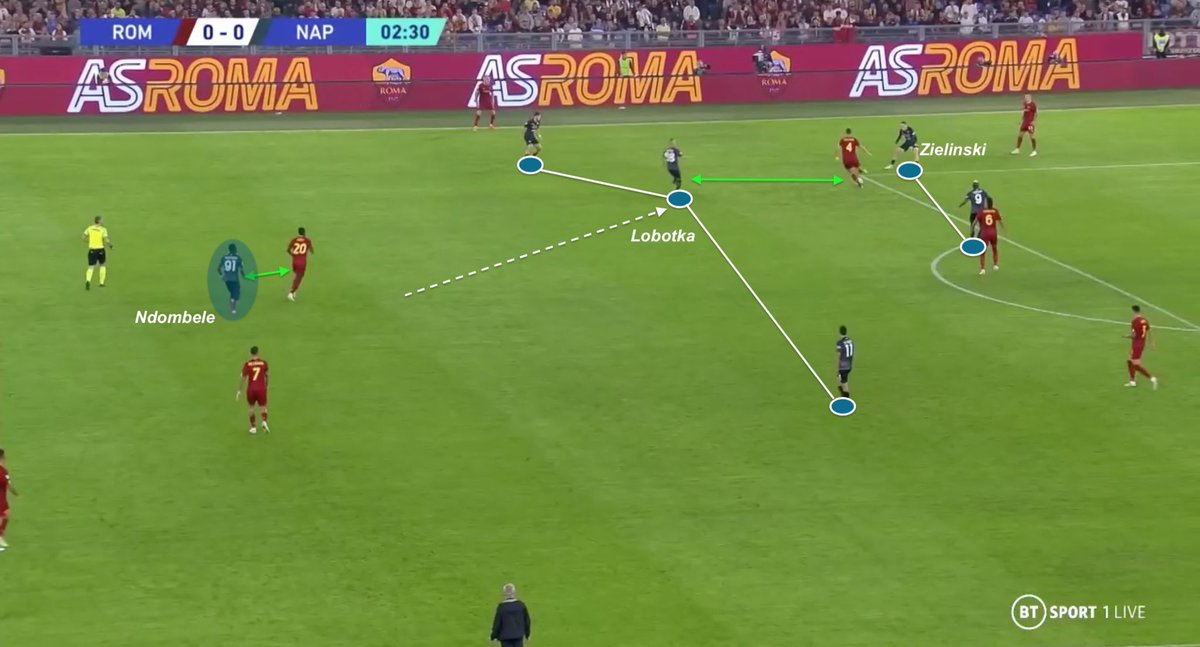
Napoli didn’t change its regular pressing structure, adapting well to Roma’s 3-2 structure in build-up. Lobotka and Ndombele had to follow each drop-off from Cristante and Camara, regardless their initial positioning.
Napoli didn’t change its regular pressing structure, adapting well to Roma’s 3-2 structure in build-up. Lobotka and Ndombele had to follow each drop-off from Cristante and Camara, regardless their initial positioning.
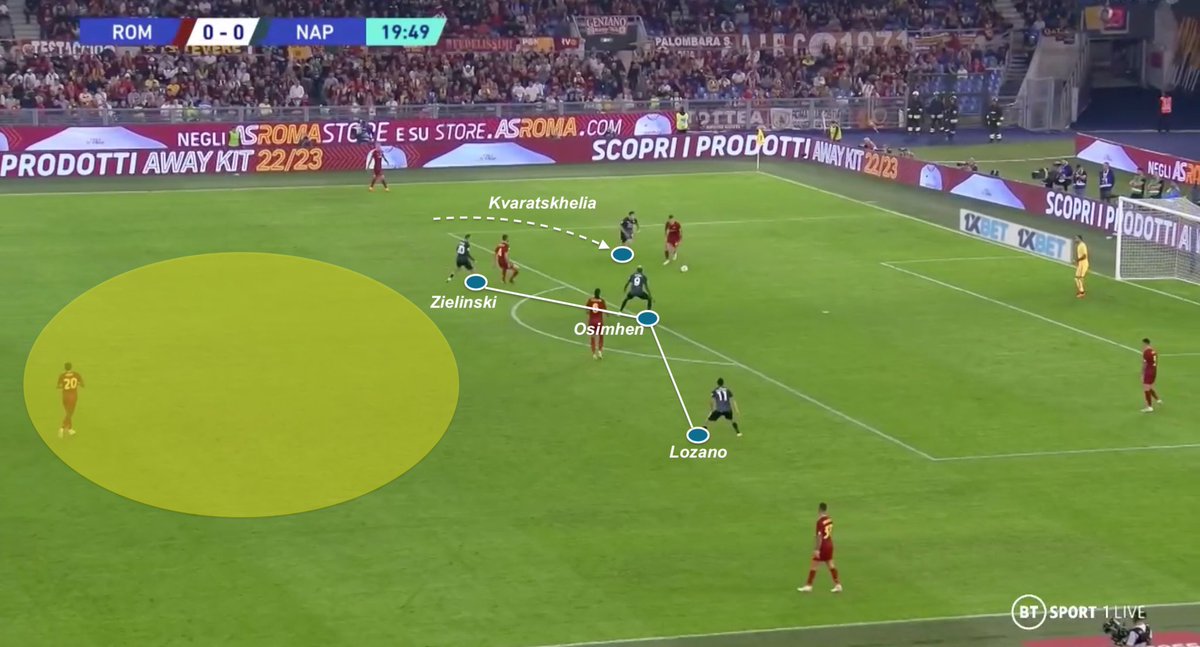
When one winger decided to start a high press, the other had to stay on the channel, withdrawn position, to cover wide positioning from wingbacks. Osimhen initiated pressing triggers, alongside Zielinski and Lozano (more frequently).
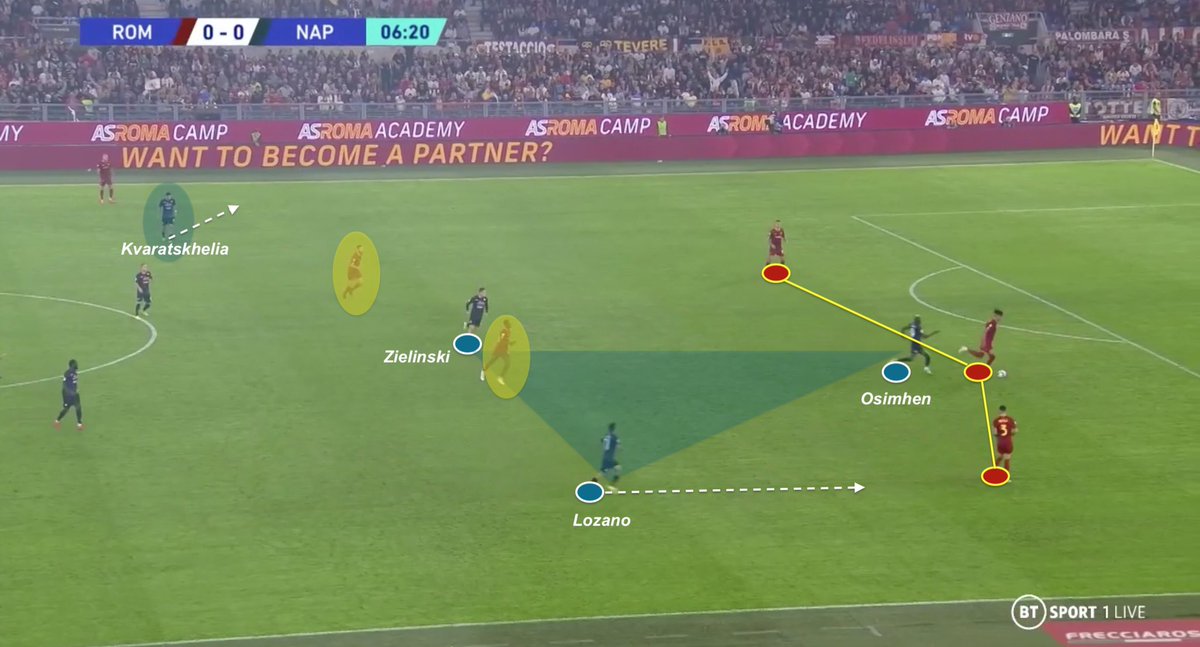
Why did Napoli duplicated Roma’s low build-up structure with man-oriented press? Because of high positioning from Karsdorp and Spinazzola, Roma wanted to play long balls to target them. If Spalletti put man-oriented press, it limited the risk of reaching them.
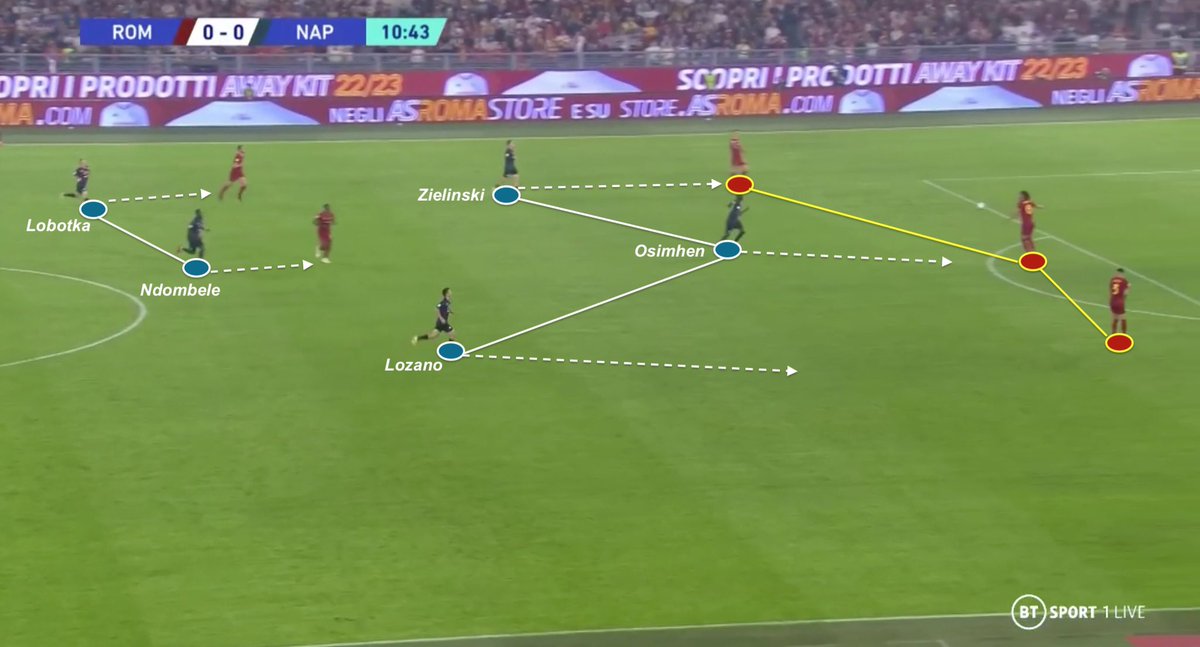
Roma has been surprised and we could have seen a lack of involvement from other players out of this 3-2 build-up shape (few drop-offs). Napoli took advantage from it to recover the ball higher on the pitch.
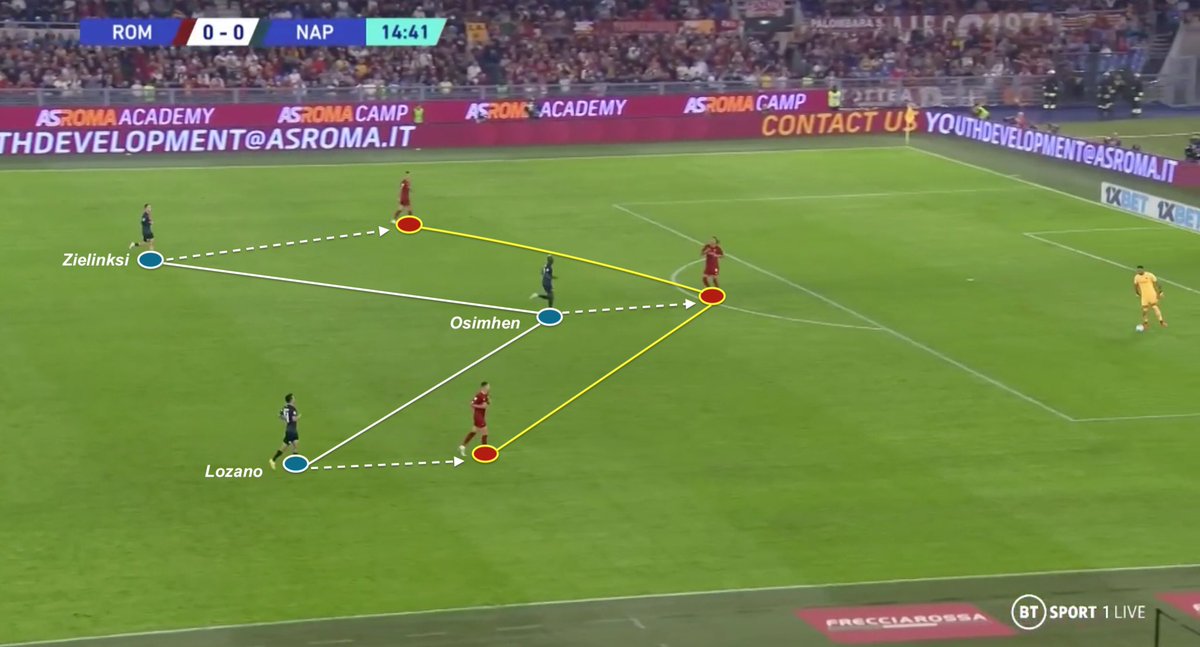
However, Napoli’s 4-5-1 in mid third allowed Roma’s central defenders (here Mancini) to give precise long balls to take advantage in large spaces b/w Napoli defensive lines. It eased out pass combinations with Spinazzola and Pellegrini.
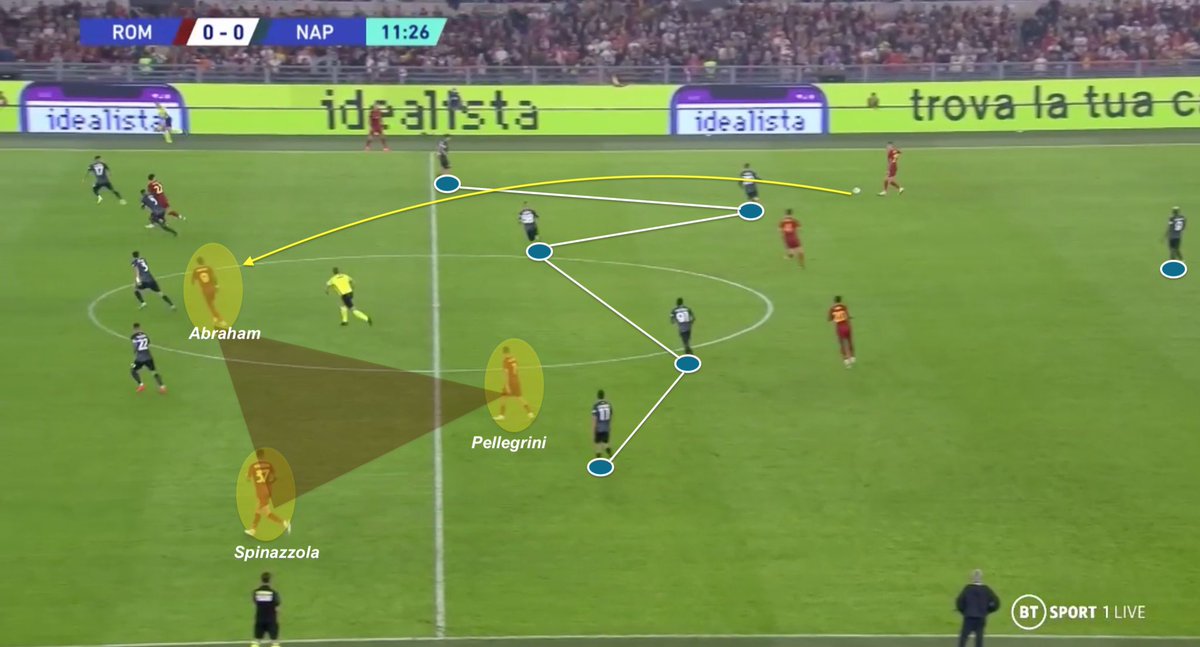
Despite tactical repositioning (Camara as Left Wingback, while Spinazzola stepped up as left winger) Napoli’s pressing structure prevent Roma to find the player who had enough time to do long balls in direction of wingbacks or Abraham (we will dissect it later)
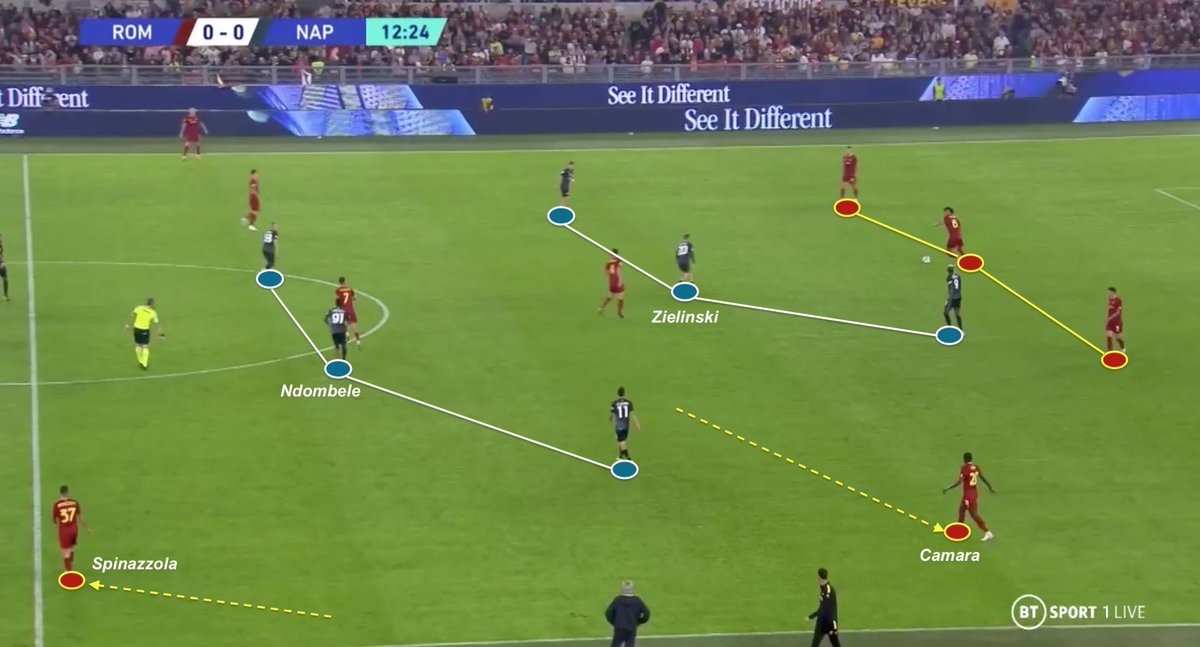
Napoli, during the first 15 minutes, understood Roma tried to avoid pressing structure by targeting free zone with Camara to catalyze build-up. That’s why Spalletti decided to settle BOTH wingers higher, and Zielinski replacing Lobotka in Cristante’s individual marking.
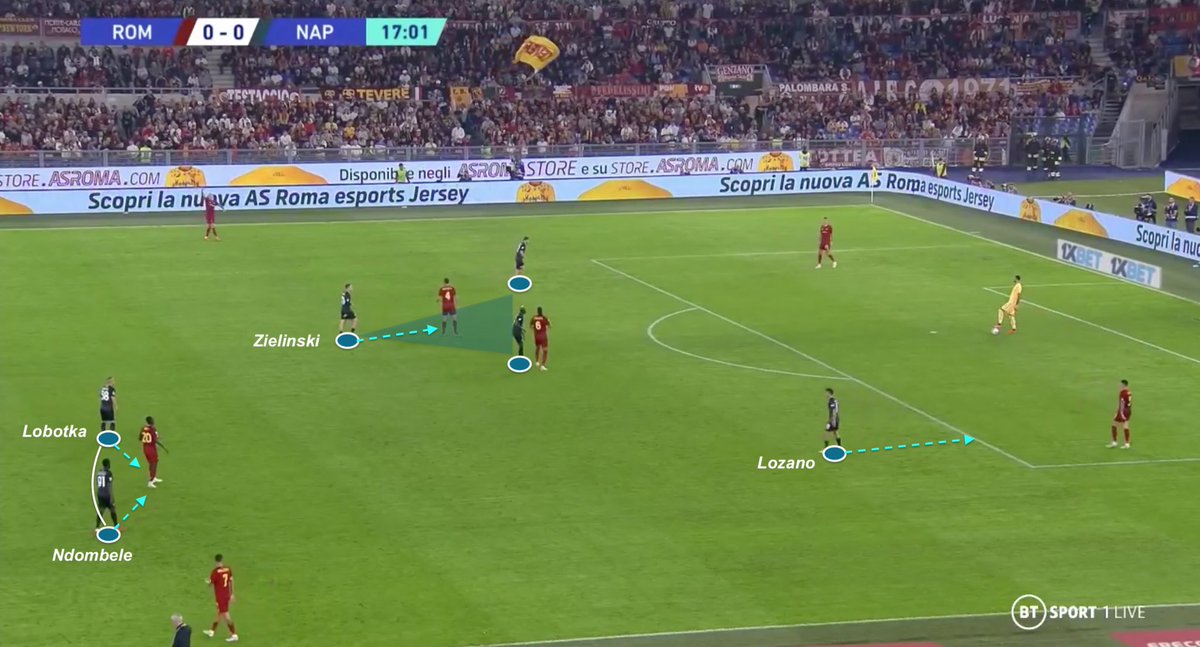
Given Cristante was constantly under pressure with a reduced activity, Ndombele’s man-marking on Camara has been fundamental to maintain balance in Napoli’s high pressing structure.
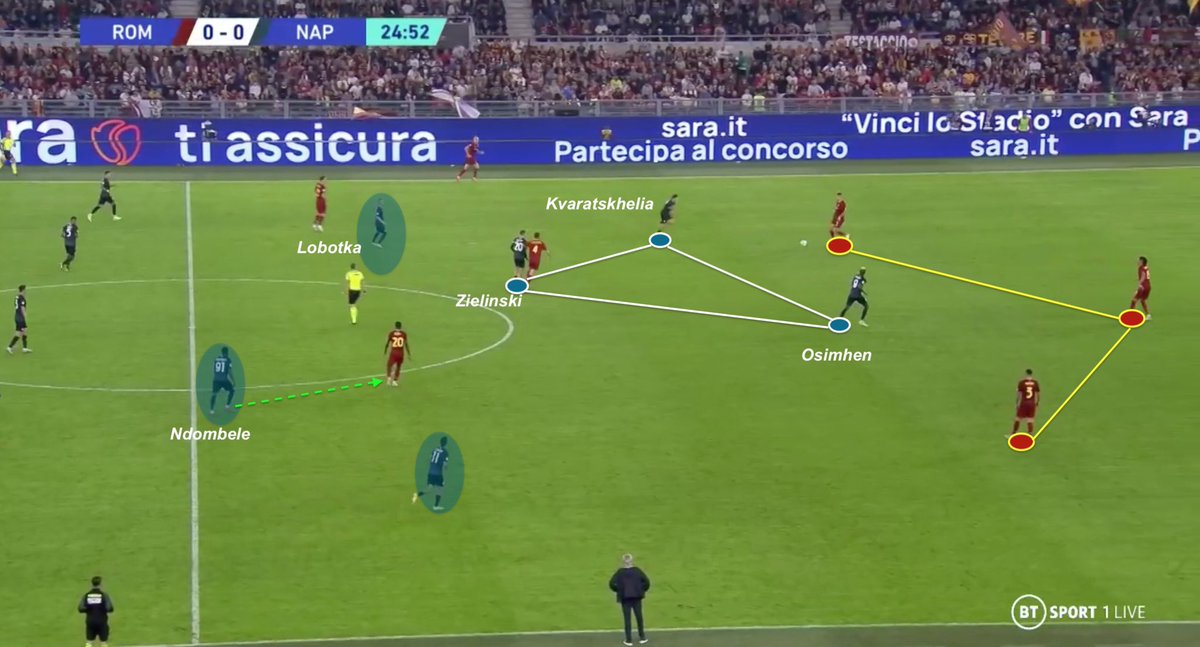
II. ROMA’S LOW BUILD-UP PHASE.
As I sais earlier, Napoli’s man-oriented press has been efficient mostly due to wingbacks’ too high positioning. That’s why Spinazzola frequently dropped off to switch Roma’s build-up into a 4 at the back.
As I sais earlier, Napoli’s man-oriented press has been efficient mostly due to wingbacks’ too high positioning. That’s why Spinazzola frequently dropped off to switch Roma’s build-up into a 4 at the back.
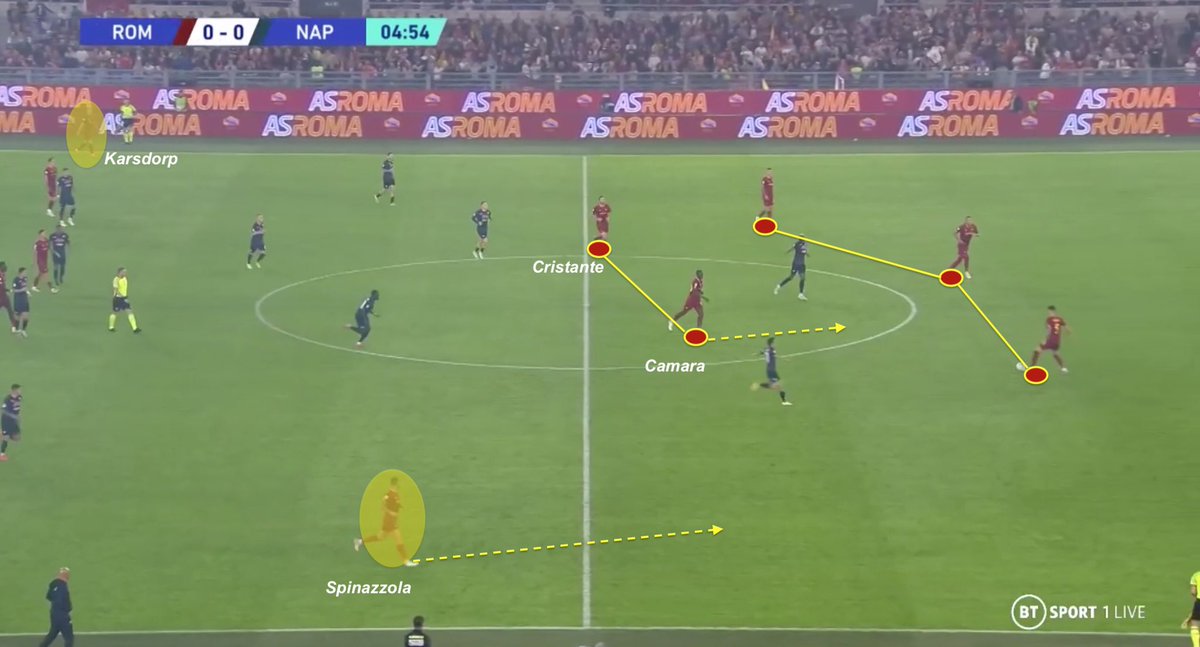
As we regularly see in 3atb systems, Smalling behaved as a #6 role in first phase of possession (replaced by Rui Patricio) to form a new double pivot, so Camara could move in free zones to receive the ball.
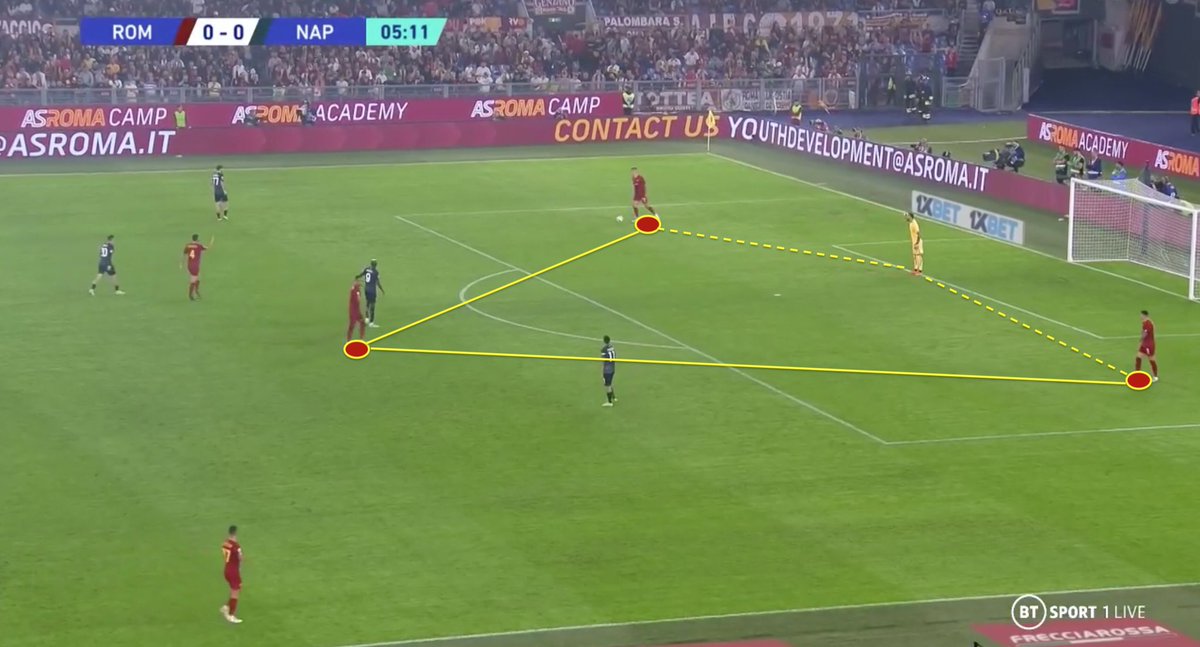
Mourinho knew Spalletti will not let his ball carriers enough time to address long balls. That’s why Roma’s plan was waiting for the perfect moment to do the vertical pass which will dismantle whole Napoli’s high block (Tammy back to goal, Pellegrini-Spinazzola in free space).
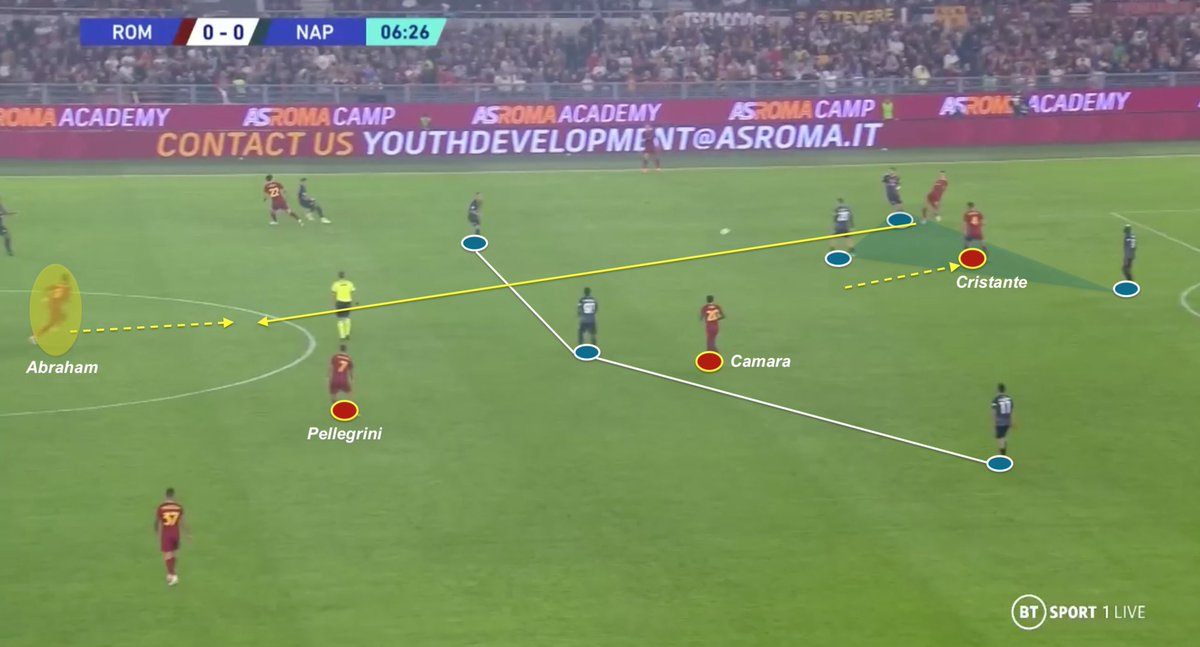
Napoli did an impressive job in cover-shadowing Roma’s double pivot. Cristante, so precious in first phase of build-up, couldn’t orientate possession as usual. Roma had to find alternatives to create that vertical passing angle to reach Abraham or wide wingbacks.
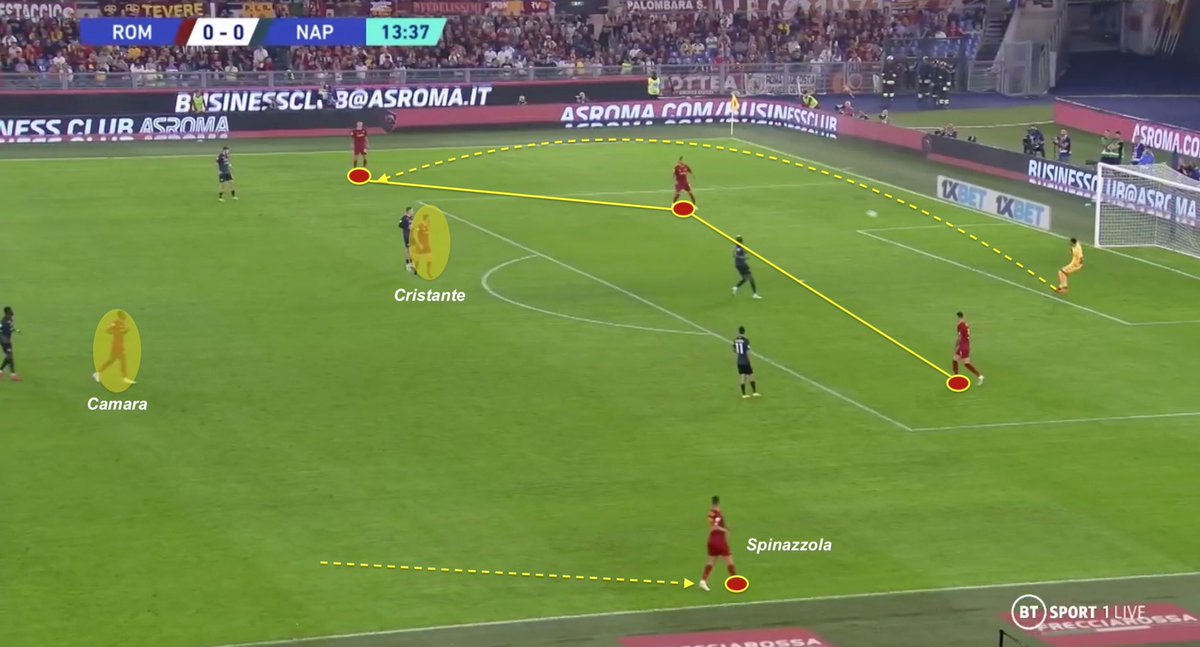
These short passes could seem useless, but they were key to :
- first of all, force Napoli’s 3-2 pressing shape to make a decision between positional and agressive structure.
- Given Kvara low position to watch left channel, Spinazzola prepare to receive the key pass (Mancini)
- first of all, force Napoli’s 3-2 pressing shape to make a decision between positional and agressive structure.
- Given Kvara low position to watch left channel, Spinazzola prepare to receive the key pass (Mancini)
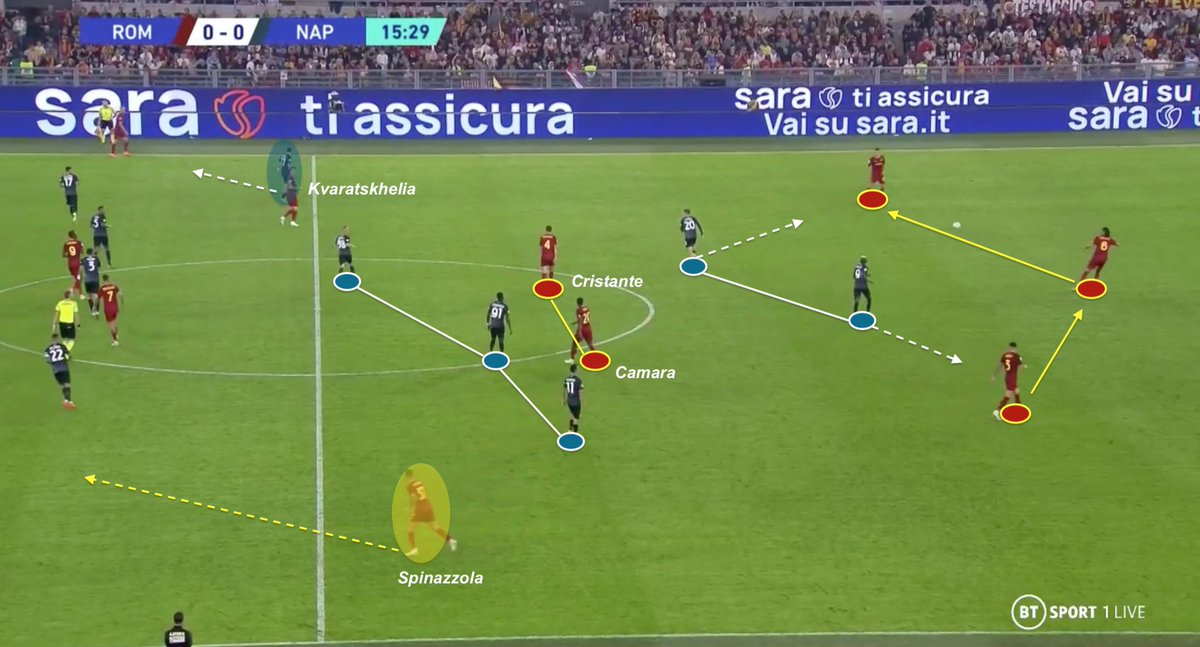
Kvarathskelia didn’t participate too much in pressing phase. But when he did, his aggressive runs really jeopardized Roma’s build-up. Yet, it was at this precise moment Roma had to find that yellow zone, huge space left by Napoli’s high block (Camara alone).
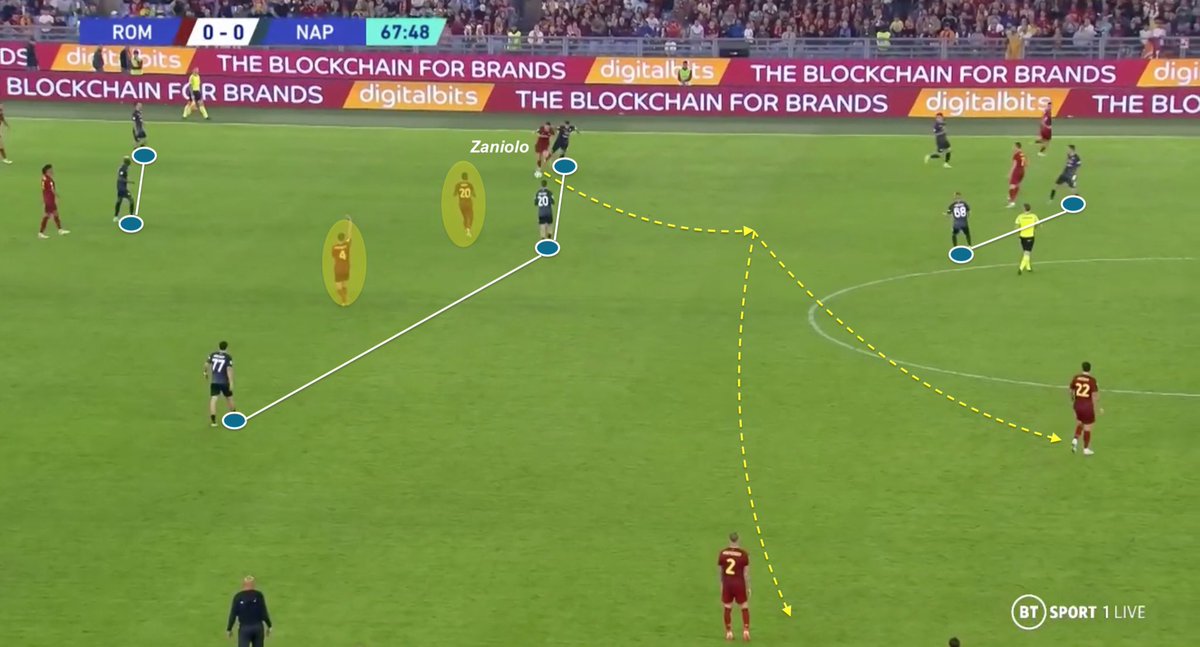
In second half, Zaniolo did what he should have done in first half: drop deep to participate in first build-up phase, and thanks to his press resistance, break Napoli’s lines of pressure. Therefore, wingbacks and forwards could receive the ball more often and ease out transitions
Loading suggestions...