

History 🧵on two methods of fluid administration devised before IV's were widespread:
These are hypodermoclysis (infusion into the subcutaneous tissue) and proctoclysis (which is exactly what you think it is).
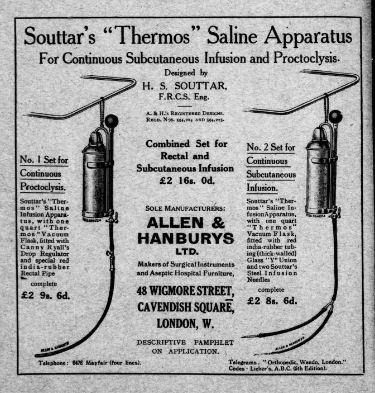
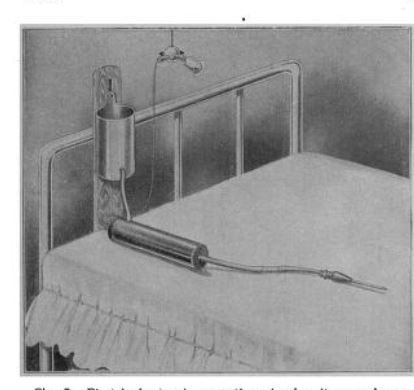
Shown here is a Thermos, but not the one you're accustomed to 🤔
These are hypodermoclysis (infusion into the subcutaneous tissue) and proctoclysis (which is exactly what you think it is).
Shown here is a Thermos, but not the one you're accustomed to 🤔
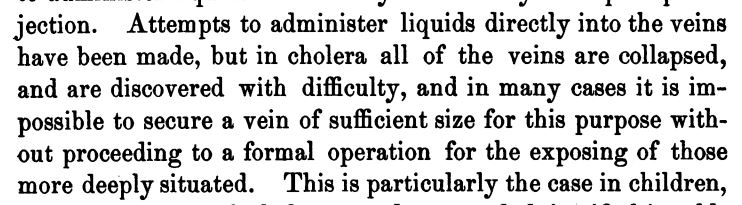
In the 1880's cholera patients could not be hydrated orally and IV access was impractical.
Daland noted that "...the veins are often collapsed" and that "it is impossible to secure a vein of sufficient size".
Central venous access didn't exist, so they turned to other methods.
Daland noted that "...the veins are often collapsed" and that "it is impossible to secure a vein of sufficient size".
Central venous access didn't exist, so they turned to other methods.
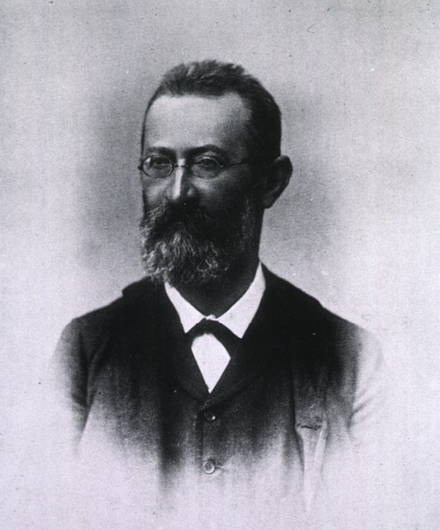
The first widely known description of hypodermoclysis was by Arnaldo Cantani, who treated cholera victims in Naples in the 1880's. His 1894 book is shown here.
He used a 0.6% salt solution, which was infused directly into the subcutanous tissue instead of a vein.
He used a 0.6% salt solution, which was infused directly into the subcutanous tissue instead of a vein.

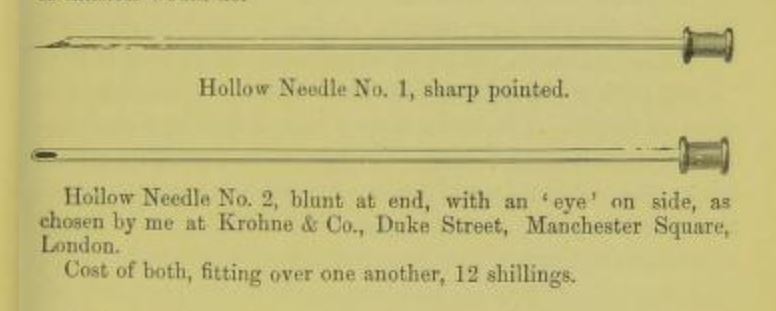
Hypodermoclysis needles were once rather large and unkind, though in 1885 they could be obtained for 12 shillings according to Fayrer.
In modern times, smaller 'butterfly' needles are more common, such as in this photo of a patient getting a subcutaneous infusion into the chest.
In modern times, smaller 'butterfly' needles are more common, such as in this photo of a patient getting a subcutaneous infusion into the chest.
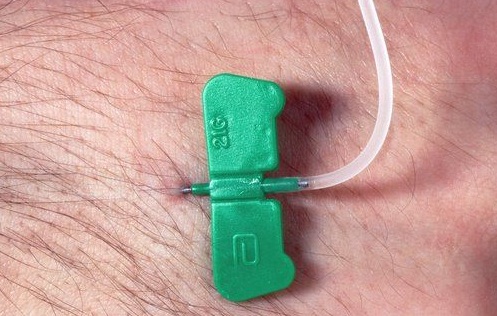
In hypodermoclysis, depending on the infusion volume, several sites could be used, including the torso or multiple extremities.
One older drawing even showed inframammary infusion (modified so it doesn't get a sensitive content label)
One older drawing even showed inframammary infusion (modified so it doesn't get a sensitive content label)
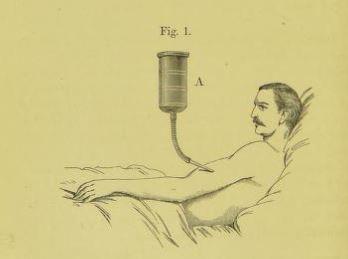
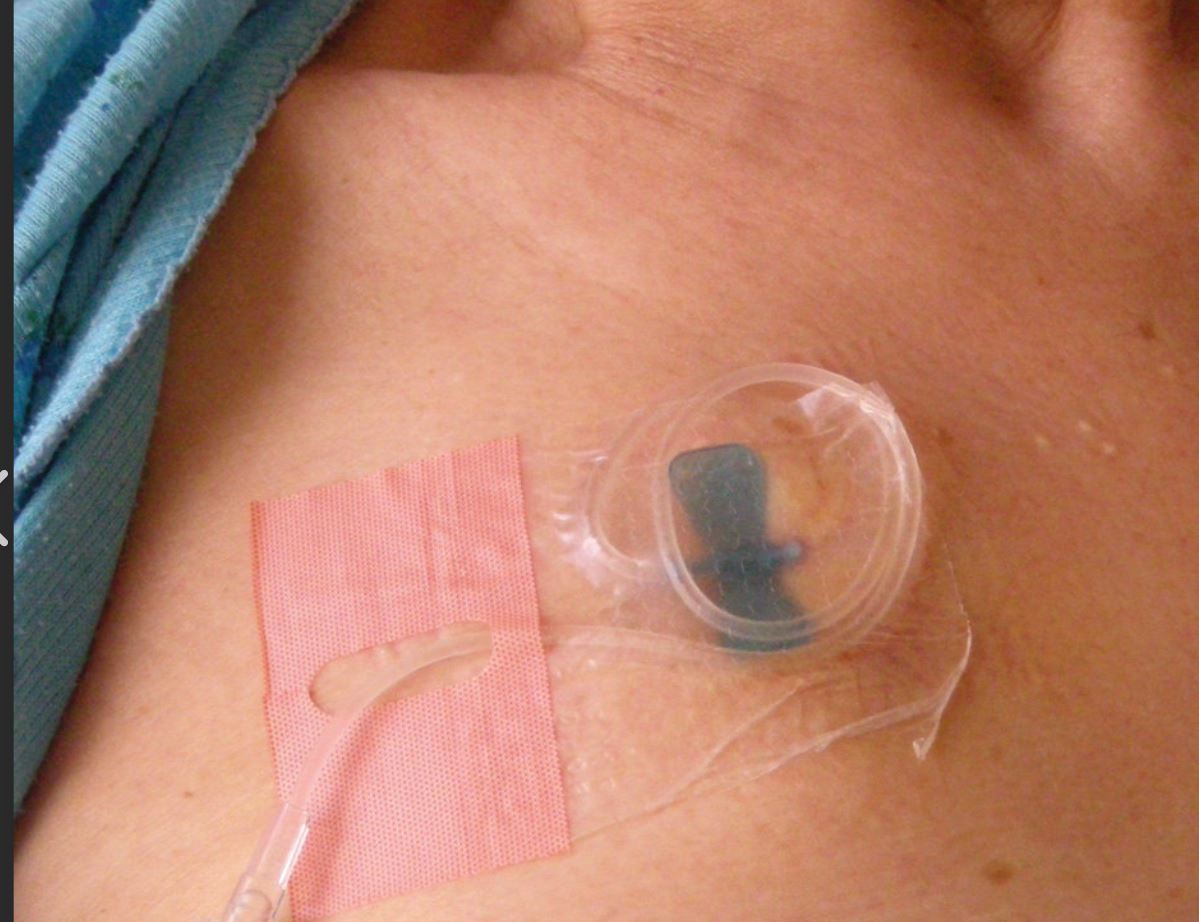
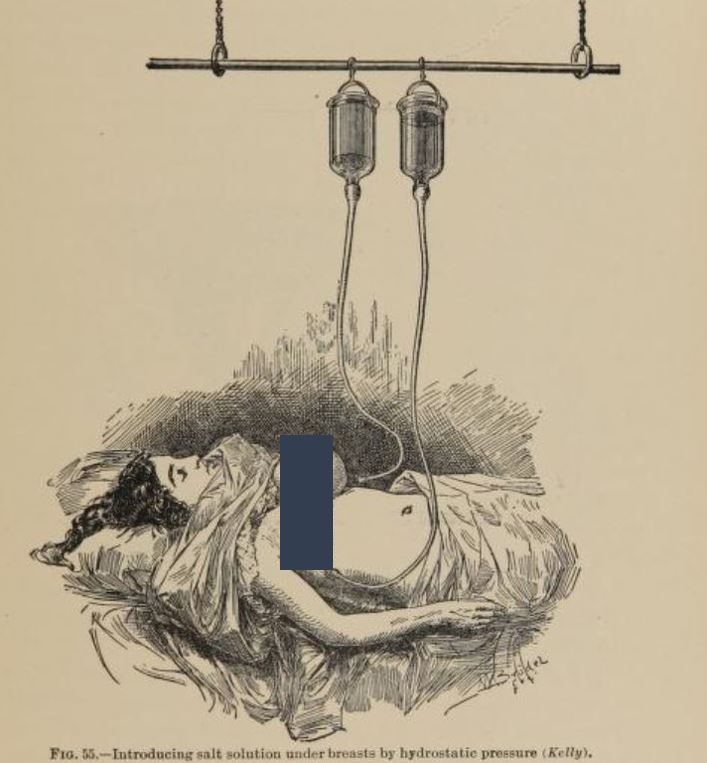
Subcutaneous edema is often seen during hypodermoclysis, as you might imagine.
Early authors noted that this usually resolved in ~45 min, but in some cases might take up to 4 hours.
Abscess formation or other infectious complications are said to be rare.
Early authors noted that this usually resolved in ~45 min, but in some cases might take up to 4 hours.
Abscess formation or other infectious complications are said to be rare.
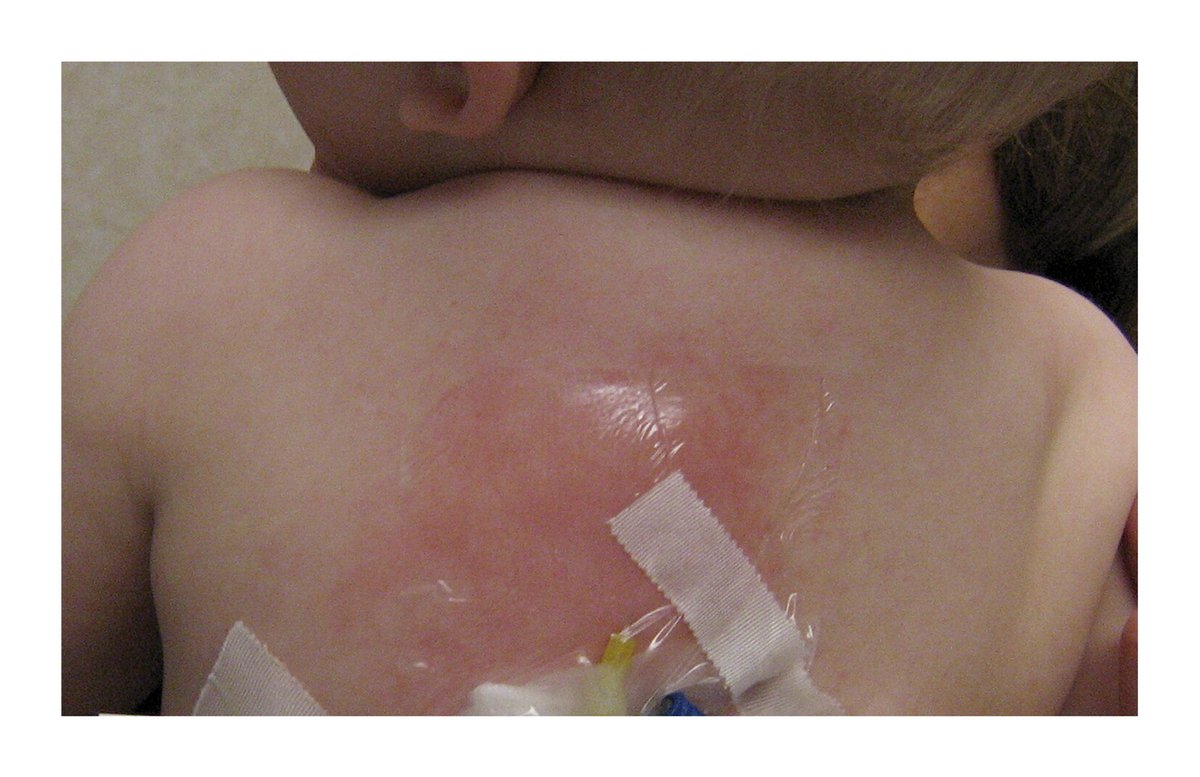
Hypodermoclysis is still used today, and there is extensive literature in geriatrics, palliative care, and for austere environments. Also perhaps in veterinary medicine (I think 😬).
An example review article is shown here:
aafp.org
An example review article is shown here:
aafp.org
Recent Canadian guidelines for hypodermoclysis may be found here:
www2.gov.bc.ca
www2.gov.bc.ca
Proctoclysis (infusion of fluid into the rectum primarily for hydration) was popularized in the US by John Murphy in about 1910.
The technique was quickly adopted for correction of hypovolemia in many disease states.
en.wikipedia.org
The technique was quickly adopted for correction of hypovolemia in many disease states.
en.wikipedia.org
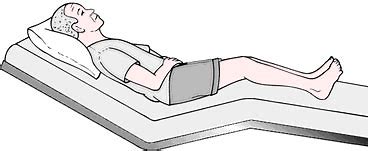
Most of the articles around 1915 or so describe doing proctoclysis in the Fowler position, though left lateral, knees-to-chest, and others were described.
Dr. Fort (1915) described instilling 'salt and coffee' through a catheter using a Fowler position (click to enlarge).
Dr. Fort (1915) described instilling 'salt and coffee' through a catheter using a Fowler position (click to enlarge).

The practice of proctoclysis was important enough at the time that aside from the Thermos apparatus (upper L), there were many others, such as the Magnuson and Murphy setups (of which 2 variants are shown)
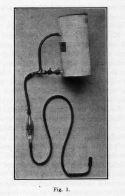
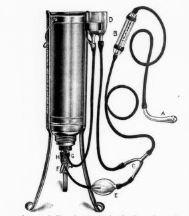
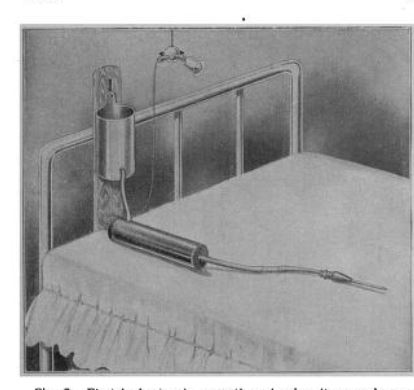
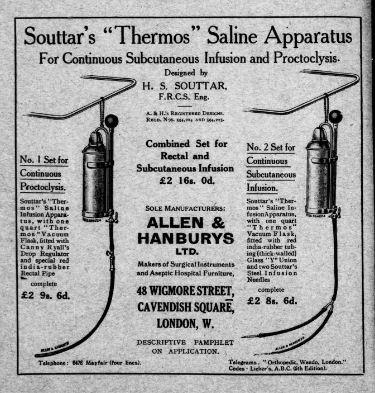
Large volumes were often required, and using room temperature fluid would cause hypothermia. So there was the matter of heating the fluid to the right amount.
One of the more interesting setups involved using an actual *light bulb* to heat the fluid. 💡🧐
One of the more interesting setups involved using an actual *light bulb* to heat the fluid. 💡🧐
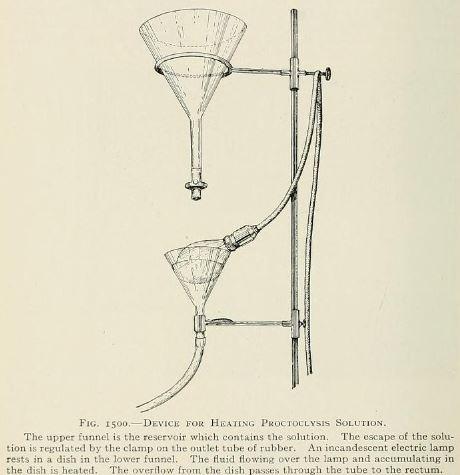
Though proctoclysis is rarely used today, one can find references to its use in situations in which there is no ready access to intravenous cannulas.
Of note, the volume of infusion that can be given is higher in proctolysis (up to 9 liter/day) than it is for hypodermoclysis.
Of note, the volume of infusion that can be given is higher in proctolysis (up to 9 liter/day) than it is for hypodermoclysis.
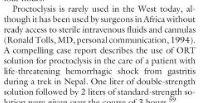
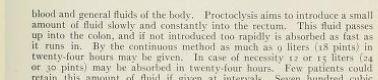
Barr et al recently published a historical overview of the clinical use of rectal nutrition since the mid-1800's. The review is open access and can be found here:
journals.lww.com
journals.lww.com
In Barr's Annals of Surgery Open article (2021), they noted:
"John Deaver opined that 'there is no question that Dr. Murphy’s line of treatment has been responsible for saving more human lives than has any other line of treatment in peritonitis.'
⬛️
"John Deaver opined that 'there is no question that Dr. Murphy’s line of treatment has been responsible for saving more human lives than has any other line of treatment in peritonitis.'
⬛️
Loading suggestions...