

NUCLEAR WASTE IS INCREDIBLY DANGEROUS!
Unshielded & fresh out of the reactor exposure for seconds would result in certain death.
But somehow there has not been a single documented death from storing civilian nuclear waste. Ever.
Here's what you need to know: a 🧵
Unshielded & fresh out of the reactor exposure for seconds would result in certain death.
But somehow there has not been a single documented death from storing civilian nuclear waste. Ever.
Here's what you need to know: a 🧵

We make dangerous things, like nuclear waste, safe.
Consider civil aviation.
In 2019, 4.5 billion passengers took 42 million flights worldwide flying 900km/hr at 30,000 feet in thin skinned, pressurized aircraft often over vast oceans.
There were only 289 fatalities.
Consider civil aviation.
In 2019, 4.5 billion passengers took 42 million flights worldwide flying 900km/hr at 30,000 feet in thin skinned, pressurized aircraft often over vast oceans.
There were only 289 fatalities.

The truth is that it's a lot easier to handle and store nuclear waste than to meticulously maintain an airliner which has over 10,000 mission critical moving parts.

The 1st step of nuclear waste handling involves moving spent fuel underwater from the reactor to spent fuel pools for 5-10 years of storage.
Water is really good at blocking radiation.
As a result fuel handlers get doses less than flight attendants.
@bigcleanenergy/video/7153721007835008298" target="_blank" rel="noopener" onclick="event.stopPropagation()">tiktok.com
Water is really good at blocking radiation.
As a result fuel handlers get doses less than flight attendants.
@bigcleanenergy/video/7153721007835008298" target="_blank" rel="noopener" onclick="event.stopPropagation()">tiktok.com
Waste is then put into thick walled concrete & steel containers called dry casks.
These sturdy dry casks, with no moving parts, and no real maintenance requirements, are then stored on site outdoors or in immaculately kept warehouses like this one @DecoupleMedia visited @opg.
These sturdy dry casks, with no moving parts, and no real maintenance requirements, are then stored on site outdoors or in immaculately kept warehouses like this one @DecoupleMedia visited @opg.
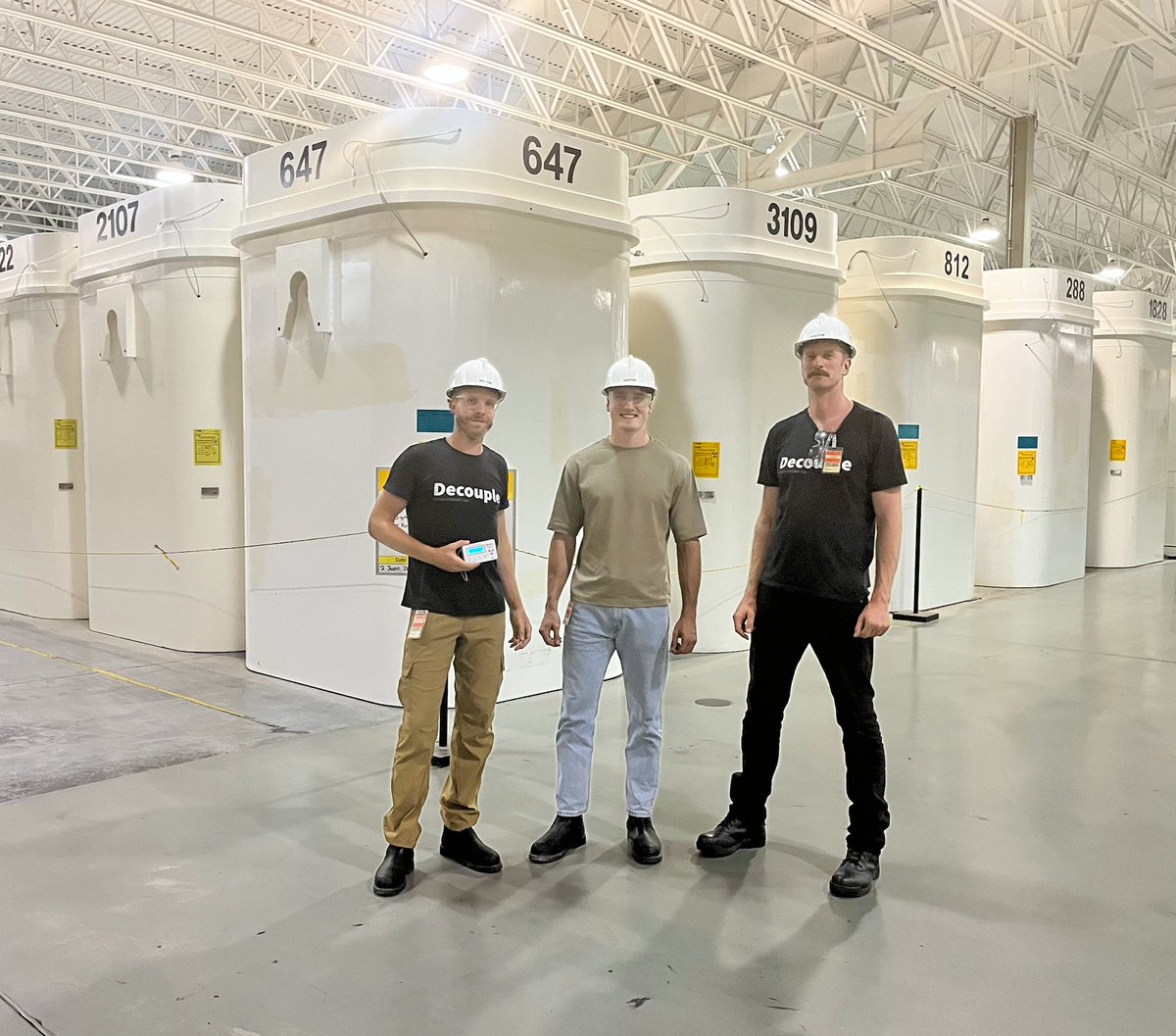
So we've stored nuclear waste safely for the entire history of nuclear power but hey, that's only 70 years.
Isnt this stuff "forever waste?"
Well no actually.
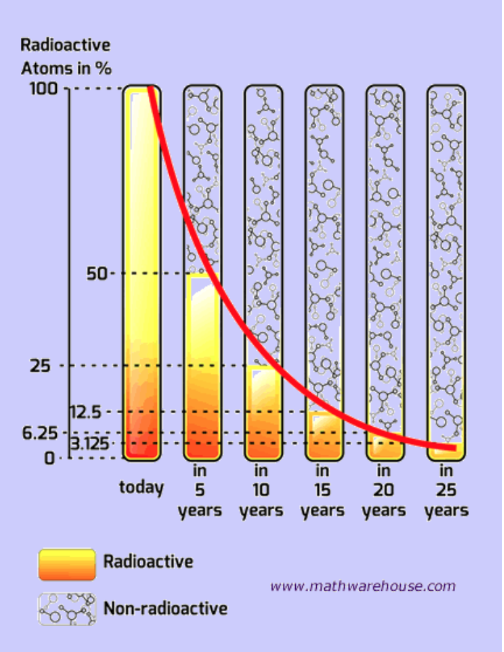
Nuclear waste undergoes exponential radioactive decay meaning that 99.9% of the radioactivity is gone within 40 years.
Isnt this stuff "forever waste?"
Well no actually.
Nuclear waste undergoes exponential radioactive decay meaning that 99.9% of the radioactivity is gone within 40 years.
The dose rate standing 30cm from the fuel will have dropped from 5,900,000 mSv/hr fresh out of the reactor (6000x the universally lethal dose) to 360 mSV/hr (1/30th that lethal dose) in 100 years.
That's still a decent dose rate equivalent to 36 full body CT scans in one hour.
That's still a decent dose rate equivalent to 36 full body CT scans in one hour.
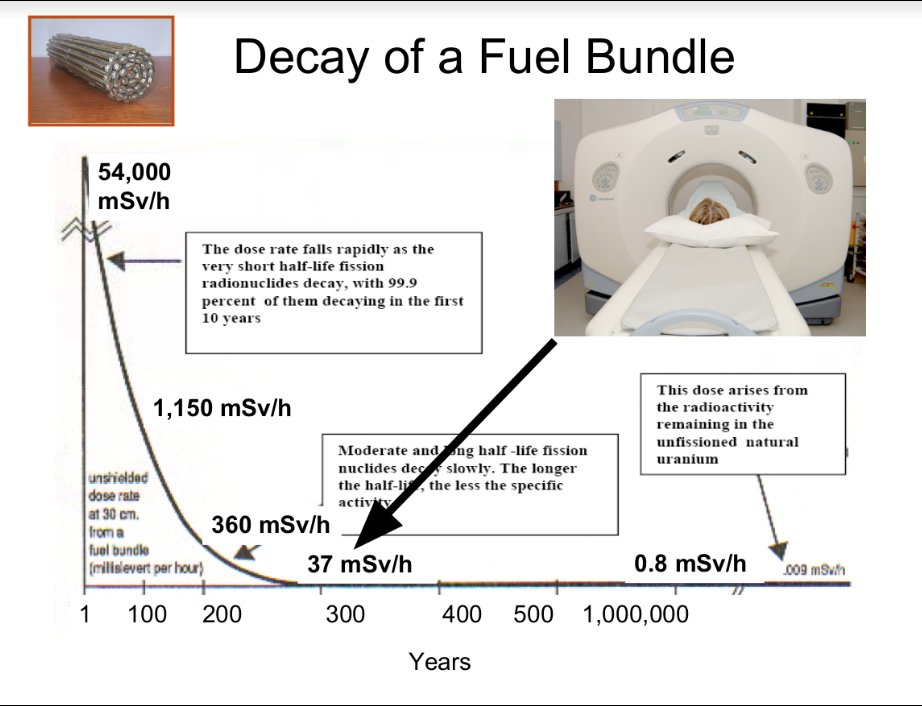
200 years after it comes out of the reactor you would get the same dose standing 30cm from unshielded nuclear waste for one hour as you would receive from four whole body CT scans.
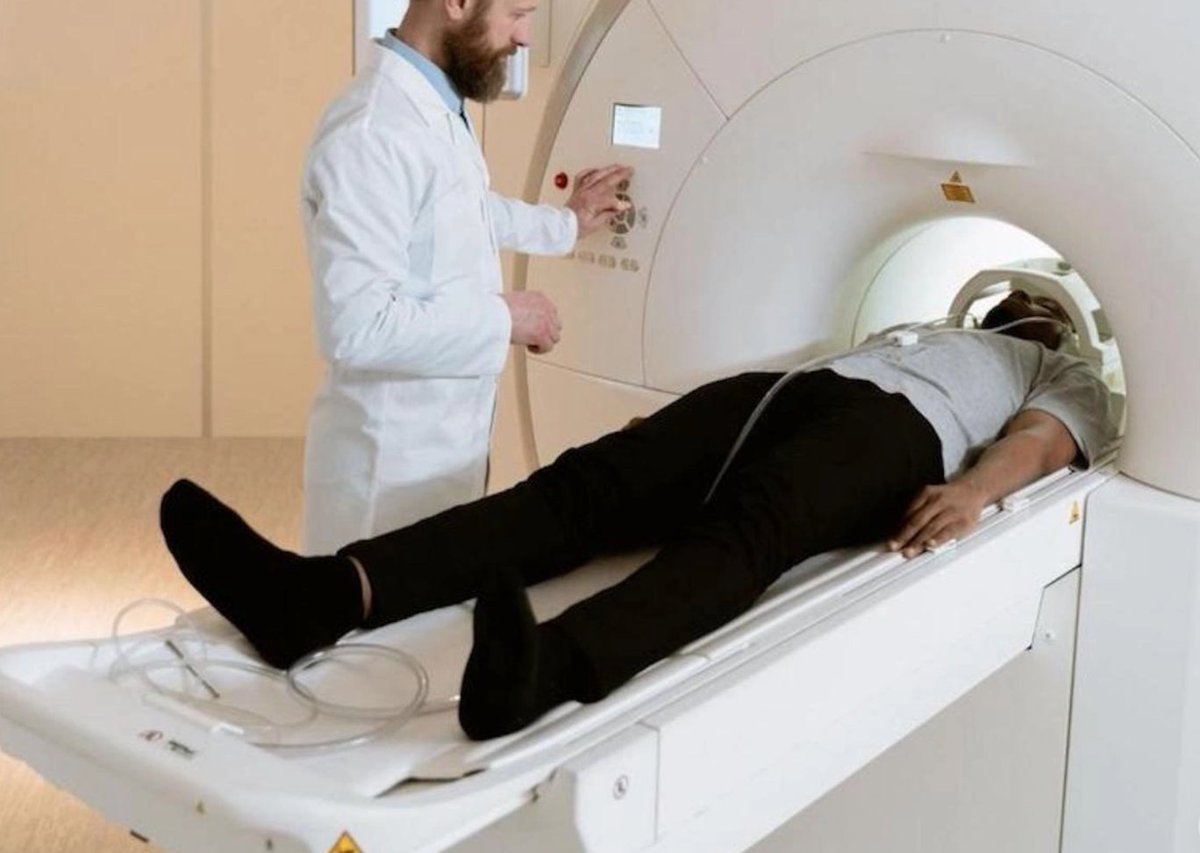
In 600 years you could safely hold spent nuclear fuel in your hands.
This is because the penetrating gamma radiation is almost entirely gone & you're left with mostly alpha radiation which is blocked by even a thin sheet of printer paper or the dead epidermis layer of your skin.
This is because the penetrating gamma radiation is almost entirely gone & you're left with mostly alpha radiation which is blocked by even a thin sheet of printer paper or the dead epidermis layer of your skin.
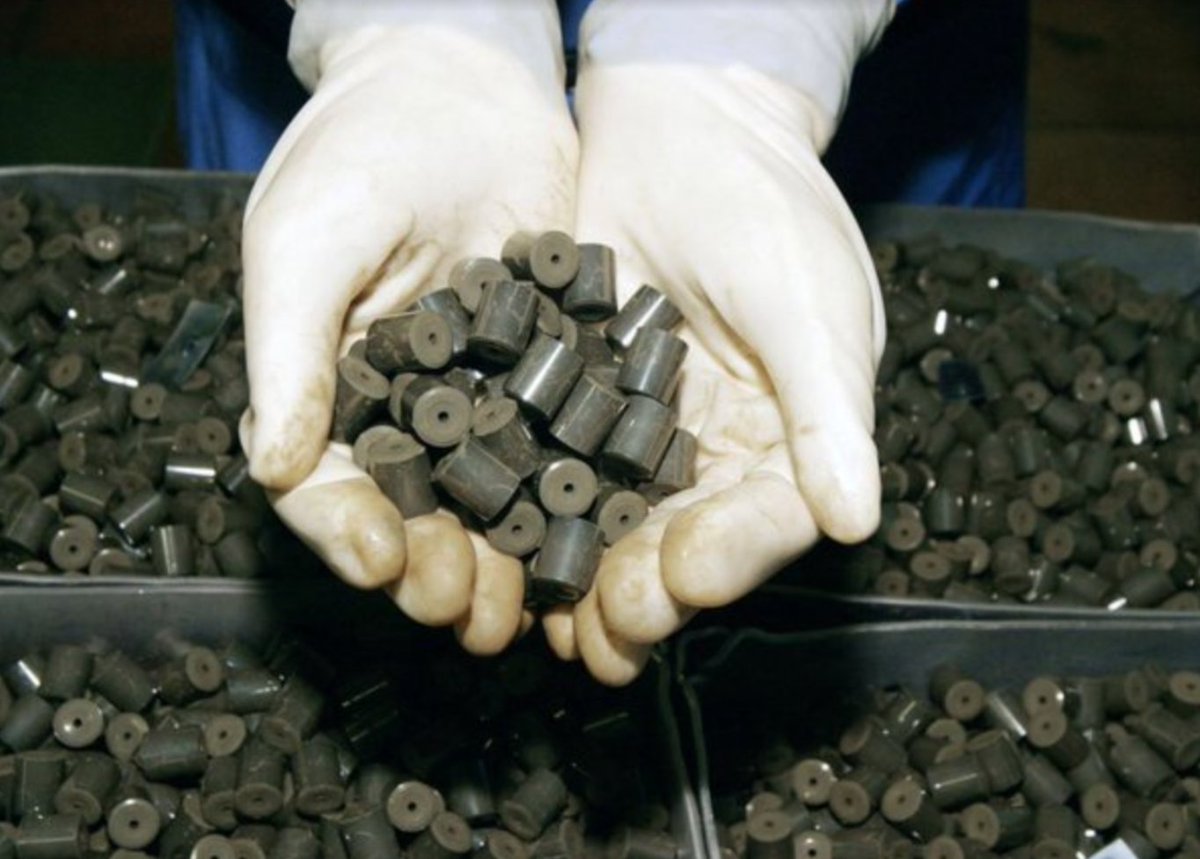
But few civilizations have lasted longer than 500 years. What do we do about the long lived radioisotopes?
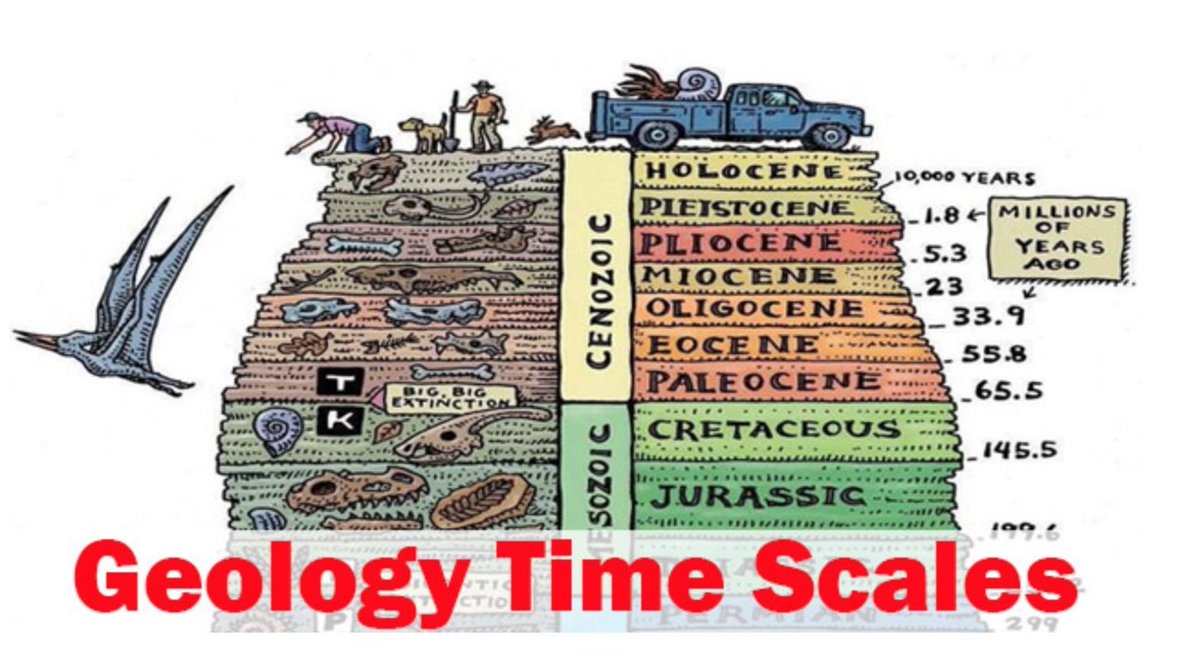
We can move waste from civilizational to geological time scales by burying it in appropriate geology. Should we?
Stay tuned for my next thread on geologic disposal...
We can move waste from civilizational to geological time scales by burying it in appropriate geology. Should we?
Stay tuned for my next thread on geologic disposal...
Loading suggestions...