
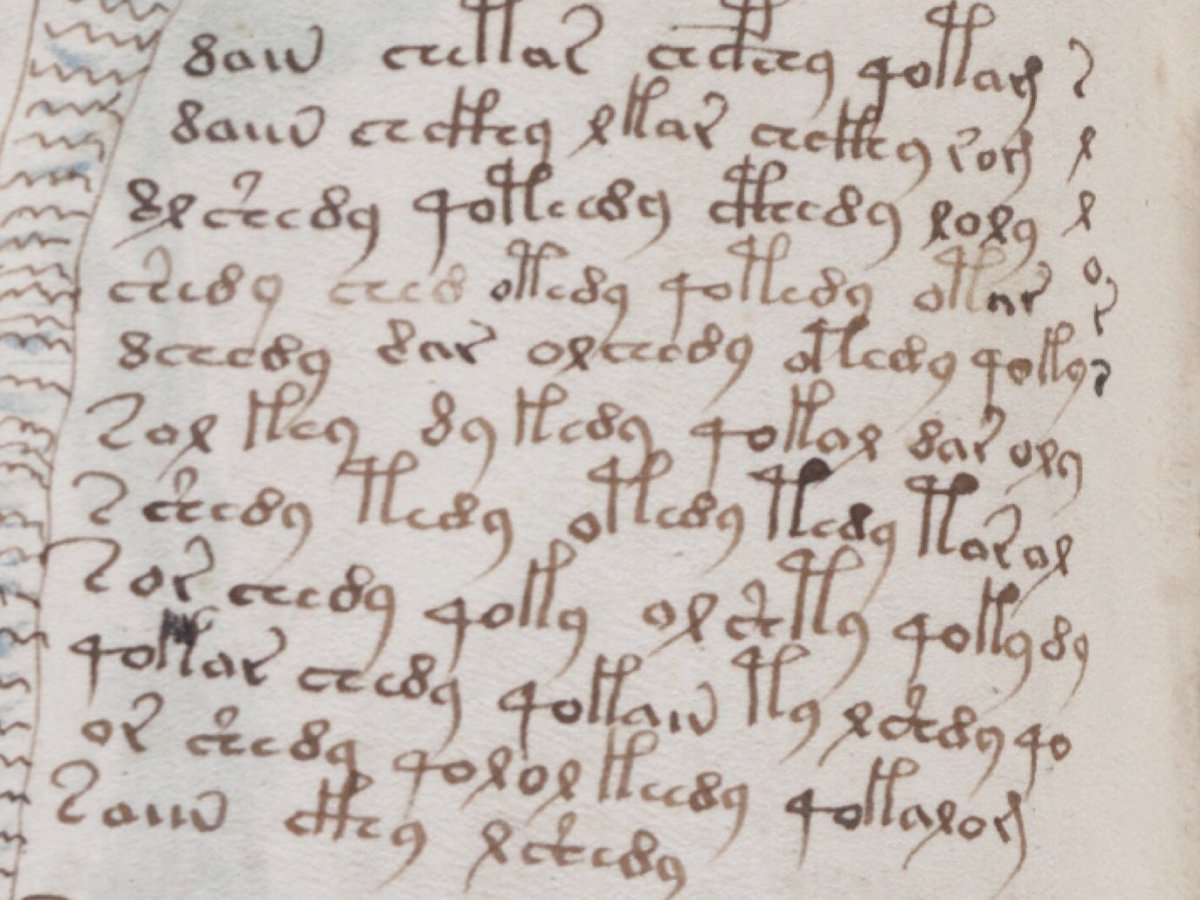
this handwriting is around 600 years old. but what does it say? is it a foreign language? a secret code?
scholars have been trying to decipher it for 400 years, but have yet to succeed — making the voynich manuscript one of the oldest unsolved mysteries around.
thread🧵
scholars have been trying to decipher it for 400 years, but have yet to succeed — making the voynich manuscript one of the oldest unsolved mysteries around.
thread🧵
the voynich manuscript, aka yale beinecke ms 408, was radiocarbon dated to the first half of the 15th century.
however, records of its ownership only begin in 1639, when its owner (an alchemist in prague) wrote to a scholar in the vatican asking for advice about deciphering it.
however, records of its ownership only begin in 1639, when its owner (an alchemist in prague) wrote to a scholar in the vatican asking for advice about deciphering it.
the alchemist, georg baresch, never received any satisfactory advice, and letters he wrote suggest he was preoccupied with the mystery for his whole life. eventually, baresch died, and ownership of the manuscript passed on to one of his friends.
in the centuries following, the voynich manuscript changed hands quite a few times, until it found its way to polish socialist-revolutionary-turned-rare-book-dealer alfred voynich in 1912
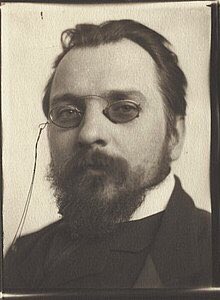
like many of the previous owners, voynich tried and failed to decipher the strange manuscript. after he died, it seems no one wanted to purchase the book, and it was eventually donated to yale beinecke library, where it still lives today.
so, what does the manuscript actually look like?
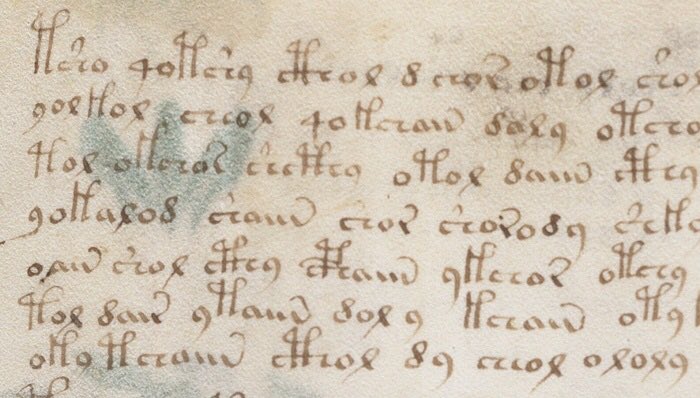
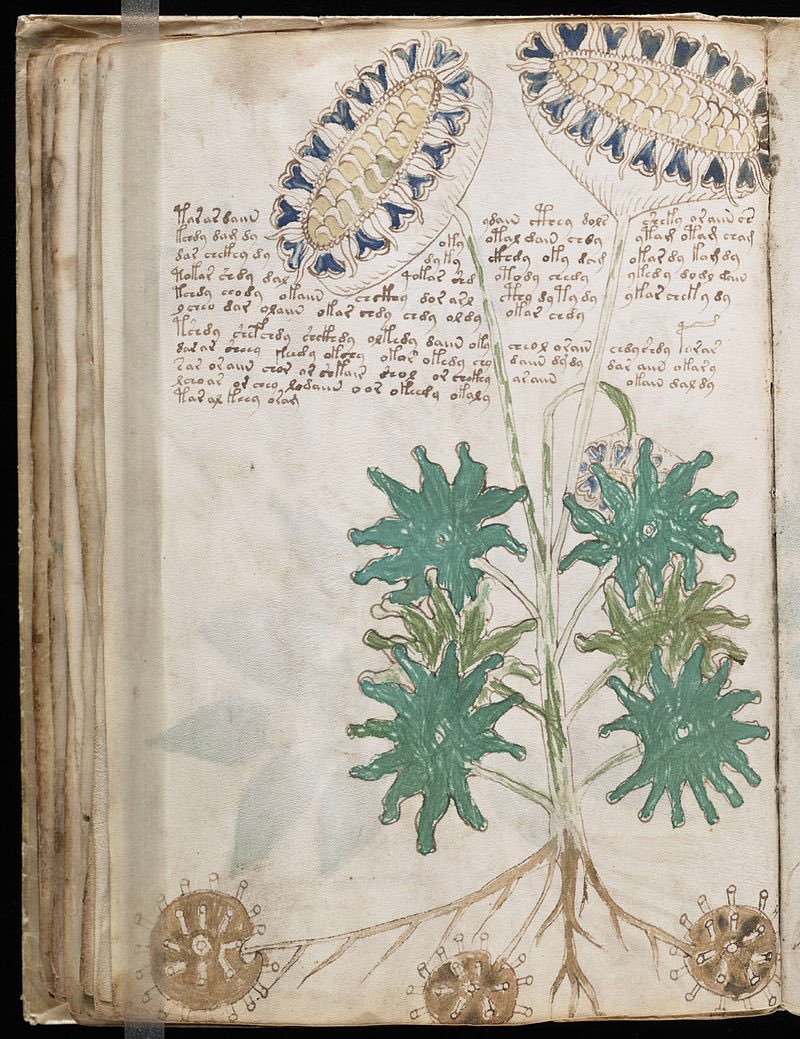
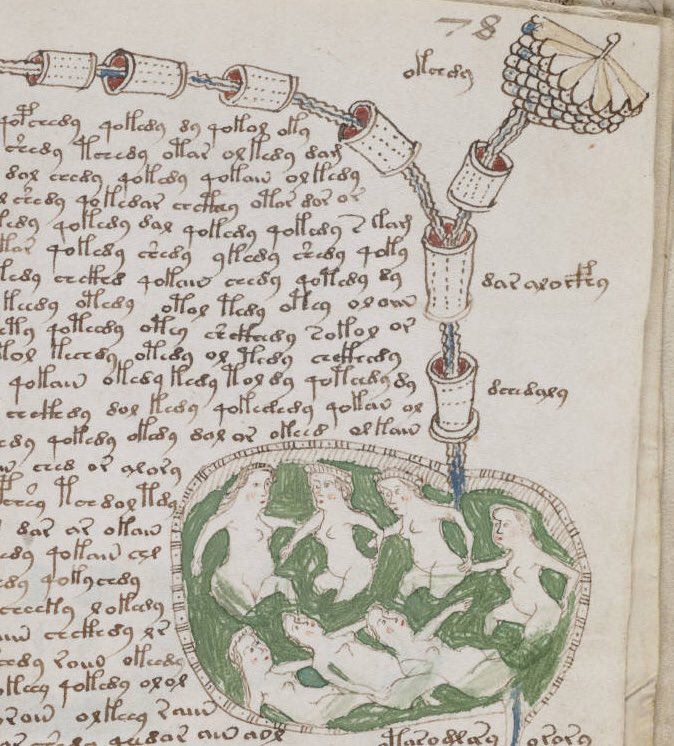
the voynich manuscript is around 240 pages long and contains this strange, unique lettering on every page, though multiple scribes may have written it.
there are also numerous illustrations: herbs, people, astrological diagrams, and symbols. however, most of the plants illustrated do not resemble any known species of plant, nor any other medieval botanical drawing.
since voynich bought the manuscript in 1912, there has been considerable interest in deciphering it. cryptologists william and elizebeth friedman, who cracked enemy codes during both world wars, tried-- and failed.
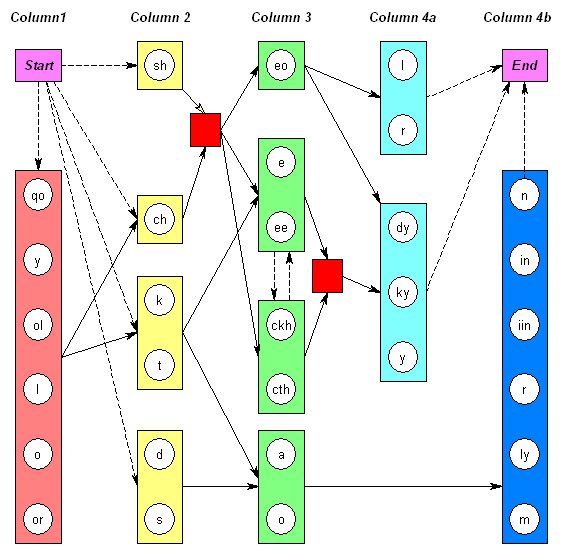
though there are 20-25 unique characters in so-called "voynichese", even modern computerised processes have failed to come up with a cipher that would translate the text into any known language.

(image above is just an illustrative transcription map used to input the text into a computer)
encoded messages and constructed languages were certainly used in the middle ages, either to communicate in secret or simply as a joke/out of personal interest—
a great example of this is hildegard von bingen's "lingua ignota", a made-up language with its own alphabet.
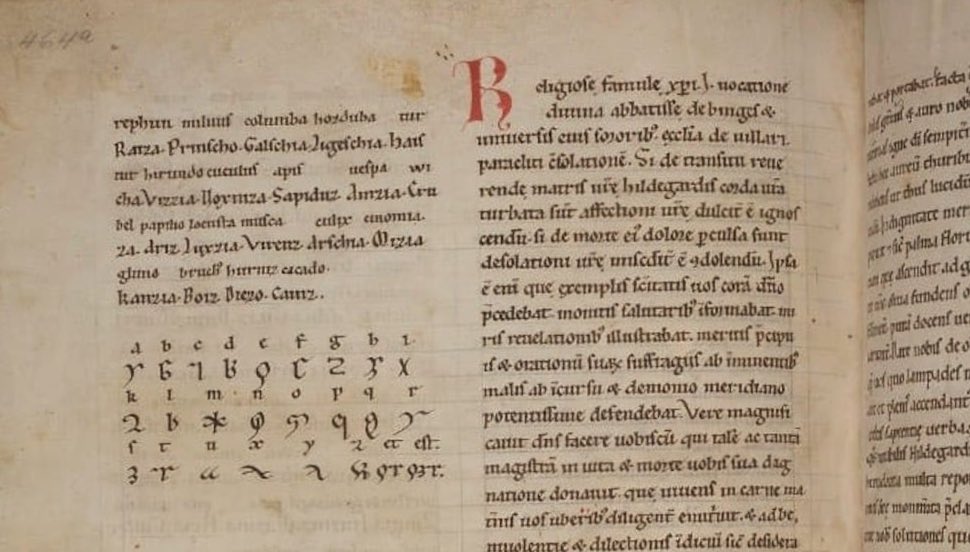
but these early ciphers were very simple and often easy to crack, even at the time. hildegard's lingua ignota uses a simple substitution of her own characters for latin characters, and she wrote down the definitions of made-up words, making it easy to decipher....
...unlike the voynich manuscript. so is it even a language? is the manuscript a hoax or a prank? if so, it's still a medieval prank--remember, it was radiocarbon dated to the 1400s and subsequent analysis has confirmed that it couldn't have been created later than this.
books were rare and valuable in the middle ages, but why fake one? surely someone with the resources to acquire 15 calf skins, ink, paint, and quill pens, never mind the time to write out the whole thing, would have been able to write in a known language?
plus, there are MANY signs that suggest voynichese is -- or is derived from -- a real language!
words in the manuscript tend to be between 2 and 10 letters, and although there are around 35,000 words, only around 8,000 are unique: lots of words are repeated!
words in the manuscript tend to be between 2 and 10 letters, and although there are around 35,000 words, only around 8,000 are unique: lots of words are repeated!
but some are more frequent than others, and some only appear near botanical drawings, while other words are only found near astrological illustrations, and so on.
every word contains at least one of a small group of letters (like english vowels), some letters never follow others, and some letters may be doubled but others are not. interestingly, some letters appear only at the beginning or end of words.
statistical analysis has shown that the patterns of letters and words are far from random, and seem to resemble the distribution of a natural language — but they don’t match any known natural language very well.
scholars have theorized that the manuscript could contain a natural language written in a shorthand or constructed alphabet, while a largely-rejected hypothesis suggests that the text is written in nahuatl, the language of the aztecs.
others have suggested a more complex encryption method may have been used than was common at the time, or that only some arbitrary feature or portion of the text (e.g. the first letters of words or number of letters in a word) contain the code, and the rest is gibberish filler.
still others have focused on the hoax or prank theory, as the manuscript could have been sold at a very high price to a wealthy buyer under the pretense of being from a far-off land in asia or africa
relatively simple algorithms have been developed that generate text with similar properties to voynichese, by combining prefixes, suffixes, and word stems
medieval hoaxes were often created to take advantage of the upper class, such as fake unicorn horn sold at extremely high prices as a purported cure for all sorts of diseases
in a time where unicorns, dragons, and other magical beings were thought to live on distant continents, the element of mysticism that was added by claiming an item was from asia or africa could entice buyers to pay a small fortune for it
the manuscript also contains few — if any — corrections, an oddity for medieval texts, which were handwritten and often required misspellings to be crossed or scraped out
and it has been noted that many of the plants contained in the voynich manuscript appear to have been constructed by combining parts from existing plants found in medieval europe
however, the complexity of the voynich manuscript’s text has led some scholars to claim that it is impossible (or at least highly unlikely) for it to be entirely meaningless
efforts are ongoing to solve the mystery of the voynich manuscript, and for now all we can do is theorise.....so what do you think?
I think the question is one not just of cryptography or linguistics but also history and human behavior...while all the proposed solutions are difficult to prove, what makes the most sense in the context of our understanding of the medieval world?
but unless we, by some miracle, discover as-of-yet unseen material that provides indisputable evidence for one explanation, i think we can only talk about the explanations in terms of relative probabilities rather than absolutes!
here’s a full digitization of the voynich manuscript if you care to take a look through!
collections.library.yale.edu
collections.library.yale.edu
and here’s a great thread by @lisafdavis that goes into much more technical detail!
Loading suggestions...