

1/ The future of lending/borrowing is here (and it's probably not what you think)
Let me introduce @MorphoLabs (their Twitter account isn't working atm)
🧵👇
Let me introduce @MorphoLabs (their Twitter account isn't working atm)
🧵👇
2/ We'll be going over:
-The state of DeFi lending/borrowing
-What Morpho is
-How it works
-$MORPHO token
-Morpho's Next Steps
-Conclusion
-The state of DeFi lending/borrowing
-What Morpho is
-How it works
-$MORPHO token
-Morpho's Next Steps
-Conclusion
3/ The state of DeFi lending/borrowing:
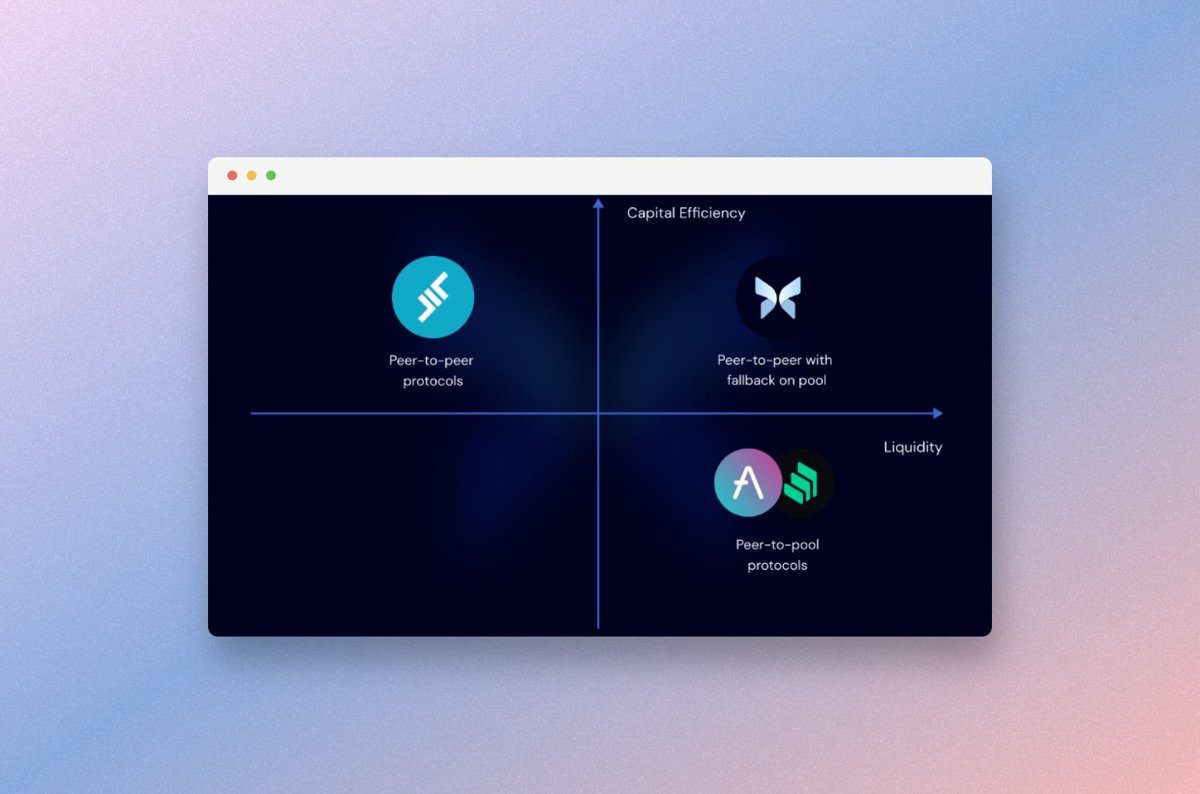
Liquidity among lending/borrowing markets is very condensed within the top protocols, those being Aave and Compound. While these protocols certainly have achieved PMF, they are by no means perfect.
Liquidity among lending/borrowing markets is very condensed within the top protocols, those being Aave and Compound. While these protocols certainly have achieved PMF, they are by no means perfect.
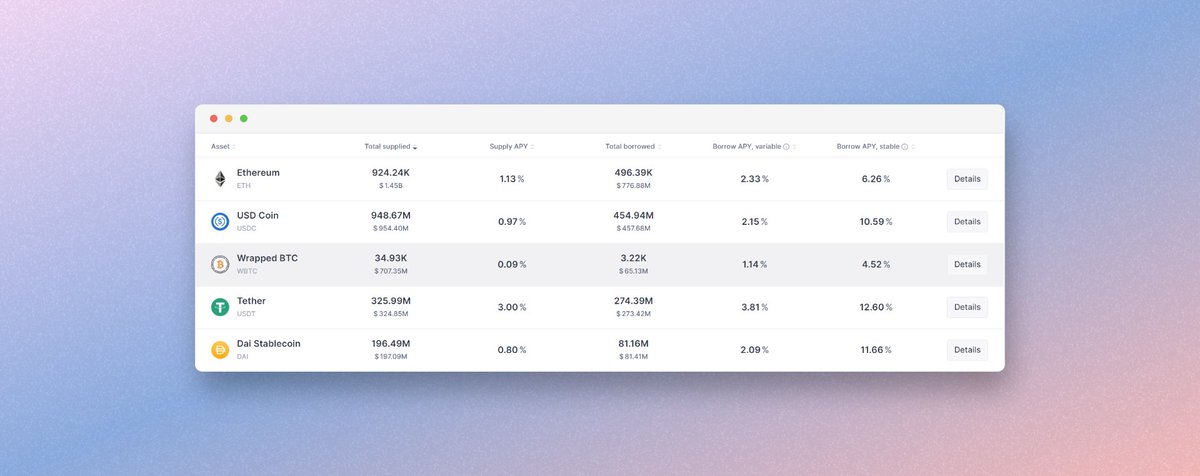
4/ If you look at the picture below, you'll see Aave's most popular listed assets. By seeing the difference in borrow/supply APY, you may have a question
If Aave is truly decentralized, why is there a spread in borrow/supply APY? Wasn't DeFi built to remove the middleman?
If Aave is truly decentralized, why is there a spread in borrow/supply APY? Wasn't DeFi built to remove the middleman?
5/ If you aren't aware, the reasoning behind this is a design choice that most lending markets follow. The ethos of DeFi would lead you to believe that money markets would be P2P (peer-to-peer), in order to cut out the middleman.
In reality, this model doesn't completely work.
In reality, this model doesn't completely work.
6/ Money markets that have attempted P2P have run into the same issues, the main being a lack of liquidity. Since there is almost always an excess of lenders compared to borrowing demand, earning yield via lending becomes PVP vs other lenders.
7/ In order to increase liquidity and democratize yield among lenders, most money markets have landed on the peer-to-pool model.
With the peer-to-pool model, lenders’ funds are combined in a pool that borrowers can borrow from.
With the peer-to-pool model, lenders’ funds are combined in a pool that borrowers can borrow from.
8/ There are definitely benefits to this model, the main being enhanced liquidity. Borrowers can almost always borrow, and lenders can earn yield with constant liquidity of their position.
While liquidity is extremely important, it has come at the cost of capital efficiency.
While liquidity is extremely important, it has come at the cost of capital efficiency.
9/ While money markets like Aave and Compound have done amazingly well in creating and growing their platforms, there are obvious capital efficiency issues that need to be fixed.
Enters Morpho
Enters Morpho
10/ What is Morpho?
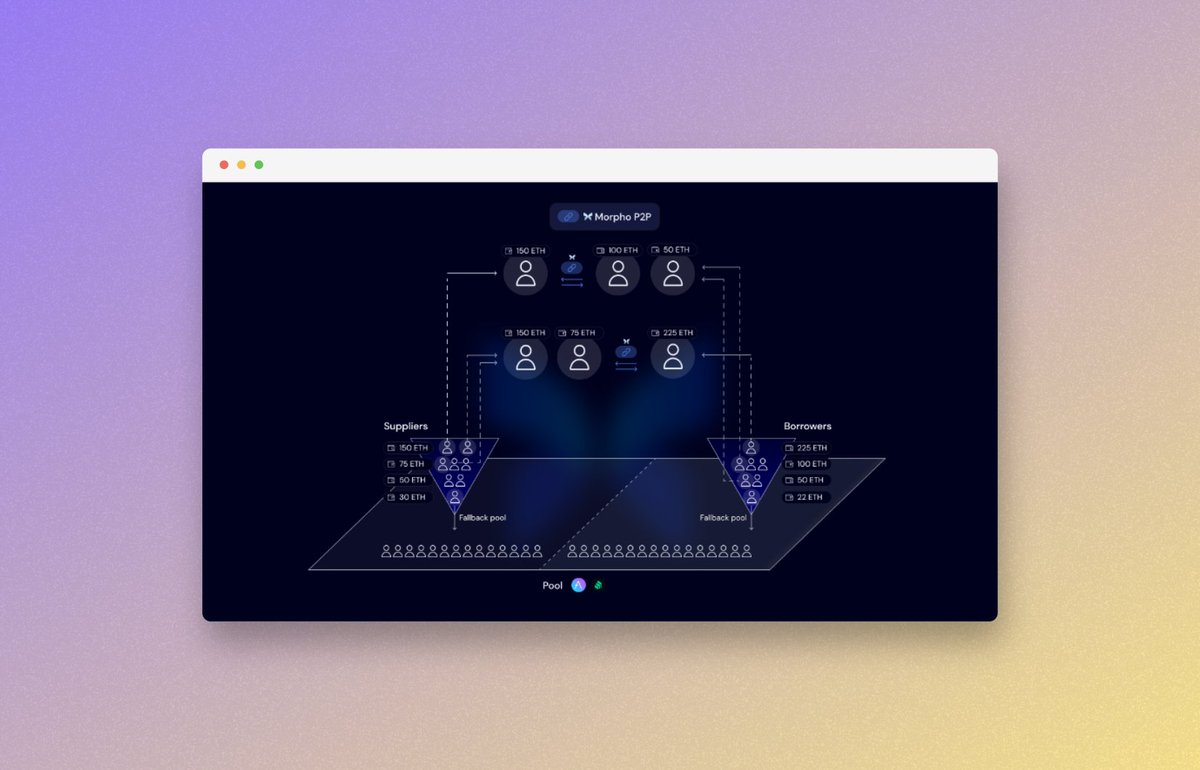
Morpho aims to be the solution to the capital inefficiency of money markets. Morpho is a protocol built upon leading money markets that gives users access to P2P lending/borrowing.
How does it work? Let's go a bit deeper.
Morpho aims to be the solution to the capital inefficiency of money markets. Morpho is a protocol built upon leading money markets that gives users access to P2P lending/borrowing.
How does it work? Let's go a bit deeper.
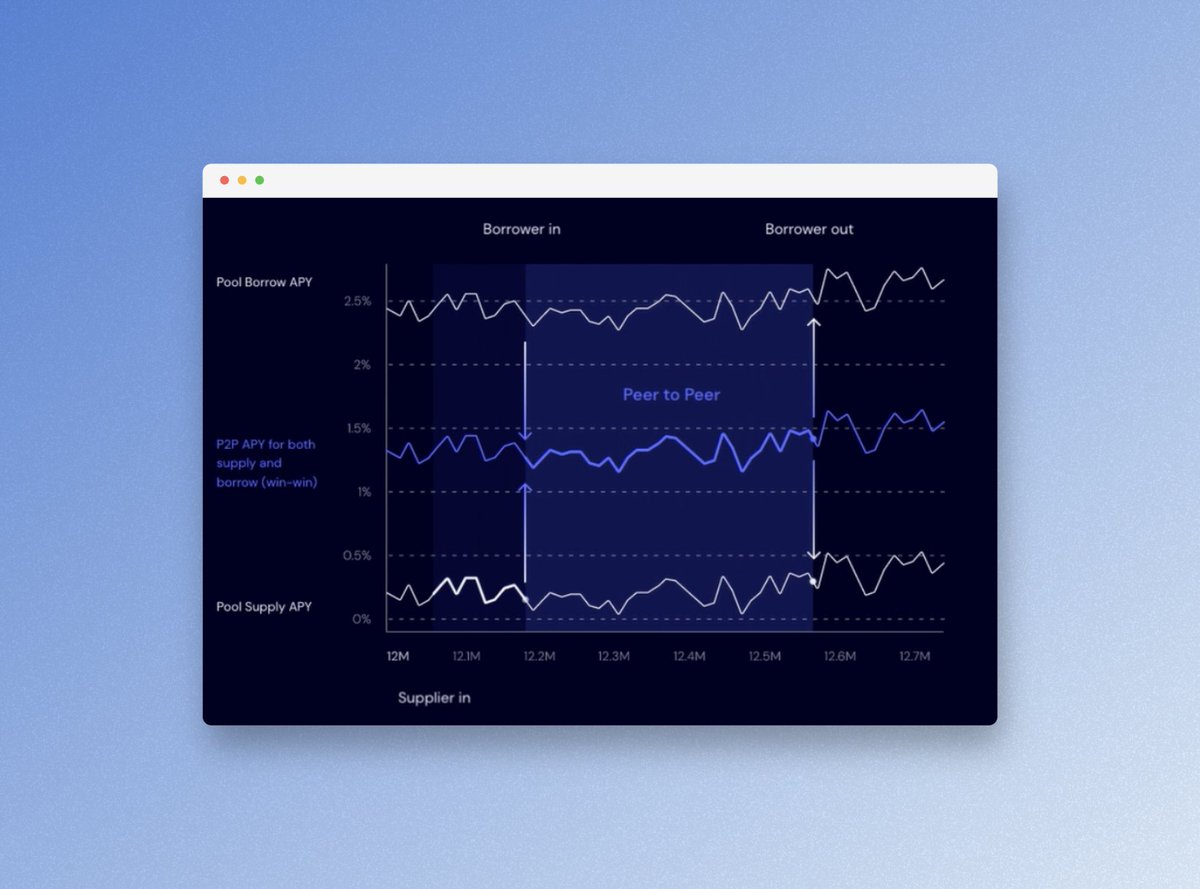
11/ At its core, Morpho is basically a lending pool optimizer. Users are able to access P2P borrowing and lending due to the billions in liquidity on Aave and Compound.
In order to get a better picture of how it works, I'll explain the process of lending and borrowing on Morpho
In order to get a better picture of how it works, I'll explain the process of lending and borrowing on Morpho
12/ Lending:
A lender uses Morpho in a very similar way as they would use Aave/Compound. After lending on Morpho's platform, Morpho takes lent funds and deposits on Aave/Compound and holds onto the aToken/cToken.
The lender is currently earning what they would on Aave/Compound
A lender uses Morpho in a very similar way as they would use Aave/Compound. After lending on Morpho's platform, Morpho takes lent funds and deposits on Aave/Compound and holds onto the aToken/cToken.
The lender is currently earning what they would on Aave/Compound

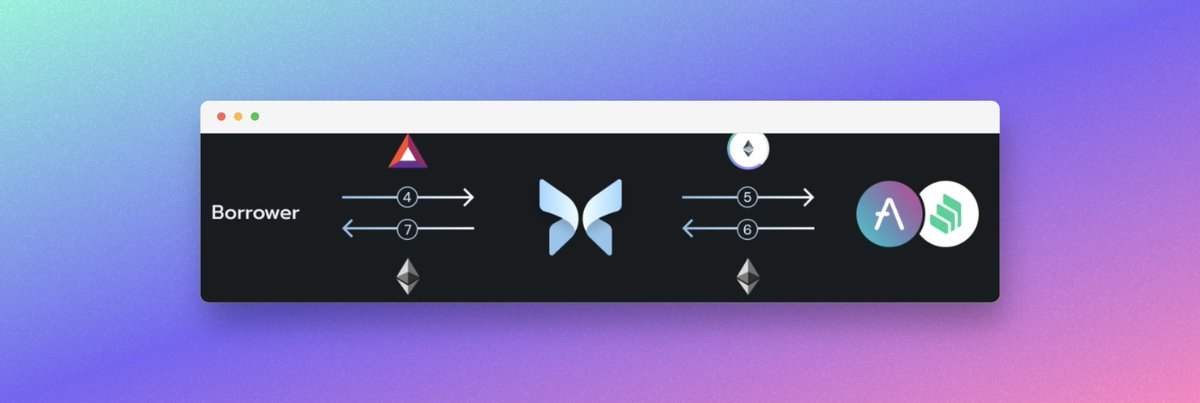
13/ Borrower: As a borrower, the process is a bit more complicated. To make it as simple as possible, I've broken it down into the main steps.
14/
1. Borrow deposits collateral with the same CR as Aave/Compound which triggers Morpho’s matching engine.
2. The matching engine links the borrower with a lender on Morpho.
3. Lender’s aTokens/cTokens are sold for liquidity, ending the lending agreement on Aave/Compound
1. Borrow deposits collateral with the same CR as Aave/Compound which triggers Morpho’s matching engine.
2. The matching engine links the borrower with a lender on Morpho.
3. Lender’s aTokens/cTokens are sold for liquidity, ending the lending agreement on Aave/Compound
15/
4. The lender’s lent funds are moved to a peer-to-peer loan with the matched borrower, enhancing APY for both parties
This process allows lenders to earn at least what they would on Aave/Compound, but when matched with a borrower, both parties see enhanced rates.
4. The lender’s lent funds are moved to a peer-to-peer loan with the matched borrower, enhancing APY for both parties
This process allows lenders to earn at least what they would on Aave/Compound, but when matched with a borrower, both parties see enhanced rates.
16/ This is a win-win situation for both parties.
For lenders, they are at minimum getting the APY they would on Aave/Compound, but when matched are receiving enhanced yield.
Borrowers can borrow just as they would on Aave/Compound, but have to pay much less in interest.
For lenders, they are at minimum getting the APY they would on Aave/Compound, but when matched are receiving enhanced yield.
Borrowers can borrow just as they would on Aave/Compound, but have to pay much less in interest.
17/ Matching Engine:
While P2P lending/borrowing enhances APY, lending becomes much more PVP. Lenders are looking to get enhanced rates, but there are less borrowers than lenders.
In order to properly match lenders and borrowers, 4 main parameters are taken into consideration
While P2P lending/borrowing enhances APY, lending becomes much more PVP. Lenders are looking to get enhanced rates, but there are less borrowers than lenders.
In order to properly match lenders and borrowers, 4 main parameters are taken into consideration
18/ Economic Efficiency: Maximize matched volumes.
Gas Efficiency: Minimize gas and avoid dust problems.
Simplicity: It should be simple to utilize Morpho's enhanced rates.
Fairness: The use of Morpho should benefit as much liquidity as possible, regardless of the user.
Gas Efficiency: Minimize gas and avoid dust problems.
Simplicity: It should be simple to utilize Morpho's enhanced rates.
Fairness: The use of Morpho should benefit as much liquidity as possible, regardless of the user.
19/ $MORPHO:
$MORPHO will be the governance token of the Morpho protocol and used to manage the treasury. Something important to keep in mind is that the $MORPHO token is currently non-transferable, so only people using the protocol can actually earn it.
$MORPHO will be the governance token of the Morpho protocol and used to manage the treasury. Something important to keep in mind is that the $MORPHO token is currently non-transferable, so only people using the protocol can actually earn it.
20/ Governance:
Morpho's governance is organized in Ages. Ages last around three months and sets new rules for emissions according to the protocol's needs. Ages are split up into epochs, which act as checkpoints and allow users to claim their $MORPHO rewards.
Morpho's governance is organized in Ages. Ages last around three months and sets new rules for emissions according to the protocol's needs. Ages are split up into epochs, which act as checkpoints and allow users to claim their $MORPHO rewards.
21/ Morpho’s Next Steps:
While the features I've talked about in this thread are already released, Morpho has plans for the future. These plans are organized into three "evolutions"
Caterpillar:
This is where Morpho is currently, and includes all the features discussed so far
While the features I've talked about in this thread are already released, Morpho has plans for the future. These plans are organized into three "evolutions"
Caterpillar:
This is where Morpho is currently, and includes all the features discussed so far
22/ Chrysalis:
The main goal for this stage is to add an order book for lenders and borrowers, giving them more flexibility and less juxtaposition in yield. For example, a mid-rate, a rate a bit lower but still inside the spread, a rate a bit higher but still inside the spread
The main goal for this stage is to add an order book for lenders and borrowers, giving them more flexibility and less juxtaposition in yield. For example, a mid-rate, a rate a bit lower but still inside the spread, a rate a bit higher but still inside the spread
23/ Butterfly:
At this stage, users would be able to determine their own rates, even outside of the underlying protocol's spread. At this point, Morpho may have enough liquidity and market makers to diverge from using underlying protocols like Aave/Compound as a backstop.
At this stage, users would be able to determine their own rates, even outside of the underlying protocol's spread. At this point, Morpho may have enough liquidity and market makers to diverge from using underlying protocols like Aave/Compound as a backstop.
24/ Conclusion:
That's it! In short, Morpho allows users to access P2P loans, while built completely on top of existing protocols. In cases where the lender/borrower wants out of the agreement, Morpho is able to default to the underlying protocol.
That's it! In short, Morpho allows users to access P2P loans, while built completely on top of existing protocols. In cases where the lender/borrower wants out of the agreement, Morpho is able to default to the underlying protocol.
Loading suggestions...