
Politics
Environmental Issues
Agriculture
Environment
Sustainable Agriculture
Water Conservation
Environmental Policy
Agricultural Practices

1/
Do you know the Punjab Preservation of Subsoil Water Act 2009 and Haryana Preservation of Sub-soil Water Act, 2009, are one of prime reasons for #Pollution in Delhi not #DiwaliCrackers ?
Interesting. Read on this small #Thread
Do you know the Punjab Preservation of Subsoil Water Act 2009 and Haryana Preservation of Sub-soil Water Act, 2009, are one of prime reasons for #Pollution in Delhi not #DiwaliCrackers ?
Interesting. Read on this small #Thread
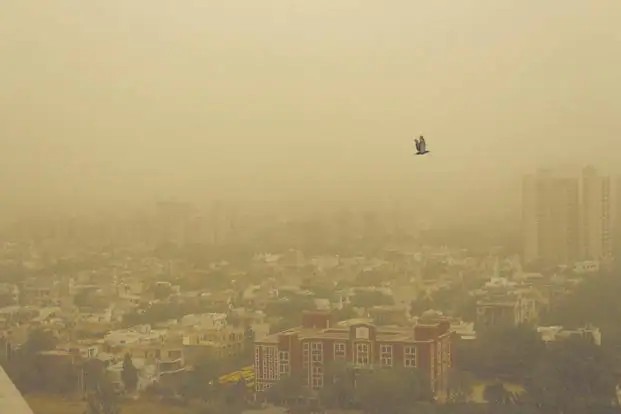
2/
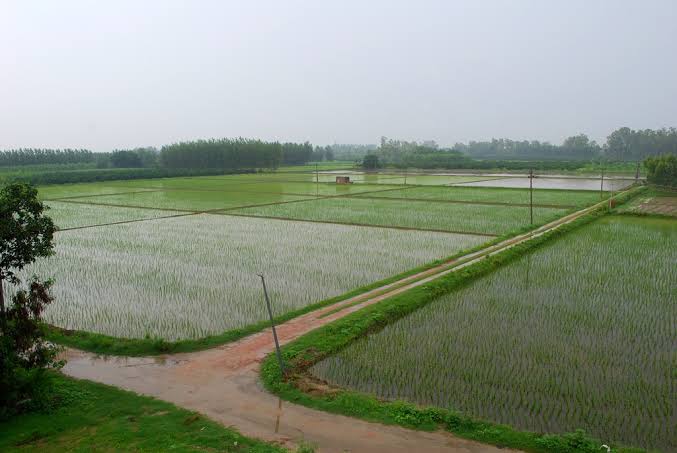
During 1970-80 the era of Green Revolution Punjab and Haryana shifted from their traditional crops (maize, pearl millet, pulses and oilseeds) to the wheat-paddy cultivation cycle to provide food security to the country without considering impact on water tables
During 1970-80 the era of Green Revolution Punjab and Haryana shifted from their traditional crops (maize, pearl millet, pulses and oilseeds) to the wheat-paddy cultivation cycle to provide food security to the country without considering impact on water tables
3/
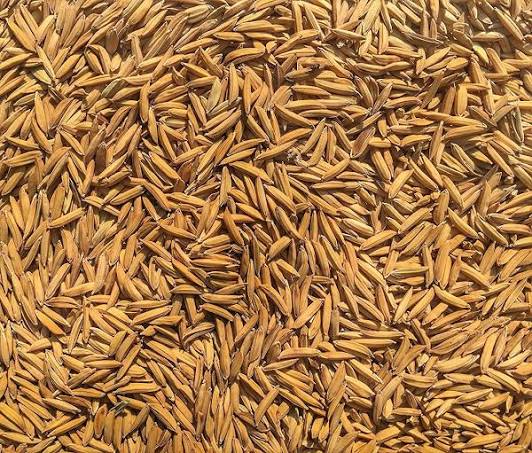
Farmers started to sow SATHI (a variety of paddy) ensuring two crops cycle in one kharif season (April to October)
One kg of rice needed 4500 litre water if sowed in April while 1500 litre water if sowed in mid june
Farmers started to sow SATHI (a variety of paddy) ensuring two crops cycle in one kharif season (April to October)
One kg of rice needed 4500 litre water if sowed in April while 1500 litre water if sowed in mid june
4/
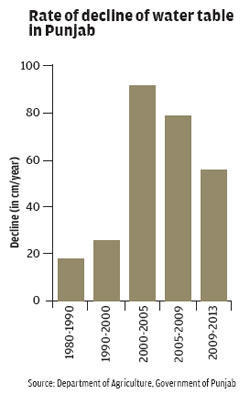
With the change in cultivation pattern, the water table in Punjab started to recede rapidly at alarming rate.
With the change in cultivation pattern, the water table in Punjab started to recede rapidly at alarming rate.


5/
Punjab Govt took water problem seriously and regulated time of paddy cultivation thru Law.
2008, farmers were prohibited to transplant saplings before June 10.
This act helped save water tables but created pressure on farmers to cultivate in less time.
Punjab Govt took water problem seriously and regulated time of paddy cultivation thru Law.
2008, farmers were prohibited to transplant saplings before June 10.
This act helped save water tables but created pressure on farmers to cultivate in less time.
6/
Farmer gets less time to prepare field for next crop and hence are forced to burn plant waste in relatively less period of time as compared to earlier.
thewire.in
Farmer gets less time to prepare field for next crop and hence are forced to burn plant waste in relatively less period of time as compared to earlier.
thewire.in
7/
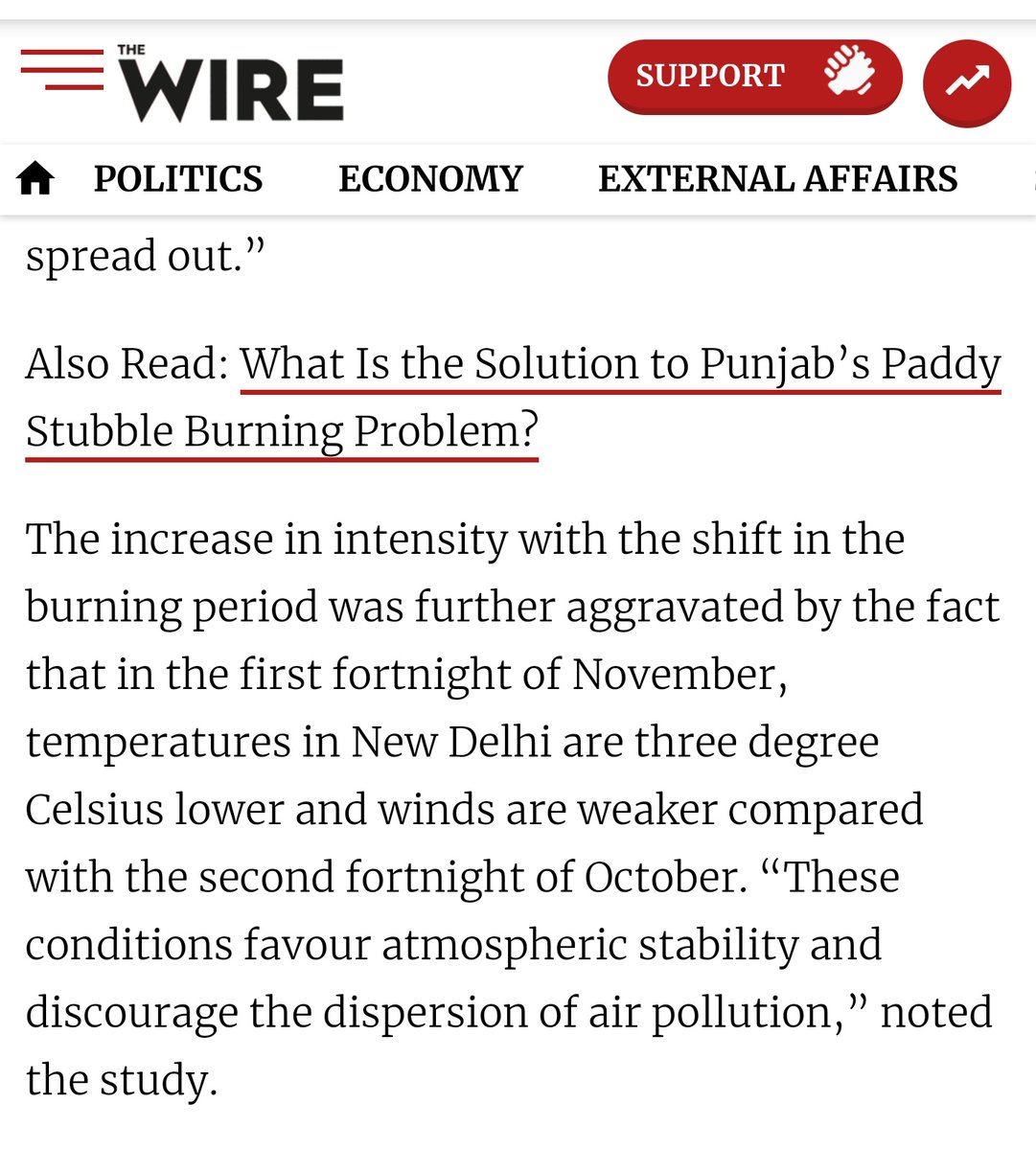
The problem get accentuated, due to the fact that temperatures in Delhi are 3° lower and winds are weaker during 1-15 Nov compared with the 15-31 Oct. “These conditions favour atmospheric stability and discourage the dispersion of air pollution,”
The problem get accentuated, due to the fact that temperatures in Delhi are 3° lower and winds are weaker during 1-15 Nov compared with the 15-31 Oct. “These conditions favour atmospheric stability and discourage the dispersion of air pollution,”
8/
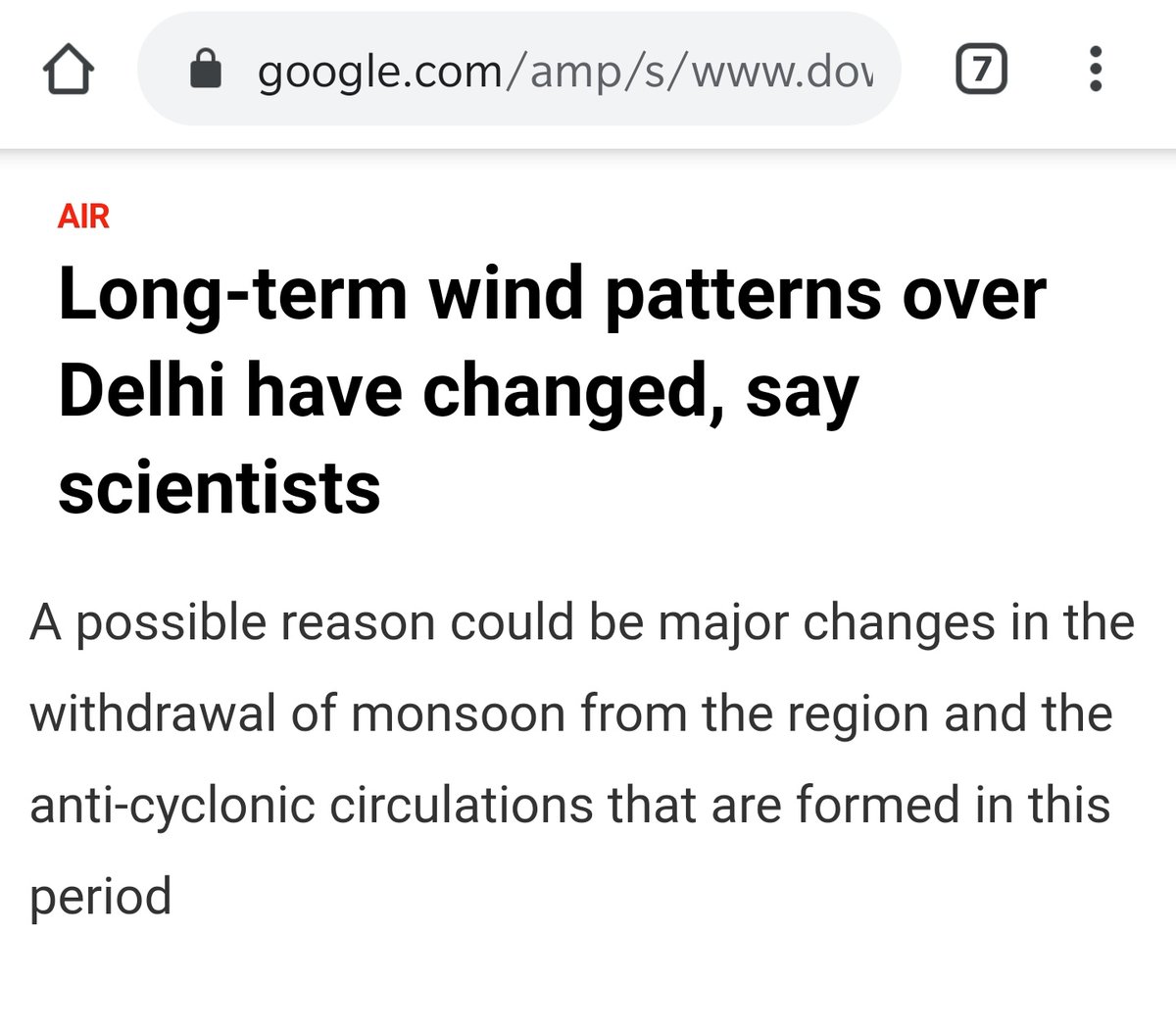
The studies says the withdrawal of monsoon from the northern region and specific location of Delhi on the path leads to flow of winds from Punjab and Haryana region during 1st fortnight of November.
downtoearth.org.in
The studies says the withdrawal of monsoon from the northern region and specific location of Delhi on the path leads to flow of winds from Punjab and Haryana region during 1st fortnight of November.
downtoearth.org.in
9/
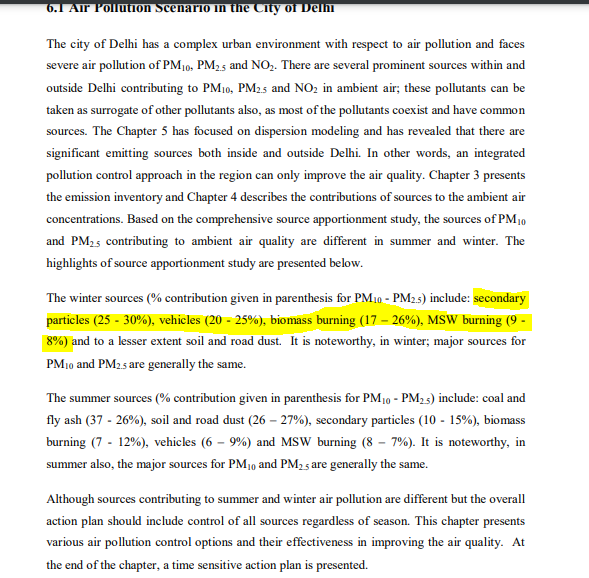
As per IIT report submitted to #Delhigoverment, the major source of Winter pollution are vehicles, subtle & MSW burning. Crackers didn;t find imminent mention.
environment.delhigovt.nic.in
As per IIT report submitted to #Delhigoverment, the major source of Winter pollution are vehicles, subtle & MSW burning. Crackers didn;t find imminent mention.
environment.delhigovt.nic.in
11/
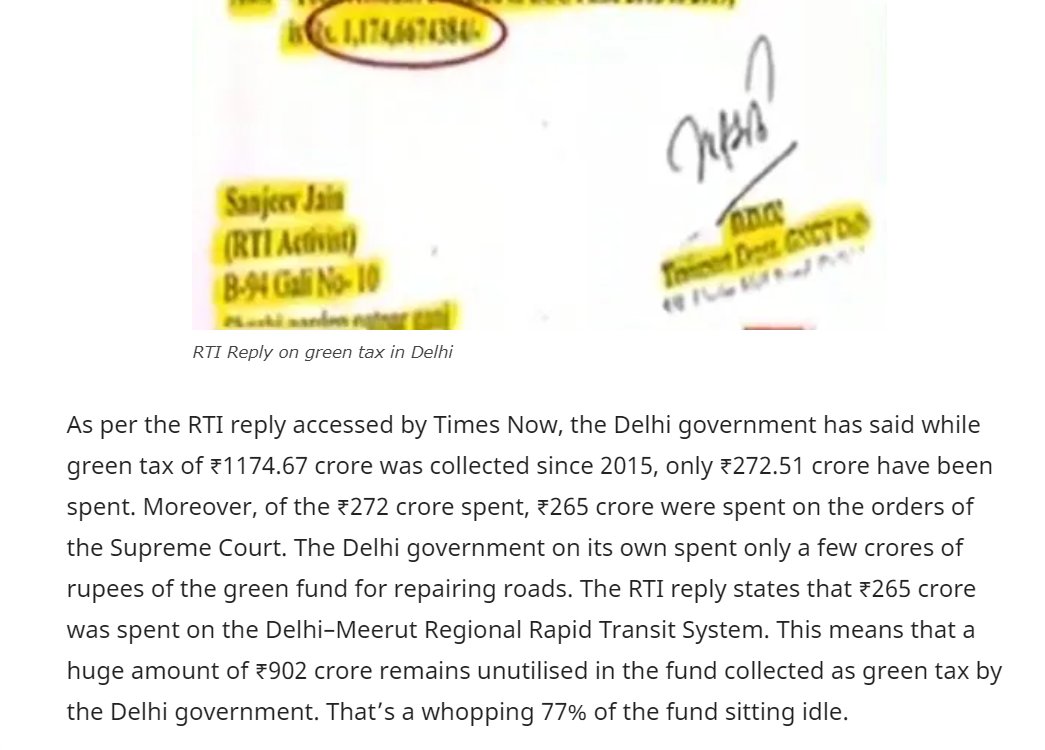
Delhi has been struggling from severe pollution for a decade now. A Green tax was levied to resolve this problem. However, RTI reply in 2019, suggests that ~80% of the amount so collected remained unutilised.
Delhi has been struggling from severe pollution for a decade now. A Green tax was levied to resolve this problem. However, RTI reply in 2019, suggests that ~80% of the amount so collected remained unutilised.
Loading suggestions...