

Profitability is vanity, cash is sanity.
Here are 3 examples so you can know the difference:
Here are 3 examples so you can know the difference:
Many business owners look at only 2 things:
1. Cash balance
2. Income Statement
When the Income Statement tells you you’ve made money, but your cash balance is going down, it can lead to you feeling like you’ve lost control.
So, why does this happen?
1. Cash balance
2. Income Statement
When the Income Statement tells you you’ve made money, but your cash balance is going down, it can lead to you feeling like you’ve lost control.
So, why does this happen?
Let’s go back to the definition of Profit:
Revenue - Expense = Profit
In Accrual Accounting,
Revenue DOES NOT equal cash in the door
Expense DOES NOT equal cash out the door
Revenue - Expense = Profit
In Accrual Accounting,
Revenue DOES NOT equal cash in the door
Expense DOES NOT equal cash out the door
Revenue is sales recorded
Expense is cost incurred
This doesn’t include:
• Assets
• Loan Payments
• Owners capital contribution/distribution
Expense is cost incurred
This doesn’t include:
• Assets
• Loan Payments
• Owners capital contribution/distribution
This is why cash management can be so hard.
You can “make” money, but not receive the cash for 30, 60, or 90 days.
You can “make” money, but send it right back out the door to loans, reinvestment, or the owners.
Let’s walk through some examples.
You can “make” money, but not receive the cash for 30, 60, or 90 days.
You can “make” money, but send it right back out the door to loans, reinvestment, or the owners.
Let’s walk through some examples.
SCENARIO A
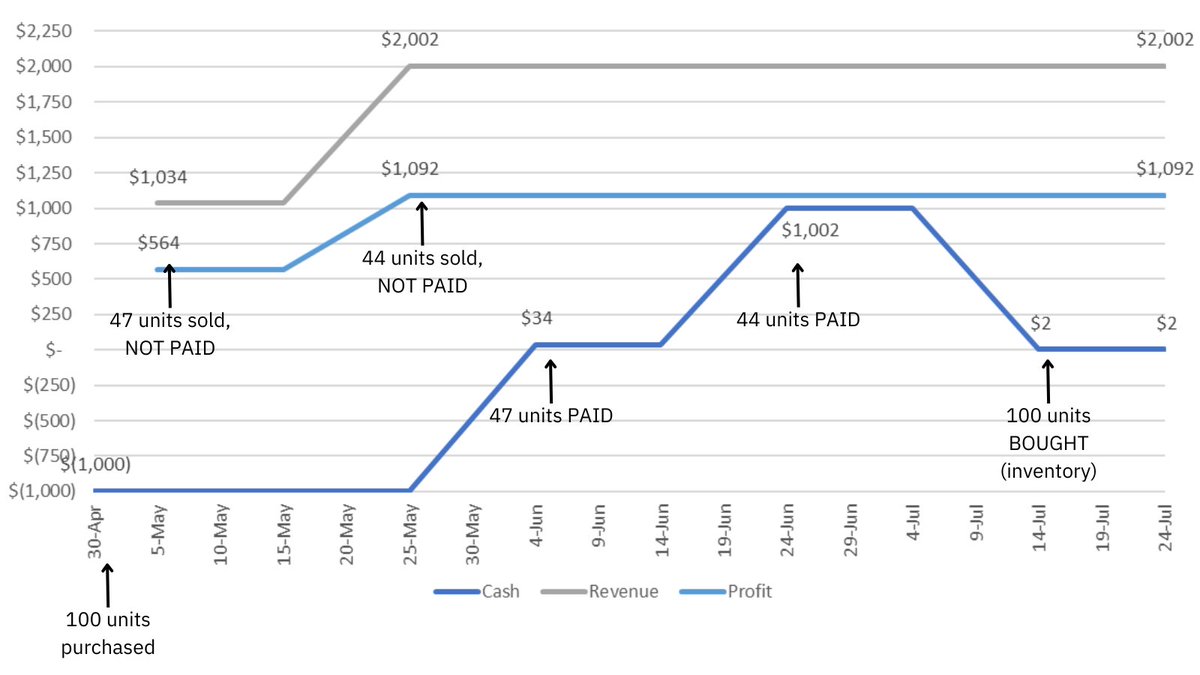
Widget Co buys (and PAYS) 100 units ($1,000) of Widget A on April 30th.
They give their customers 30 days to pay, meaning that when the customer buys on May 5th, they don’t have to pay until June 4th (35 days after Widget Co paid for them).
Widget Co buys (and PAYS) 100 units ($1,000) of Widget A on April 30th.
They give their customers 30 days to pay, meaning that when the customer buys on May 5th, they don’t have to pay until June 4th (35 days after Widget Co paid for them).
But that’s just to get back to “zero,” or the same cash position they had before purchasing inventory.
To double their money, they need to see 91 total units, but then they’ll have to repurchase! So buying 100 more units, they’re depleting cash.
To double their money, they need to see 91 total units, but then they’ll have to repurchase! So buying 100 more units, they’re depleting cash.
After rebuying, they’re only $2 positive from where they were before they bought the first 100 units.
At the end of the day we show:
• Revenue $2,002
• Profit $1,092
• Cash $2
So: where’d the cash go? Back into inventory…
At the end of the day we show:
• Revenue $2,002
• Profit $1,092
• Cash $2
So: where’d the cash go? Back into inventory…
SCENARIO B
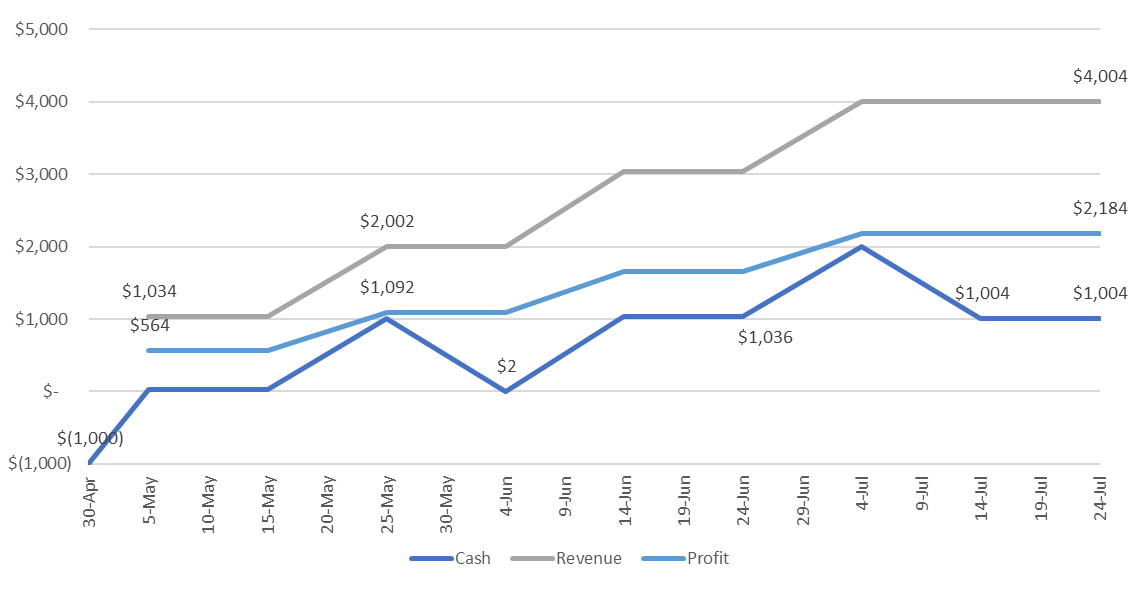
Imagine the customer now has to pay at purchase. Assuming the same sales as above, they now have enough cash from the May 25 sale to rebuy inventory.
That allows us to rebuy again on July 14, assuming the same sales velocity.
Imagine the customer now has to pay at purchase. Assuming the same sales as above, they now have enough cash from the May 25 sale to rebuy inventory.
That allows us to rebuy again on July 14, assuming the same sales velocity.
SCENARIO C
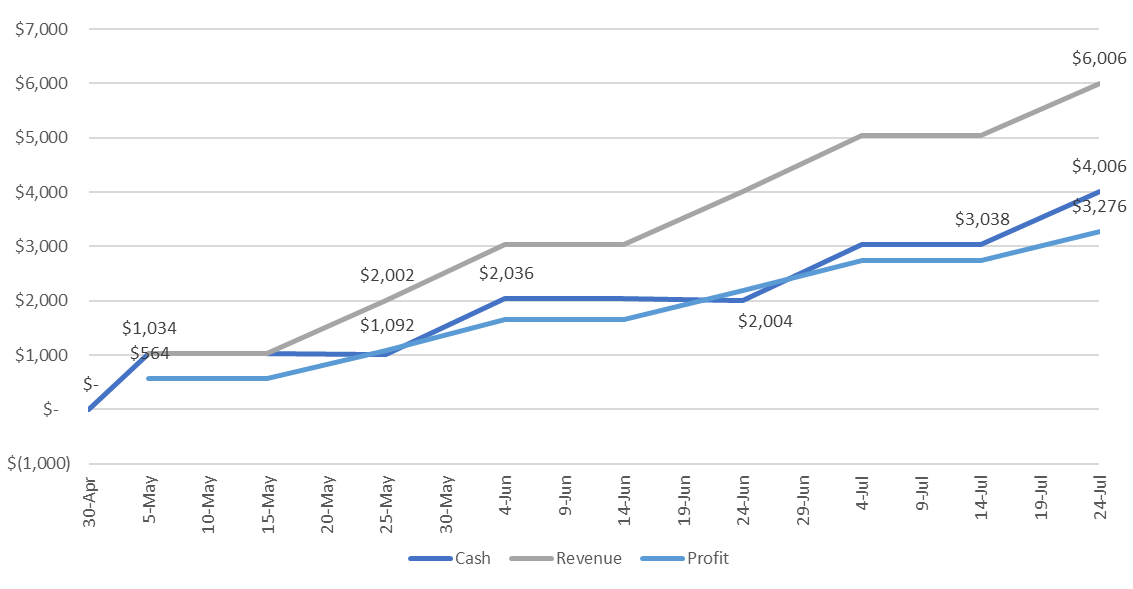
Now imagine they had 30-day terms from Supplier Co AND got immediate payment from the customer.
You’ve now received payment from your customer on 91 units BEFORE paying your supplier.
In this case, your cash balance can actually *outpace* your profits.
Now imagine they had 30-day terms from Supplier Co AND got immediate payment from the customer.
You’ve now received payment from your customer on 91 units BEFORE paying your supplier.
In this case, your cash balance can actually *outpace* your profits.
SUMMARY
In these scenarios, over the same time period, you have much different inventory turnover:
Scenario A: 1 turnover
Scenario B: 2 turnovers
Scenario C: 3 turnovers
It’s only when inventory turns that cash balances converge again.
In these scenarios, over the same time period, you have much different inventory turnover:
Scenario A: 1 turnover
Scenario B: 2 turnovers
Scenario C: 3 turnovers
It’s only when inventory turns that cash balances converge again.
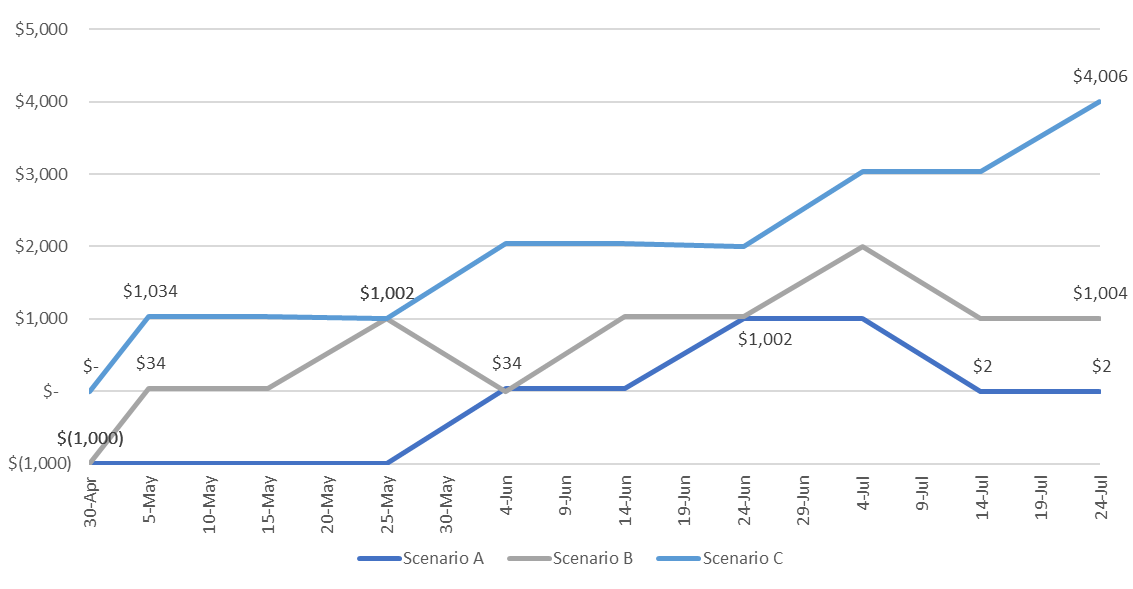
When we compare the 3 scenarios:
Scenario C has:
• 5x the cash balance of A
• 2.5x the balance of B
This is only one aspect of cash in a business. There are other levers to pull for assets and owners equity, but liabilities are often more difficult to move quickly on.
Scenario C has:
• 5x the cash balance of A
• 2.5x the balance of B
This is only one aspect of cash in a business. There are other levers to pull for assets and owners equity, but liabilities are often more difficult to move quickly on.
So, ideally, a business will have:
• Favorable terms on inventory
• Customers paying immediately
• Little or no reinvestment is needed in the business
If you meet these criteria, the dollars made in “profit” become available to do as you please.
• Favorable terms on inventory
• Customers paying immediately
• Little or no reinvestment is needed in the business
If you meet these criteria, the dollars made in “profit” become available to do as you please.
I broke this down in my newsletter this week, which you can check out here (subscribe so you don't miss these in the future):
getrevue.co
getrevue.co
Thank you for reading!
If you enjoyed it, I'd appreciate a follow (@KurtisHanni) and RT of the first tweet:
If you enjoyed it, I'd appreciate a follow (@KurtisHanni) and RT of the first tweet:
Loading suggestions...