

DeFi is a realm of unbound financial creativity.
Let's break down a novel new mechanism that amplifies and optimizes yield in an innovative new way.
Here is everything you need to know about @ChickenBonds.
A 🧵
Let's break down a novel new mechanism that amplifies and optimizes yield in an innovative new way.
Here is everything you need to know about @ChickenBonds.
A 🧵
First off, let's make sure we know what a bond is.
A bond is a financial instrument in which an investor loans money to a borrower.
The investor then receives interest on the bond.
They can redeem their investment back once their bond reaches "maturity."
A bond is a financial instrument in which an investor loans money to a borrower.
The investor then receives interest on the bond.
They can redeem their investment back once their bond reaches "maturity."
So, what's a chicken bond?
A chicken bond differs from your normal bond due to 3 key factors.
1) These bonds are principle protected - You can claim back your investment at any point.
2) There is no fixed maturity.
3) They incorporate dynamic NFTs.
A chicken bond differs from your normal bond due to 3 key factors.
1) These bonds are principle protected - You can claim back your investment at any point.
2) There is no fixed maturity.
3) They incorporate dynamic NFTs.
ChickenBonds are built by @LiquityProtocol.
A borrowing protocol that allows you to take 0-interest loans on your $ETH.
All loans on the protocol are paid out via their native decentralized stablecoin $LUSD
It is this $LUSD that you currently use to create a chicken bond.
A borrowing protocol that allows you to take 0-interest loans on your $ETH.
All loans on the protocol are paid out via their native decentralized stablecoin $LUSD
It is this $LUSD that you currently use to create a chicken bond.
You have two options to acquire $LUSD to create a bond.
1) As stated above, use your $ETH as collateral, and borrow $LUSD.
2) Swap into $LUSD via a DEX such as @CurveFinance
Bonding is super simple and takes place on multiple different frontends.
1) As stated above, use your $ETH as collateral, and borrow $LUSD.
2) Swap into $LUSD via a DEX such as @CurveFinance
Bonding is super simple and takes place on multiple different frontends.
Naly, that's cool, but why would I want to bond $LUSD?
Currently, you can use $LUSD on several protocols to earn stablecoin yield.
Chicken Bonds are a mechanism to maximise this yield.
They are essentially an "NFT-enhanced yield optimizer".
Let's break it down.
Currently, you can use $LUSD on several protocols to earn stablecoin yield.
Chicken Bonds are a mechanism to maximise this yield.
They are essentially an "NFT-enhanced yield optimizer".
Let's break it down.
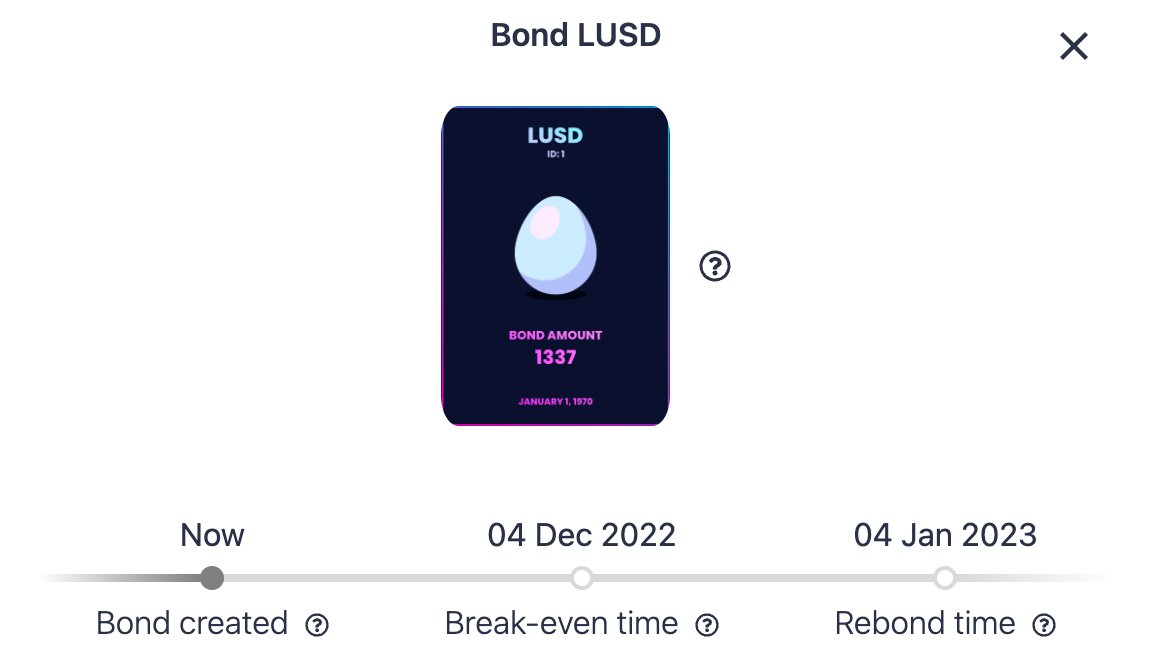
As soon as you bond your $LUSD, you receive an ERC721 "Bonding NFT".
Your position will instantly start accruing rewards in the form of $bLUSD tokens.
You will not earn this $bLUSD directly, it will accrue virtually in your wallet until claimed.
Your position will instantly start accruing rewards in the form of $bLUSD tokens.
You will not earn this $bLUSD directly, it will accrue virtually in your wallet until claimed.
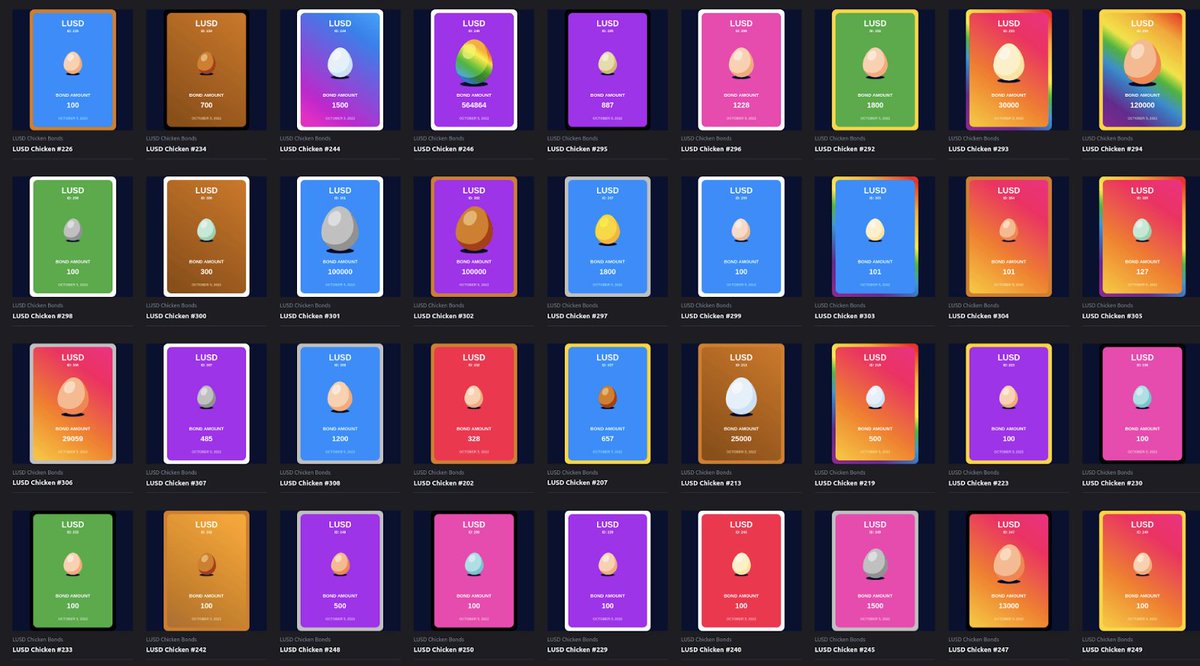
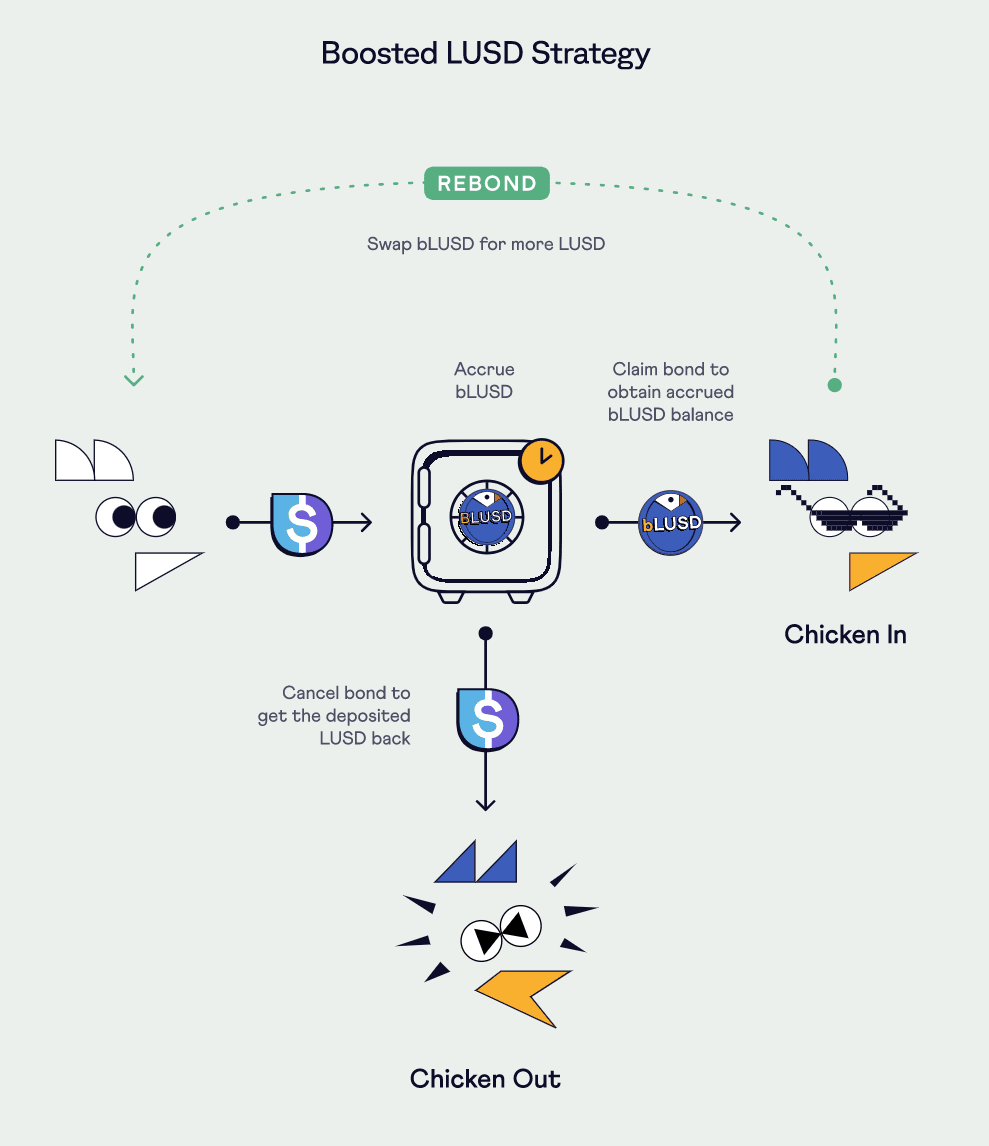
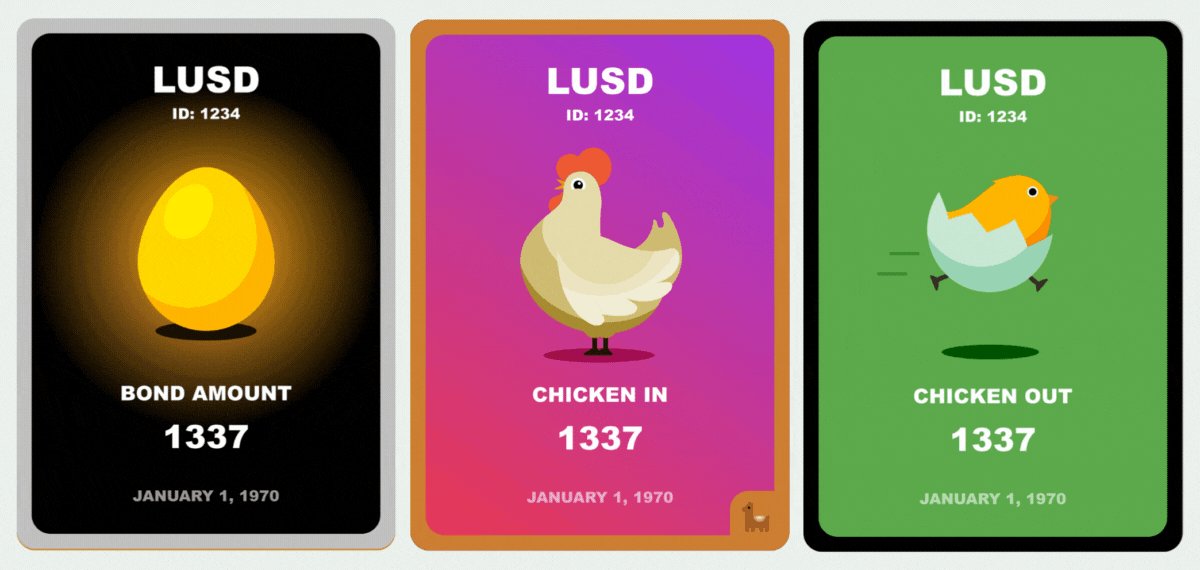
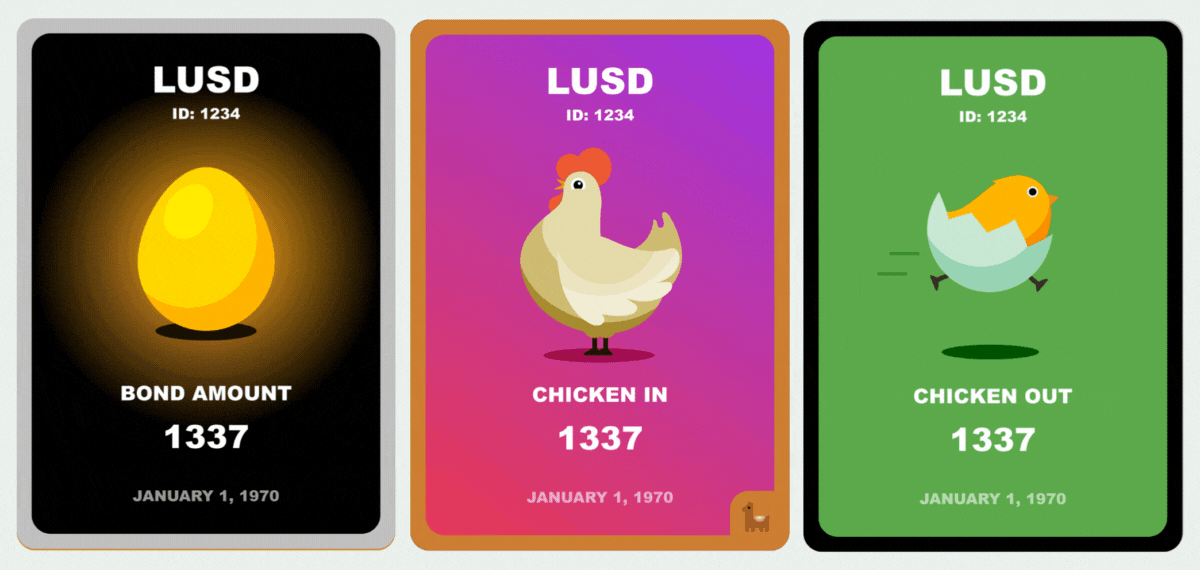
At any point, you can select to "Chicken in" and mint the virtually accrued $bLUSD.
Or, you could select to "Chicken Out", forfeiting the accrued $bLUSD to redeem your underlying $LUSD.
Both actions will dynamically change the aesthetic of your NFT.
Or, you could select to "Chicken Out", forfeiting the accrued $bLUSD to redeem your underlying $LUSD.
Both actions will dynamically change the aesthetic of your NFT.
Whoa, hold up there Naly. What's this $bLUSD?!
$bLUSD is an interest-bearing version of $LUSD.
The ratio of $BLUSD : $LUSD changes due to underlying yield generation and token backing.
$bLUSD is an interest-bearing version of $LUSD.
The ratio of $BLUSD : $LUSD changes due to underlying yield generation and token backing.
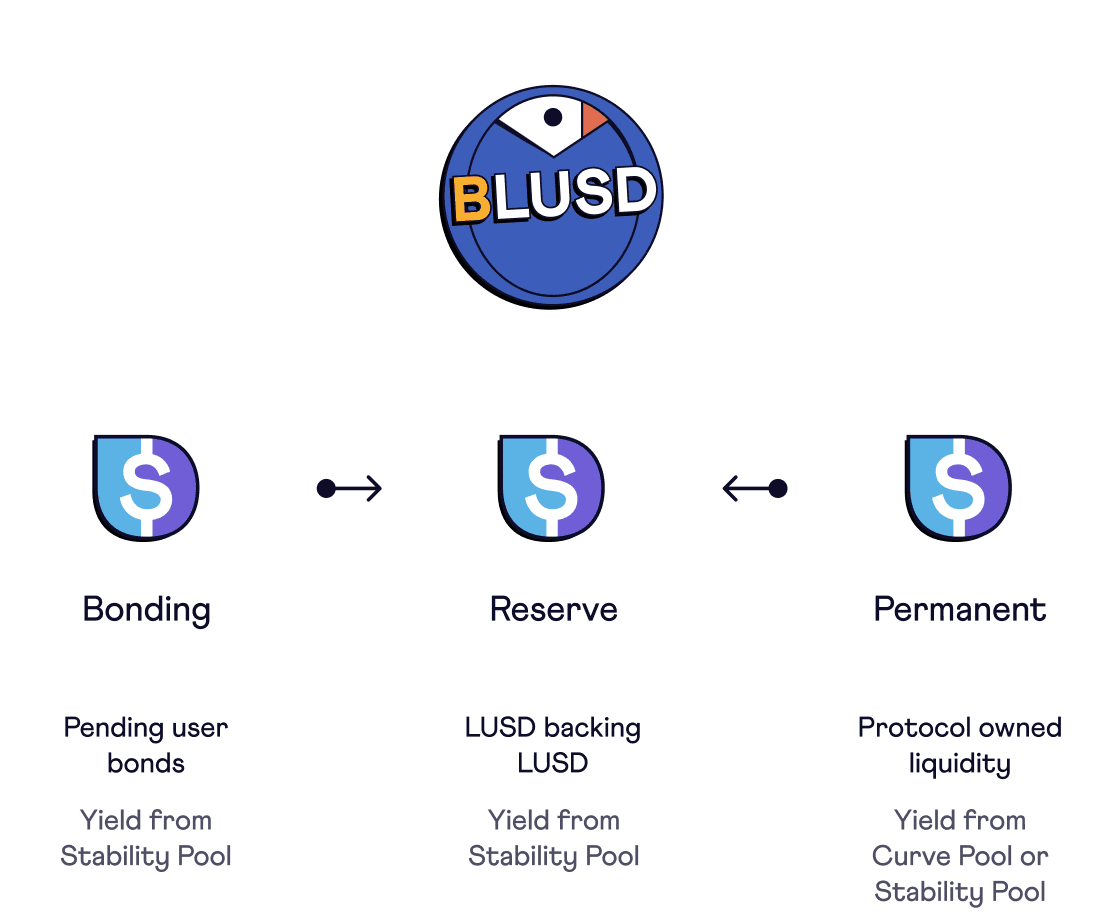
$bLUSD has an ever-growing floor price due to yield generation from 3 different sources.
1) Pending Bucket
2) Reserve Bucket
3) Permanent Bucket
You can think of these "buckets" as the internal treasury accounting for the protocol.
1) Pending Bucket
2) Reserve Bucket
3) Permanent Bucket
You can think of these "buckets" as the internal treasury accounting for the protocol.
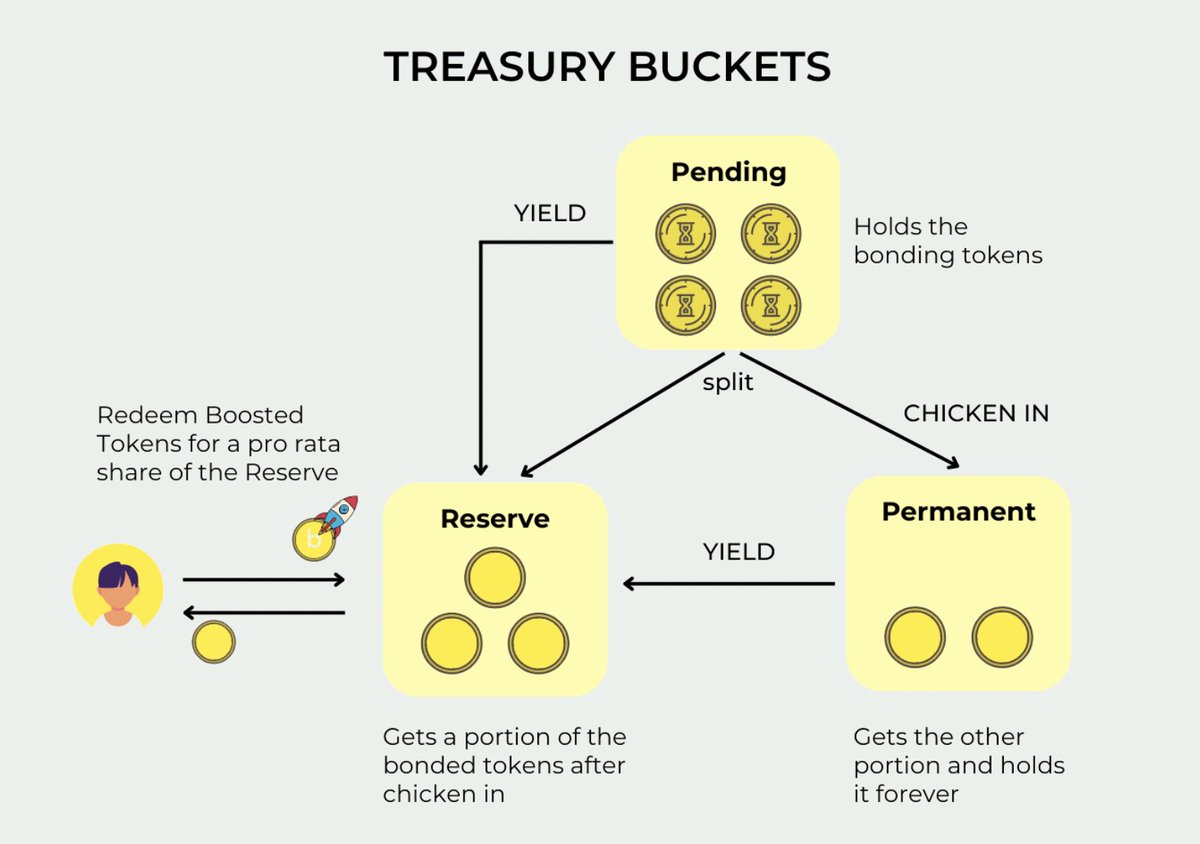
1) Pending Bucket
When you bond your $LUSD, it's sent to the Pending Bucket.
This bucket places your $LUSD in the Liquity stability pool, earning both $ETH and $LQTY rewards.
These rewards are then compounded back into $LUSD and sent to two other buckets.
When you bond your $LUSD, it's sent to the Pending Bucket.
This bucket places your $LUSD in the Liquity stability pool, earning both $ETH and $LQTY rewards.
These rewards are then compounded back into $LUSD and sent to two other buckets.
2) Reserve bucket
The $LUSD within this bucket is what backs $bLUSD.
This $LUSD also earns extra yield via the stability pool and creates a yield-earning flywheel, slowly increasing the backing of $bLUSD.
The $LUSD within this bucket is what backs $bLUSD.
This $LUSD also earns extra yield via the stability pool and creates a yield-earning flywheel, slowly increasing the backing of $bLUSD.
3) Permanent Bucket
The $LUSD sent to the permanent bucket grows the POL of $LUSD.
It sends yield to the Reserve Bucket.
It also systemically shifts $LUSD between different protocols to earn additional yield and help to secure the $LUSD peg.
The $LUSD sent to the permanent bucket grows the POL of $LUSD.
It sends yield to the Reserve Bucket.
It also systemically shifts $LUSD between different protocols to earn additional yield and help to secure the $LUSD peg.
Confusing?
The key takeaway here is that your deposited $LUSD is used to generate yield.
The yield is compounded into more $LUSD that backs $bLUSD.
And, as your $LUSD stays within the pending bucket, you can "Chicken out" to remove your principal at any point.
The key takeaway here is that your deposited $LUSD is used to generate yield.
The yield is compounded into more $LUSD that backs $bLUSD.
And, as your $LUSD stays within the pending bucket, you can "Chicken out" to remove your principal at any point.
Alternatively, you could choose to Chicken in.
Both actions are permanent and cannot be reversed.
If you select to "Chicken in" you give up your deposited $LUSD to claim the accrued $bLUSD.
If you Chicken Out, you forfeit the $bLUSD and redeem your $LUSD.
Both actions are permanent and cannot be reversed.
If you select to "Chicken in" you give up your deposited $LUSD to claim the accrued $bLUSD.
If you Chicken Out, you forfeit the $bLUSD and redeem your $LUSD.
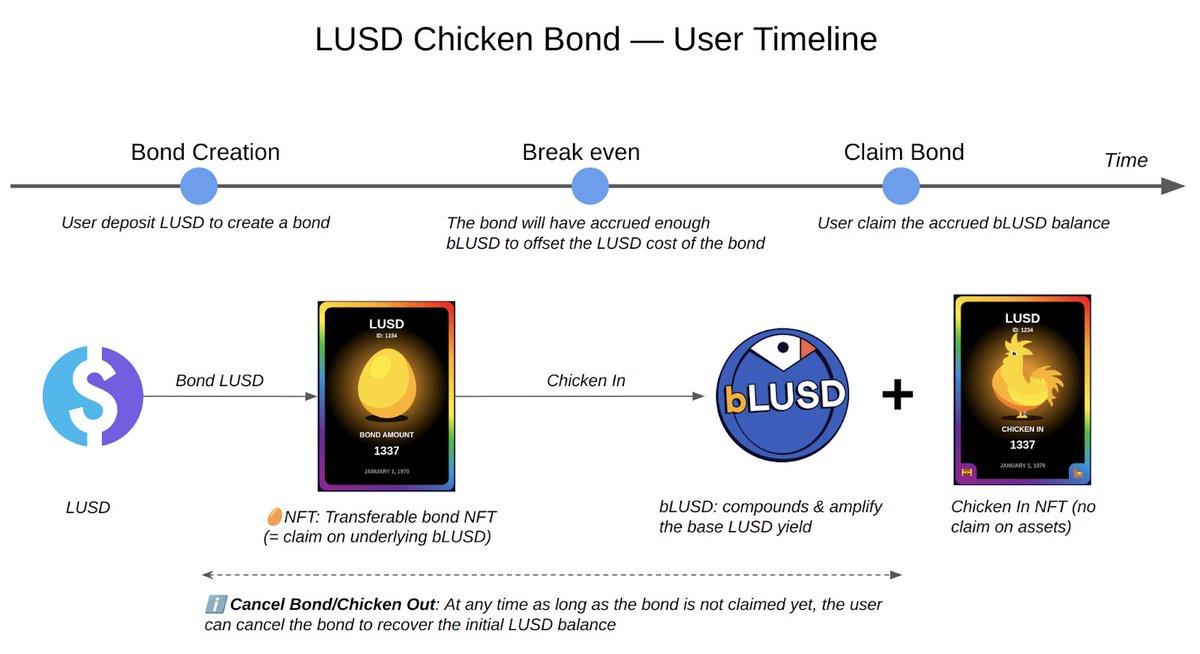
But, what happens to the LUSD when you chicken in?
The LUSD is sent to both of the other buckets.
The tokens are split between these two buckets via a formula that ensures the $bLUSD you claim is backed by the same amount of $LUSD in the reserve bucket.
The LUSD is sent to both of the other buckets.
The tokens are split between these two buckets via a formula that ensures the $bLUSD you claim is backed by the same amount of $LUSD in the reserve bucket.
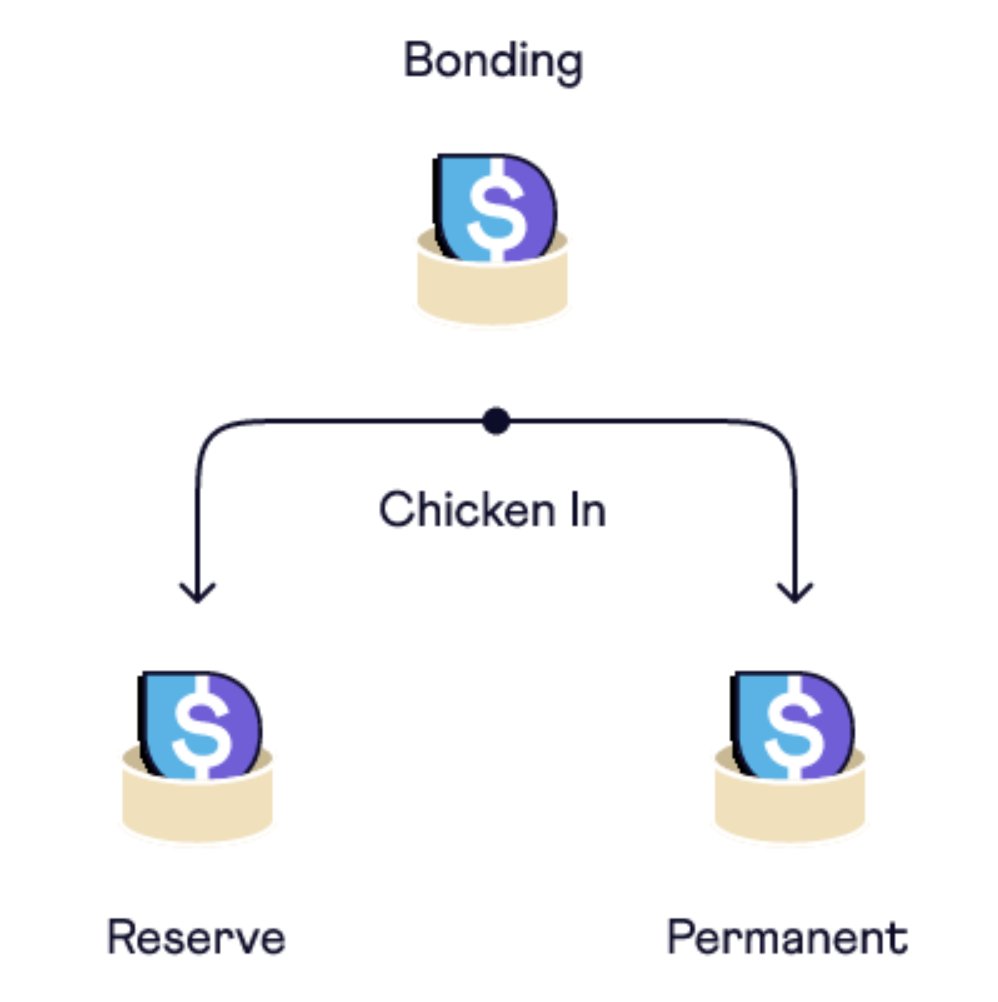
All minted $bLUSD are always backed by $LUSD.
In addition, the reserve bucket receives additional yield sources from both of the other buckets.
This Yield amplification ensures a $bLUSD rising floor price.
$bLUSD will always trade at a premium against $LUSD.
In addition, the reserve bucket receives additional yield sources from both of the other buckets.
This Yield amplification ensures a $bLUSD rising floor price.
$bLUSD will always trade at a premium against $LUSD.
Sweet!
So, you can chicken in to claim $bLUSD tokens that have an increasing floor price.
But, at what point do you chicken in?
And what do you do next?
So, you can chicken in to claim $bLUSD tokens that have an increasing floor price.
But, at what point do you chicken in?
And what do you do next?
Typically, you would select to chicken in when your bond breaks even.
This is that point at which the market value of the currently accrued $bLUSD exceeds the value of the bonded tokens.
But Chicken bonds integrate a level of gamification and optimization.
This is that point at which the market value of the currently accrued $bLUSD exceeds the value of the bonded tokens.
But Chicken bonds integrate a level of gamification and optimization.
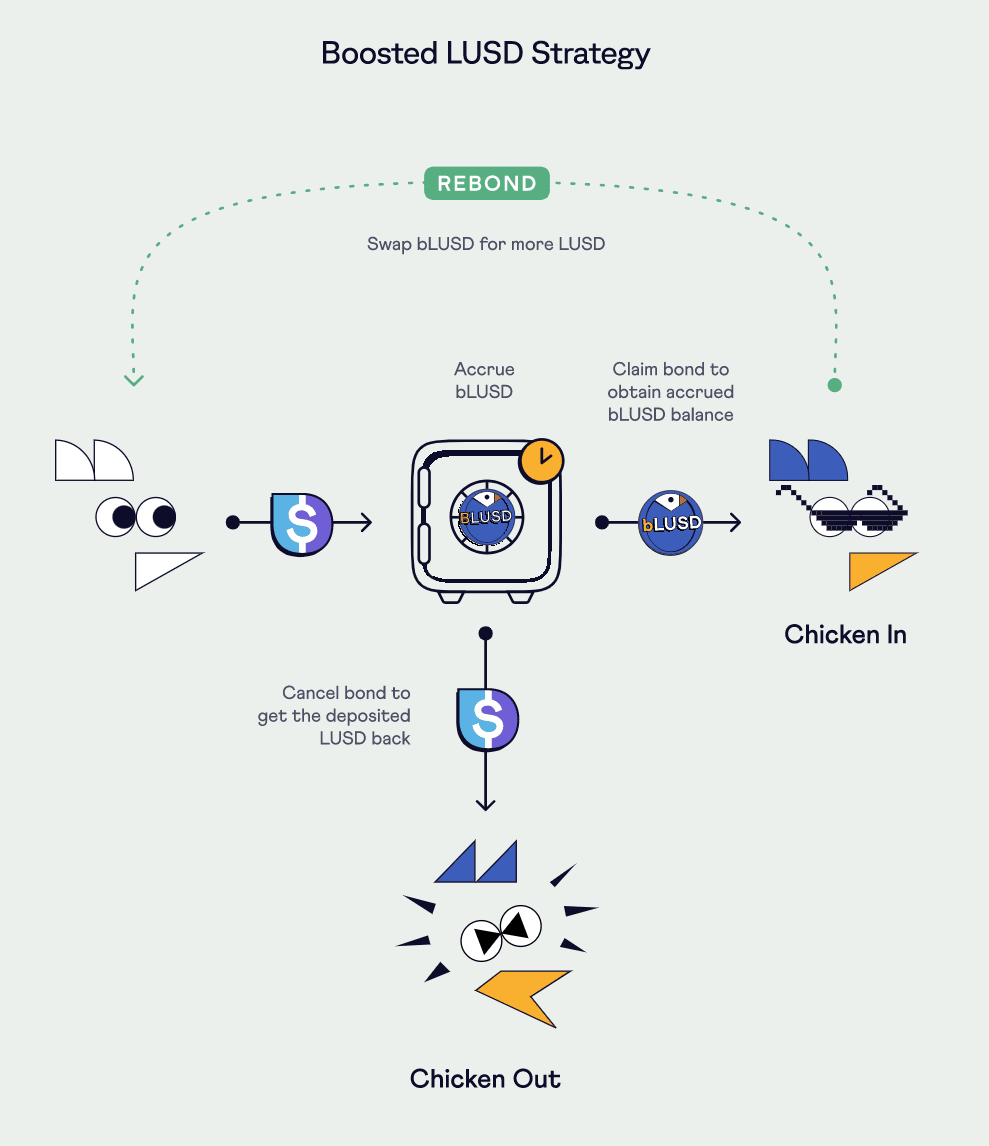
$bLUSD does not accrue linearly.
Your bond initially starts accruing $bLUSD rapidly but will then plateau.
It also reaches a cap.
cap = bond_amount / redemption_price
where redemption_price = $LUSD in reserve (bucket) / $bLUSD supply
Your bond initially starts accruing $bLUSD rapidly but will then plateau.
It also reaches a cap.
cap = bond_amount / redemption_price
where redemption_price = $LUSD in reserve (bucket) / $bLUSD supply
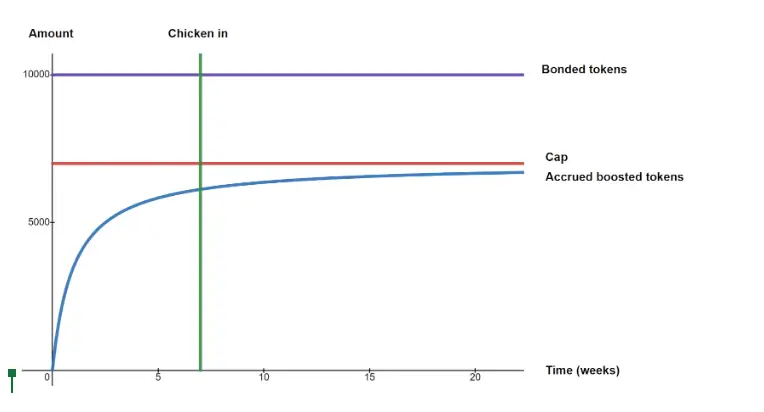
This curve ensures that fresh bonders accrue $bLUSD more rapidly than old bonds.
This incentivizes continued rebonding.
The cap ensures that claimed $bLUSD never affects the redemption price.
It also means there is an optimal time to Chicken In.
This incentivizes continued rebonding.
The cap ensures that claimed $bLUSD never affects the redemption price.
It also means there is an optimal time to Chicken In.
If the market price of $bLUSD is trading above the floor price, you can utilise the curve pool to swap back to $LUSD for a premium and rebond.
If you do this, you want to ensure you are maximising $bLUSD accrual in the long time frame.
If you do this, you want to ensure you are maximising $bLUSD accrual in the long time frame.
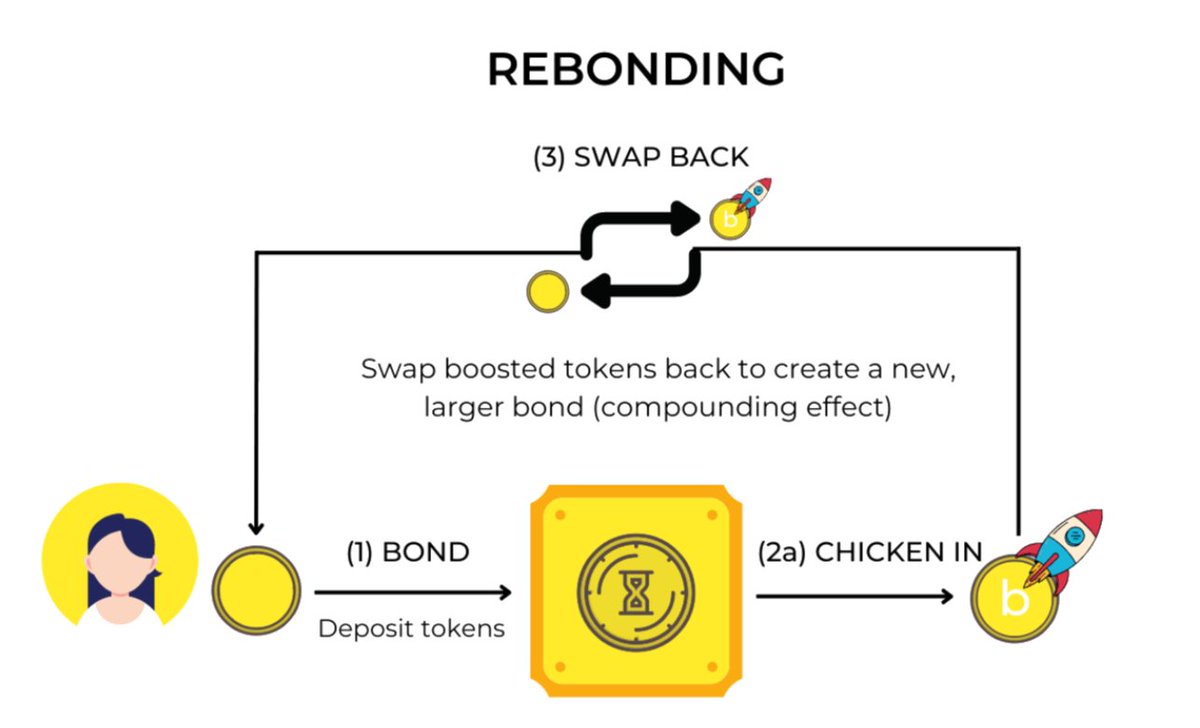
Chickening in early results in less $bLUSD, it also directs more of your $LUSD to the permanent bucket and amplifies the $bLUSD yield.
Due to the plateauing curve, Chickening in late returns less $bLUSD over time.
You lose out on potential $bLUSD if you were to rebond optimally
Due to the plateauing curve, Chickening in late returns less $bLUSD over time.
You lose out on potential $bLUSD if you were to rebond optimally
The yield amplification of $bLUSD is a factor of the number of users currently bonding.
If the market price is trading significantly above the floor, you could chicken in early and still profit.
The system requires a level of attention and gamification to ensure optimization.
If the market price is trading significantly above the floor, you could chicken in early and still profit.
The system requires a level of attention and gamification to ensure optimization.
This is further emphasized by the incorporation of NFTs.
Rarities, dynamic changes, and secondary marketplaces add a creative spin on top of a somewhat complex financial system.
Rarities, dynamic changes, and secondary marketplaces add a creative spin on top of a somewhat complex financial system.
You also don't have to rebond.
Once your chicken is in, you could just hold the $bLUSD.
You will hold an appreciating stablecoin with optimized yield.
You don't even have to bond; you could swap into $bLUSD via the curve pool.
Once your chicken is in, you could just hold the $bLUSD.
You will hold an appreciating stablecoin with optimized yield.
You don't even have to bond; you could swap into $bLUSD via the curve pool.
Holding $bLUSD alone unlocks:
🔹Amplified and optimised yield
🔹Fully redeemable interest-bearing stablecoin
Clearly, being exposed to this token is beneficial.
🔹Amplified and optimised yield
🔹Fully redeemable interest-bearing stablecoin
Clearly, being exposed to this token is beneficial.
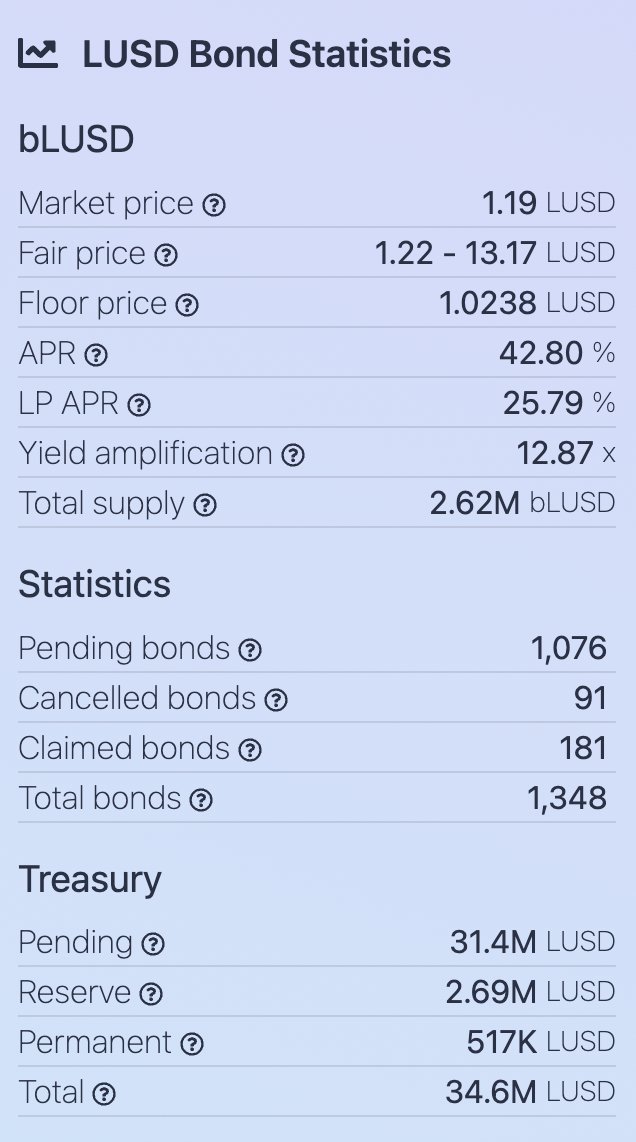
You can see some of the statistics below.
The market price is currently trading far higher than the floor price due to users acquiring the token to gain exposure to yield amplification.
The market price is currently trading far higher than the floor price due to users acquiring the token to gain exposure to yield amplification.
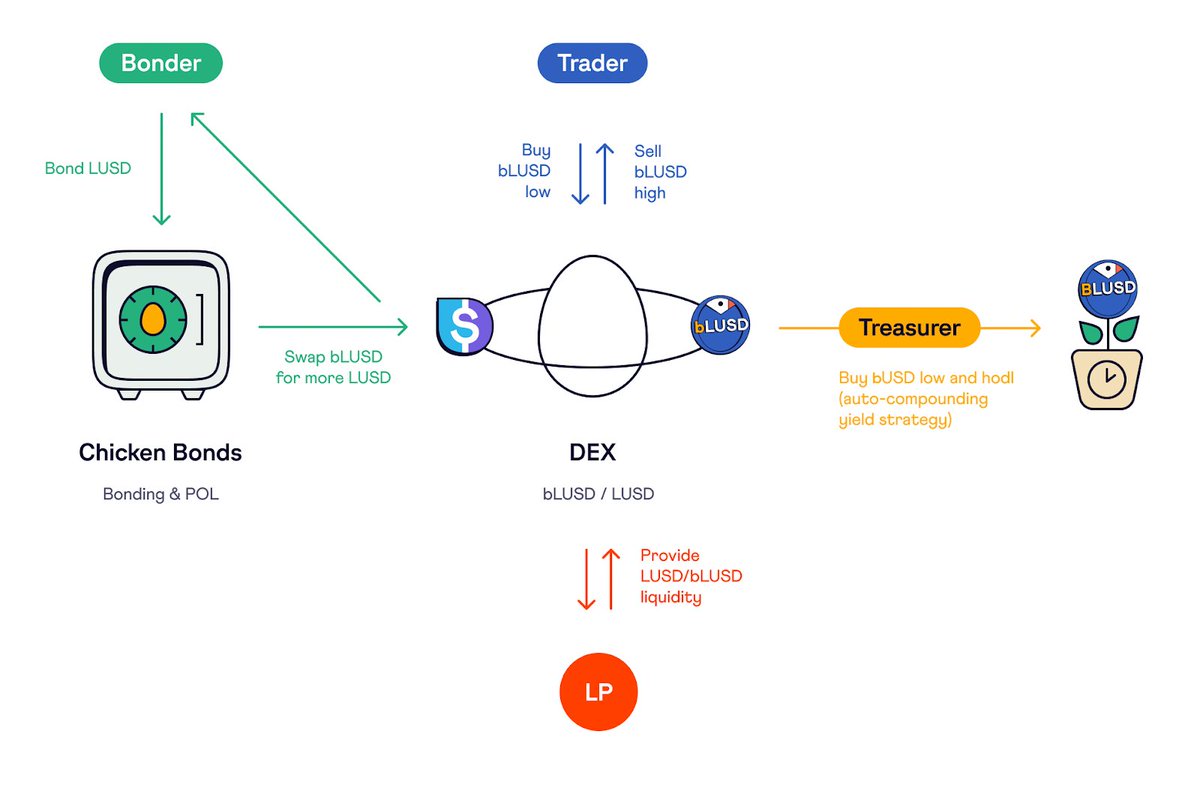
Whether a bonder, a trader, a liquidity provider or a treasurer.
There are multiple options to participate in the system.
There are multiple options to participate in the system.
Chicken Bonds offer an innovative and playful mechanism for optimizing stablecoin yield.
They open up new avenues of exploration for protocols, DAOs and users alike.
And $LUSD is only the beginning.
They open up new avenues of exploration for protocols, DAOs and users alike.
And $LUSD is only the beginning.
Protocols will be able to utilise this mechanism in the future for their own Yield-Bearing token.
This would allow protocols to bootstrap POL in an efficient and integrated way.
I am intrigued to see how it plays out.
This would allow protocols to bootstrap POL in an efficient and integrated way.
I am intrigued to see how it plays out.
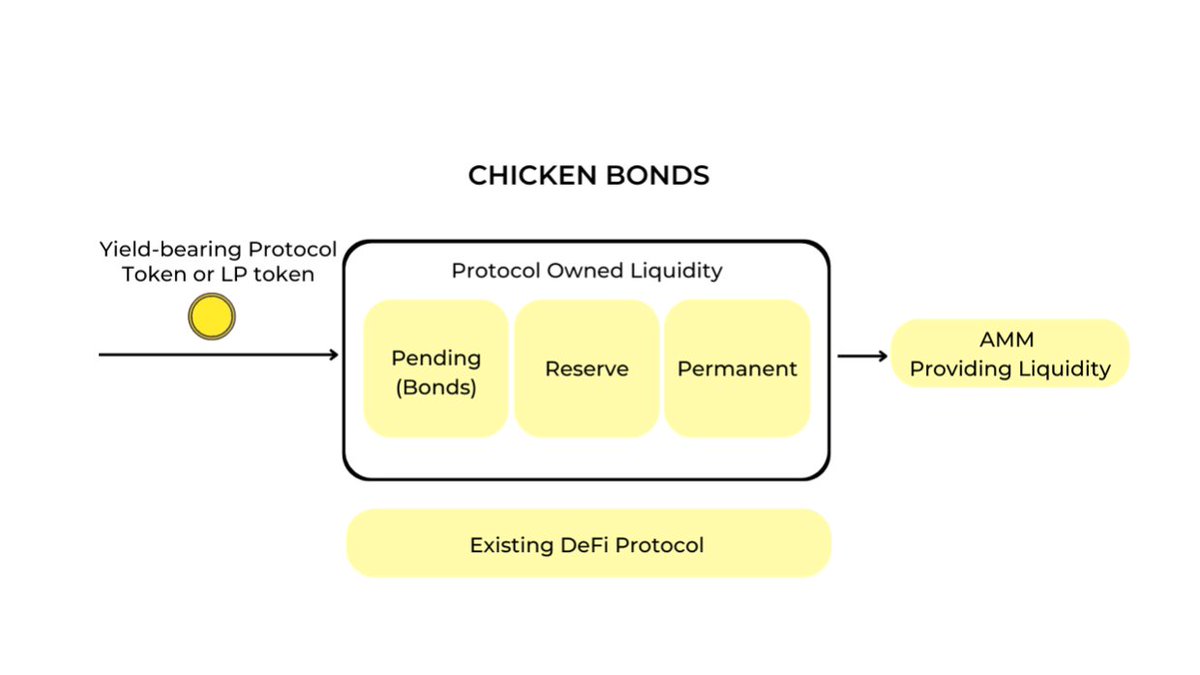
There is nearly $40 million in TVL within these bonds, and the number of unique users is rapidly rising.
They are clearly enticing.
🔹 Principle protected
🔹 Yield optimisation
🔹 Dynamic NFTs
🔹 Gamified and playful
They are clearly enticing.
🔹 Principle protected
🔹 Yield optimisation
🔹 Dynamic NFTs
🔹 Gamified and playful
So, what do you think? Are you intrigued? Confused?
I would love to hear your opinion in the comments.
If you made it this far and enjoyed the thread, feel free to give it a share. 🫡
I would love to hear your opinion in the comments.
If you made it this far and enjoyed the thread, feel free to give it a share. 🫡
Loading suggestions...