

COVID-19: Pediatric Long COVID
A Long COVID clinic for children was opened in the USA in April 2022 and they have seen 43 patients so far with 72% being female ranging from age 5 months to 17 years with an example presented in this video ( youtu.be ). 🧵1/
A Long COVID clinic for children was opened in the USA in April 2022 and they have seen 43 patients so far with 72% being female ranging from age 5 months to 17 years with an example presented in this video ( youtu.be ). 🧵1/

Eryka Pawlak describes a typical patient that was a 17 year old female, initial infection in November 2020 with symptoms of headache and tested because her father tested positive. H/T: @Dakota_150 2/
She was not hospitalized, did not need any medication and had no persistent symptoms. Her second COVID infection was in Feb. 2022 with antibody testing a few weeks later to confirm. This time she had fatigue and headaches which initially resolved but then restarted. 3/
She was *not* vaccinated. Her symptoms at the initial Long COVID clinic were:
- brain fog, memory loss, confusion, difficulty concentrating
- dizziness, depression, anxiety, problems sleeping
4/
- brain fog, memory loss, confusion, difficulty concentrating
- dizziness, depression, anxiety, problems sleeping
4/
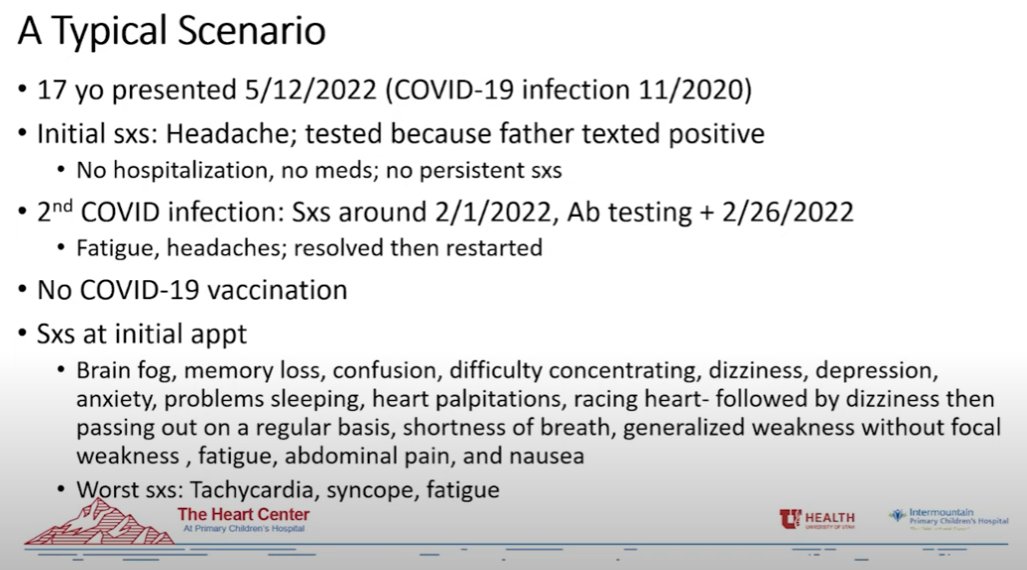
- heart palpitations, racing heart followed by dizziness then passing out on a regular basis
- shortness of breath, generalized weakness, fatigue, abdominal pain and nausea
5/
- shortness of breath, generalized weakness, fatigue, abdominal pain and nausea
5/
Her worst symptoms were tachycardia, syncope (fainting), and fatigue. She was referred to Cardiology where they diagnosed her with orthostatic intolerance ( inability to remain upright without symptoms ). 6/
She had a number of tests done and referrals along with symptom management recommendations. 7/
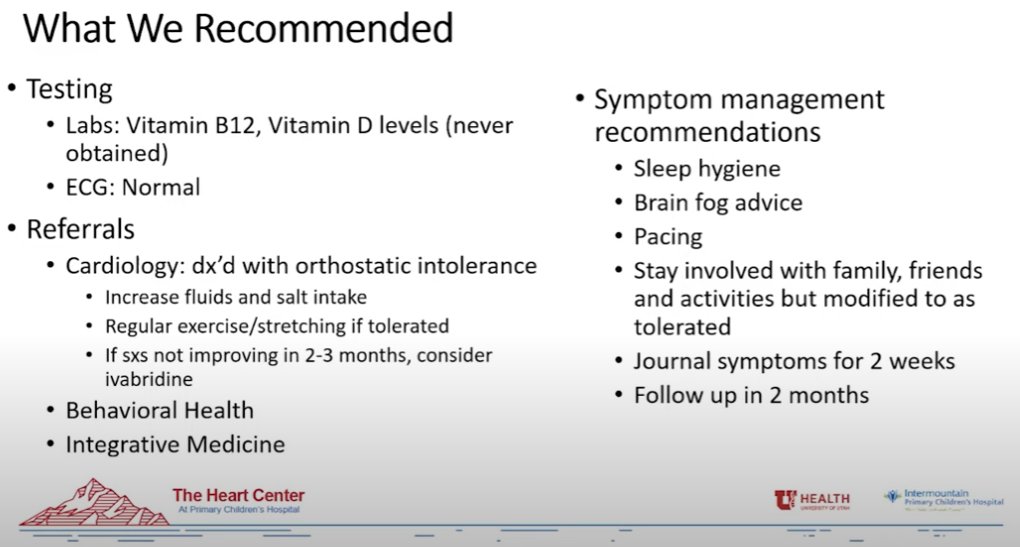
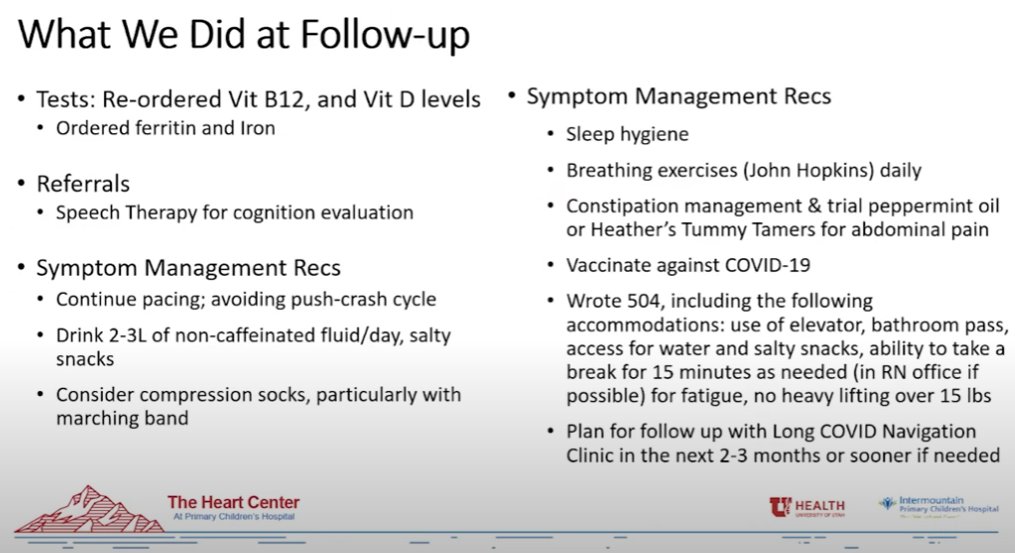
At her follow-up 3 months later some indicators were worse such as mental fatigue and somatic symptom scale, but she reported seeing a lot of improvement since her last appointment and feels her symptoms are more manageable than before. 8/
Dr. Dongngan Troung looks at pediatric Long COVID and some of the differences compared to the adult version in this video ( youtu.be ). 9/
This is a summary of their talk. There is much less data on pediatric Long COVID than MIS-C or adult Long COVID so there are still lots of unknowns but this is what they know so far. 10/
There is no pediatric specific definition for Long COVID, the WHO case definition is more adult specific. 11/
Some differences between pediatric and adult Long COVID:
- Most children/youth had mild disease and some asymptomatic
- Most children were not hospitalized with COVID-19, even less in ICUs
12/
- Most children/youth had mild disease and some asymptomatic
- Most children were not hospitalized with COVID-19, even less in ICUs
12/
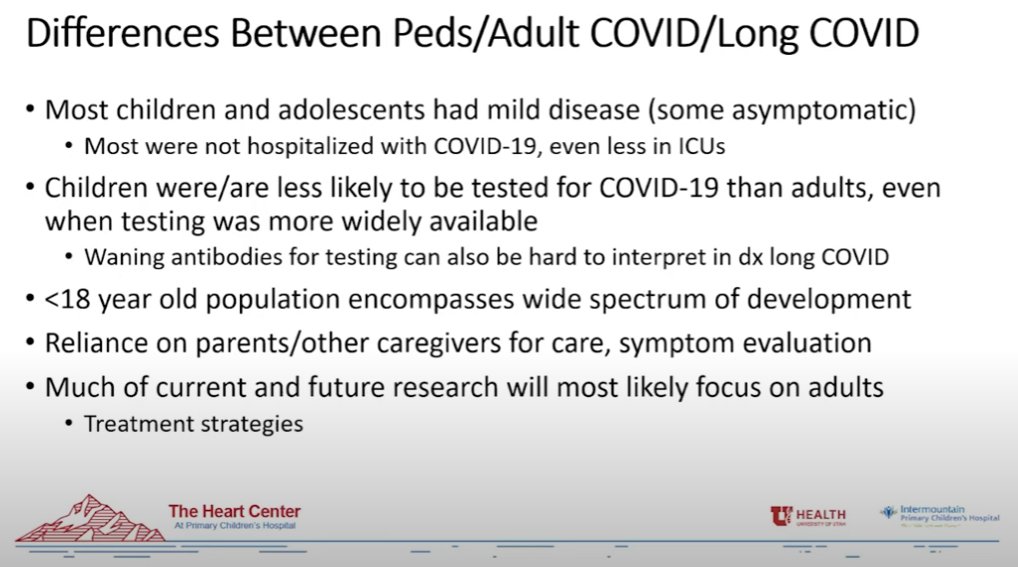
- Children less likely to be tested for COVID than adults even when testing more widely available
- Waning antibodies for testing can also be hard to interpret in Long COVID
- Population under age 18 encompasses wide spectrum of development
13/
- Waning antibodies for testing can also be hard to interpret in Long COVID
- Population under age 18 encompasses wide spectrum of development
13/
- Reliance on parents/other caregivers for care, symptom evaluation
- Much of current and future research will most likely focus on adults
14/
- Much of current and future research will most likely focus on adults
14/
The concept of pediatric post-virus syndromes is not new and there are established long-term complications for common pediatric infectious disease. The table shows many examples. 15/
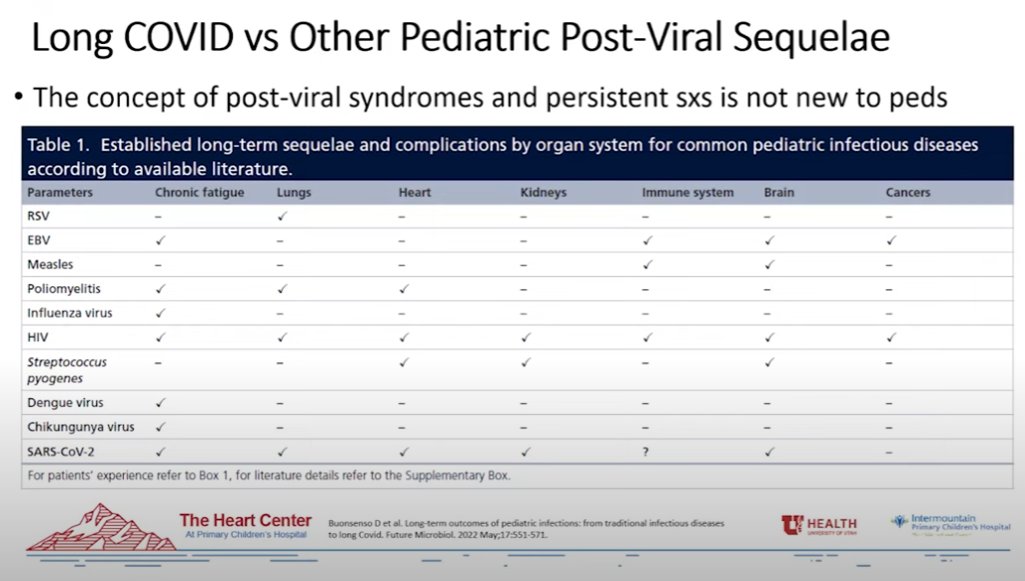
Lungs impacted by:
- RSV
- Poliomyelitis
- HIV
- COVID
Chronic fatigue:
- EBV
- Poliomyelitis
- Influenza
- HIV
- Dengue
- Chikungunya
- COVID
Heart:
- Poliomyelitis
- HIV
- Streptococcus pyogenes
- Dengue
- Chikungunya
- COVID
16/
- RSV
- Poliomyelitis
- HIV
- COVID
Chronic fatigue:
- EBV
- Poliomyelitis
- Influenza
- HIV
- Dengue
- Chikungunya
- COVID
Heart:
- Poliomyelitis
- HIV
- Streptococcus pyogenes
- Dengue
- Chikungunya
- COVID
16/
Additional examples are given in the table for impact on kidneys, the immune system, brain, and cancers. 17/
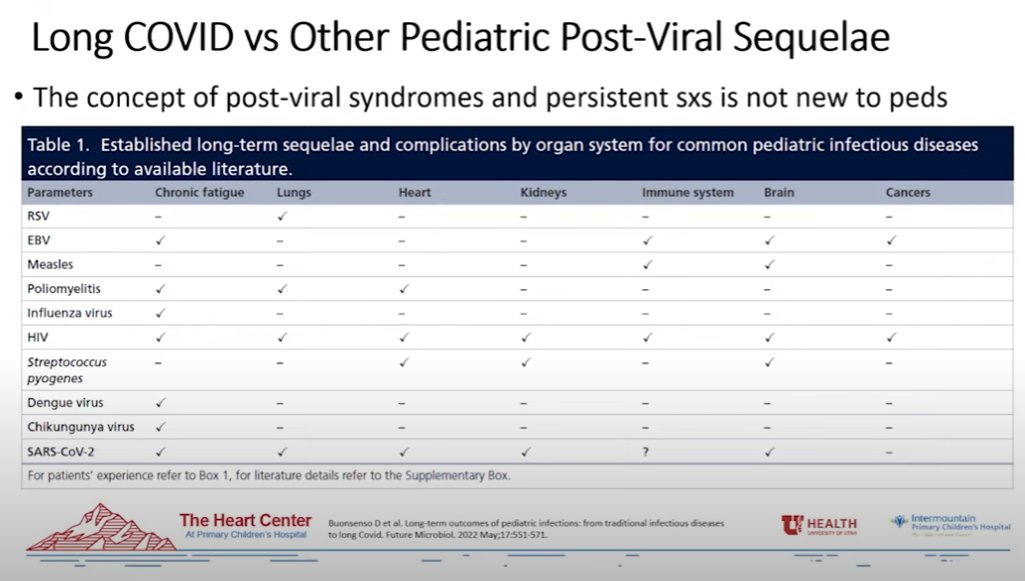
Dr. Troung points out some of the limitations of research so far, such as reliance on self or parent reported symptoms, often without clinical assessments and no standardized testing assessment, absence of control groups, biases including selection, non-response, and recall. 18/
The prevalence of pediatric Long COVID has been highly variable ranging from early data suggesting >50% to more recent studies showing 4%-6% where accuracy is difficult to determine from the limitations listed above. 19/
Several factors have been associated with Long COVID development in children:
- older age (e.g. teenagers)
- female sex
- past history of allergic diseases
20/
- older age (e.g. teenagers)
- female sex
- past history of allergic diseases
20/
- worse pre-COVID physical or mental health
- for those hospitalized, longer stay correlated with greater severity, persistent symptoms
21/
- for those hospitalized, longer stay correlated with greater severity, persistent symptoms
21/
The most common symptoms in children were:
- Fatigue and malaise
- Headaches
- Brain fog, attention problems
- Sleep disturbance
- Tachycardia and palpitations
- Chest pain
- Dysautonomia (POTS, orthostatic intolerance)
- Nausea
- Abdominal pain
- Rash
22/
- Fatigue and malaise
- Headaches
- Brain fog, attention problems
- Sleep disturbance
- Tachycardia and palpitations
- Chest pain
- Dysautonomia (POTS, orthostatic intolerance)
- Nausea
- Abdominal pain
- Rash
22/
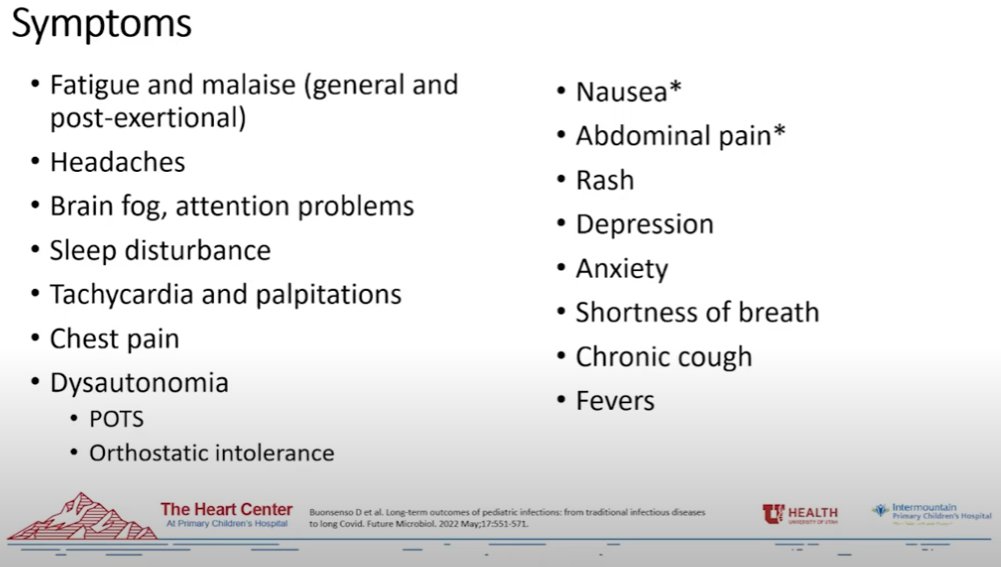
- Depression
- Anxiety
- Shortness of breath
- Chronic cough
- Fevers
23/
- Anxiety
- Shortness of breath
- Chronic cough
- Fevers
23/
In children like adults, there is a lot of overlap of symptoms with ME/CFS and females have higher incidence than males. 24/
Every time a child gets infected, there is a chance Long COVID could happen. The more times they get infected, the more chances there are. 25/
There are still a lot of unknowns so it might be a good idea to reduce the risk of children getting infected since they will be living with the consequences of any long term disability for more years than the adults much older than them who are making policies right now. 26/
Loading suggestions...