

More fresh air in your home using exhaust fans and/or ERV/HRV
With a CO2 monitor I was able to measure the impact on fresh air in my home (with 4 people) in various scenarios including turning on all the bathroom and kitchen exhaust fans and using a ventilator (ERV/HRV). 🧵1/
With a CO2 monitor I was able to measure the impact on fresh air in my home (with 4 people) in various scenarios including turning on all the bathroom and kitchen exhaust fans and using a ventilator (ERV/HRV). 🧵1/

I'm using a CO2.click Model C monitor built in Canada by Andre Courchesne (@IndianaTux) using a high quality dual-beam NDIR sensor which I reviewed here ( ). 2/
See further down for more details of what an ERV/HRV is. Our ventilator (HRV) died so I unfortunately had the opportunity to do some measurements with windows closed and no external ventilation coming into the house. 3/
You can see from the graph that the red and orange lines at the top have CO2 measurements that are the highest and over 1200 ppm CO2 in some cases. This is when no fresh air is being brought into the house so makes sense this would be the highest. 4/
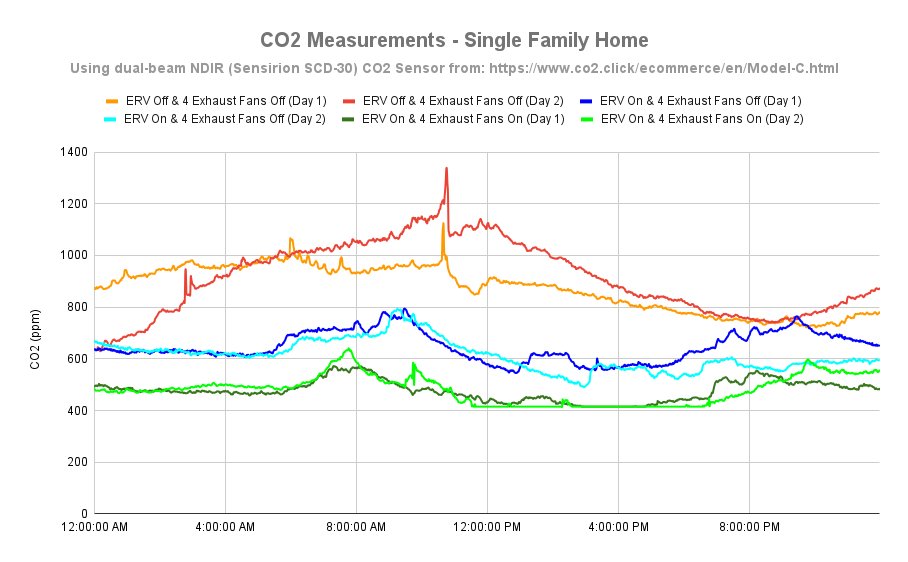
After we had our HRV replaced with an ERV, it continuously brings in fresh air from outside and replaces the stale air from inside with our furnace fan running to distribute the fresh air around the house. 5/
The light and dark blue lines on the graph in the middle show that CO2 levels are much better staying under 800 ppm and closer to 600 ppm. 6/
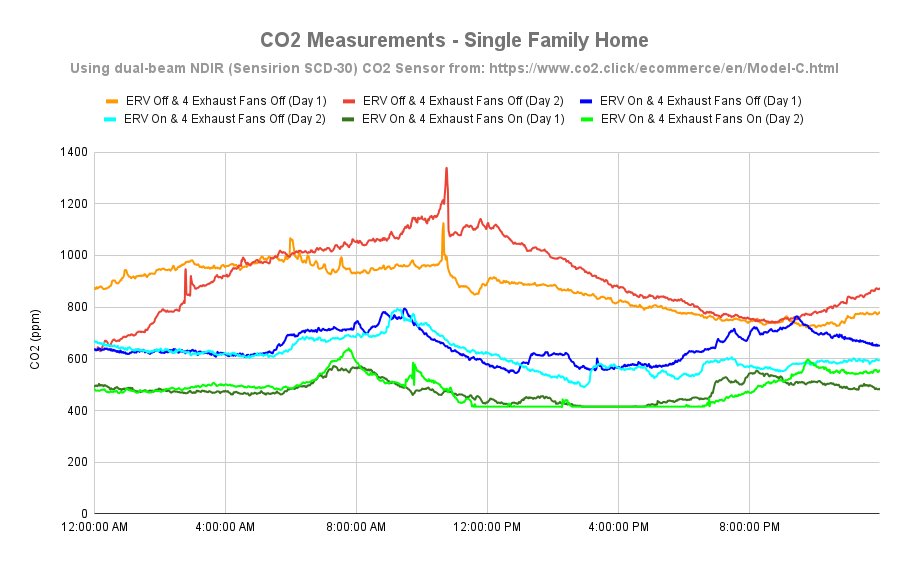
Finally the green lines at the bottom of the graph show an even better improvement with CO2 levels rarely going over 600 ppm and usually staying under 500 ppm. This is when we turned on our 4 exhaust fans (bathroom and kitchen) on top of the ERV running. 7/
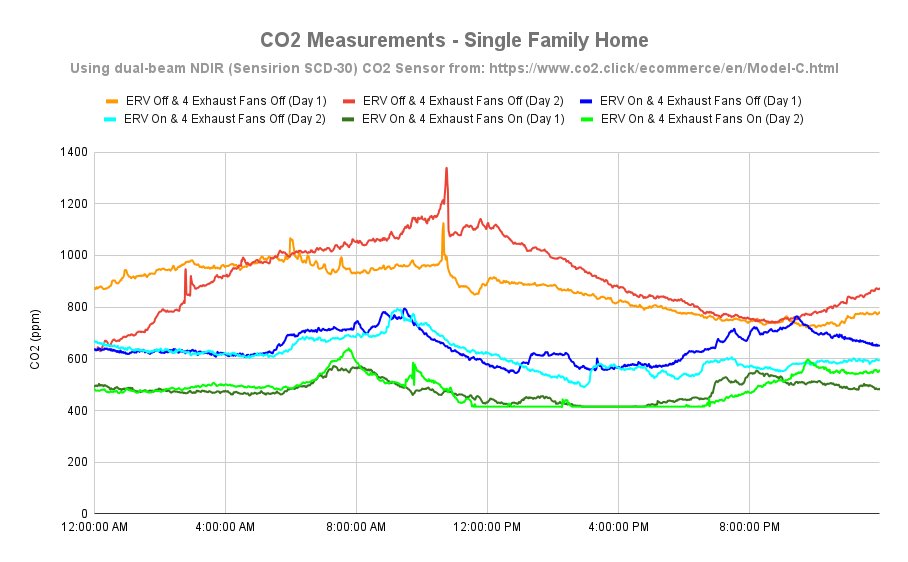
While newer houses are more airtight, they are not perfectly sealed so if you run the exhaust fans in your bathrooms and kitchen, air gets pushed out of your house through the vents... 8/
...and the makeup air to replace it has to come from somewhere which typically gets pulled in from those cracks and spaces that are less sealed, bringing in some fresh air. 9/
I figured the exhaust fans might make a difference but was surprised how much lower CO2 levels were when I actually measured the difference. 10/
As an interesting side note, while we were doing an energy audit on the house where they use a huge blower fan to measure how airtight the house is, the auditor told me that spiders love fresh air sources and will often spin their webs close to one. 11/
Sure enough when we looked in the unfinished part of the basement we found several webs swaying in the makeup air being pulled into the house. 12/
Here is a closer look at how fast CO2 levels decreased over a 5 hour period from when I turned on the 4 exhaust fans (yellow line) and also having the ERV and exhaust fans off but opening multiple windows in the house (blue line at bottom). 13/
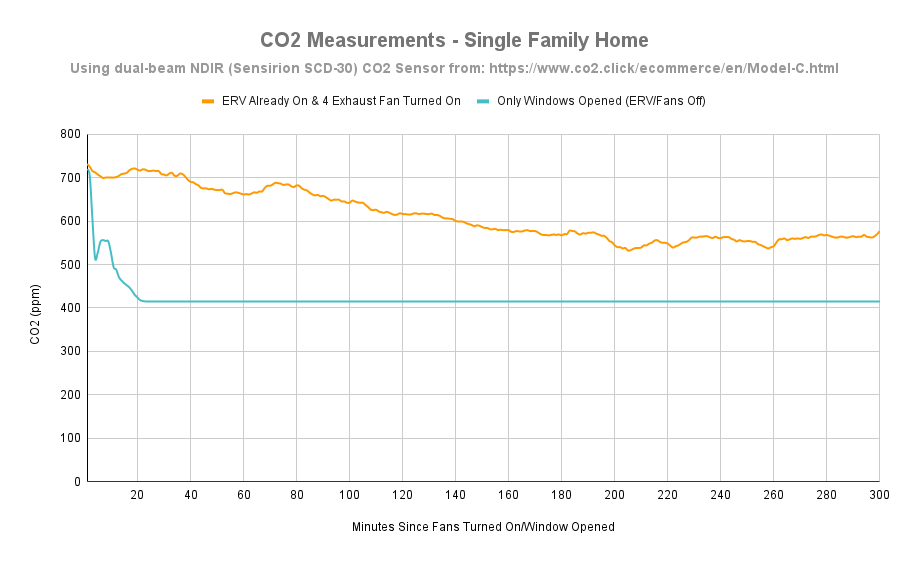
The CO2 levels slowly dropped by 150 ppm over the course of a few hours with the exhaust fans while opening windows caused the CO2 levels to drop to outside concentrations within 20 minutes. 14/
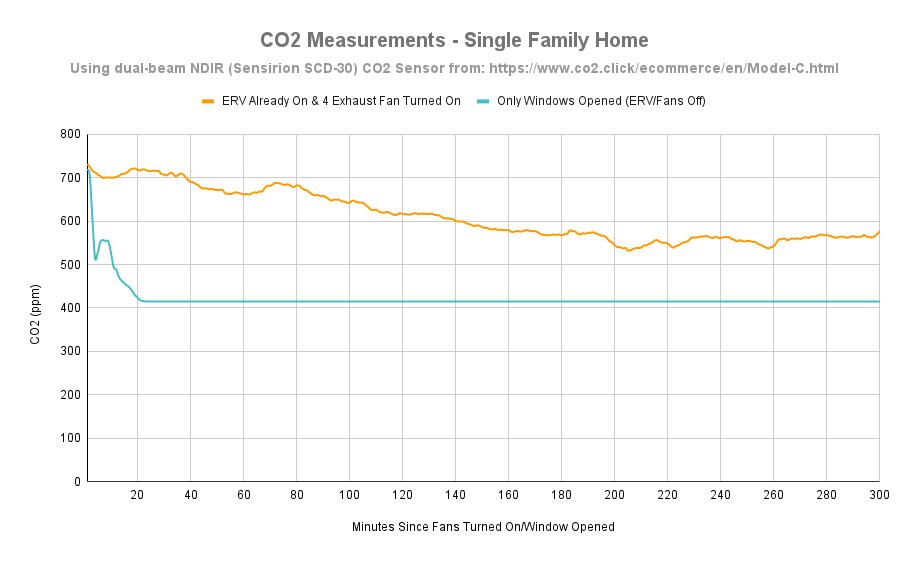
Opening windows is likely a faster and more effective method to ventilate the house but when the weather does not allow for windows to be open, using exhaust fans may help bring in more fresh air and exhaust stale air in a bind. 15/
Every house is different so you may need to actually measure how much if any impact your exhaust fans might have in your situation. 16/
Homes built since 1977 are more airtight which helps save energy but can make the inside air stale ( nrcan.gc.ca ). 17/
Ventilators replace stale indoor air with fresh outdoor air, helps make your home healthier, and gets rid of many pollutants such as excess moisture and moulds, household chemicals, and bacteria. 18/
Fresh air also dilutes aerosols, lowering the concentration of virus particles in the air that people breath/speak/shout/sing out when they are infected with respiratory viruses ( ). 19/
The two common types of ventilators are ERV (energy recovery ventilator) which can exchange both heat and moisture and HRV (heat recovery ventilator) which during heating season captures heat from the stale air leaving the house ( nrcan.gc.ca ). 20/
Please note I am not an HVAC or ventilation expert so people should consult someone with proper knowledge about their own personal spaces. You can get more information from people like @DavidElfstrom and @joeyfox85 ( ). 21/
Even more information on ventilation is also available here: itsairborne.com 22/
A couple more suggestions for places to get information on ventilation ( ). 23/
Today is #WorldVentil8Day see this site to get facts and resources ( worldventil8day.com ). H/T: @WorldVentil8Day and @IndianaTux
There are a number of events and webinars taking place so check out which ones you might be interested in. 24/
There are a number of events and webinars taking place so check out which ones you might be interested in. 24/
Loading suggestions...