

I’m all about using comparative physiology to understand critical illness but I gotta call BS on this.
The “mysterious EEG pattern” they described is burst suppression & the most likely explanation for it (and the mysterious prolonged unconsciousness) is OVERSEDATION.
A 🧵
1/
The “mysterious EEG pattern” they described is burst suppression & the most likely explanation for it (and the mysterious prolonged unconsciousness) is OVERSEDATION.
A 🧵
1/
They claim that deep sedation is neuroprotective based on a *theoretical* model of burst suppression.
We know for *actual studies* done in the ICU that the opposite is true: burst suppression in critical illness is associated with increased mortality.
ncbi.nlm.nih.gov
2/
We know for *actual studies* done in the ICU that the opposite is true: burst suppression in critical illness is associated with increased mortality.
ncbi.nlm.nih.gov
2/
I’m all about the Painted Turtle & what we can learn from it - I’ve even written & given Grand Rounds on this subject! (See this🧵 & link below for example)
But the analogy of C Picta belli to critically ill humans is deeply flawed.
GR lecture: onepagericu.com
3/
But the analogy of C Picta belli to critically ill humans is deeply flawed.
GR lecture: onepagericu.com
3/
The pained turtle (C picta belli) has many unique physiologic adaptations that critically ill humans do not:
The 🐢 doesn’t breathe for 4 mo, drops its temp to -3C, & raises lactate to ~200 mmol/L.
Not at all analogous to people with ARDS on ventilators receiving 100% FiO2
4/
The 🐢 doesn’t breathe for 4 mo, drops its temp to -3C, & raises lactate to ~200 mmol/L.
Not at all analogous to people with ARDS on ventilators receiving 100% FiO2
4/
But why didnt the patients wake up?
It’s important to understand the difference between “elimination half life” & “context sensitive half life”, particularly in critically ill patients on high dose continuous infusions & those with organ dysfunction.
openanesthesia.org
5/
It’s important to understand the difference between “elimination half life” & “context sensitive half life”, particularly in critically ill patients on high dose continuous infusions & those with organ dysfunction.
openanesthesia.org
5/
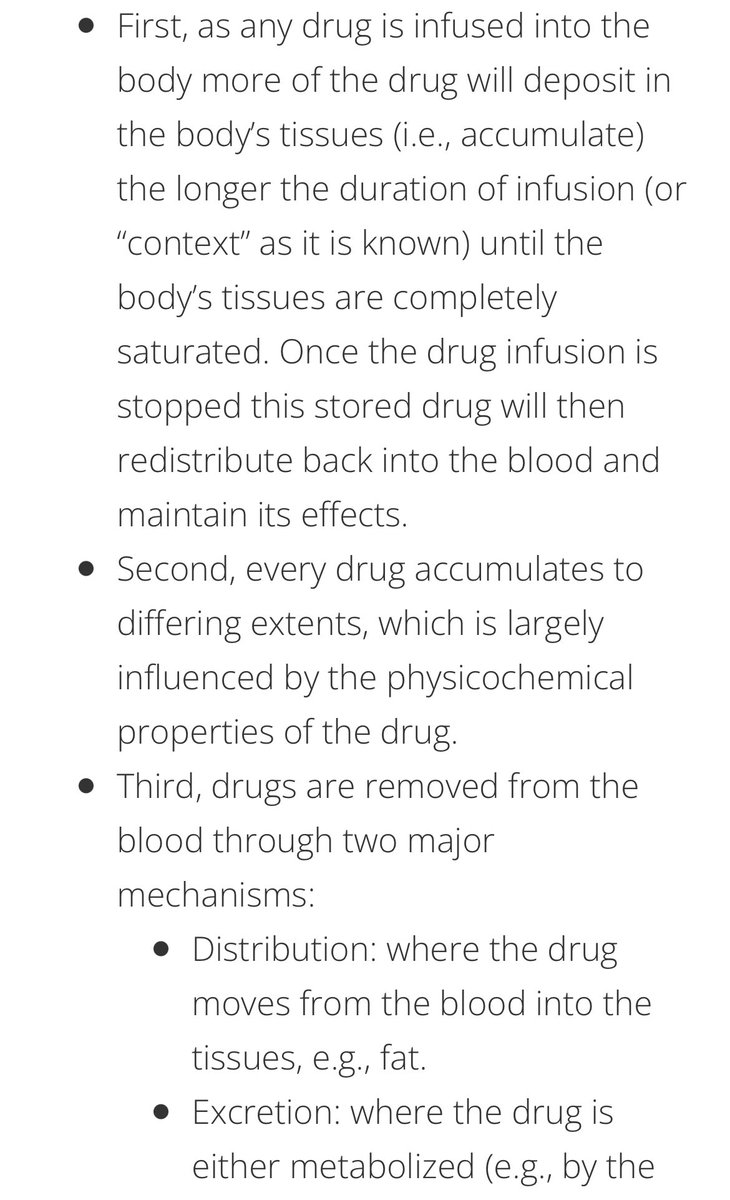
Recall that some people with COVID received continuous infusions of benzodiazepines & opioids for days or even weeks. Many had renal failure.
This can *significantly* increase the *context sensitive half life* of those medications
No surprise that many were slow to wake up!
6/
This can *significantly* increase the *context sensitive half life* of those medications
No surprise that many were slow to wake up!
6/
But despite what the authors *theorize* this isn’t a benign mysterious neuroprotective effect.
The sad reality is that prolonged deep sedation is association with worse outcomes, including neurological function. This is why spontaneous awaking trials (SAT) are so crucial!
7/
The sad reality is that prolonged deep sedation is association with worse outcomes, including neurological function. This is why spontaneous awaking trials (SAT) are so crucial!
7/
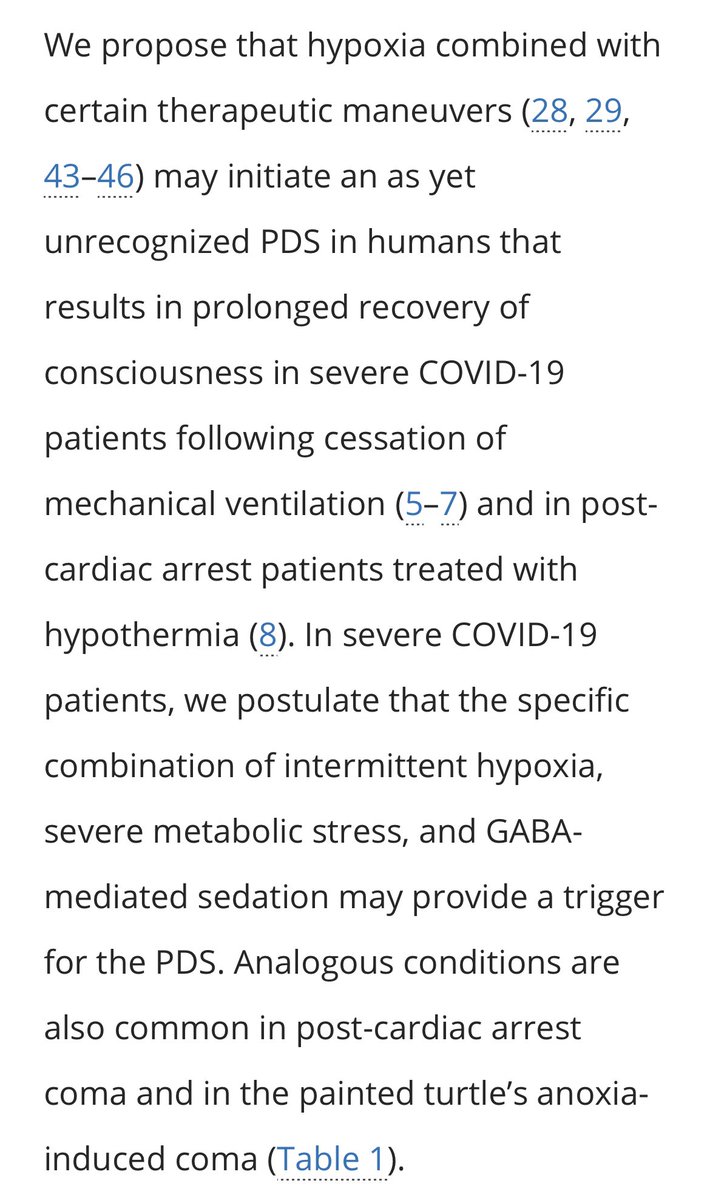
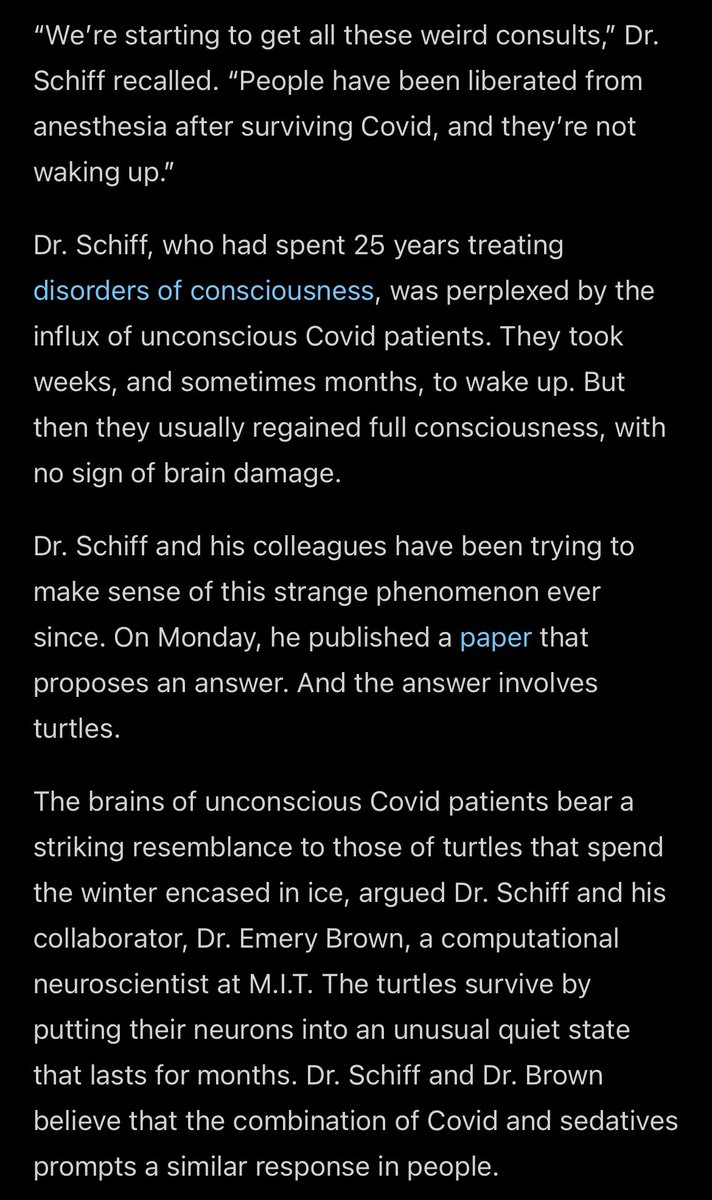
I love looking to extreme examples from nature to understand our own physiology but this is a stretch. I applaud the authors for thinking outside the box but I’m skeptical.
I wish @NYTHealth would talk to intensivists before credulously writing a story like this.
8/8
I wish @NYTHealth would talk to intensivists before credulously writing a story like this.
8/8
Loading suggestions...