

Stress is silently killing you.
How it affects the body and 9 proven ways to combat it:
How it affects the body and 9 proven ways to combat it:
Most of our modern diseases are caused by modern stressors.
They destroy our physical and mental balance, which leads to ill health.
And often we are unprepared to know how to deal with them effectively. Let’s dive in how to combat that:
They destroy our physical and mental balance, which leads to ill health.
And often we are unprepared to know how to deal with them effectively. Let’s dive in how to combat that:
What is stress?
Stress is the effect of external & internal stimuli throwing the body out of balance.
Stress attacks the biome, which affects our mental health leading to negative internal psychological stressors.
Stress is the effect of external & internal stimuli throwing the body out of balance.
Stress attacks the biome, which affects our mental health leading to negative internal psychological stressors.
Stress can come in many forms:
- Lack of sleep
- Poor nutrition
- Disconnection from nature
- Limited physical movement
- Over-stimulation (phones, apps)
- Attachment to news & social media
- Over-working & blurring of work/life
- Over-use of stimulants (coffee, alcohol)
- Lack of sleep
- Poor nutrition
- Disconnection from nature
- Limited physical movement
- Over-stimulation (phones, apps)
- Attachment to news & social media
- Over-working & blurring of work/life
- Over-use of stimulants (coffee, alcohol)
Where does stress come from?
Our bodies are designed to deal with real threats (tiger chasing us, being attacked, running out of food).
But our brains and nervous systems struggle distinguishing between real and perceived (emotions, negative self-talk, fears) threats.
Our bodies are designed to deal with real threats (tiger chasing us, being attacked, running out of food).
But our brains and nervous systems struggle distinguishing between real and perceived (emotions, negative self-talk, fears) threats.
Stress is predominantly caused by fears. Often these fears aren't real threats and stem from not being present
Our minds create a story around this perceived threat which we believe to be true.
We then take action accordingly, creating a cycle of stress -> damaging our body
Our minds create a story around this perceived threat which we believe to be true.
We then take action accordingly, creating a cycle of stress -> damaging our body
Stress and your nerves
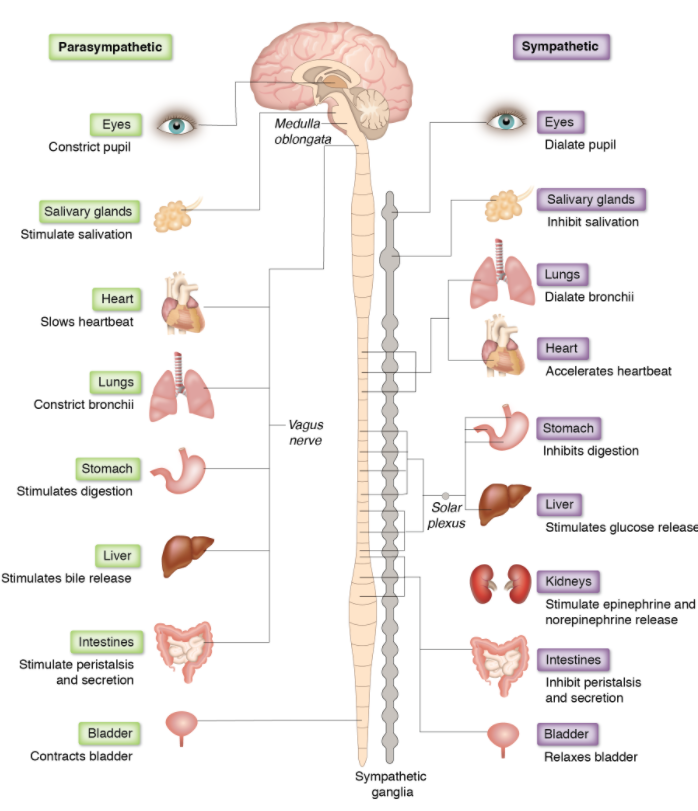
Our body’s automated functions are split into the sympathetic (SNS) and parasympathetic (PNS) nervous systems.
SNS activation → fight – flight – freeze response
PNS activation → rest and digest response
Our body’s automated functions are split into the sympathetic (SNS) and parasympathetic (PNS) nervous systems.
SNS activation → fight – flight – freeze response
PNS activation → rest and digest response
Distress occurs in two forms: Acute and Chronic.
Acute distress is triggered by a single or series of extreme events.
Chronic distress is caused by prolonged exposure to everyday stressors, triggering the same nervous system reaction, but in lower doses.
Acute distress is triggered by a single or series of extreme events.
Chronic distress is caused by prolonged exposure to everyday stressors, triggering the same nervous system reaction, but in lower doses.
Acute Stress Responses
- Increased heart rate and respiration
- Elevated blood pressure
- Muscle constriction
- Tunnel vision
- Perspiration
- Dizziness
After the threat is gone, it takes 20-60 minutes for the body to return to its pre-arousal levels.
- Increased heart rate and respiration
- Elevated blood pressure
- Muscle constriction
- Tunnel vision
- Perspiration
- Dizziness
After the threat is gone, it takes 20-60 minutes for the body to return to its pre-arousal levels.
Chronic stress is a state of prolonged tension caused by repeated and untreated exposure to internal or external everyday stressors.
The nervous system reacts similar to acute stress, but in lower doses.
The nervous system reacts similar to acute stress, but in lower doses.
Chronic Stress Responses
- Suppression of the immune system
- Delayed wound healing
- Breathing difficulties
- Digestive problems
- Sleep disorders
- Depression
- Anxiety
- Fatigue
- Suppression of the immune system
- Delayed wound healing
- Breathing difficulties
- Digestive problems
- Sleep disorders
- Depression
- Anxiety
- Fatigue
Stress responses are built into our DNA. But the sheer stimuli we are exposed to is too much for our bodies and minds.
Fortunately, we can use our bodies to heal ourselves from the effects of stress.
Here are 9 proven ways to combat stress:
Fortunately, we can use our bodies to heal ourselves from the effects of stress.
Here are 9 proven ways to combat stress:
1) Awareness
Tune into how your body feels.
Pay attention to your body’s sensations.
Notice the small ways stress impacts you physically.
Tune into how your body feels.
Pay attention to your body’s sensations.
Notice the small ways stress impacts you physically.
2) Use your breath
Andrew Huberman advocates for the ‘Psychological Sigh’. This technique is a quick fix to help alleviate stress through your breath:
- 2 short inhales through the nose
- 1 long exhale through the mouth
- Repeat one to three times
Andrew Huberman advocates for the ‘Psychological Sigh’. This technique is a quick fix to help alleviate stress through your breath:
- 2 short inhales through the nose
- 1 long exhale through the mouth
- Repeat one to three times
3) Connect with people
Chat with a loved one or have a meaningful conversation with someone close.
Making eye contact can cue your body to relax.
Talk through what’s going on with you.
Also see how you can be of help.
Chat with a loved one or have a meaningful conversation with someone close.
Making eye contact can cue your body to relax.
Talk through what’s going on with you.
Also see how you can be of help.
4) Exercise
Your body needs to move to help cell renewals.
Send the right signals and at the same time:
• increase self-confidence
• improve your sleep
• lighten your mood
• reduce anxiety
• relax
Your body needs to move to help cell renewals.
Send the right signals and at the same time:
• increase self-confidence
• improve your sleep
• lighten your mood
• reduce anxiety
• relax
5) Fishbowl meditation
Imagine your skull as a fishbowl, and your thoughts are the cloudy, murky water.
Your breathing is the filter.
Breath in → Fresh water enters the bowl.
Breath out → Murky water leaves your mind.
Set a 5min timer to reduce stress.
Imagine your skull as a fishbowl, and your thoughts are the cloudy, murky water.
Your breathing is the filter.
Breath in → Fresh water enters the bowl.
Breath out → Murky water leaves your mind.
Set a 5min timer to reduce stress.
6) Get outdoors
Steer your thoughts in a more hopeful direction by using your five senses.
Go outside, listening to birds, and smelling a flower are all simple “grounding” activities that help activate the vagus nerve.
Steer your thoughts in a more hopeful direction by using your five senses.
Go outside, listening to birds, and smelling a flower are all simple “grounding” activities that help activate the vagus nerve.
7) Write
Our brains are great for coming up with ideas, not storing them.
Free mental capacity by capturing what’s on your mind.
Daily reflection ensures you are in control of your life.
It also sharpens your memory.
Our brains are great for coming up with ideas, not storing them.
Free mental capacity by capturing what’s on your mind.
Daily reflection ensures you are in control of your life.
It also sharpens your memory.
8) Walking meditation
Going for a walk is powerful to rebalance your brain.
But not when you take your problems with you.
Do a walking meditation instead.
Focus on every single step.
Walk around your block fully present and come back refreshed.
Going for a walk is powerful to rebalance your brain.
But not when you take your problems with you.
Do a walking meditation instead.
Focus on every single step.
Walk around your block fully present and come back refreshed.
9) Forgive yourself
So you struggle with stress?
We all do.
Forgive yourself and build the life you deserve.
So you struggle with stress?
We all do.
Forgive yourself and build the life you deserve.
9 Ways to Combat Stress:
Connect with people
Fishbowl meditation
Walking meditation
Forgive yourself
Use your breath
Get outdoors
Awareness
Exercise
Write
Connect with people
Fishbowl meditation
Walking meditation
Forgive yourself
Use your breath
Get outdoors
Awareness
Exercise
Write
That's a wrap!
If you enjoyed this thread:
1. Follow me @tobi_emonts for more of these
2. RT the tweet below to share this thread with your audience
If you enjoyed this thread:
1. Follow me @tobi_emonts for more of these
2. RT the tweet below to share this thread with your audience
Loading suggestions...