

Your biases sabotage your decision-making process.
Here are 11 biases and how to counteract them (with illustrations):
Here are 11 biases and how to counteract them (with illustrations):
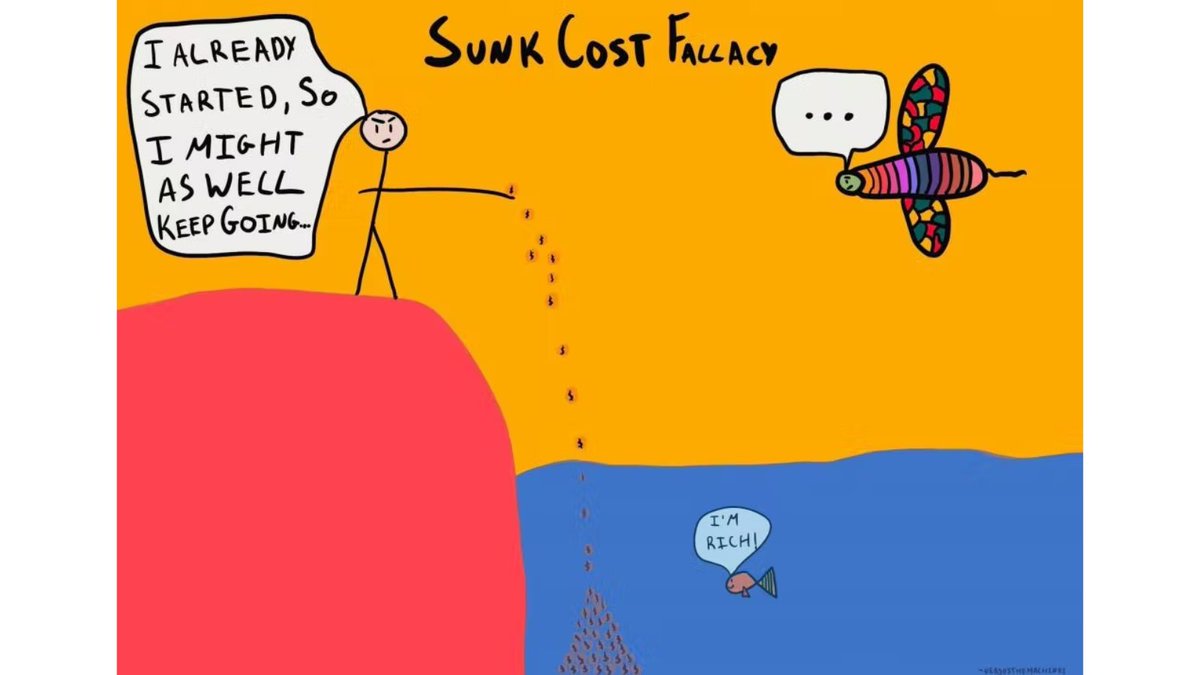
• Sunk cost bias
Previous investments in people, product, or place are irrelevant when deciding on the next one.
Quit chasing the bad because of what you previously invested.
Previous investments in people, product, or place are irrelevant when deciding on the next one.
Quit chasing the bad because of what you previously invested.
• Optimism bias
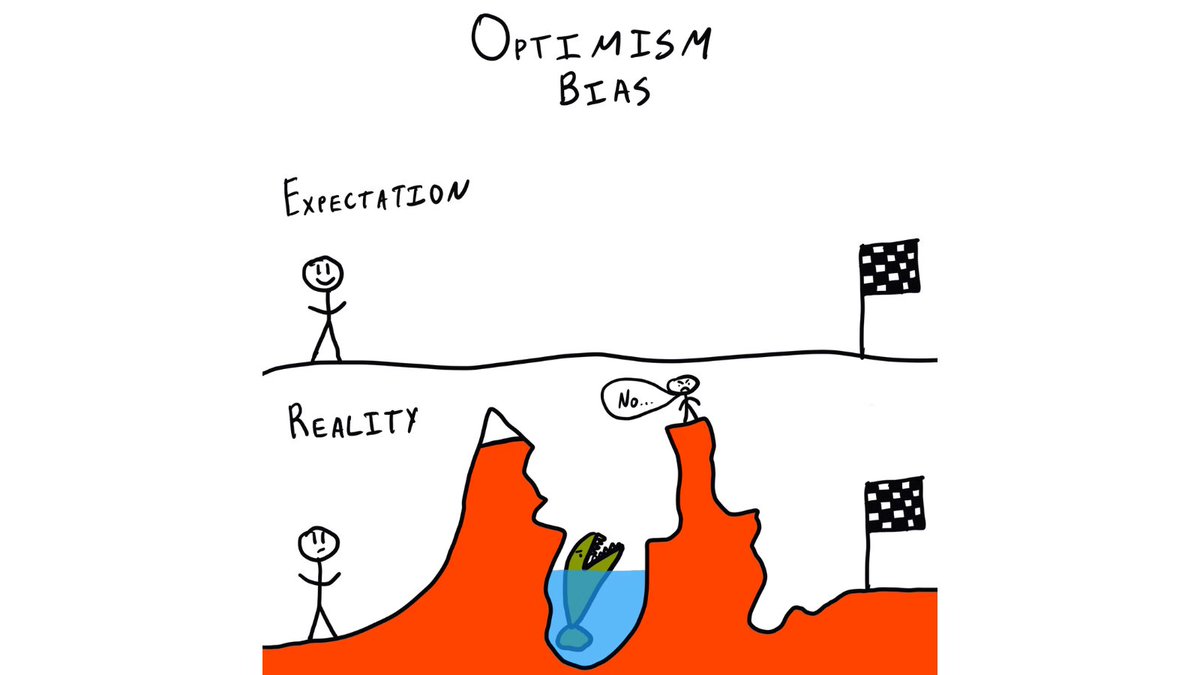
When you overestimate the probability of good things happening, you fail to identify the risks.
Overcome this by:
▸ documenting our process
▸ asking for the opinion of others
When you overestimate the probability of good things happening, you fail to identify the risks.
Overcome this by:
▸ documenting our process
▸ asking for the opinion of others
• Hindsight bias
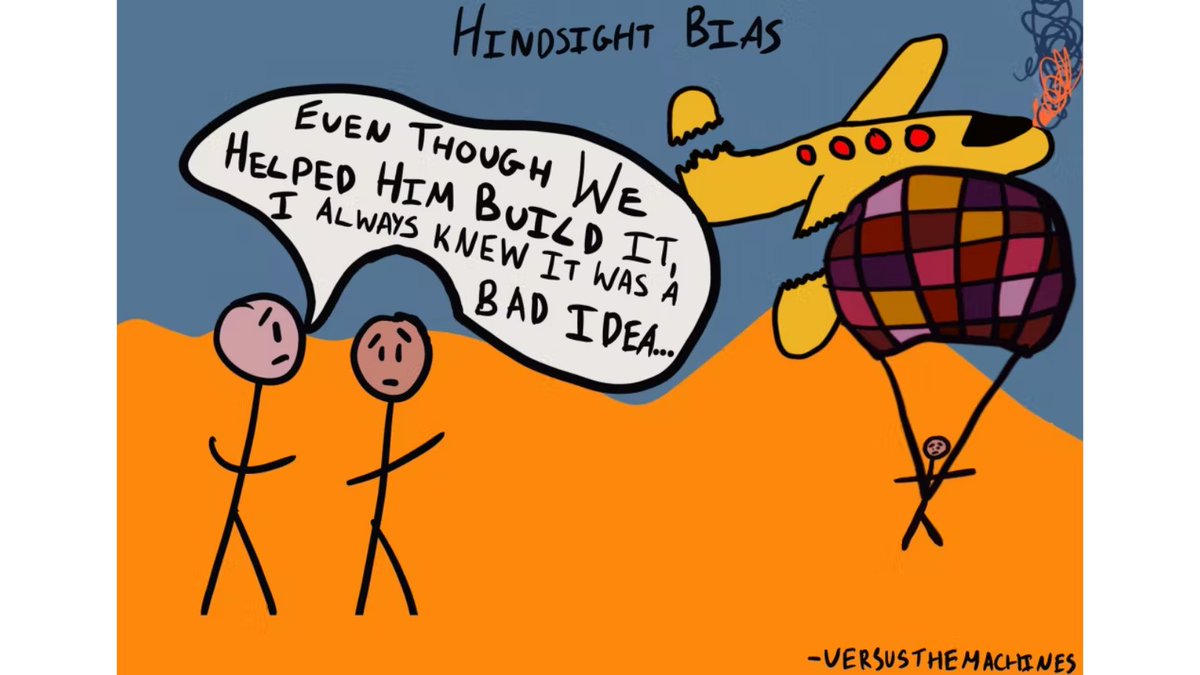
We misremember previous beliefs and suppress the doubts we had.
We can combat this by:
▸ Recording our predictions
▸ Pause and analyze your predictions
We misremember previous beliefs and suppress the doubts we had.
We can combat this by:
▸ Recording our predictions
▸ Pause and analyze your predictions
• Anchoring bias
The first:
▸ answer on google
▸ price you’re told
We anchor our expectations to the first piece of information we see.
Counteract by:
▸ Take a step back & delay your decision
▸ Use it offensively; create the anchor when negotiating with others
The first:
▸ answer on google
▸ price you’re told
We anchor our expectations to the first piece of information we see.
Counteract by:
▸ Take a step back & delay your decision
▸ Use it offensively; create the anchor when negotiating with others

• Status quo bias
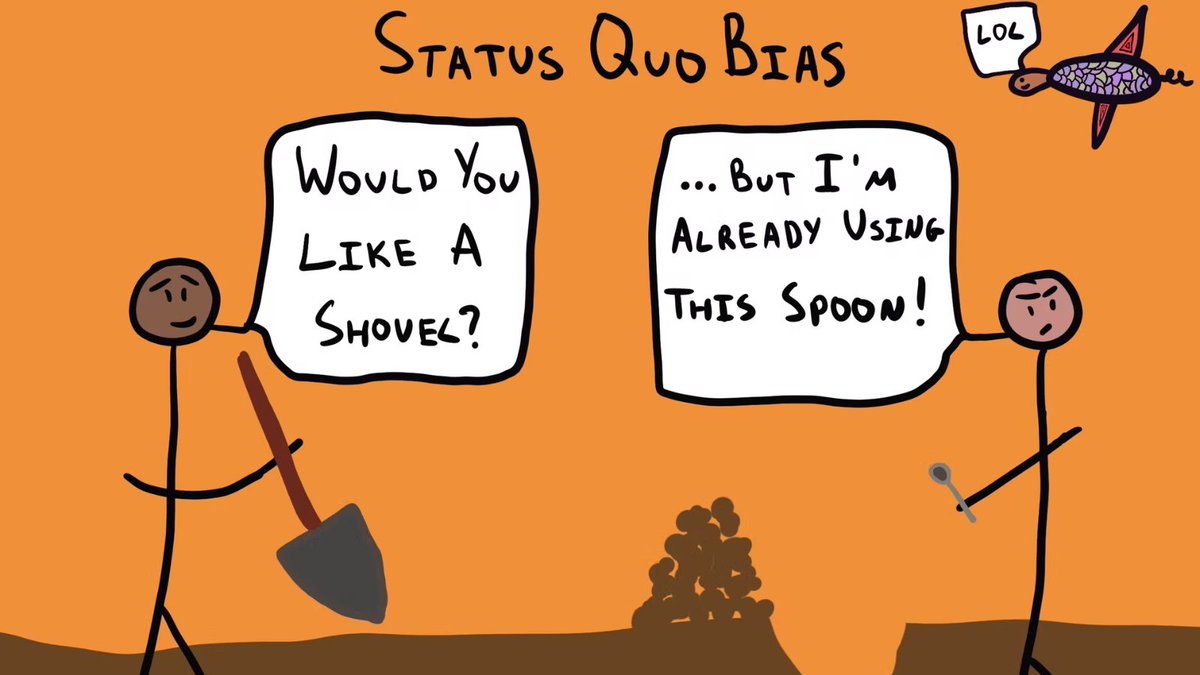
We opt for familiarity because it feels less risky.
Have you kept the:
▸ inferior health insurance?
▸ old cable provider?
We opt for familiarity because it feels less risky.
Have you kept the:
▸ inferior health insurance?
▸ old cable provider?
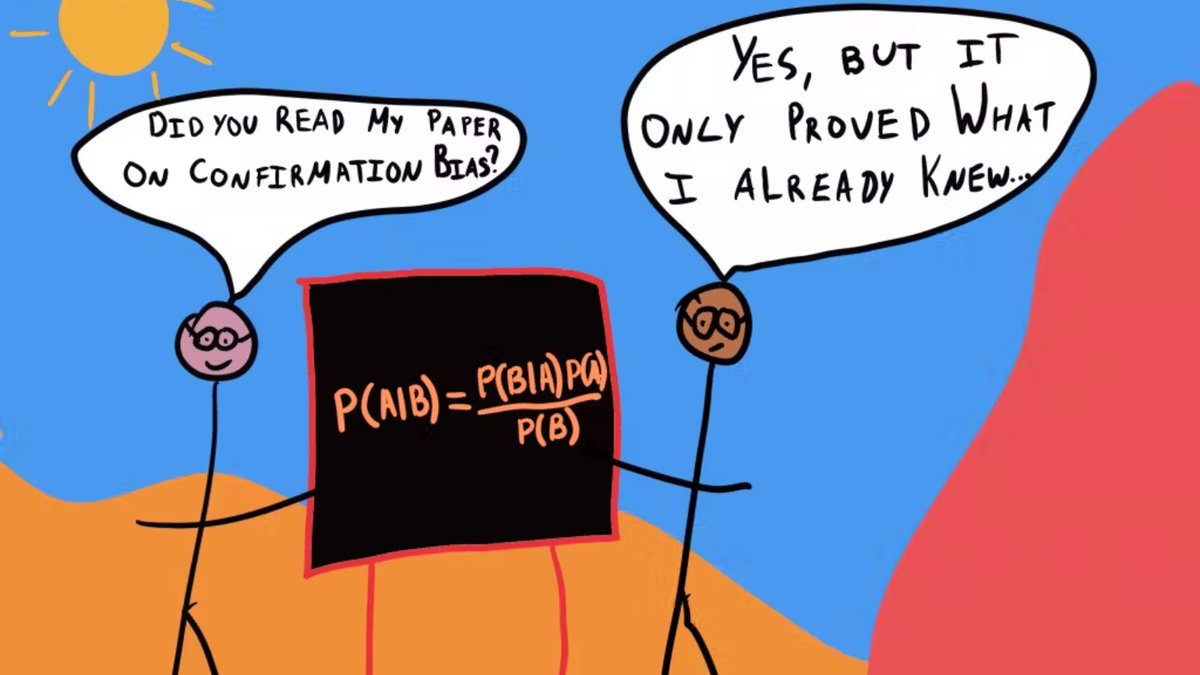
• Confirmation bias
Do you doubt yourself and find yourself self-loathing?
Instead:
▸ Seek out differing options
▸ Ask yourself: what would cause me to change my mind?
Do you doubt yourself and find yourself self-loathing?
Instead:
▸ Seek out differing options
▸ Ask yourself: what would cause me to change my mind?
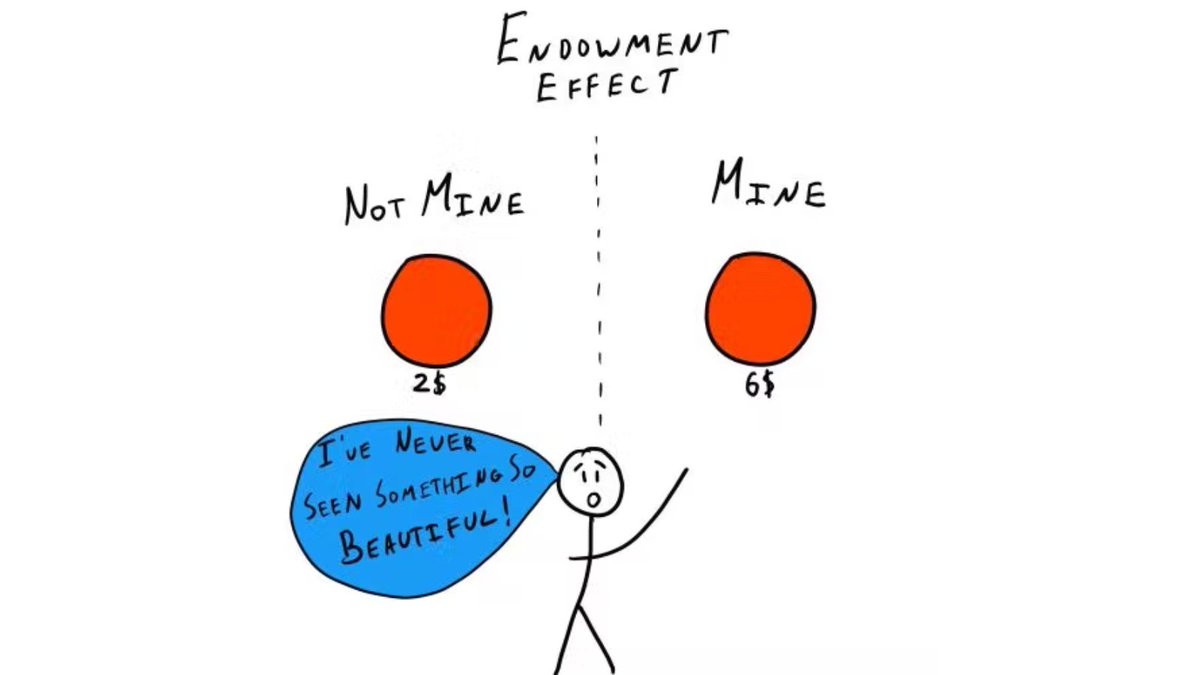
• Endowment effect
We do this as both buyer (loss aversion) and the seller (overvalue what we own).
Avoid it by:
▸ researching market value
▸ disassociating ownership from self
We do this as both buyer (loss aversion) and the seller (overvalue what we own).
Avoid it by:
▸ researching market value
▸ disassociating ownership from self
• Fundamental Attribution Error
You lost money because of a freak event, but they lost it because they’re bad at business.
Blaming outside forces is toxic because it means you don’t have to acknowledge your shortcomings.
You lost money because of a freak event, but they lost it because they’re bad at business.
Blaming outside forces is toxic because it means you don’t have to acknowledge your shortcomings.

• Availability heuristic
We often let one event have an outsized impact on our decisions.
Wanting a Telsa results in seeing them all over.
Or seeing a plane crash makes you notice all of them.
Look at trends or data to counteract this.
We often let one event have an outsized impact on our decisions.
Wanting a Telsa results in seeing them all over.
Or seeing a plane crash makes you notice all of them.
Look at trends or data to counteract this.

• Misinformation effect
Your memories can be changed intentionally or unintentionally by:
▸ being asked questions
▸ listening to the opinion of others
▸ time lapse between the event and recall
Writing your memory down, can help you counteract it.
Your memories can be changed intentionally or unintentionally by:
▸ being asked questions
▸ listening to the opinion of others
▸ time lapse between the event and recall
Writing your memory down, can help you counteract it.

• Projection Bias
We assume our future selves will share the same beliefs, values and behaviors, causing us to make short-sighted decisions.
This causes us to make bad, harmful decisions today assuming we’ll be better in the future
We assume our future selves will share the same beliefs, values and behaviors, causing us to make short-sighted decisions.
This causes us to make bad, harmful decisions today assuming we’ll be better in the future

Biases are unacknowledged all around us. The first step to not falling prey is to:
▸ ask questions
▸ educate yourself
▸ be aware of your surroundings
▸ ask questions
▸ educate yourself
▸ be aware of your surroundings
The illustrations come from thedecisionlab.com. Check them out for more information on these biases.
If you enjoyed this thread, I'd appreciate a follow @KurtisHanni and RT of the first tweet:
If you enjoyed this thread, I'd appreciate a follow @KurtisHanni and RT of the first tweet:
Loading suggestions...