

@y_k_s_3 @gaudiya_surya The Abahattha of the Charyagitis is not the same as Odia, but rather the ancestor of Maithili, Odia, Assamese, Bangla, Sylheti, Magahi, etc. Out of those languages it's overall closest to Odia because Odia is rather conservative.
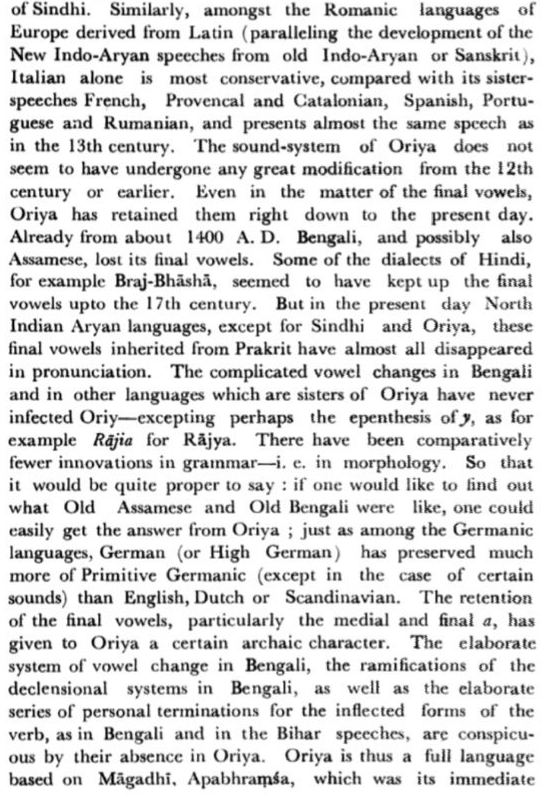
@y_k_s_3 @gaudiya_surya As per Suniti Kumar Chatterjee, the oldest texts in full-formed Odia date to the 13th century and they weren't even found in Odisha, but rather in the Lakshmi Narasimha temple at Simhachalam in Andhra Pradesh.
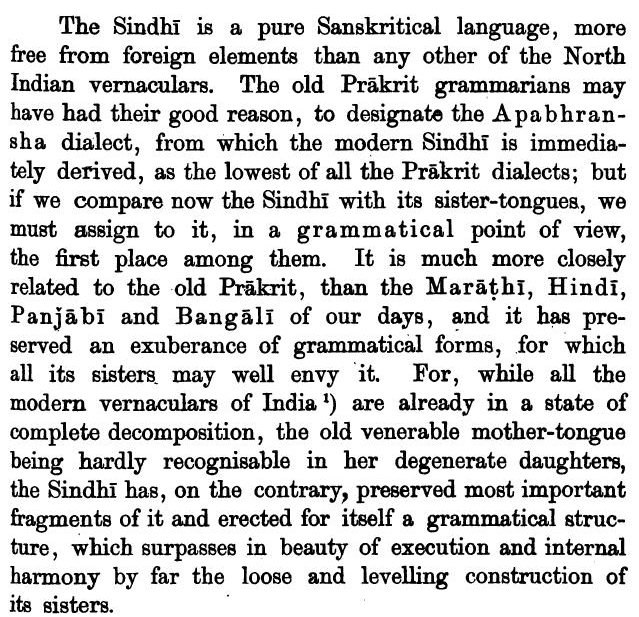
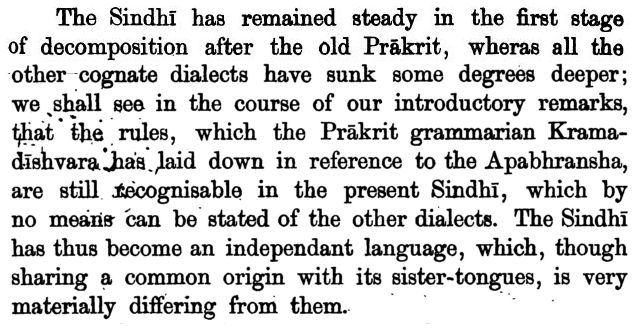
@y_k_s_3 @gaudiya_surya But Odia is not unique in being a conservative IA language that descends of apabhramsha stage. Sindhi is also quite conservative and even though its vocabulary has adopted many Arabic and Persian words, the underlying grammar is rather unchanged.
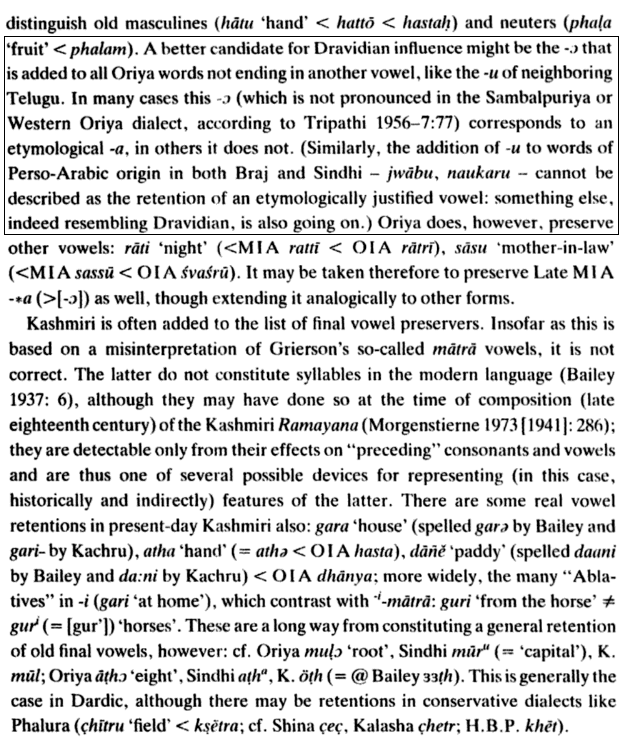
@y_k_s_3 @gaudiya_surya Also, regarding the dropping of vowels, Odia and Sindhi aren't really the only ones that keep the final vowels. Nepali (technically Khas) generally also keeps final vowels. Also, Masica suggests the retention of final vowels in Odia might be an example of Dravidian influence.
@y_k_s_3 @gaudiya_surya Not sure how accepted this Dravidian influence theory is among Indo-Aryanists. @avzaagzonunaada
@y_k_s_3 @gaudiya_surya I say generally, because it's somewhat difficult to predict when the final vowel is preserved or not.
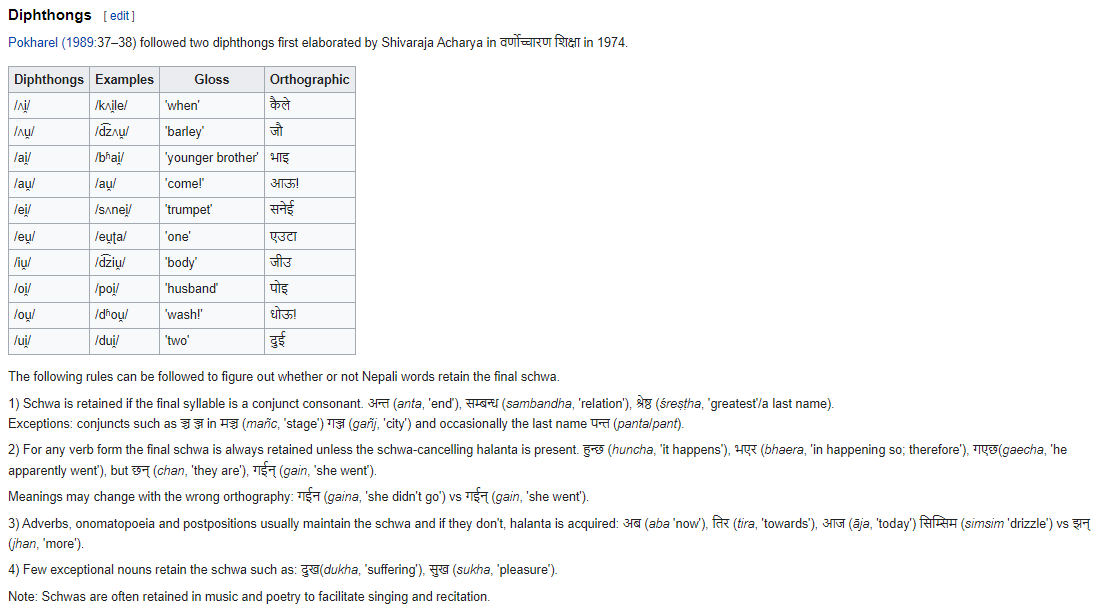
@y_k_s_3 @gaudiya_surya Though I don't necessarily agree with all the dipthongs given there, e.g. /eu̯ʈa/ for एउटा. That's the way it should be formally pronounced, but usually one hears /jʌu̯ʈa/. Sometimes you'll even see it spelled as यौटा.
Loading suggestions...