

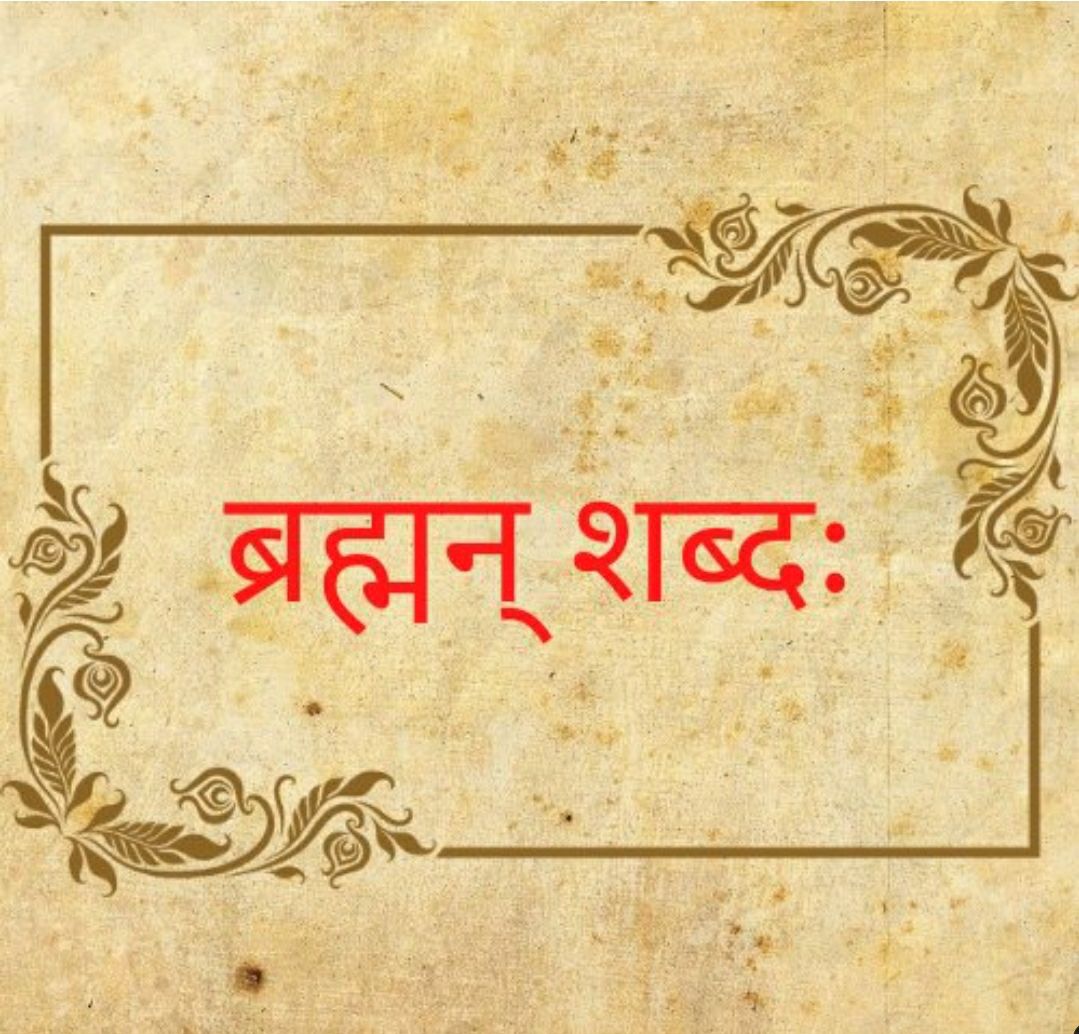
This post will deal with how the pronunciation of the word Brahma (ब्रह्म).
ORIGIN OF THE WORD:
The Prātipadikam of the word Brahma (Napuṃsaka Liṅga) (ब्रह्म) and Brahmā (Pulliṅga) (ब्रह्मा) is Brahman. The Prathama Vibhakti Eka Vacana is Brahma and Brahmā respectively.
ORIGIN OF THE WORD:
The Prātipadikam of the word Brahma (Napuṃsaka Liṅga) (ब्रह्म) and Brahmā (Pulliṅga) (ब्रह्मा) is Brahman. The Prathama Vibhakti Eka Vacana is Brahma and Brahmā respectively.
The word Brahman is used only for Sambōdhana i.e. to call out loudly for both Napuṃsaka linga and Pulliṅga. This is a Nakāranta (नकारान्त) Śabda.
Note the Pulliṅga Brahmā (ब्रह्मा) Śabda follows the Nakāranta (नकारान्त) Maghavan Śabda. But the Napuṃsaka Brahma (ब्रह्म) word is different.
This is the Pulliṅga version:
Ashtadhyayi Shabda
This is for the Napuṃsaka Liṅga version:
Ashtadhyayi Shabda
Note the huge difference between them.
Ashtadhyayi Shabda
This is for the Napuṃsaka Liṅga version:
Ashtadhyayi Shabda
Note the huge difference between them.
PRONUNCIATION:
The common pronunciation of the word Brahma (ब्रह्म) is Bramha (ब्रम्ह), here we pronounce the Makāra (मकार) before the Hakāra (हकार).
The common pronunciation of the word Brahma (ब्रह्म) is Bramha (ब्रम्ह), here we pronounce the Makāra (मकार) before the Hakāra (हकार).
But we have many scholars also who argue that the pronunciation of the word is Brahma (ब्रह्म) with Hakāra (हकार) followed by a Makāra (मकार) just as it is written.
Note that while writing it should always be written as ब्रह्म and not ब्रम्ह. The pronunciation of both is correct, this is due to Caṃkramaṇa (चंक्रमण) and this is present due to age-old practice.
Words like Brahma (ब्रह्म), and Vahni (वह्नि) come under this. But we do not see this for words like Āhvayāmi (आह्वयामि), Bāhva (बाह्व), etc… the Hakāra (हकार) is pronounced first.
The Caṃkramaṇa (चंक्रमण) applies only to certain words. For laukika (i.e. day-to-day) purposes both the pronunciations are correct and have no Klēṣa (mistake) attached to them.
The same thing is followed for the word Brāhmaṇa (ब्राह्मण).
The same thing is followed for the word Brāhmaṇa (ब्राह्मण).
CERTAIN MISTAKES:
There is Akāra (अकार) in the word Brahma (ब्रह्म) which is neutral gender, so the Akāra (अकार) should be heard and not be cut, Hindi speakers normally cut it make it sound like Brahm (ब्रह्म्), which is wrong in Samskrita.
There is Akāra (अकार) in the word Brahma (ब्रह्म) which is neutral gender, so the Akāra (अकार) should be heard and not be cut, Hindi speakers normally cut it make it sound like Brahm (ब्रह्म्), which is wrong in Samskrita.
For Caturmukha it is Brahmā (ब्रह्मा) with Ākāra (आकार) hence should be prolonger for two Mātras. For Hrasvasvara the Mātra Kāla is one and for Dhīrghasvara the Mātra Kāla is two.
VĒDIC REFERENCE:
Now for Vēdic purposes, the pronunciation is always with Makāra (मकार) followed the Hakāra (हकार).
Now for Vēdic purposes, the pronunciation is always with Makāra (मकार) followed the Hakāra (हकार).
Only the Kerala Brāhmaṇas belonging to the Yajur Vēda chant while pronouncing Hakāra (हकार) first.
But the general pronunciation is correct because the Dhīrghassvaritā is present for the word Brahma (ब्रह्म) in certain places of Ṛg Vēda and Atharva Vēda.
Example:
आपो॒ न दे॒वीरुप॑ यन्ति हो॒त्रिय॑म॒वः प॑श्यन्ति॒ वित॑तं॒ यथा॒ रज॑: । प्रा॒चैर्दे॒वास॒: प्र ण॑यन्ति देव॒युं ब्र॑ह्म॒प्रियं॑ जोषयन्ते व॒रा इ॑व ॥ (RV 1.83.2)
आपो॒ न दे॒वीरुप॑ यन्ति हो॒त्रिय॑म॒वः प॑श्यन्ति॒ वित॑तं॒ यथा॒ रज॑: । प्रा॒चैर्दे॒वास॒: प्र ण॑यन्ति देव॒युं ब्र॑ह्म॒प्रियं॑ जोषयन्ते व॒रा इ॑व ॥ (RV 1.83.2)
Here the word ब्र॑ह्म॒ has Dhīrghassvaritā.
इन्धा॑नो अ॒ग्निं व॑नवद्वनुष्य॒तः कृ॒तब्र॑ह्मा शूशुवद्रा॒तह॑व्य॒ इत् । जा॒तेन॑ जा॒तमति॒ स प्र स॑र्सृते॒ यंयं॒ युजं॑ कृणु॒ते ब्रह्म॑ण॒स्पति॑: ॥ (RV 2.25.1)
इन्धा॑नो अ॒ग्निं व॑नवद्वनुष्य॒तः कृ॒तब्र॑ह्मा शूशुवद्रा॒तह॑व्य॒ इत् । जा॒तेन॑ जा॒तमति॒ स प्र स॑र्सृते॒ यंयं॒ युजं॑ कृणु॒ते ब्रह्म॑ण॒स्पति॑: ॥ (RV 2.25.1)
Here the word ब्र॑ह्मा has Dhīrghassvaritā.
वि॒स॒र्माणं॑ कृणुहि वि॒त्तमे॑षां॒ ये भु॒ञ्जते॒ अपृ॑णन्तो न उ॒क्थैः । अप॑व्रतान्प्रस॒वे वा॑वृधा॒नान्ब्र॑ह्म॒द्विष॒: सूर्या॑द्यावयस्व ॥ (RV 5.42.9)
वि॒स॒र्माणं॑ कृणुहि वि॒त्तमे॑षां॒ ये भु॒ञ्जते॒ अपृ॑णन्तो न उ॒क्थैः । अप॑व्रतान्प्रस॒वे वा॑वृधा॒नान्ब्र॑ह्म॒द्विष॒: सूर्या॑द्यावयस्व ॥ (RV 5.42.9)
Here the word ब्र॑ह्म॒ has Dhīrghassvaritā.
आ जना॑य॒ द्रुह्व॑णे॒ पार्थि॑वानि दि॒व्यानि॑ दीपयो॒ऽन्तरि॑क्षा । तपा॑ वृषन्वि॒श्वत॑: शो॒चिषा॒ तान्ब्र॑ह्म॒द्विषे॑ शोचय॒ क्षाम॒पश्च॑ ॥ (RV 6.22.8)
आ जना॑य॒ द्रुह्व॑णे॒ पार्थि॑वानि दि॒व्यानि॑ दीपयो॒ऽन्तरि॑क्षा । तपा॑ वृषन्वि॒श्वत॑: शो॒चिषा॒ तान्ब्र॑ह्म॒द्विषे॑ शोचय॒ क्षाम॒पश्च॑ ॥ (RV 6.22.8)
Here the word ब्र॑ह्म॒ has Dhīrghassvaritā.
सचा॒ सोमे॑षु पुरुहूत वज्रिवो॒ मदा॑य द्युक्ष सोमपाः । त्वमिद्धि ब्र॑ह्म॒कृते॒ काम्यं॒ वसु॒ देष्ठ॑: सुन्व॒ते भुव॑: ॥ (RV 8.66.6)
सचा॒ सोमे॑षु पुरुहूत वज्रिवो॒ मदा॑य द्युक्ष सोमपाः । त्वमिद्धि ब्र॑ह्म॒कृते॒ काम्यं॒ वसु॒ देष्ठ॑: सुन्व॒ते भुव॑: ॥ (RV 8.66.6)
Here the word ब्र॑ह्म॒ has Dhīrghassvaritā.
सोमो॒ राजा॑ प्रथ॒मो ब्र॑ह्मजा॒यां पुन॒: प्राय॑च्छ॒दहृ॑णीयमानः । अ॒न्व॒र्ति॒ता वरु॑णो मि॒त्र आ॑सीद॒ग्निर्होता॑ हस्त॒गृह्या नि॑नाय ॥ (RV 10.109.2)
सोमो॒ राजा॑ प्रथ॒मो ब्र॑ह्मजा॒यां पुन॒: प्राय॑च्छ॒दहृ॑णीयमानः । अ॒न्व॒र्ति॒ता वरु॑णो मि॒त्र आ॑सीद॒ग्निर्होता॑ हस्त॒गृह्या नि॑नाय ॥ (RV 10.109.2)
Here the word ब्र॑ह्म has Dhīrghassvaritā.
तपु॑र्मूर्धा तपतु र॒क्षसो॒ ये ब्र॑ह्म॒द्विष॒: शर॑वे॒ हन्त॒वा उ॑ । क्षि॒पदश॑स्ति॒मप॑ दुर्म॒तिं ह॒न्नथा॑ कर॒द्यज॑मानाय॒ शं योः ॥ (RV 10.182.3)
तपु॑र्मूर्धा तपतु र॒क्षसो॒ ये ब्र॑ह्म॒द्विष॒: शर॑वे॒ हन्त॒वा उ॑ । क्षि॒पदश॑स्ति॒मप॑ दुर्म॒तिं ह॒न्नथा॑ कर॒द्यज॑मानाय॒ शं योः ॥ (RV 10.182.3)
Here the word ब्र॑ह्म॒ has Dhīrghassvaritā.
यत्र॑ दे॒वा ब्र᳚ह्म॒विदो॒ ब्रह्म॑ ज्ये॒ष्ठमु॒पास॑ते। यो वै तान्वि॒द्यात्प्र॒त्यक्षं॒ स ब्र॒ह्मा वेदि॑ता स्यात् ॥ (AV 10.7.24)
Here the word ब्र᳚ह्म॒ has Dhīrghassvaritā.
यत्र॑ दे॒वा ब्र᳚ह्म॒विदो॒ ब्रह्म॑ ज्ये॒ष्ठमु॒पास॑ते। यो वै तान्वि॒द्यात्प्र॒त्यक्षं॒ स ब्र॒ह्मा वेदि॑ता स्यात् ॥ (AV 10.7.24)
Here the word ब्र᳚ह्म॒ has Dhīrghassvaritā.
Note, that when Dhīrghassvaritā is present for the word Brahma (ब्रह्म), Hakāra (हकार) cannot be pronounced first, if one tries to, he will fail.
Hence the Makāra (मकार) is pronounced first. In the Vēda it is always Makāra (मकार) followed by the Hakāra (हकार)
Hence the Makāra (मकार) is pronounced first. In the Vēda it is always Makāra (मकार) followed by the Hakāra (हकार)
Source. Sūrya S A (सूर्य.एस्.ए)
Loading suggestions...