

The average investor underperforms the market.
The top 1% of Investors double or triple the market’s return.
The Reason: Investor’s Psychology
Here’s a list of 13 biases you need to avoid (+Investment Psychology Checklist PDF for free)👇🏼
The top 1% of Investors double or triple the market’s return.
The Reason: Investor’s Psychology
Here’s a list of 13 biases you need to avoid (+Investment Psychology Checklist PDF for free)👇🏼

How this Thread helps you avoid the biases:
1) Awareness - Being aware of them is already half a win
2) Routine - I created a checklist of the biases influencing your investment process.
The checklist is on my Substack (for free), link below.
1) Awareness - Being aware of them is already half a win
2) Routine - I created a checklist of the biases influencing your investment process.
The checklist is on my Substack (for free), link below.
1. Cognitive Ease
Cognitive ease is the main reason all the following biases work so well.
Cognitive ease is a desirable state of mind associated with good feelings.
But it leads to bad decision-making.
Cognitive ease is the main reason all the following biases work so well.
Cognitive ease is a desirable state of mind associated with good feelings.
But it leads to bad decision-making.

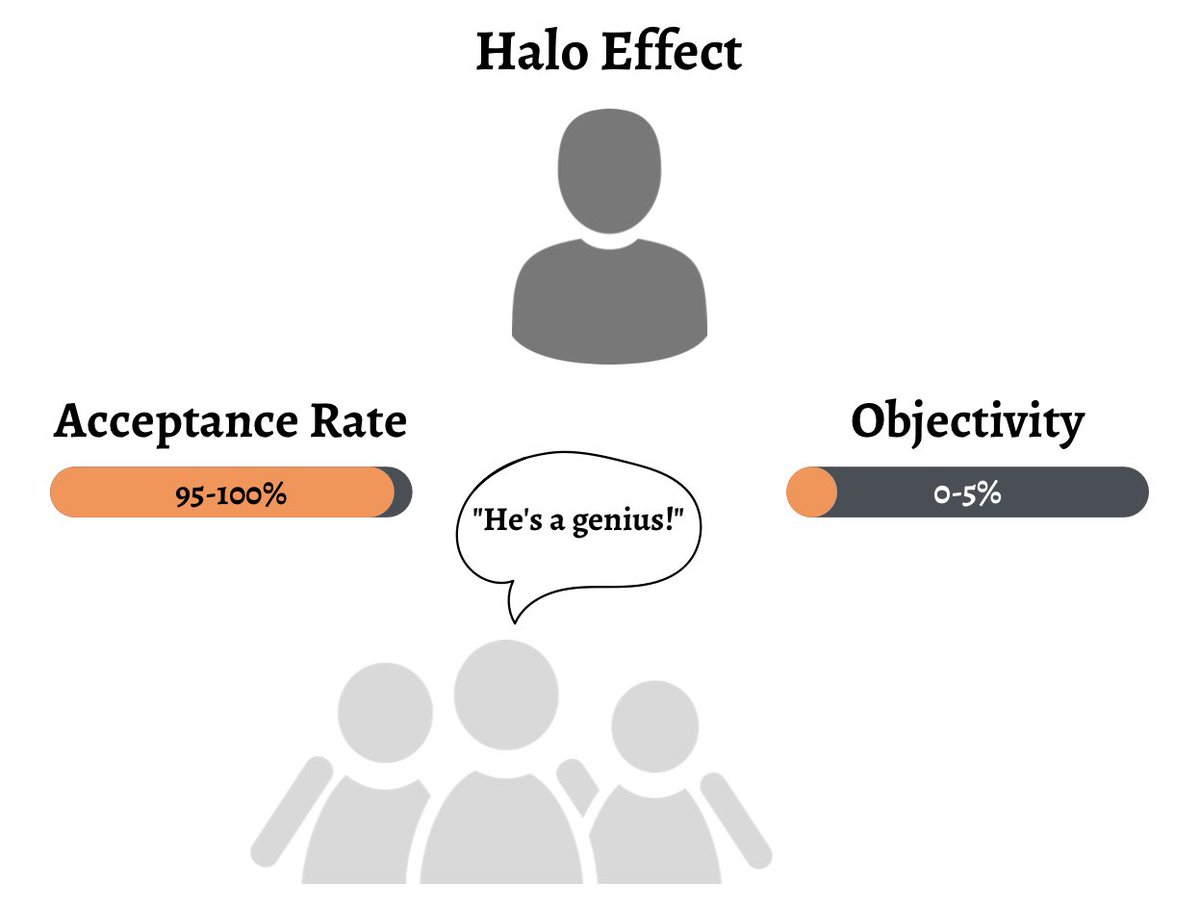
2. Halo Effect
Thinking in absolutes is way easier than in grey patterns.
The Halo Effect describes how we either like or dislike everything about someone or something.
Agreeing with some things and disagreeing with others is more challenging than we think.
Thinking in absolutes is way easier than in grey patterns.
The Halo Effect describes how we either like or dislike everything about someone or something.
Agreeing with some things and disagreeing with others is more challenging than we think.
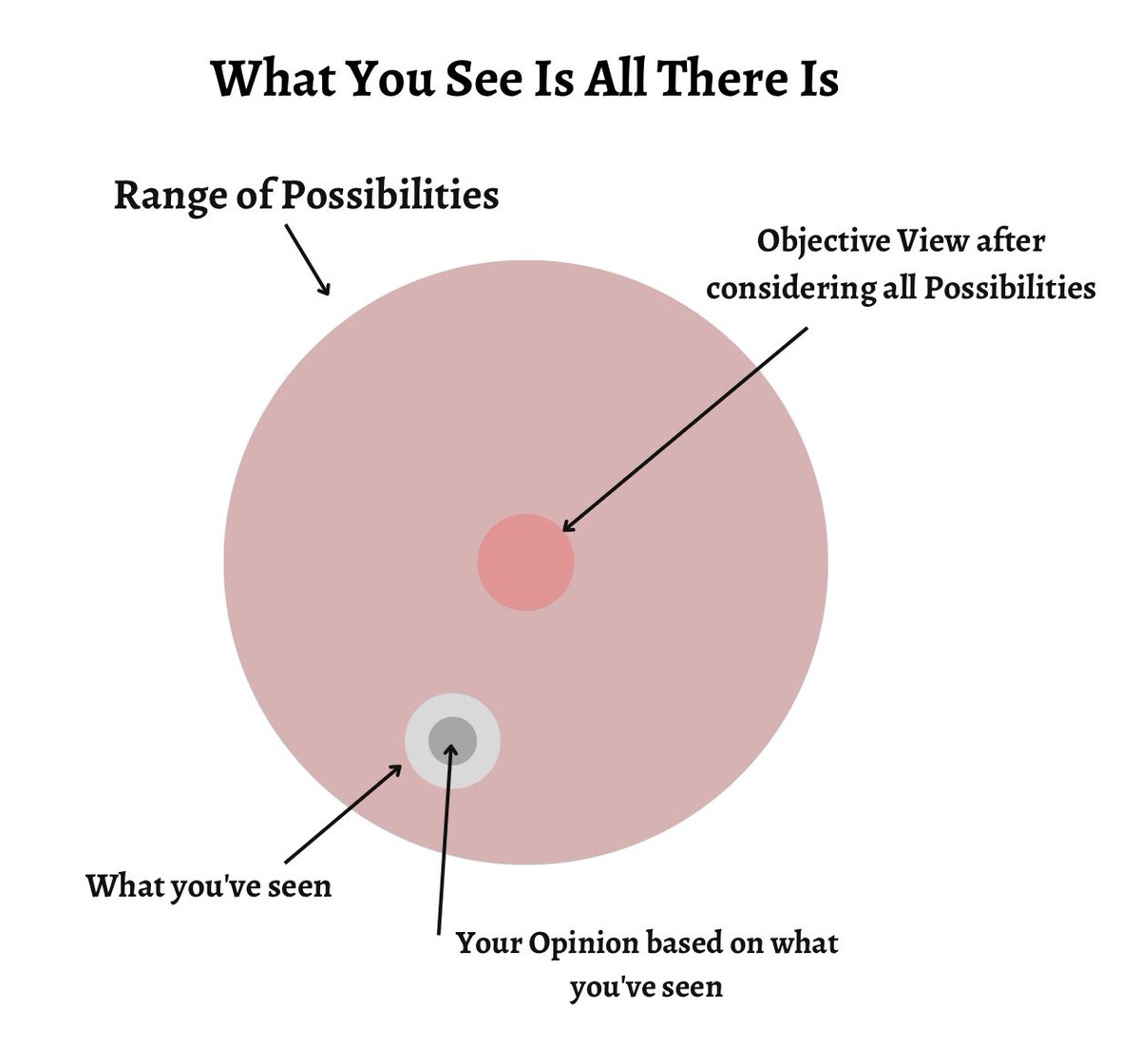
3. WYSIATI
What you see is all there is.
You cannot consider what you don’t know.
Hearing only one side of the story, paradoxically, also increases your confidence about being right.
Once again, we choose confidence over doubt.
What you see is all there is.
You cannot consider what you don’t know.
Hearing only one side of the story, paradoxically, also increases your confidence about being right.
Once again, we choose confidence over doubt.
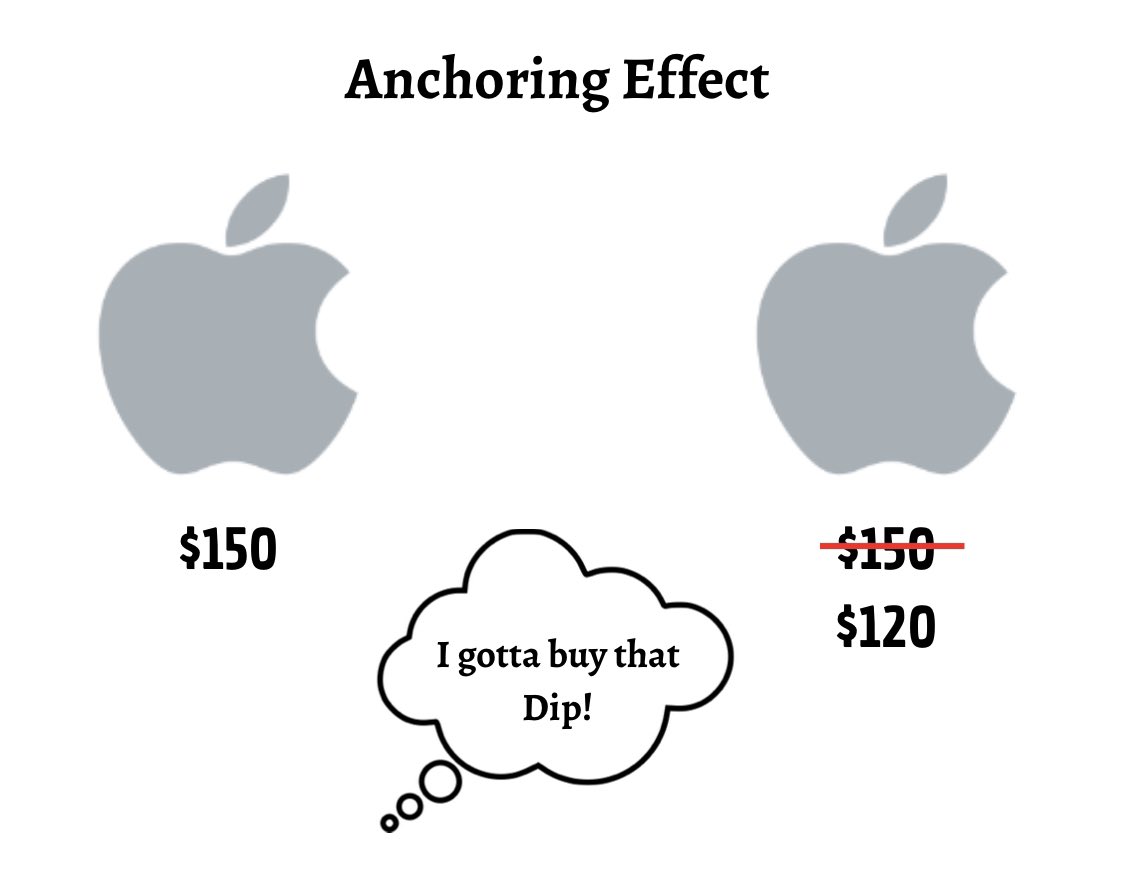
4. Anchoring
Our judgment is heavily screwed by the first information we are given about something.
When you know Apple shares trade at $150, the same stock will look like a bargain at $120.
Even without knowing if the $150 were even close to fair value.
Our judgment is heavily screwed by the first information we are given about something.
When you know Apple shares trade at $150, the same stock will look like a bargain at $120.
Even without knowing if the $150 were even close to fair value.
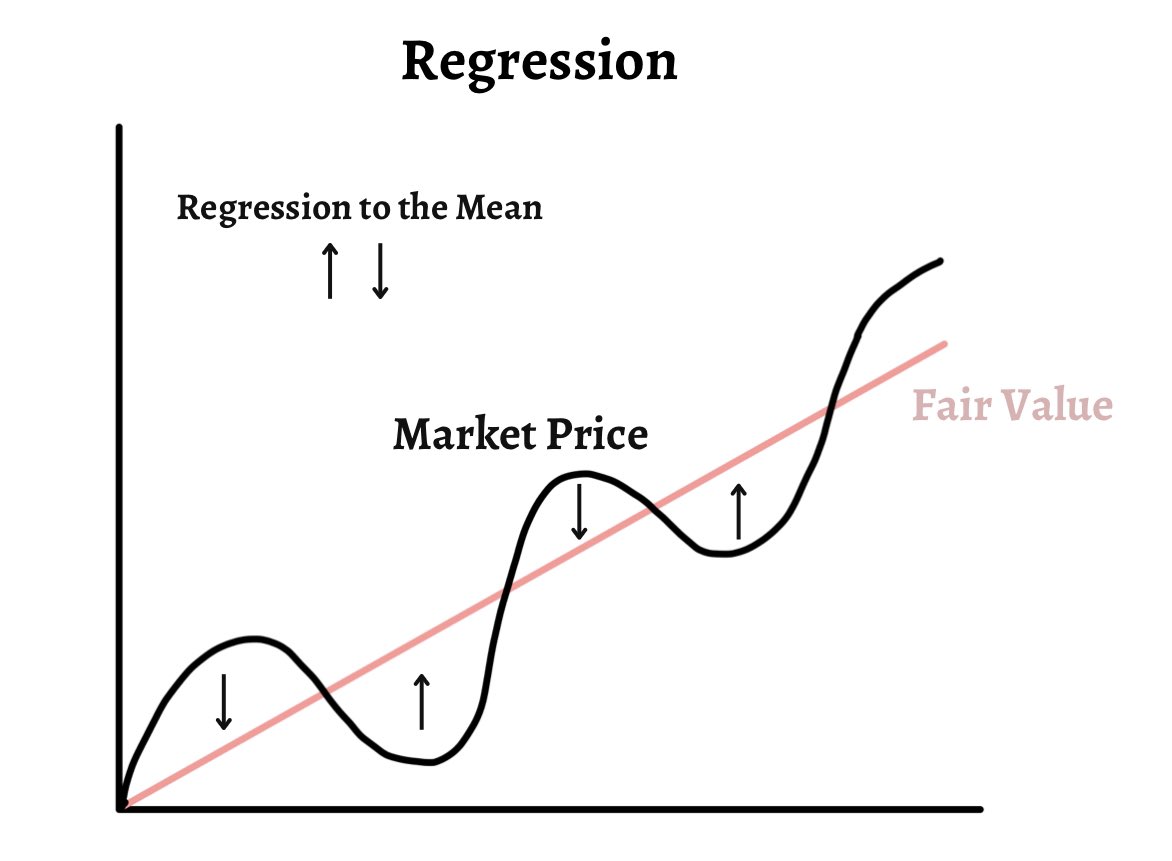
5. Regression
We love to see cause-effect relationships where none exist.
Regression to the mean might be one of the most powerful yet neglected effects.
Everything, always, regresses to its mean!
We love to see cause-effect relationships where none exist.
Regression to the mean might be one of the most powerful yet neglected effects.
Everything, always, regresses to its mean!
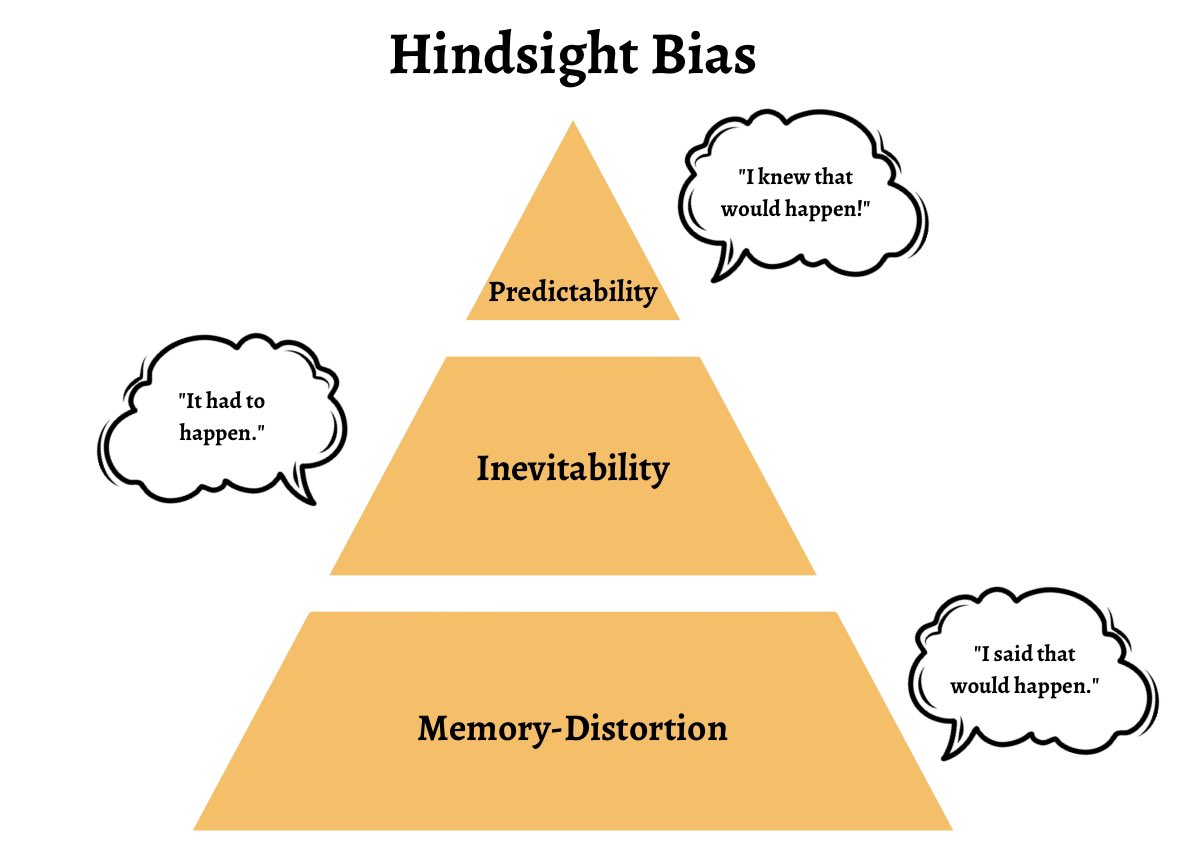
6. Hindsight Bias
The Hindsight bias makes us think that events were more predictable than actually was the case.
It’s easy to come up with cause-effect relationships in hindsight.
Unfortunately, reality is complex. You can make many reasonable calls about what will happen.
The Hindsight bias makes us think that events were more predictable than actually was the case.
It’s easy to come up with cause-effect relationships in hindsight.
Unfortunately, reality is complex. You can make many reasonable calls about what will happen.
7. Illusion of (stock picking) Skill
Buyers and sellers have the same information.
They trade the stock based on different opinions.
Short-term stock picking is luck and the reason why people don’t believe that is because it’s highly-educated people doing that job.
Buyers and sellers have the same information.
They trade the stock based on different opinions.
Short-term stock picking is luck and the reason why people don’t believe that is because it’s highly-educated people doing that job.
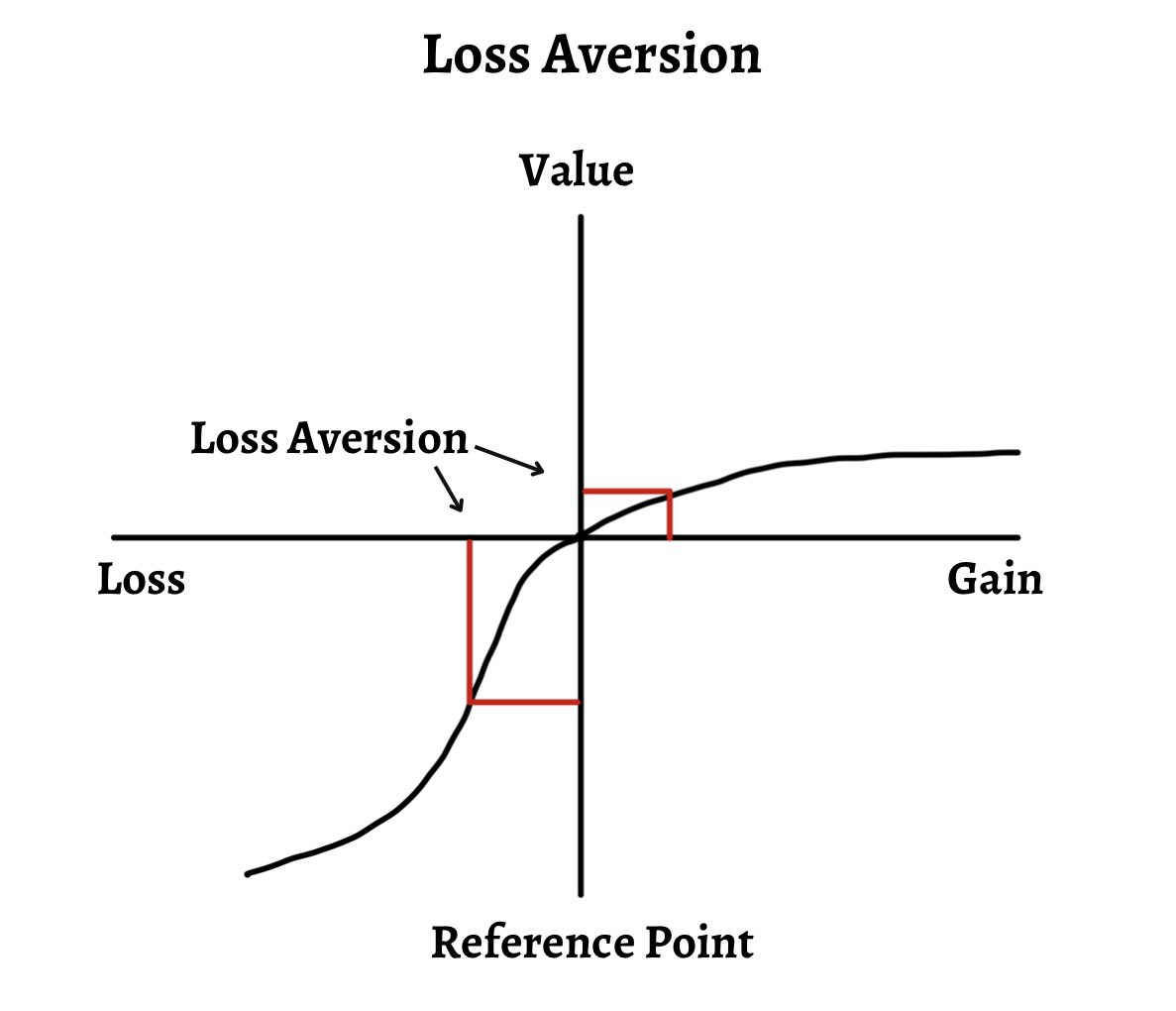
8. Loss Aversion
Loss aversion is causing us to ignore even expected value-positive gambles.
Loss weighs twice as intensively as the equivalent gain.
Loss aversion is causing us to ignore even expected value-positive gambles.
Loss weighs twice as intensively as the equivalent gain.
9. Commitment Bias
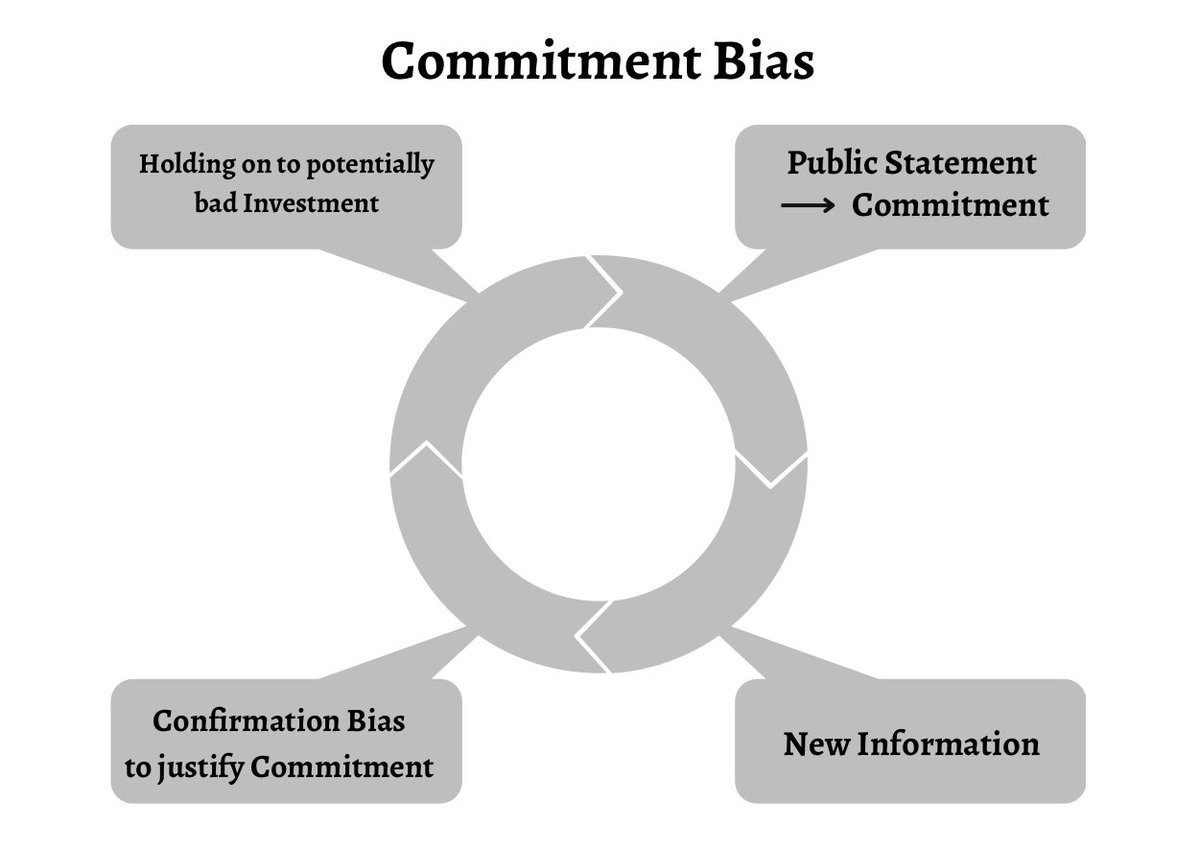
Commitment is associated with positive characteristics such as consistency and intelligence.
Thus, we avoid breaking commitments.
Publicly speaking about investment decisions is such a commitment.
The more you say, the more you talk yourself into them.
Commitment is associated with positive characteristics such as consistency and intelligence.
Thus, we avoid breaking commitments.
Publicly speaking about investment decisions is such a commitment.
The more you say, the more you talk yourself into them.
10. Recency Bias
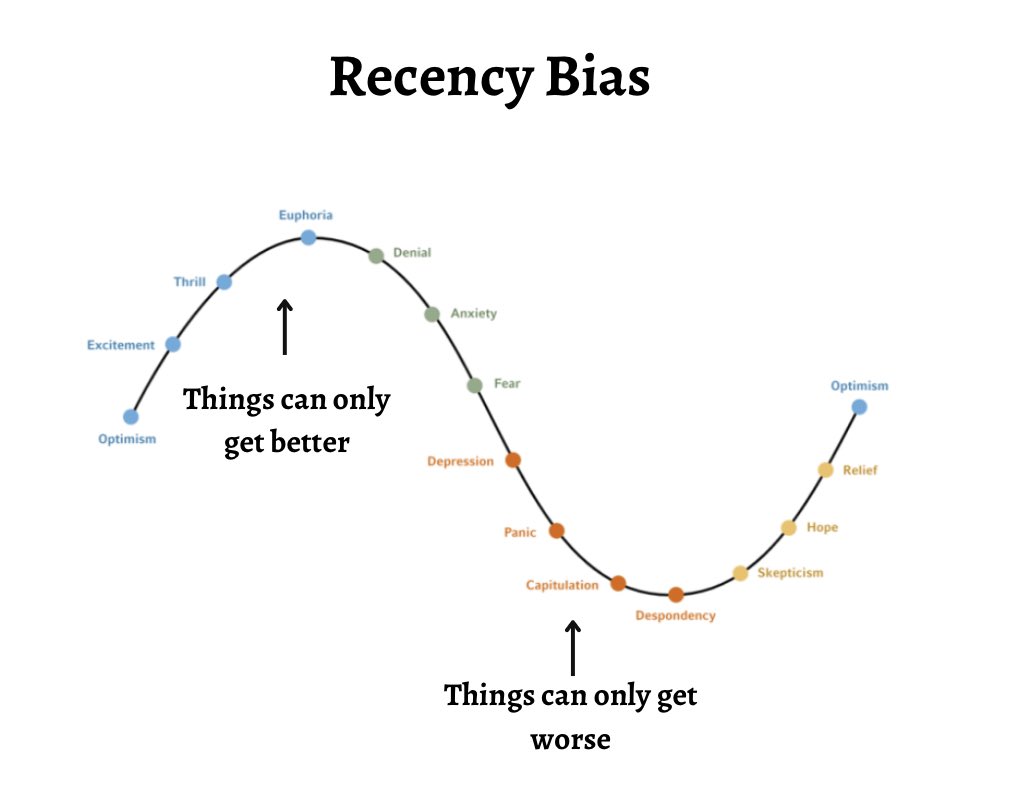
We tend to put too much weight on recent events.
This effect is why the market so often exaggerates in one direction.
When things are great, we think they will get only better.
When things are bad, we think they will get only worse.
We tend to put too much weight on recent events.
This effect is why the market so often exaggerates in one direction.
When things are great, we think they will get only better.
When things are bad, we think they will get only worse.
11. Endowment Effect
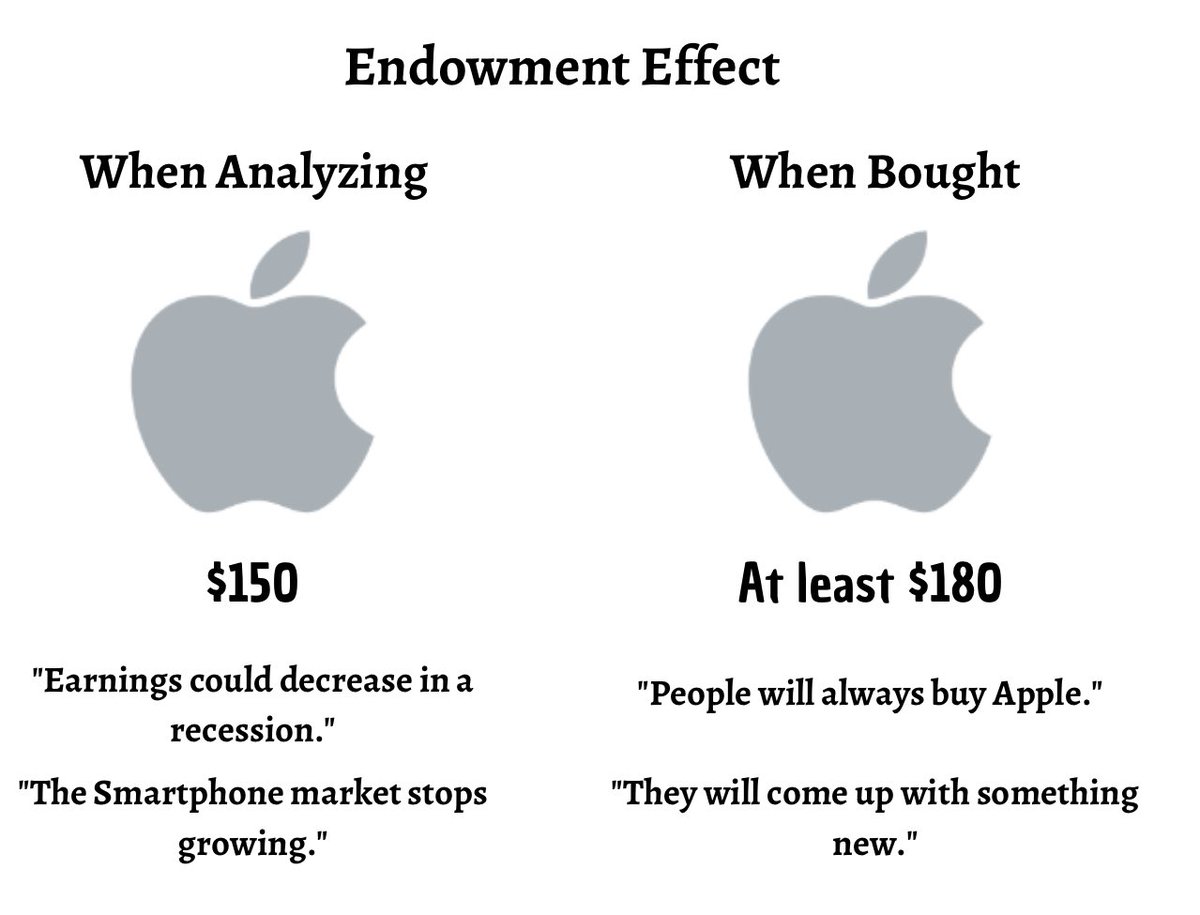
We value items more when we own them.
It’s a form of justifying our decisions.
Before buying a stock, we are critical and look for risks.
After buying, we focus on the positives to justify our decision.
We value items more when we own them.
It’s a form of justifying our decisions.
Before buying a stock, we are critical and look for risks.
After buying, we focus on the positives to justify our decision.
12. Confirmation Bias
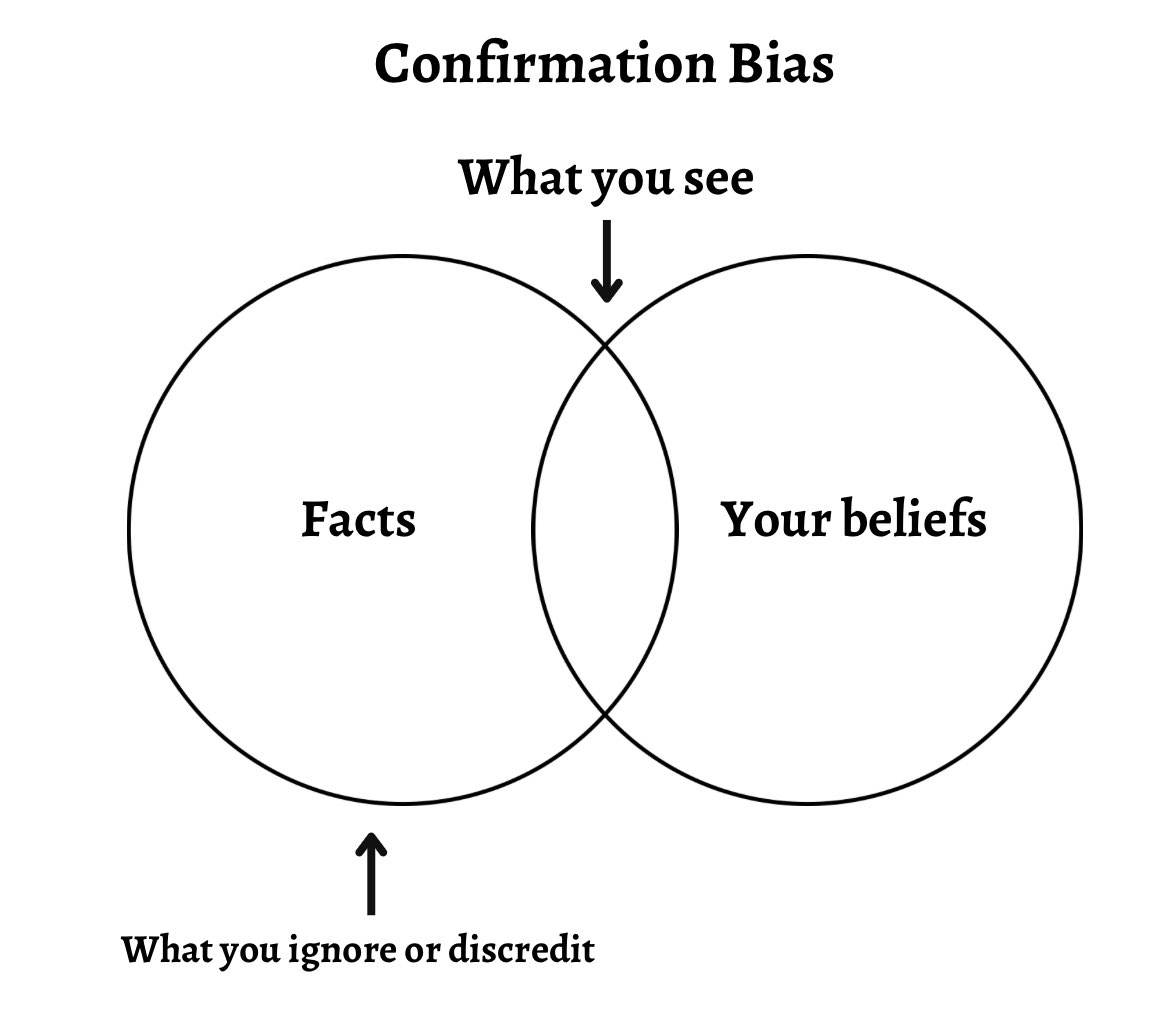
We filter information in a way that fits our existing beliefs.
What doesn’t fit our view gets ignored or discredited as a lie.
We filter information in a way that fits our existing beliefs.
What doesn’t fit our view gets ignored or discredited as a lie.
13. Probabilistic Thinking
We are prone to emotional thinking.
But everything in our life is a game of probabilities.
Our decision-making would profit enormously if we included basic probabilities in our thinking process.
We are prone to emotional thinking.
But everything in our life is a game of probabilities.
Our decision-making would profit enormously if we included basic probabilities in our thinking process.
Here’s the Link to my Substack and the Psychology Investment Checklist PDF:
danielmnke.substack.com
danielmnke.substack.com

If you enjoyed this thread, please Like and Retweet it.
Follow me @MnkeDaniel to learn more about Investing.
Cheers!
Follow me @MnkeDaniel to learn more about Investing.
Cheers!
Loading suggestions...