
Did you know the first flamethrower was invented in the Byzantine Empire?
A short thread on the wonders of “Greek Fire.”
A short thread on the wonders of “Greek Fire.”
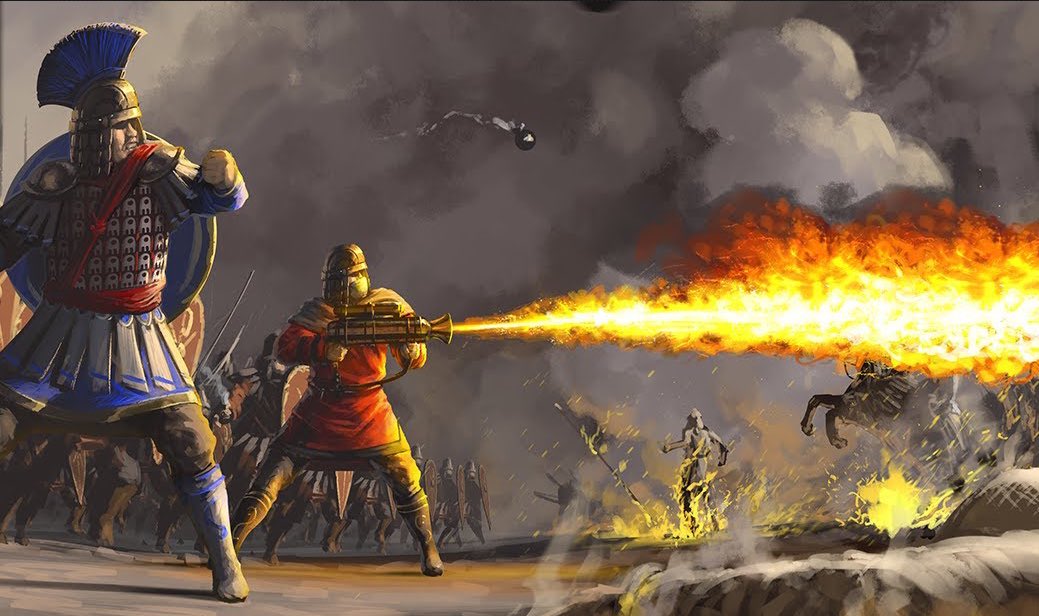
Flaming weapons have been used since ancient times. The Assyrians launched flaming pots with their catapults into enemy cities as early as the 9th century BC. However, “Greek Fire” was special because of its unique attributes; flammable in water & application as a jet of fire.

Traditionally the invention of Greek Fire has been attributed to the Jewish-Byzantine architect & chemist Kallinikos. Born in Heliopolis, Lebanon, Kallinikos fled the Muslim invasions & settled in Constantinople, sharing the secrets of his fire with the Byzantine military.

Modern scholarship rejects this story for a more collaborative development. Whatever the case, Greek Fire’s adoption by the Byzantines came at a critical time in their history. Beleaguered by Slavic & Arab invasions, Byzantium stood at the precise, teetering on destruction.
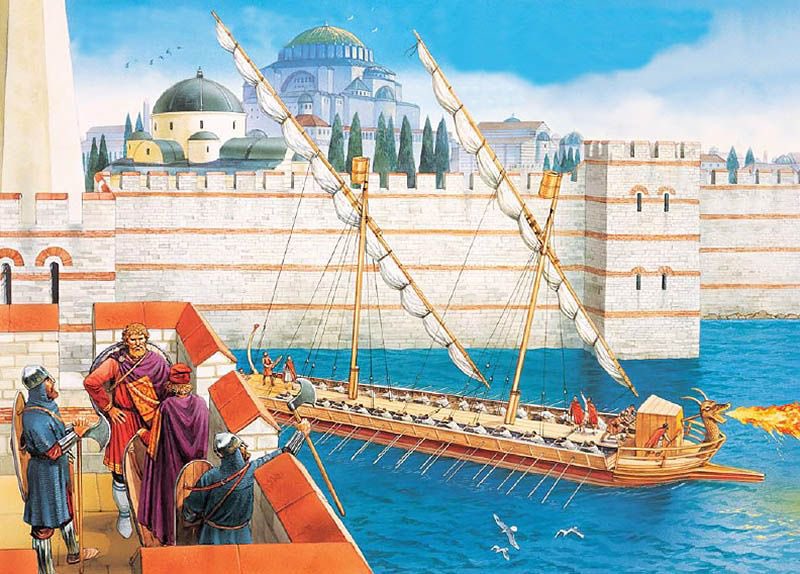
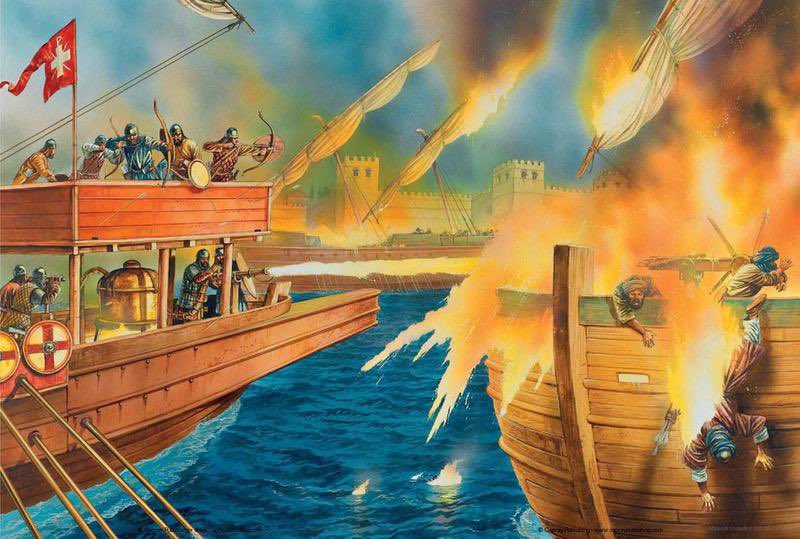
The use of Greek Fire to incinerate Muslim fleets besieging Constantinople in 674-678 AD and critically in 717-718 AD, the Empire’s darkest hour, was of great importance to the Byzantines. Later Byzantine writers characterized its discovery as divine intervention.
By controlling the sea Constantinople eased pressure on its weaker seaside fortifications, prevented enemy supply & communication across the Bosphorus, & allowed for the movement of men, material, & food to aid in the defense of the city.
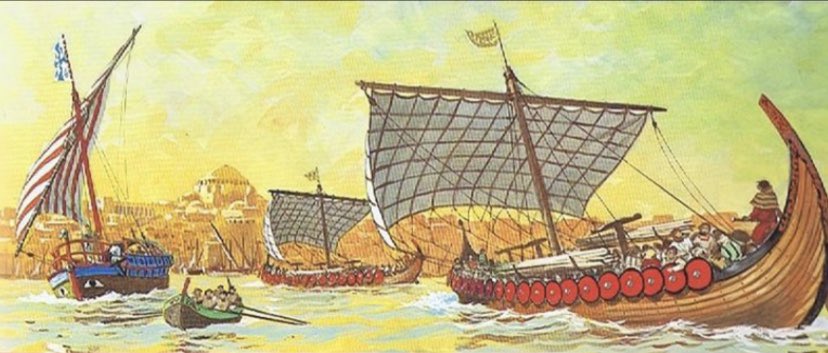
Greek Fire continued to aid the Byzantines in future sieges by Rus fleets & in battles against their enemies. The manufacture of Greek Fire was considered a matter of national security & a closely-guarded secret. Even today we do not know how exactly it was made.

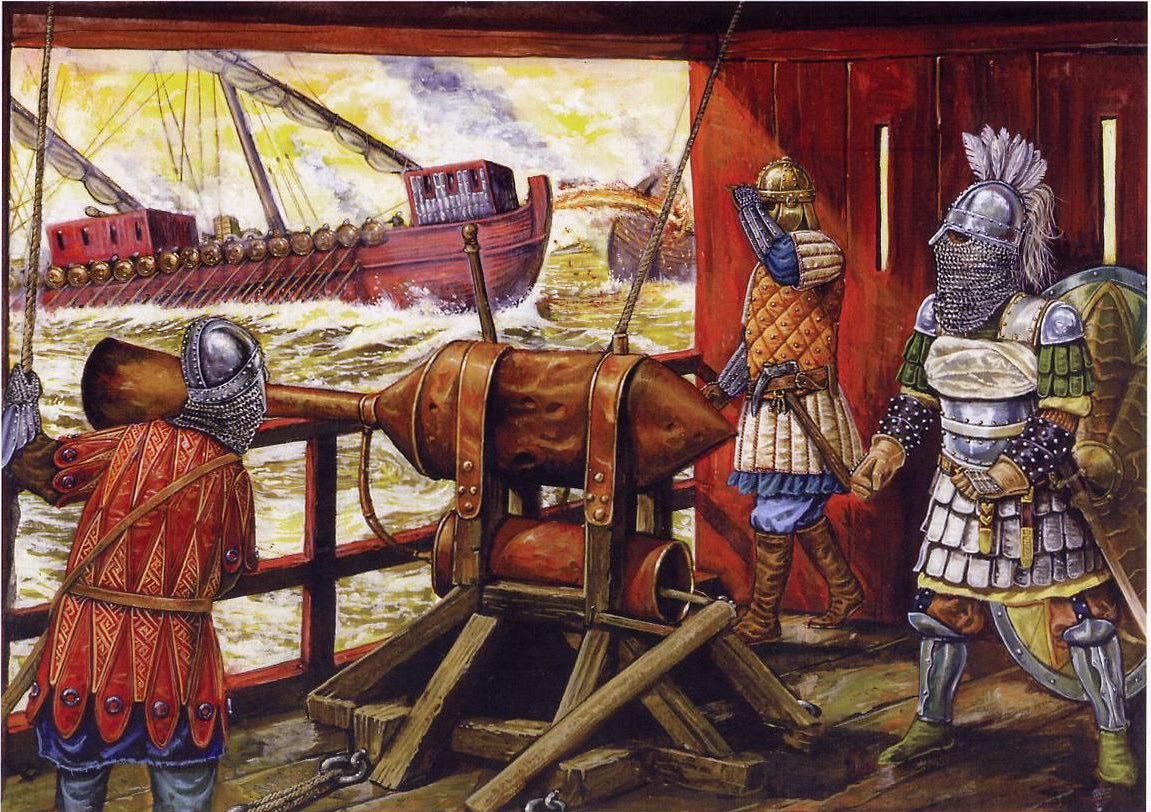
Most modern scholars believe Greek Fire to be some sort of crude petroleum, similar to napalm. It could be stored in pots, lit and smashed, or heated in cauldrons and sprayed out of siphons in a jet, ignited by a flame at the mouth.
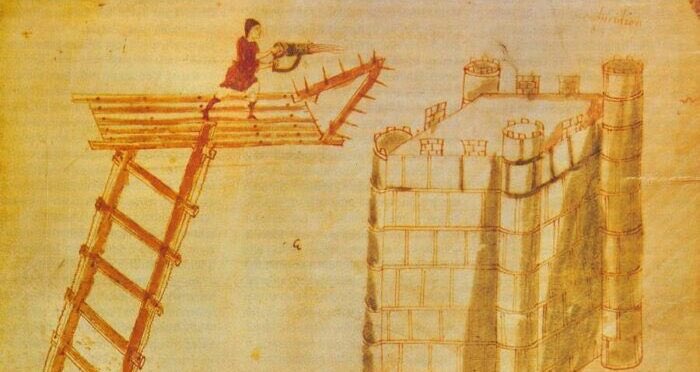
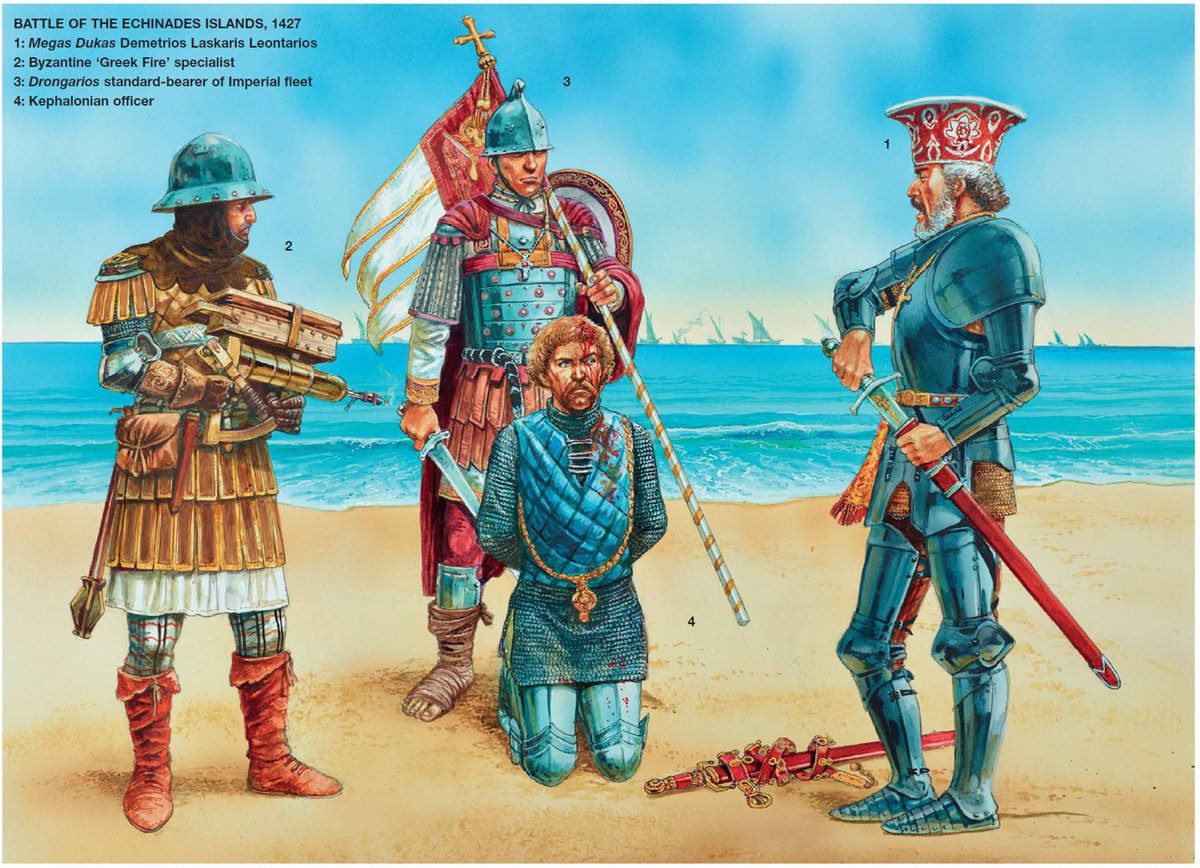
Portable types of this siphon existed as well, similar to modern flamethrowers. These were called cheirosiphōn. Here is an illustration of its employment in the Poliocertica of Hero of Byzantium from the 10th century.
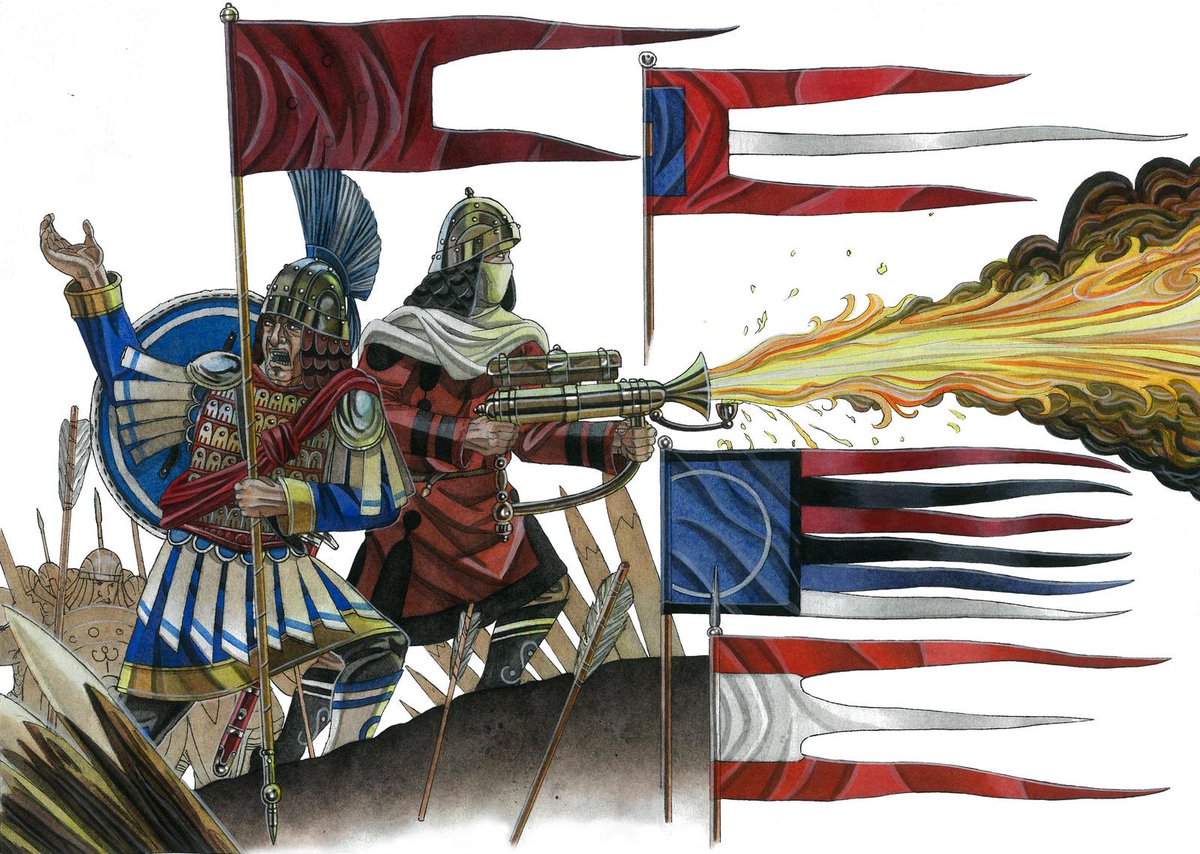
Here are some more representations of how a cheirosiphōn may have looked.
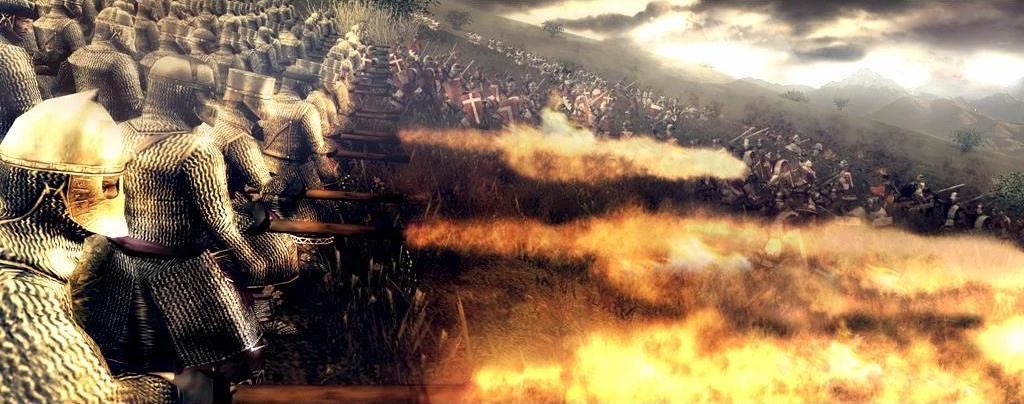
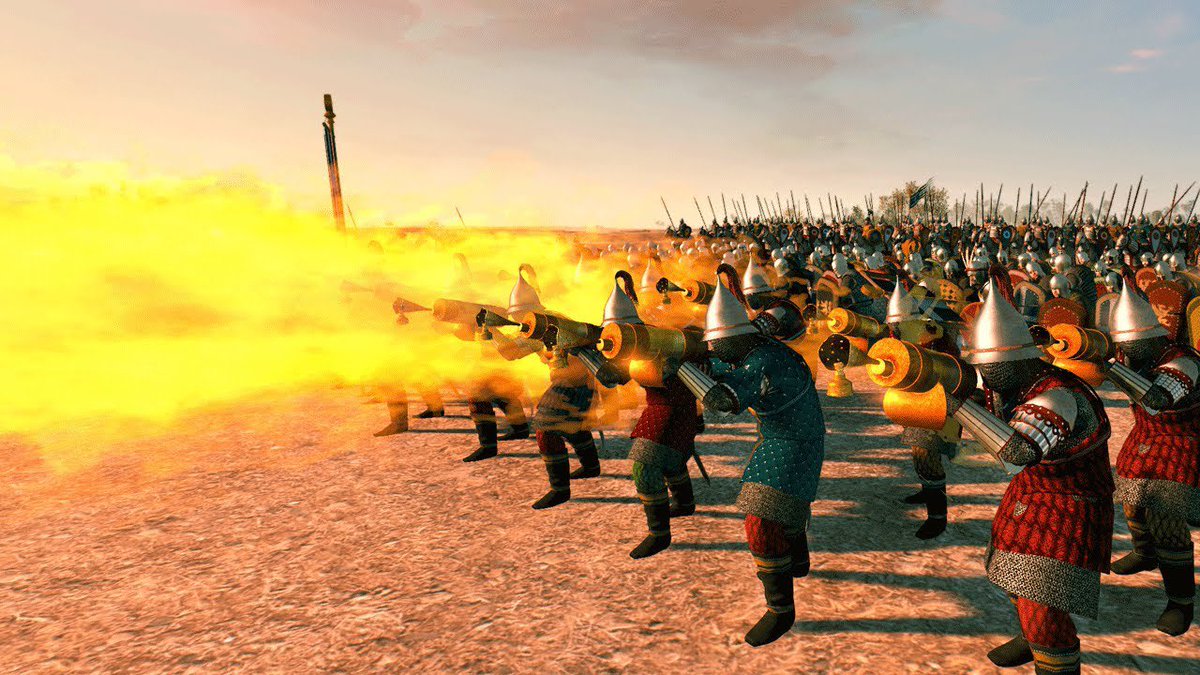
As the Byzantine Empire faded so to did Greek Fire. Perhaps the resources to produce it were lost to enemies, or money became too tight, or periods of upheaval allowed its recipe to fade from memory. Regardless, Greek Fire remains a potent demonstration of Byzantine ingenuity.
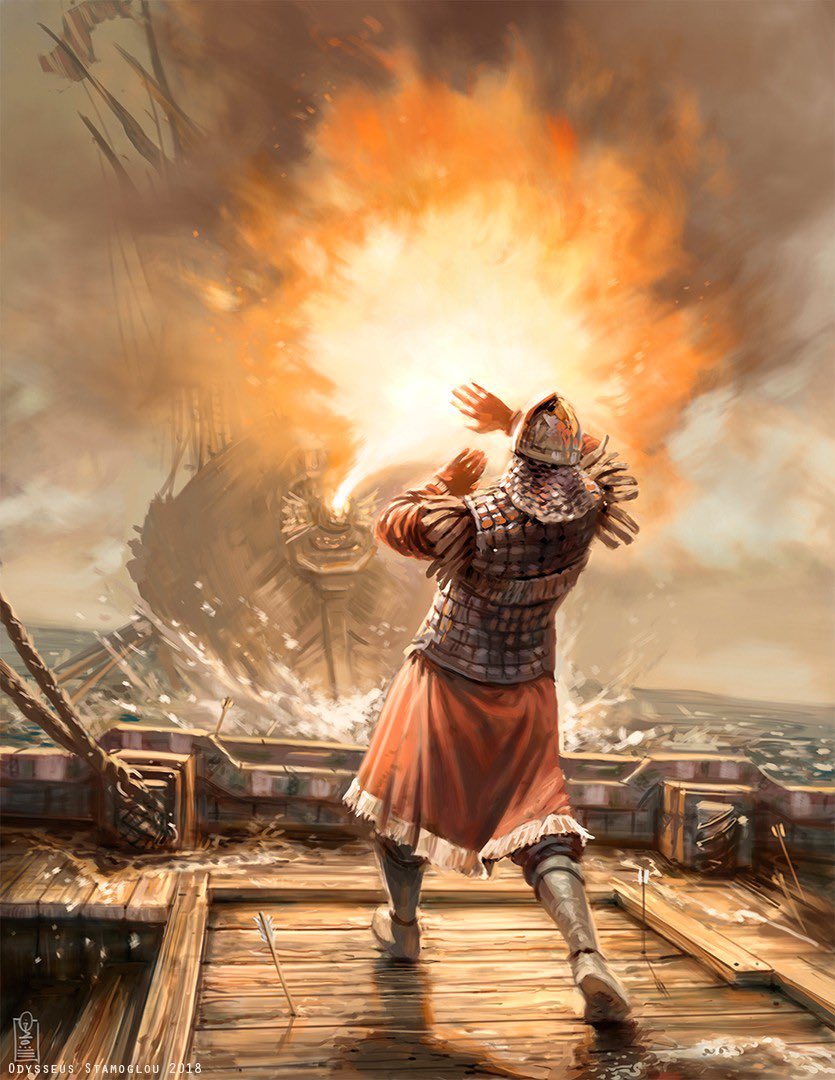
First picture is from @InvictaHistory, check out their videos here! youtu.be
Loading suggestions...