

The Goa Files🔥
‘Hat Katro Khamb’ of Goa
Do you know about it?
The atrocities that were faced by the Hindus of Goa.
'Hat Katro Khamb' is referred to as in Konkani, Hat means‘Hand’, Kataro means ‘Cut’ and Khambh called ‘Pillar’ which literally means a pillar where
#Thread
‘Hat Katro Khamb’ of Goa
Do you know about it?
The atrocities that were faced by the Hindus of Goa.
'Hat Katro Khamb' is referred to as in Konkani, Hat means‘Hand’, Kataro means ‘Cut’ and Khambh called ‘Pillar’ which literally means a pillar where
#Thread
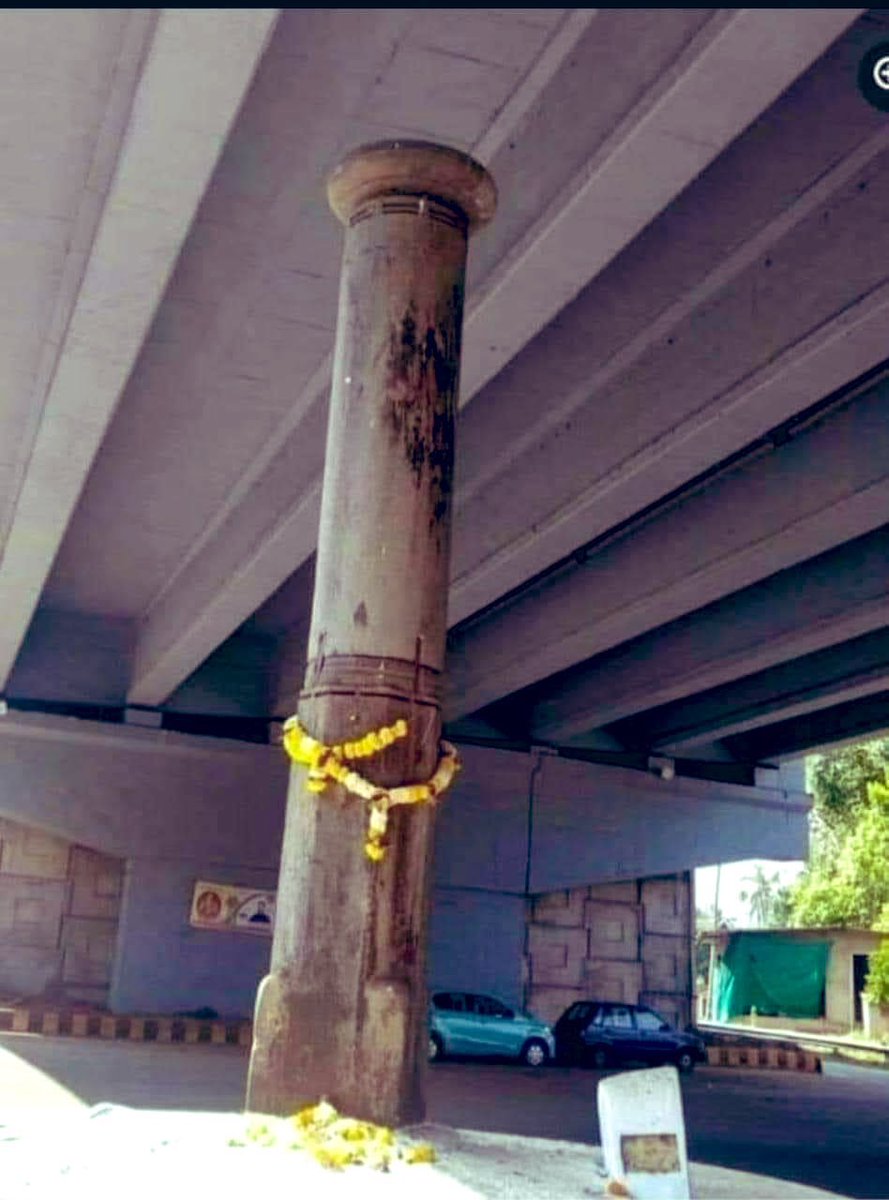
hands were chopped.
Hath Kataro Khambh of Goa was used to tie and amputate arms of those Hindus who refused to covert to Christianity. This is blood stained history of Goa which no one wants to discuss.
We need one more file on Goa like the Kashmir Files to expose
Hath Kataro Khambh of Goa was used to tie and amputate arms of those Hindus who refused to covert to Christianity. This is blood stained history of Goa which no one wants to discuss.
We need one more file on Goa like the Kashmir Files to expose
the crimes done by Francis Xavier ( co-founder of the Society of Jesus ) on HIndus.
It is an intriguing pillar dating back from Kadamba era believed to be built in 12th-13th century and was part of the temple relic then.
This pillar is standing even today as a witness of
It is an intriguing pillar dating back from Kadamba era believed to be built in 12th-13th century and was part of the temple relic then.
This pillar is standing even today as a witness of
extreme oppression by Portuguese rulers, of Hindus in Goa.
The Goan inquisition is regarded by all contemporary portrayals as d most violent inquisition ever executed by the Portuguese Catholic Church. It lasted from 1560-1812
Here👇is an Eye-witness account of Goan inquisition
The Goan inquisition is regarded by all contemporary portrayals as d most violent inquisition ever executed by the Portuguese Catholic Church. It lasted from 1560-1812
Here👇is an Eye-witness account of Goan inquisition
“The inquisition of Goa, distinguished itself on account of the greater rigors than those of the tribunals of the metropolis; thousands of victims died at the stake in flames
-Joao Felix Pereira(19th C.) in Historia de Portugal,3rd edition, pg 235
-Joao Felix Pereira(19th C.) in Historia de Portugal,3rd edition, pg 235
The cells:
A fetid cell, provided with a hole for relieving himself. But it overflowed, and there were faeces all over, an abominable smell, practically no light, save for slits on the wall, well above the reach of one's hands.
A fetid cell, provided with a hole for relieving himself. But it overflowed, and there were faeces all over, an abominable smell, practically no light, save for slits on the wall, well above the reach of one's hands.
Those who died in the jail were buried inside the building, and as they were going to be judged, the bodies were exhumed, and the bones were kept to be burnt on the next ‘auto da fé’ (the burning of a heretic)
Tortures:
Three kinds of torture were practiced: 1) the rope or the pulley, 2) water and 3) fire.
The torture by ‘rope’ consisted of the arms being tied backwards and then raised by a pulley, leaving the victim hanging for some time, and then let the victim drop down to
Three kinds of torture were practiced: 1) the rope or the pulley, 2) water and 3) fire.
The torture by ‘rope’ consisted of the arms being tied backwards and then raised by a pulley, leaving the victim hanging for some time, and then let the victim drop down to
half a foot above the floor,then raised again. These continued up-and-down movement dislocated the joints
and made the prisoner emit horrible cries of pain. This torture went on for an hour.
and made the prisoner emit horrible cries of pain. This torture went on for an hour.
The torture by ‘water’ was as follows: the victim was made to lie across an iron bar, and was forced to imbibe water without stopping. The iron bar broke the vertebrae and caused horrible pains, whereas the water treatment provoked vomits and asphyxia.
The torture by fire was definitely the worst: the victim was hung above a fire, which warmed the soles of the feet, and the jailers rubbed bacon and other combustible materials on the feet. The feet were burned until the victim confessed.
Exact data on the nature and number of Hindu temples destroyed by the Christian missionaries and Portuguese government are unavailable.
Some 160 temples were razed to the ground on the Goa island by A.D. 1566.
Between A.D. 1566 and A.D. 1567, a campaign by
Some 160 temples were razed to the ground on the Goa island by A.D. 1566.
Between A.D. 1566 and A.D. 1567, a campaign by
Franciscan missionaries destroyed. another 300 Hindu temples in Bardez (North Goa).
In Salcete (South Goa), approx. another 300 Hindu temples were destroyed by the Christian officials of the Inquisition.
Numerous Hindu temples were destroyed elsewhere at Assolna (South Goa)
In Salcete (South Goa), approx. another 300 Hindu temples were destroyed by the Christian officials of the Inquisition.
Numerous Hindu temples were destroyed elsewhere at Assolna (South Goa)
and Cuncolim (South Goa) by Portuguese
An A.D. 1569 royal letter in Portuguese archives records that all Hindu temples in its colonies in India have been burnt and razed to the ground.
-(Andrew Spicer (2016).Parish Churches in d Early Modern World. Taylor & Francis. pp.309–311)
An A.D. 1569 royal letter in Portuguese archives records that all Hindu temples in its colonies in India have been burnt and razed to the ground.
-(Andrew Spicer (2016).Parish Churches in d Early Modern World. Taylor & Francis. pp.309–311)
And then these Xtians claims themselves as a lover of peace.
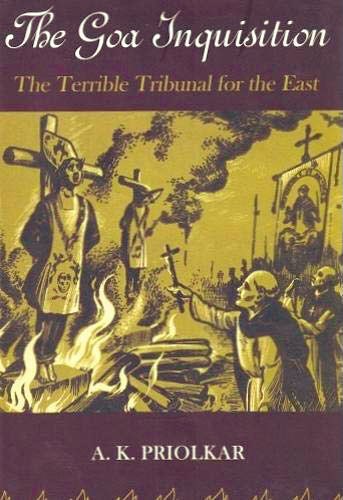
Credit - “The Goa Inquisition” by Anant Kakba Priolkar.
Credit - “The Goa Inquisition” by Anant Kakba Priolkar.
Loading suggestions...