

If you struggle to make decisions, read this:
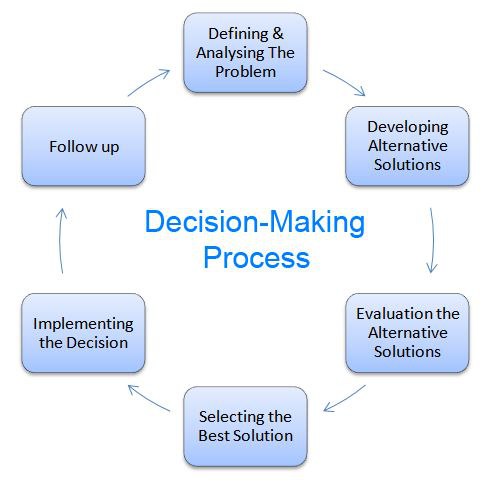
1. Decide to be decisive
If you're naturally indecisive, you will continue to be that way by habit.
Becoming decisive will require active, conscious effort.
Tell yourself that
- you are decisive
- not that you "can be" or "will become" decisive
- but that you already "are."
If you're naturally indecisive, you will continue to be that way by habit.
Becoming decisive will require active, conscious effort.
Tell yourself that
- you are decisive
- not that you "can be" or "will become" decisive
- but that you already "are."
2. Stop worrying about "bad" decisions
Acknowledge that each decision you make will lead to a learning opportunity.
By learning to see the good in each decision you make, you can become less fearful of those that turn out poorly.
Acknowledge that each decision you make will lead to a learning opportunity.
By learning to see the good in each decision you make, you can become less fearful of those that turn out poorly.
3. Be brave in the face of your mistakes
Everyone makes mistakes.
Acknowledging and accepting this truth will not make you weaker.
Once you overcome that fear, it will no longer be able to
- control you
- hold you back
Everyone makes mistakes.
Acknowledging and accepting this truth will not make you weaker.
Once you overcome that fear, it will no longer be able to
- control you
- hold you back
4. Throw yourself an easy choice for practice
Start giving yourself simple decisions to make that have minimal consequences.
Small decisions include questions like,
- "What should I have for dinner?"
- "Would I rather see a movie or stay at home this weekend?"
Start giving yourself simple decisions to make that have minimal consequences.
Small decisions include questions like,
- "What should I have for dinner?"
- "Would I rather see a movie or stay at home this weekend?"
5. Reflect on the past
Review your memory and think about any decision you faced in the past.
Think about the choices you made then and ask yourself how they turned out.
Mimic the good choices and act oppositely to the bad choices.
Review your memory and think about any decision you faced in the past.
Think about the choices you made then and ask yourself how they turned out.
Mimic the good choices and act oppositely to the bad choices.
6. Stay in the present
While you can reflect on the past to help guide you in the present,
ultimately,
you need to remember that you are currently in the present.
Anxieties and fears about things that happened in the past should be left in the past.
While you can reflect on the past to help guide you in the present,
ultimately,
you need to remember that you are currently in the present.
Anxieties and fears about things that happened in the past should be left in the past.
I am a Transformational Mindset Coach
Benefits of working with me
How to overcome :
- Self sabotage
- Procrastination
- Erasing limiting beliefs
- Stop living in fear
Adopt:
- Empowering model of the world
- Learn content vs context
Benefits of working with me
How to overcome :
- Self sabotage
- Procrastination
- Erasing limiting beliefs
- Stop living in fear
Adopt:
- Empowering model of the world
- Learn content vs context

Enjoyed this thread?
Retweet the first tweet to help others improve their lives.
Want more content like this?
Follow me @JamesCpeters
Thanks for reading.
Retweet the first tweet to help others improve their lives.
Want more content like this?
Follow me @JamesCpeters
Thanks for reading.
Loading suggestions...