

DNA Synthesis
This will be a look at the process of DNA synthesis.
This will be a look at the process of DNA synthesis.
1/ There are about 3 billion nucleotides in the human genome across 23 pairs of Chromosomes. It would take a very long time to copy all of them with just one set of replication enzymes. This means the DNA will synthesize using many points of replication.
2/ The site where the replication starts is called the origin of replication. There is one of these replication start points every several thousand nucleotides in the human genome. These are at sites rich with A and T pairs as they have less bonds.
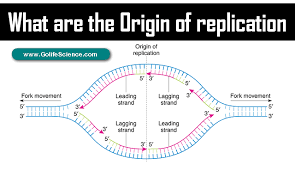
3/ The first enzyme will be Helicase which opens the DNA at the origin of replication. It unzips the DNA along the hydrogen bonds that hold the DNA together. The spot at which the Helicase unzips the DNA is called the replication fork.
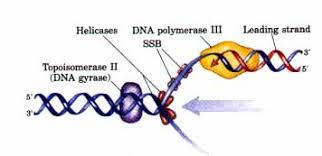
4/ Since the DNA has an electrostatic charge, it will want to snap back closed. There is a set of proteins called Single Strand Binding (SSB) proteins that bind to each strand of the DNA and stabilizes the charges.
5/ The DNA polymerase that is responsible for copying the DNA can only bind to double stranded DNA, but in this case the DNA is separated. There is a RNA primase that comes in and lays in a few RNA primers into the starting spot so the DNA polymerase can attach.
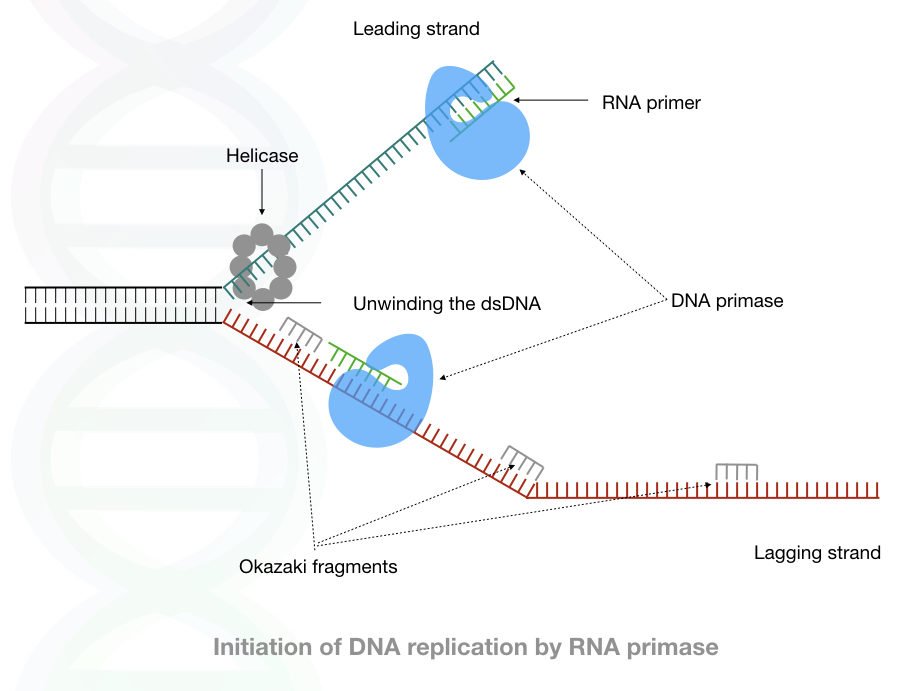
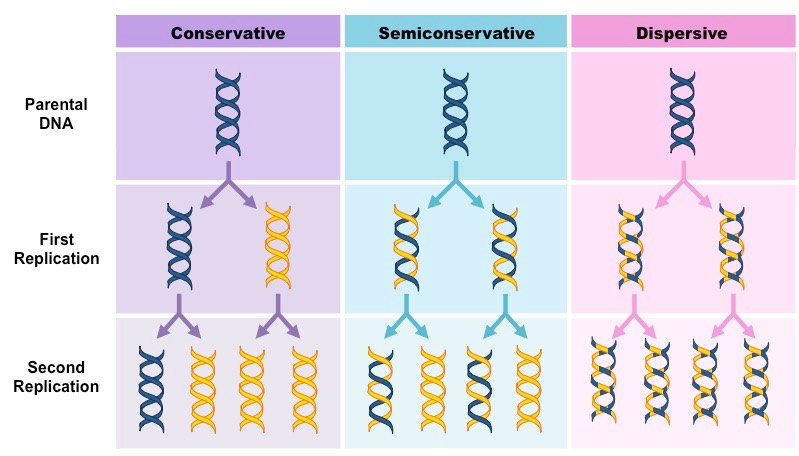
6/ Both strands are copied at the same time. Each original strand acts as a template while a new strand is synthesized from each of the original strands. This process leaves each new DNA with 1 original strand bound to 1 new strand.
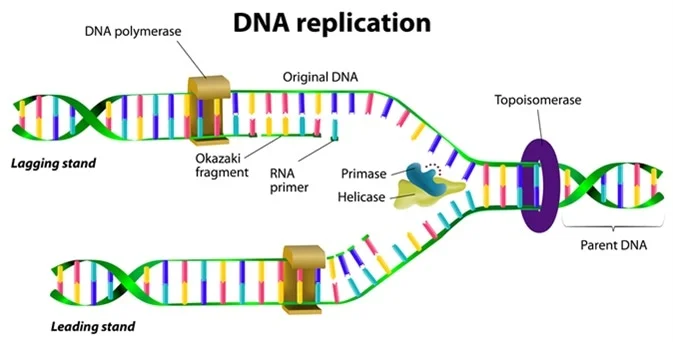
7/ This process of taking one original strand and using it as a template to make a new strand leaves each new copy of the DNA with one original paired with one new strand. This is called the Semiconservative model of DNA replication.
8/ The DNA polymerase has to read the DNA going from the 3' to the 5' direction because it creates DNA from 5' to 3'. This makes one strand of the DNA easy to copy. The polymerase just binds to the 3' end and goes copying the DNA along the way as it is always moving forward.
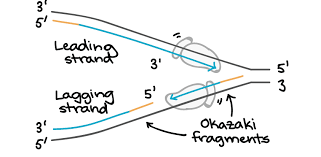
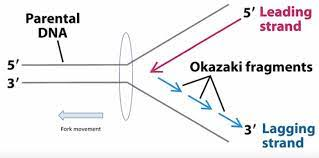
9/ The stand that starts at the 3' end and continues with the flow of the replication fork is called the Leading Strand. The DNA polymerase just moves along this strand copying the template strand into a new strand as it goes.
10/ The other strand runs in the opposite direction of this leading strand. That mean the DNA polymerase has to work backward as that strand is going in the 5' to 3' direction. It does this by jumping several thousand nucleotides ahead and working backwards.
11/ These sections of DNA, it copies by jumping ahead and working backwards, are called Okazaki fragments. Initially, they are not connected together. There is another enzyme that comes along and connects these Okazaki fragment together. This enzyme is called DNA ligase.
12/ The DNA is wound together into a double helix. As the helicase moves along the DNA and opens it up, it will create tension on the DNA. If that tension isn't released, it will build until it stops the helicase.
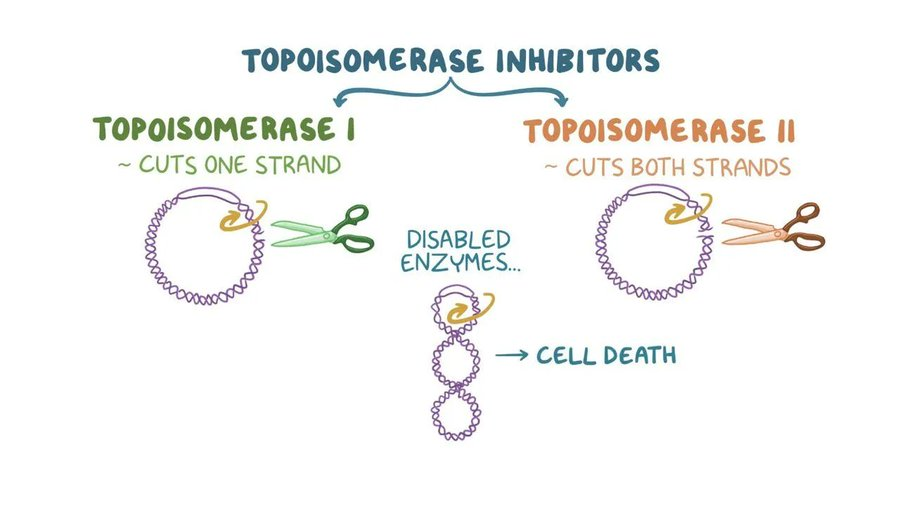
13/ There is another enzyme that binds to the double strands of DNA ahead of the helicase enzyme. As the tension on the DNA gets too high, the topoisomerase enzyme will break the bonds of the DNA and allow it to unwind the tension before binding it back together.
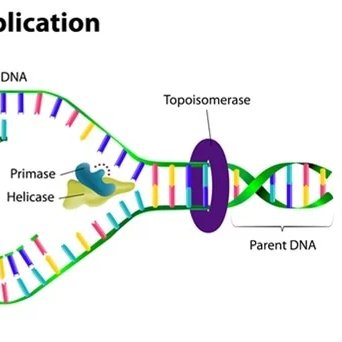
14/ The topoisomerase is a critical enzyme that is necessary for DNA synthesis to release the tension. There are cancer drugs that target this topoisomerase enzyme to prevent DNA synthesis in rapidly replicating cells.
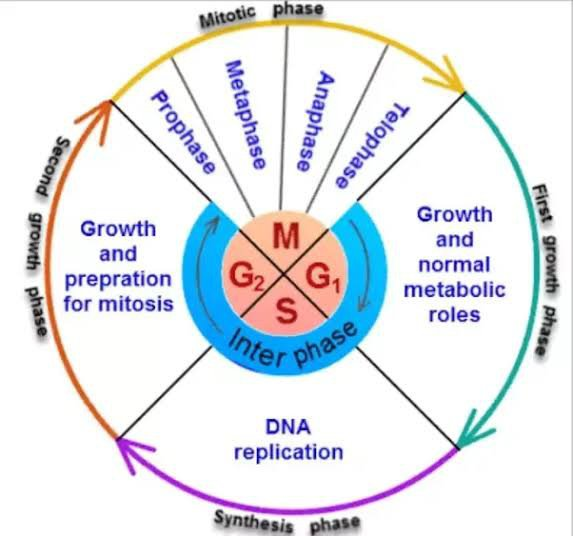
15/ The process of DNA synthesis occurs during the cell cycle in the S phase of the cycle. This is the only time the DNA gets copied before the cell undergoes mitosis.
16/ Next we will look at DNA transcription.
Loading suggestions...