
Spain v Germany offered a level that is very difficult to observe in national team games. So many collective and individual brilliance, tactical tweaks, enthusiasm from players to play a beautiful game. Everything was for us to enjoy football. Let’s start with Spain’s high press.

Spain usually use aggressive high press. They press with 7 players against 8 and use man-marking. It was no different against Germany at the beginning of the game. Luis Enrique made the assignment considering Germany’s asymmetry regarding FBs.
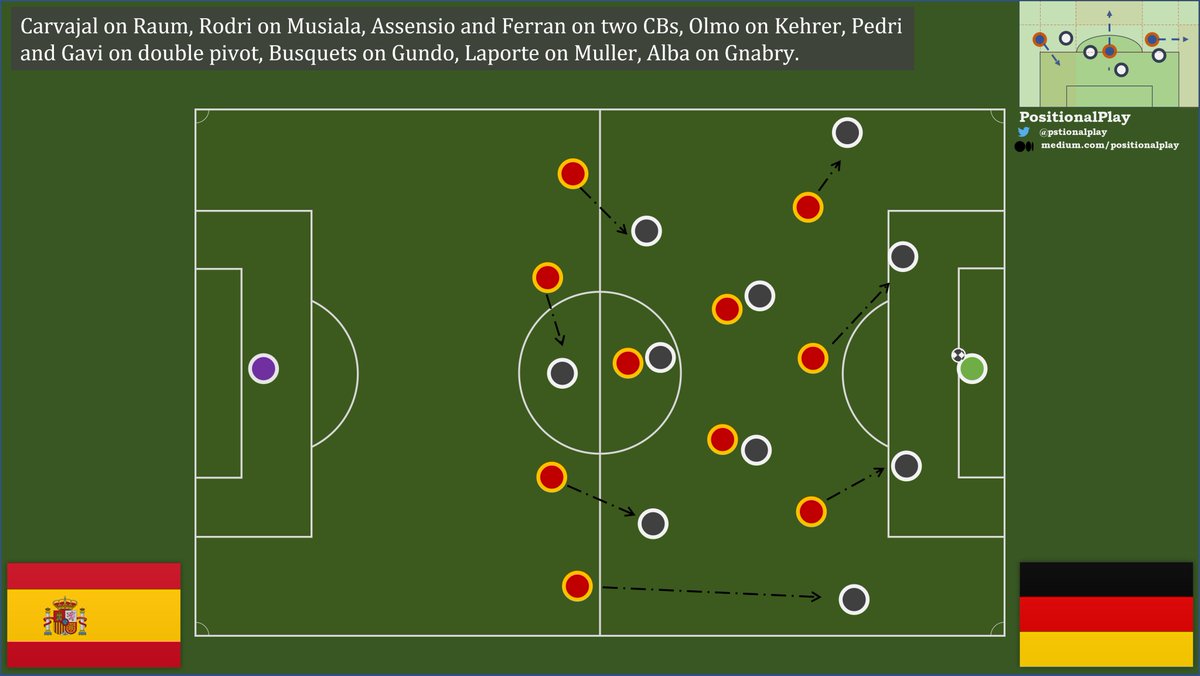
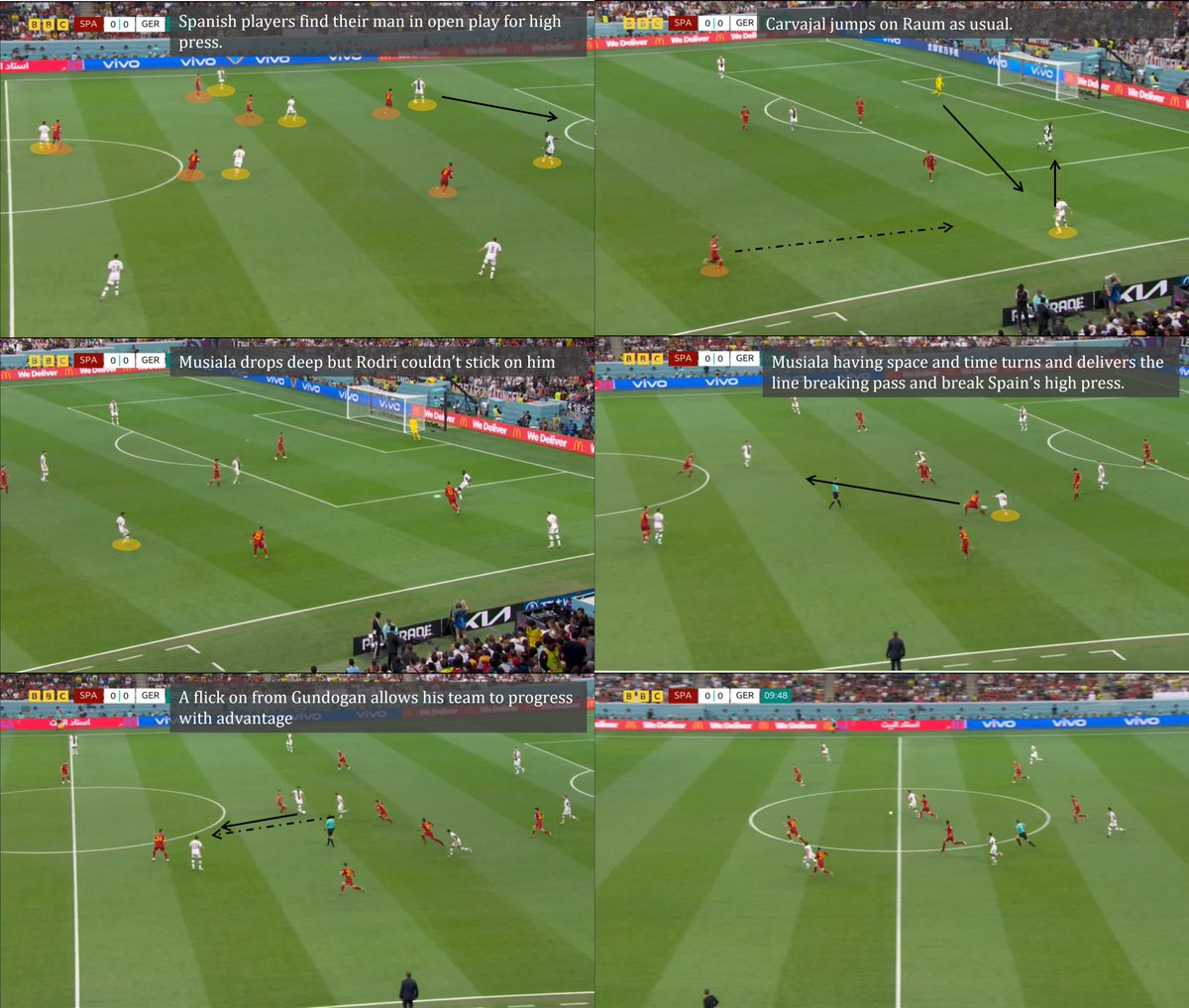
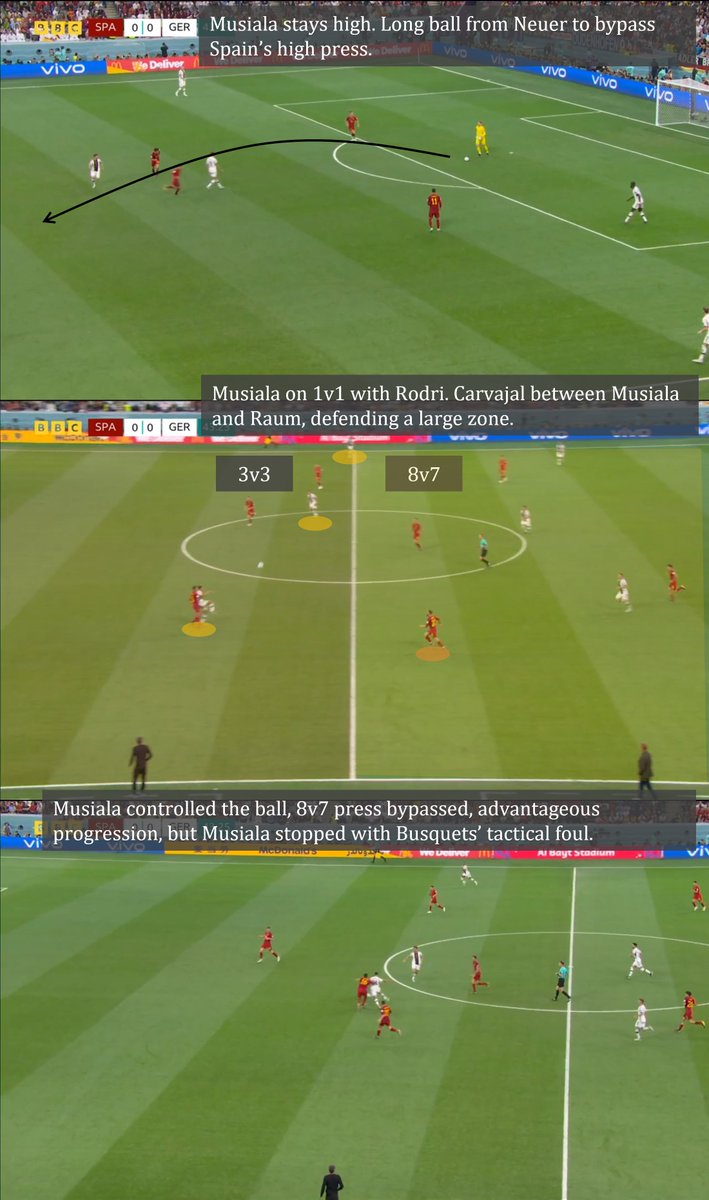
However, when Carvajal jumped on Raum, Musiala dropped back and offered support. His assignee, Rodri, hesitated to jump because of his defensive responsibilities as CB. This allowed an easy and advantageous progression opportunity for Germany.
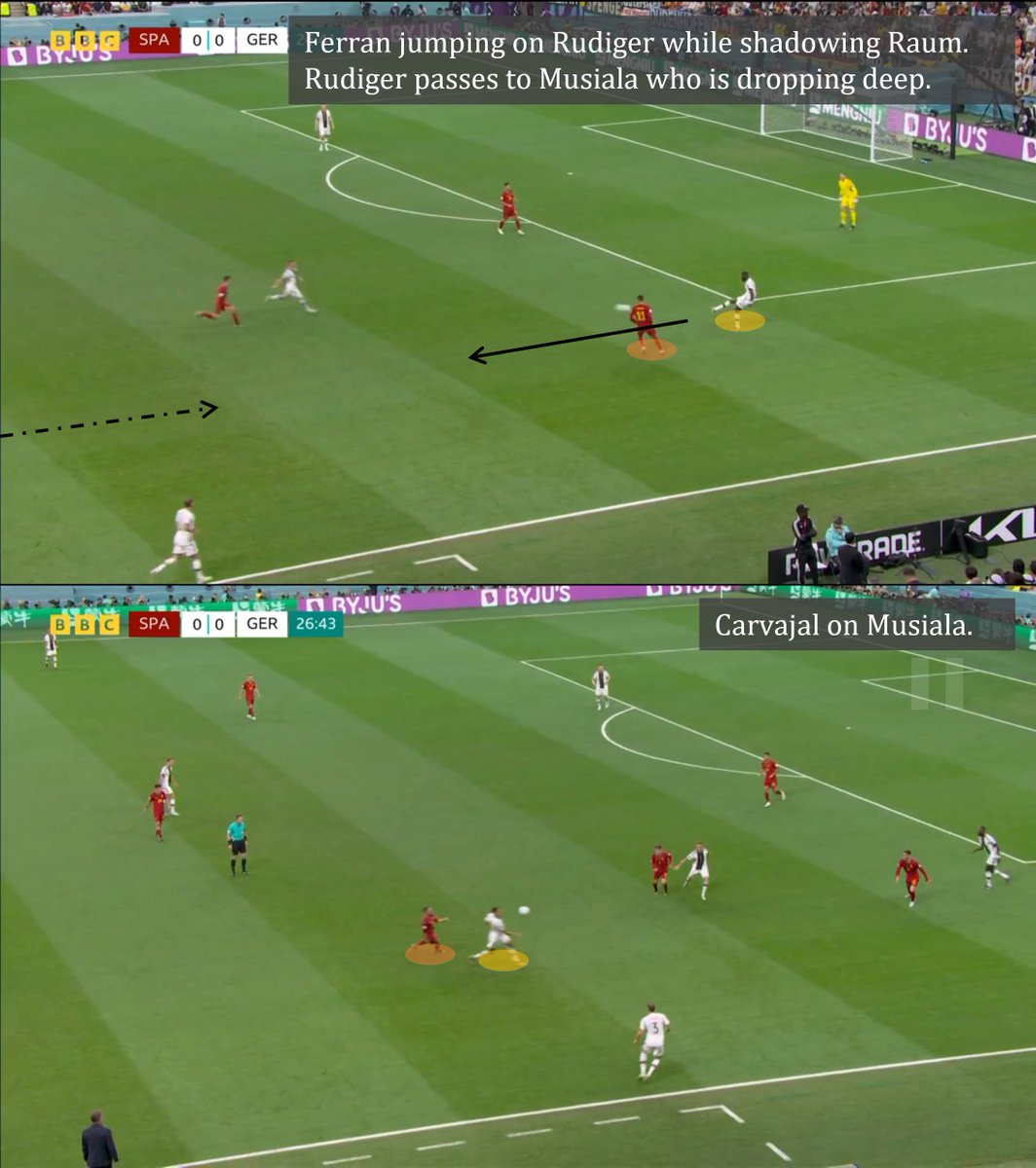
After this incident, Carvajal and Rodri started to mark zones. In Germany’s short build-ups Carvajal could defend the area between Raum and Musiala (when dropped deep). But then Musiala stayed high and used 1v1s over a long ball.
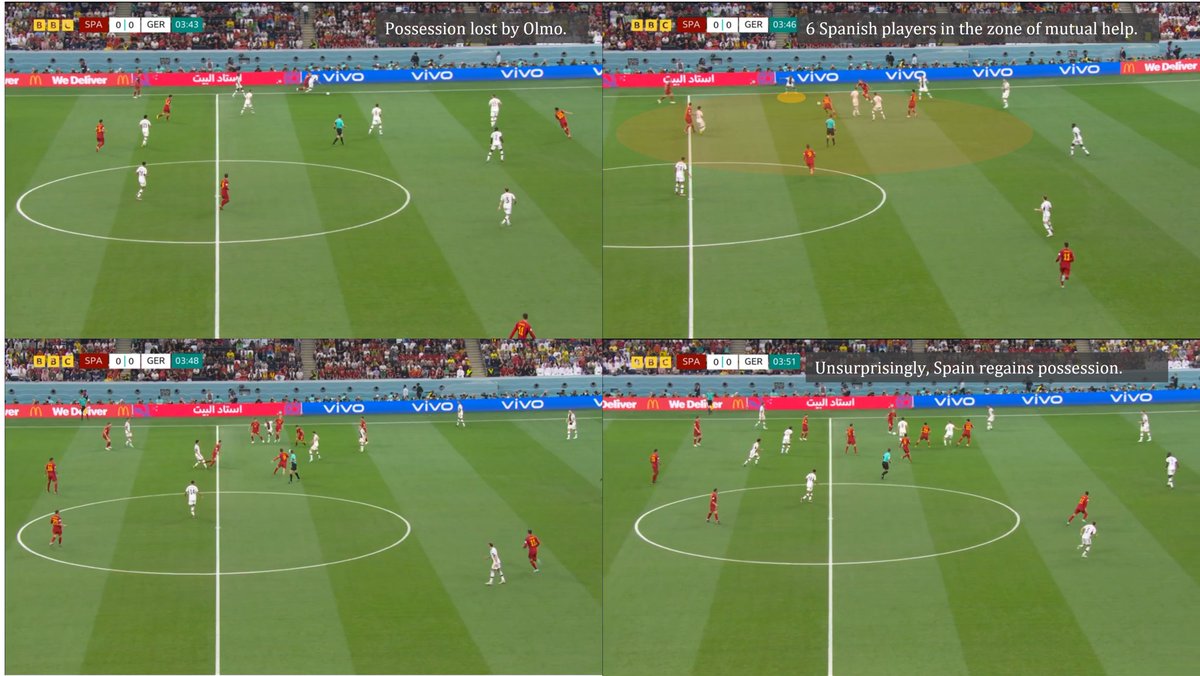
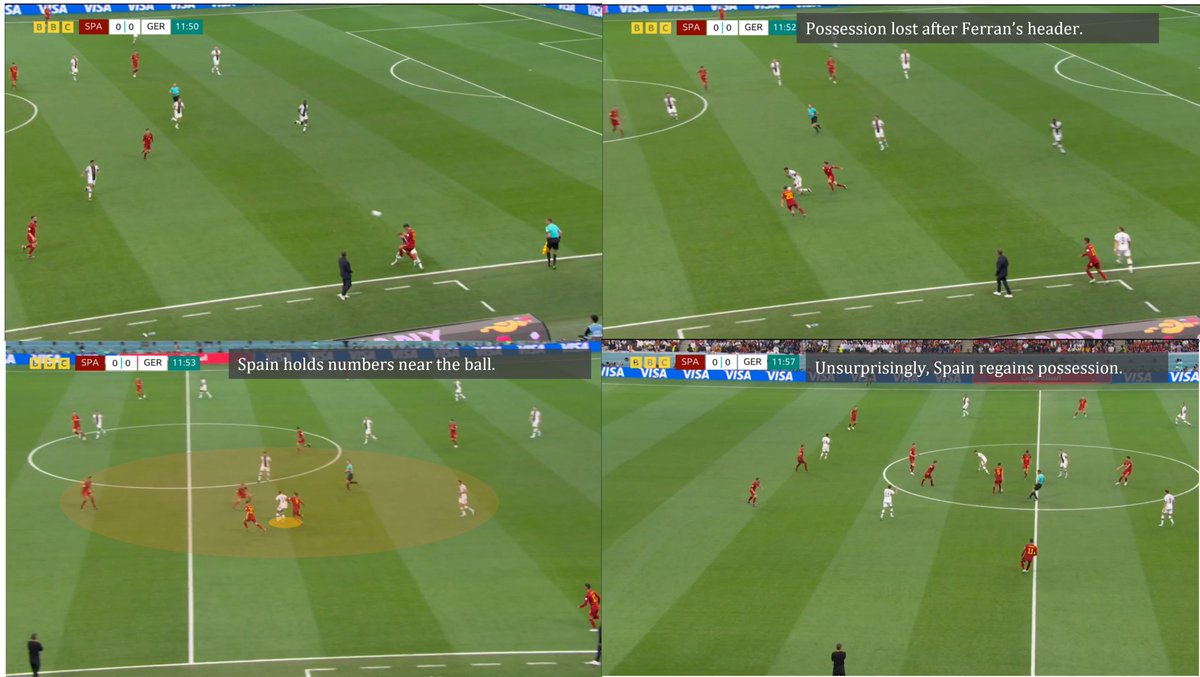
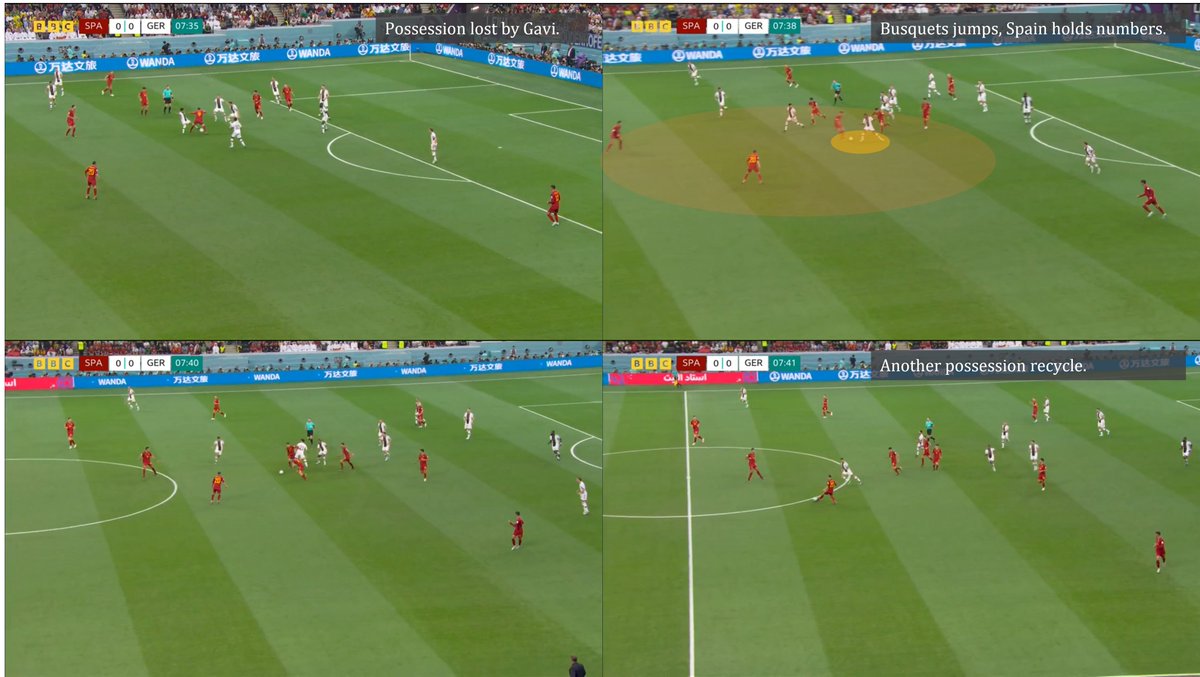
Musiala continued to be the problem for Spain’s press in Germany’s build-ups, but when it comes to defensive transitions, Spain’s counter-press was still top-notch. As I have been repeatedly saying: Distances in possession was key in Spain’s strong CP again.
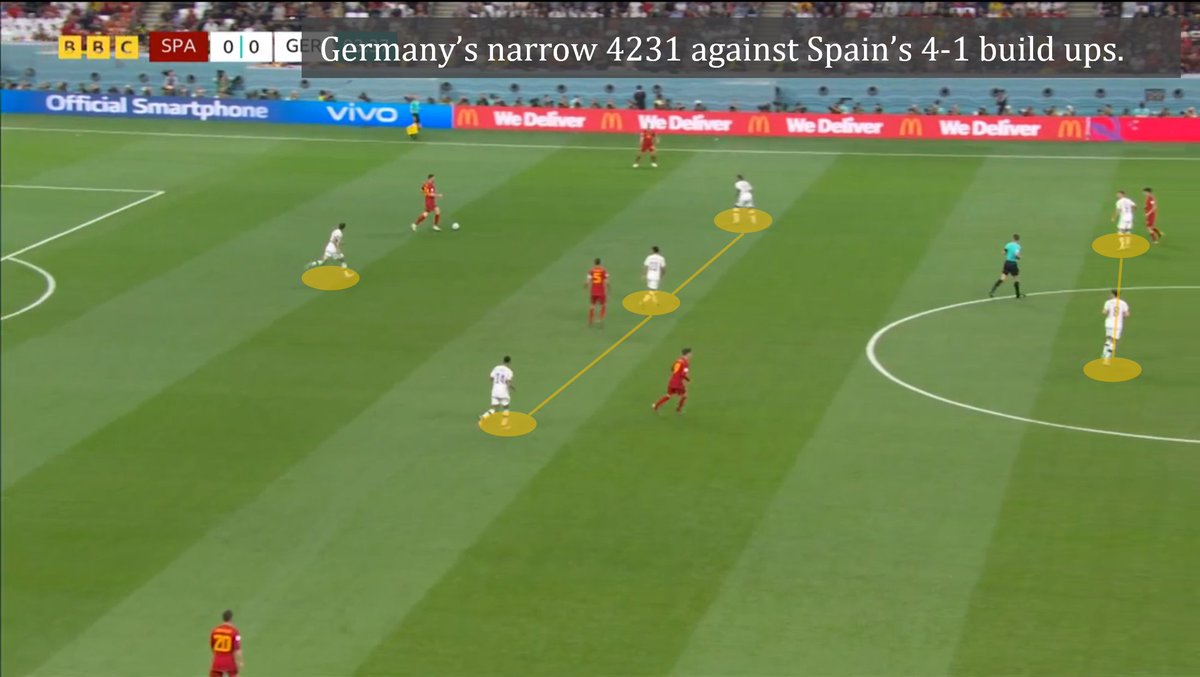
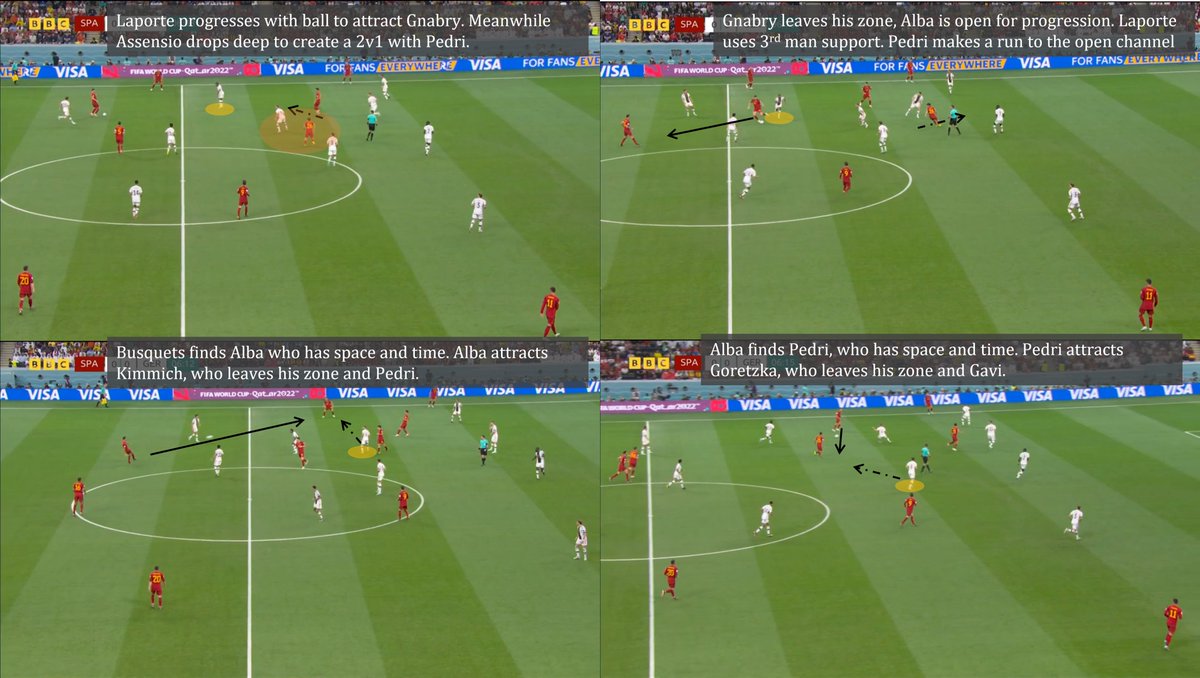
Meanwhile Germany started the game with a 4231 mid-block (hence an 8v6 on paper). At the beginning of the game, Spain repeatedly broke Germany’s lines due to low engagement from CBs. Assensio dropped created 2v1s with Pedri, and Spain progressed.
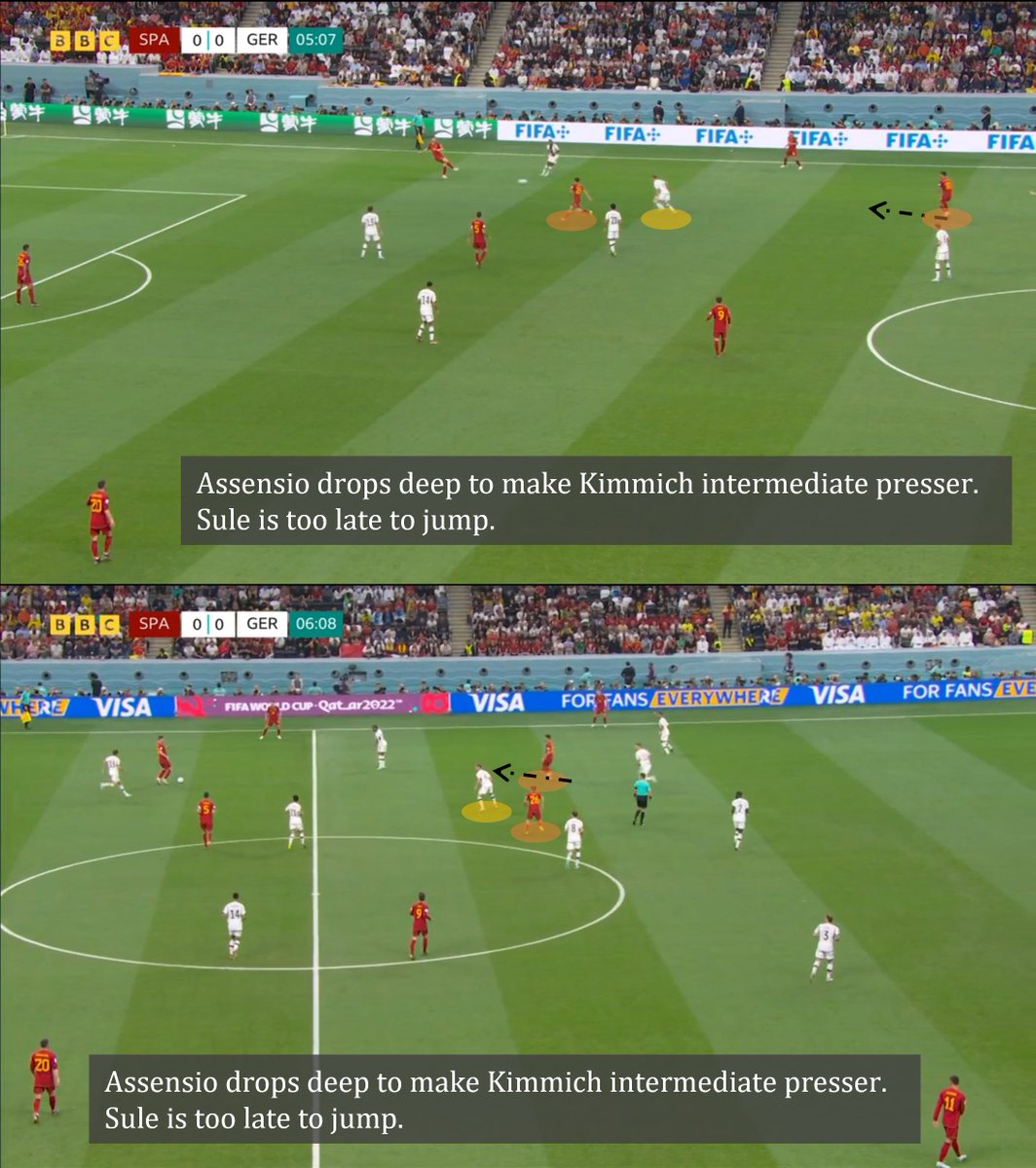
The beautiful sequence below could’ve ended with a goal, but it was still enough to demonstrate the sublime fluid football Spain is capable of playing.
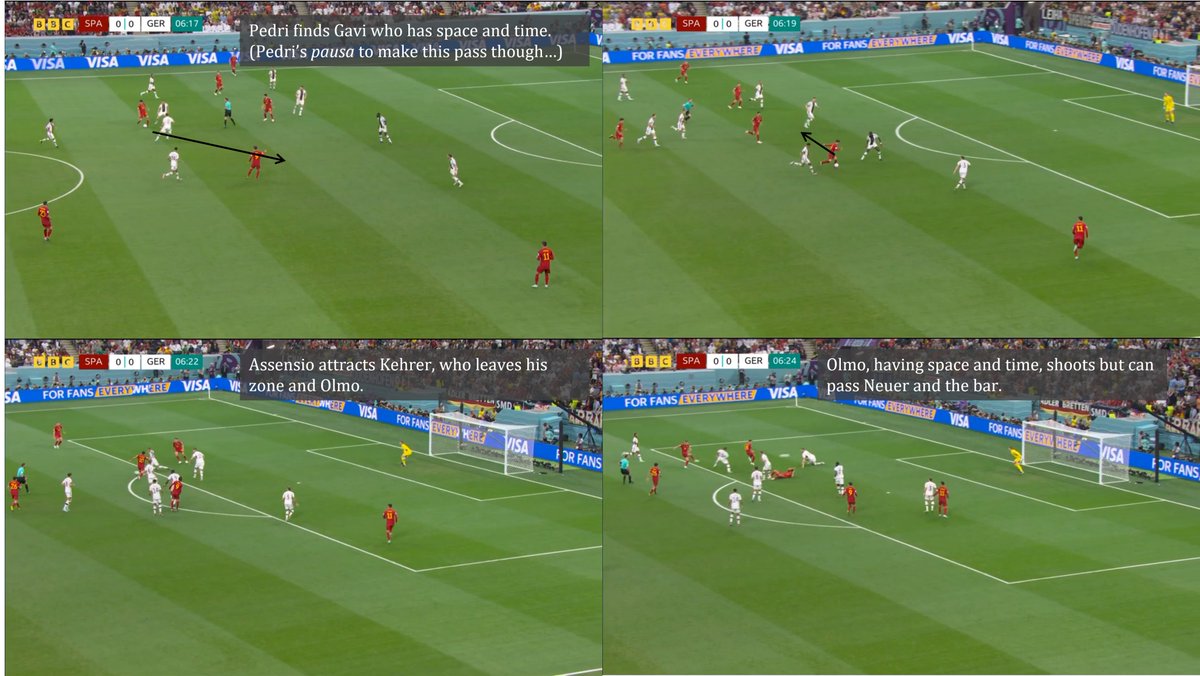
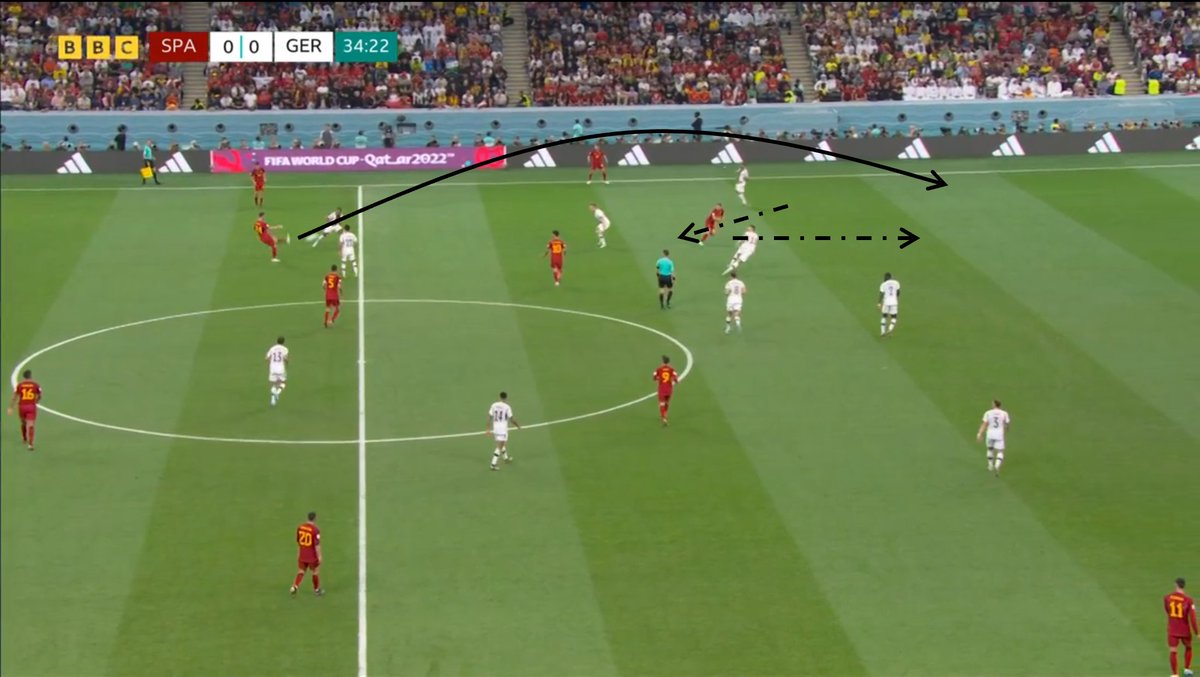
This changed after around ~15 mins and CBs started to stick on Assensio. However, towards the end of the half, Olmo’s fake to drop deep and run behind the defensive line put Germany defense in a difficult situation.
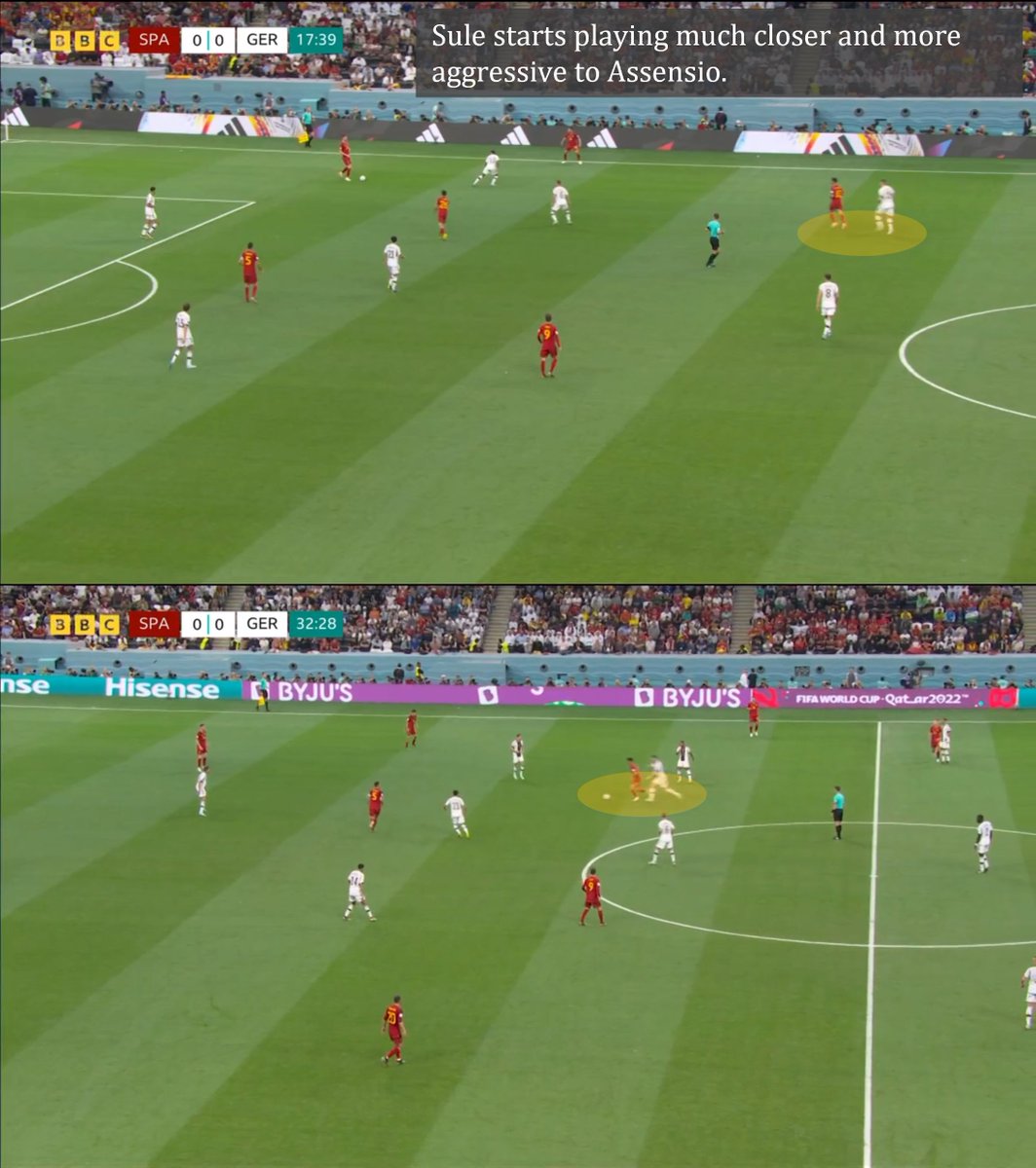
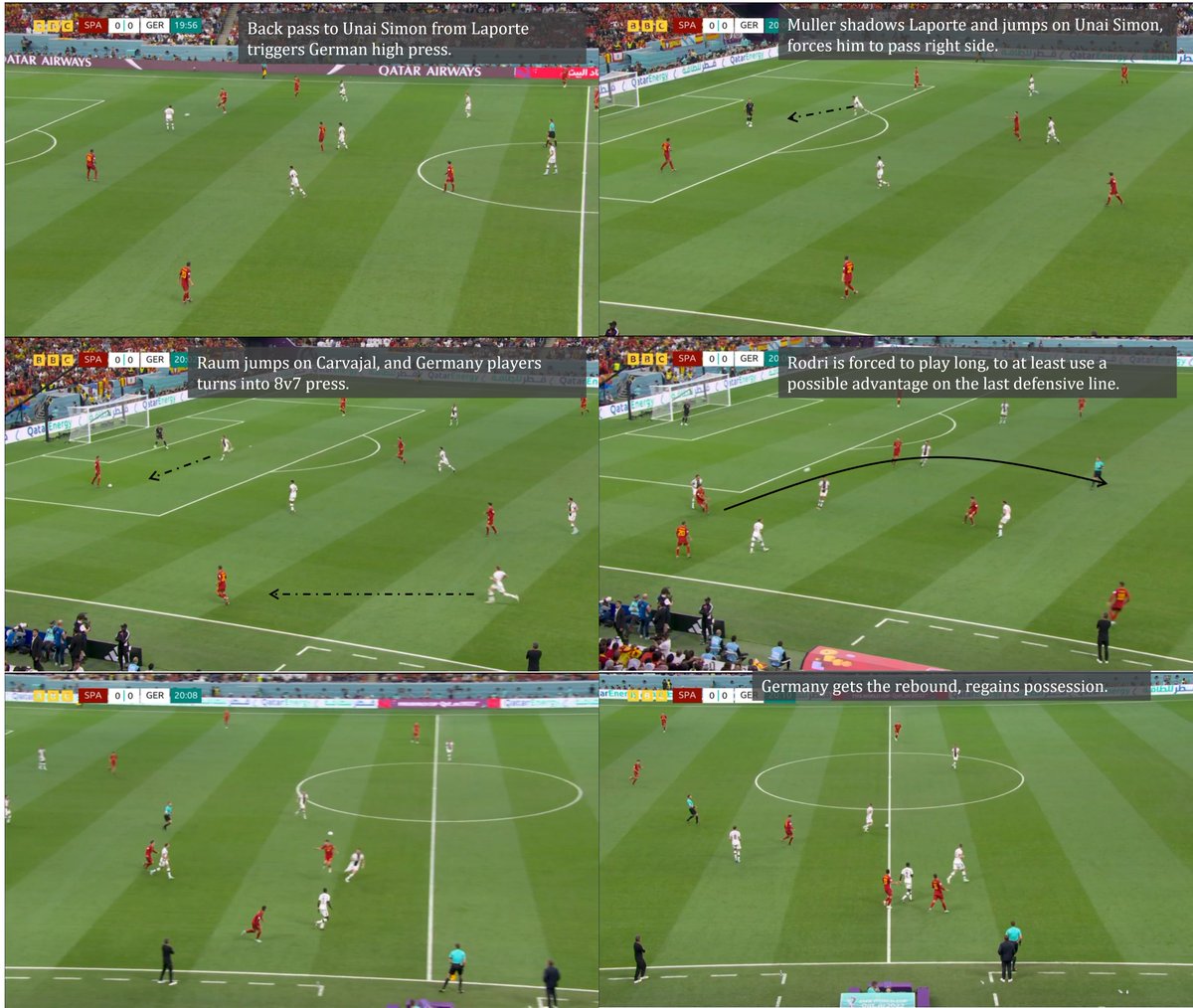
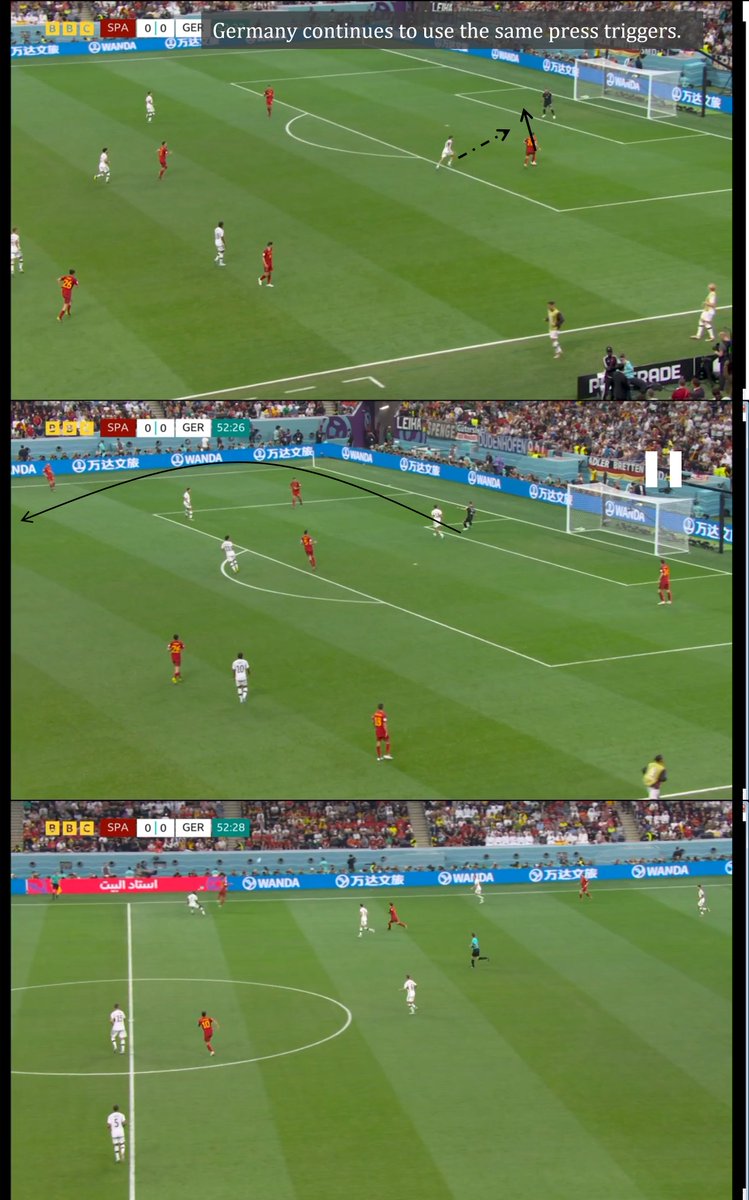
We started observing Germany’s high press triggers around mid 1st half;
1) A back pass to Unai Simon who is faced to pass to Carvajal: In this situation, everybody finds his man; Raum jumps on Carvajal, and Sule on Assensio, Rudiger on Ferran.
1) A back pass to Unai Simon who is faced to pass to Carvajal: In this situation, everybody finds his man; Raum jumps on Carvajal, and Sule on Assensio, Rudiger on Ferran.
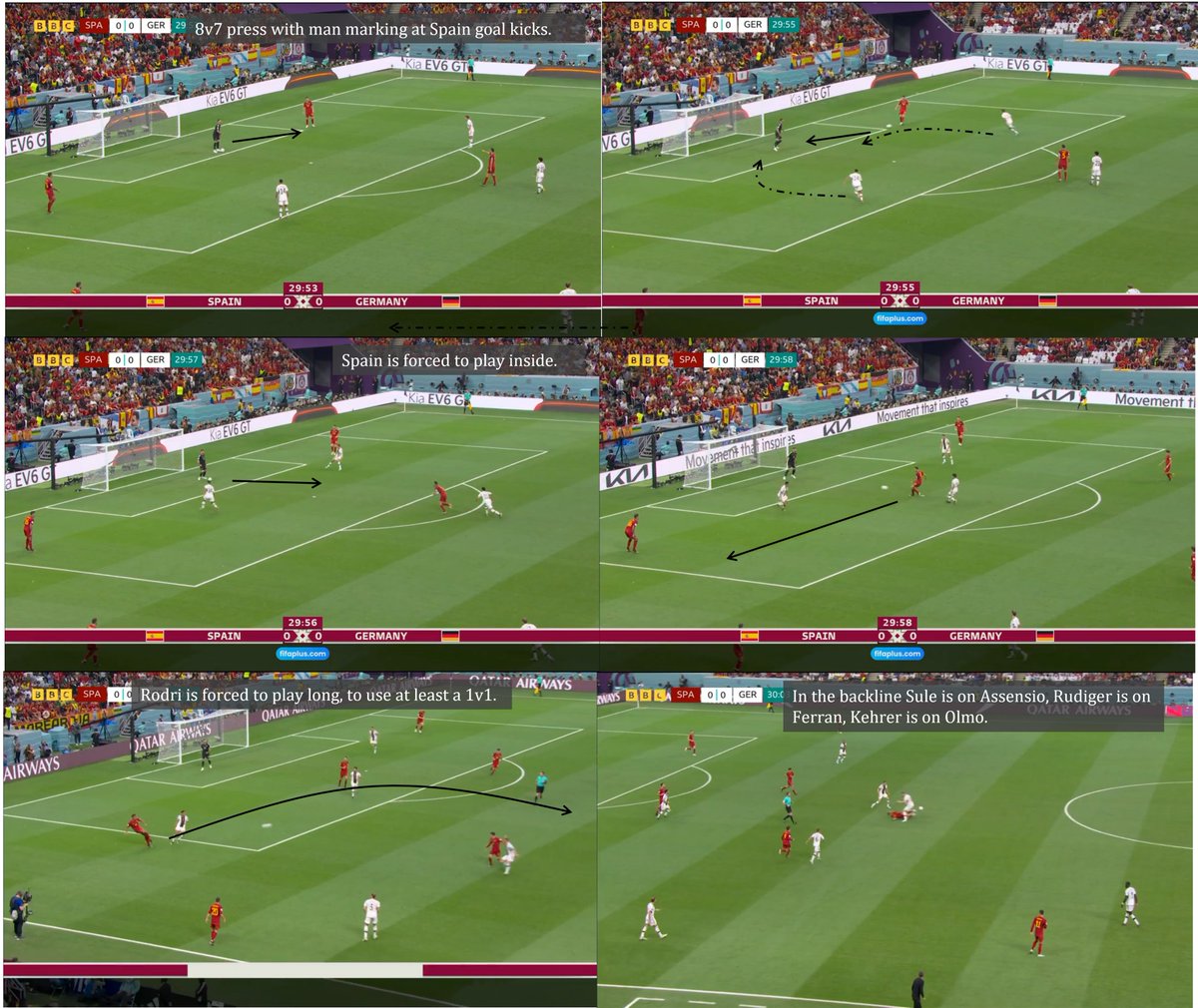
2) Spain's short goal kicks. Germany changes its shape to 3412 (Press switches to 8v7), everybody finds his man, and Spain’s short build-up is tested.
Luis Enrique had the solution for Germany’s strong high press, but he wanted to start the 2nd half to be sure Germany continues to use same out-of-possession intentions.
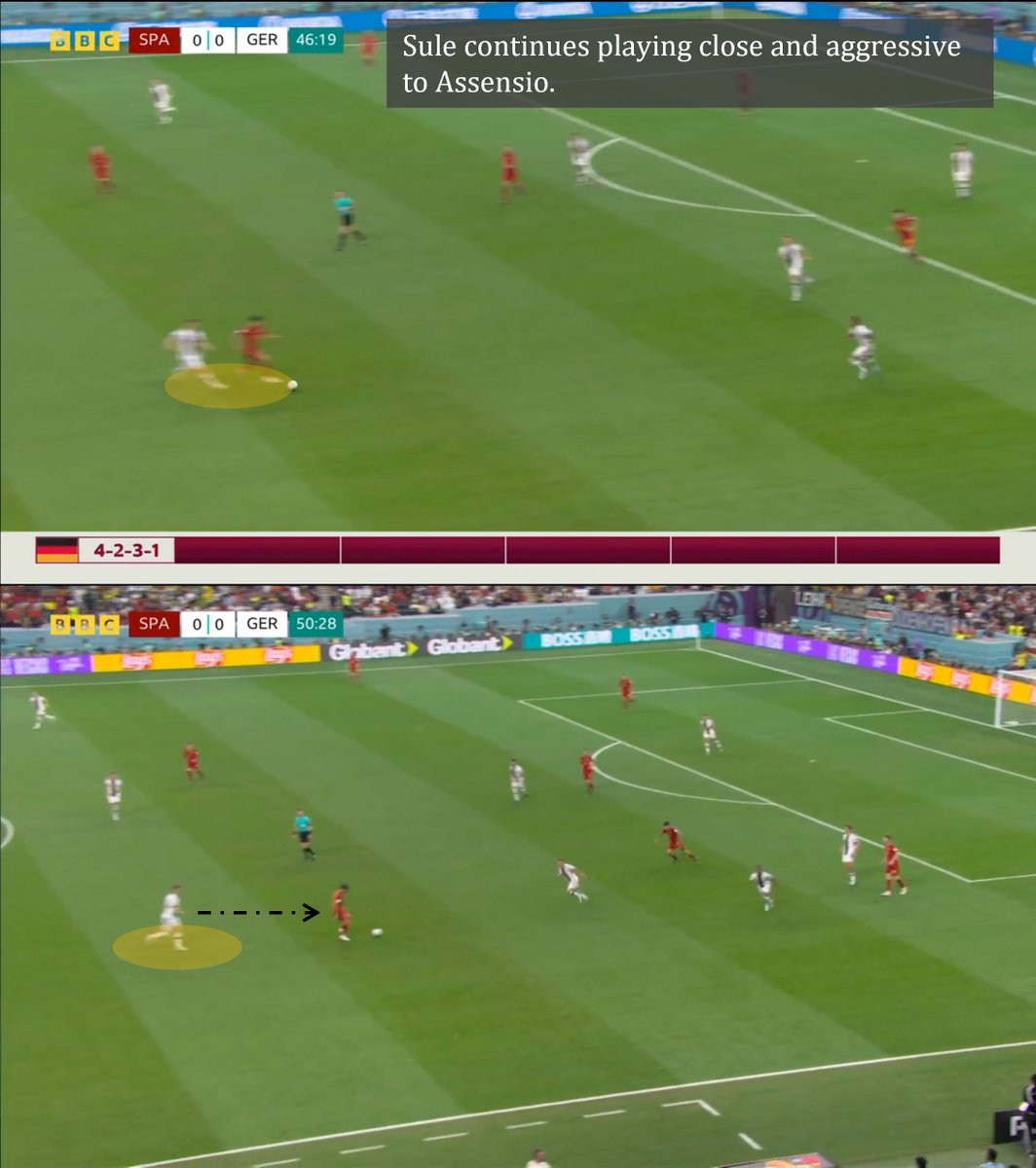
He saw it and made the perfect substitution, used Morata as a threat for in-behind runs against CBs and Assensio as a receiver for in-between behind Raum, who jumps on Carvajal.
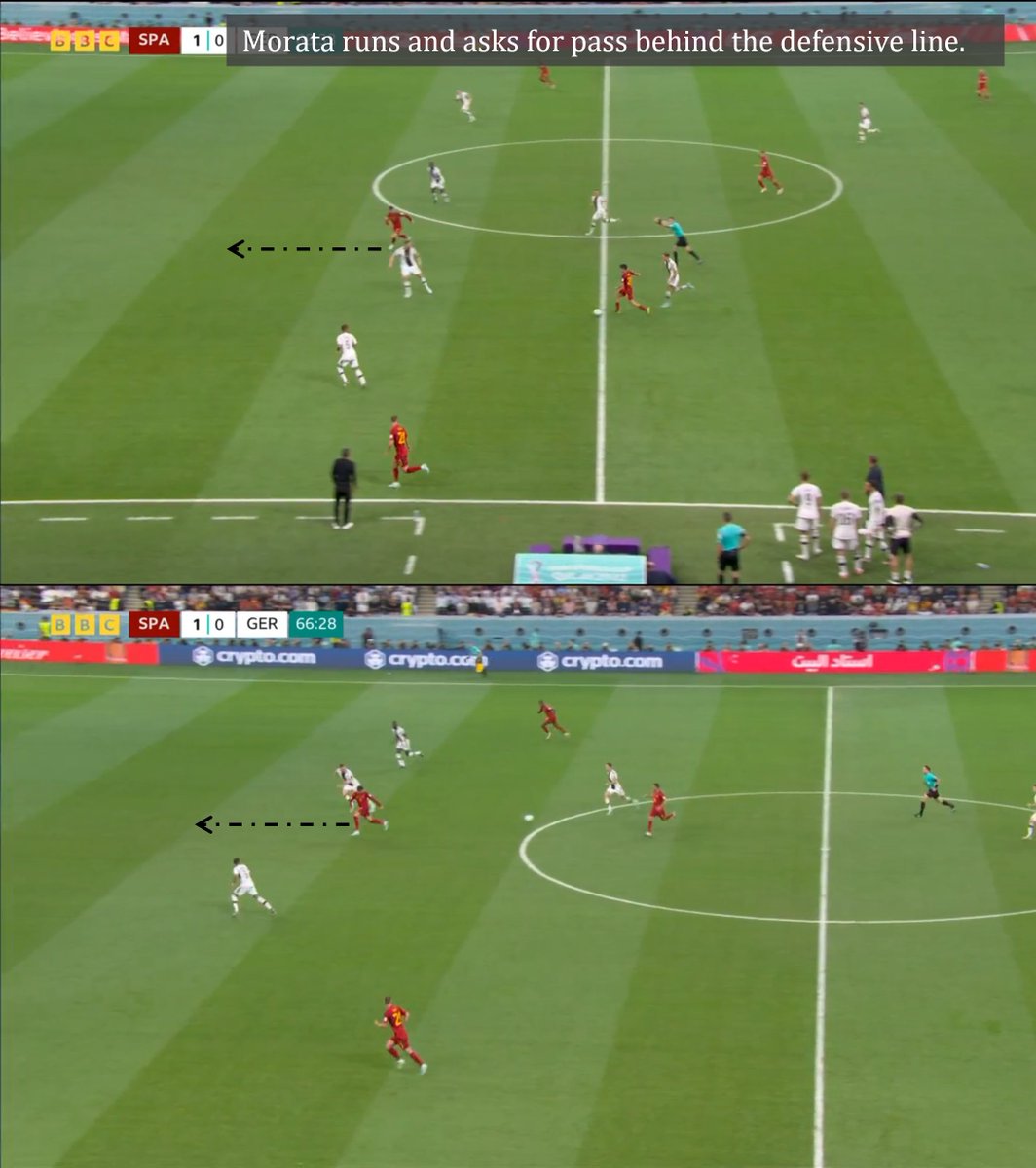
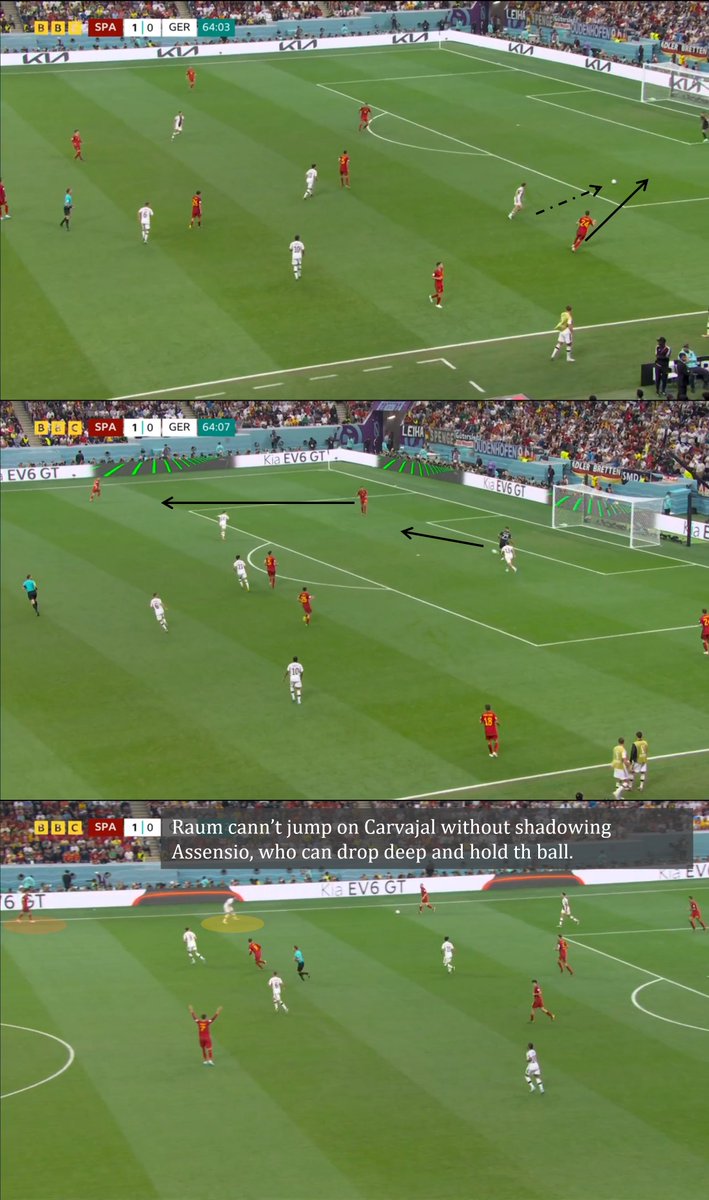
This started to work immediately: Assensio receives, switches play, Morata makes runs behind Sule. It was surprising it couldn’t bring another goal for Spain.
After Spain’s goal, as Germany would take risks, it was making perfect sense to have Nico on the field in theory, but in practice, having Assensio off took Spain’s privilege with ball retention. Hasty decisions resulted in ending Spain’s sequences at unexpected moments.
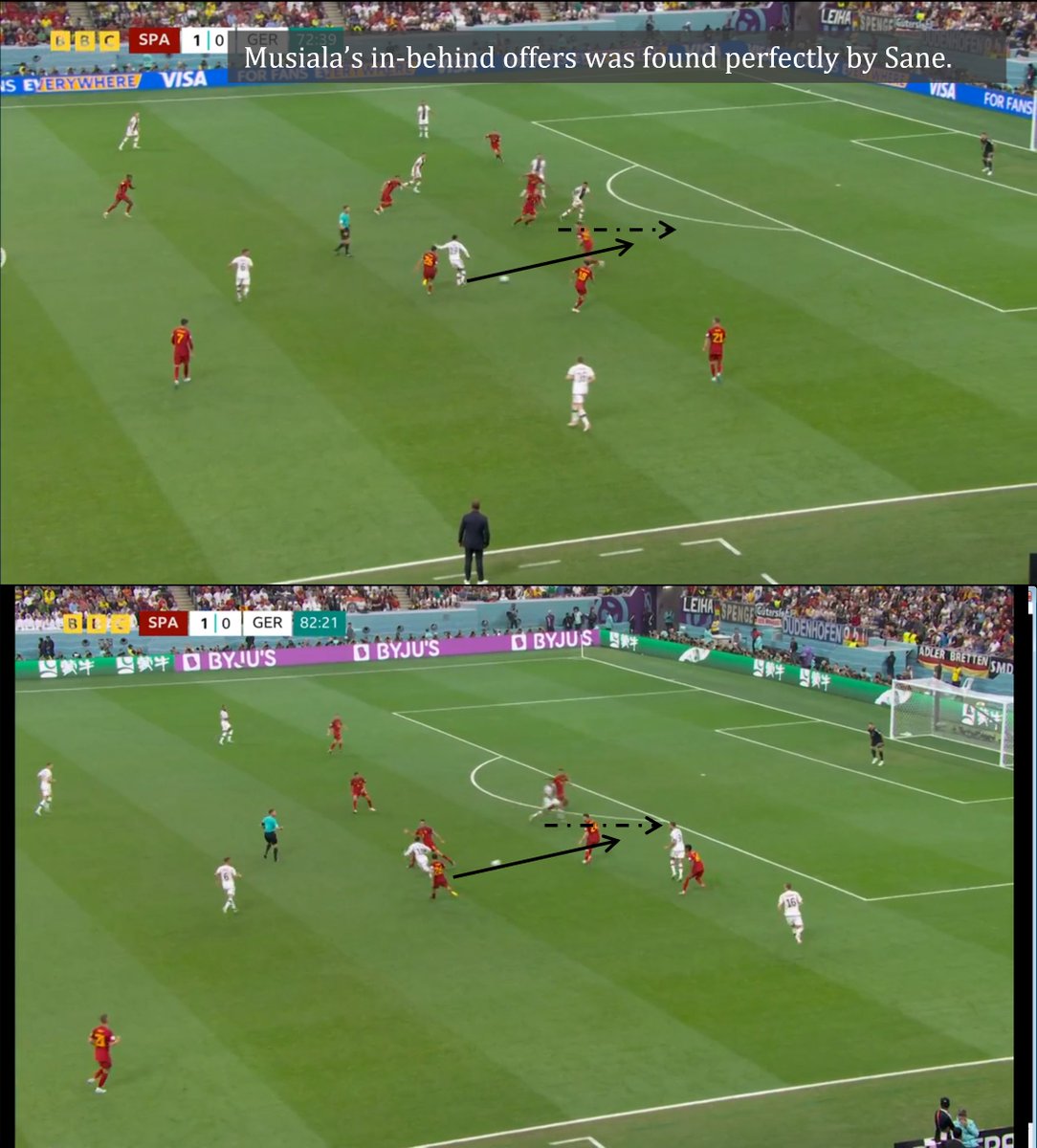
Meanwhile Flick’s substitutions worked perfectly this time. Fullkrug created space for Musiala to make in-behind runs, Musiala used the Rodri’s greenness as a CB, and Sane delivered the perfect through balls to his Bayern teammate.
In the end, I would be sad if any of these teams had lost yesterday. Although I know it is very unlikely, I wish these two teams will play with each other again in this tournament (which can only happen, as you know, in a final).
Spain and Germany are breaking a new path for international football. If they somehow become successful and their approach is accepted, this can be revolutionary, and can remarkably increase the quality and entertainment level of World Cups, Euros, Copa Americas.
Loading suggestions...