

Translation
Here we will look at the process of Translation and some of the mutations that occur.
Here we will look at the process of Translation and some of the mutations that occur.
1/ When the messenger RNA (mRNA) exits the nucleus, it will be loaded into a organelle called the ribosome. These little factories take the RNA blueprint and use it to build a protein from amino acids.
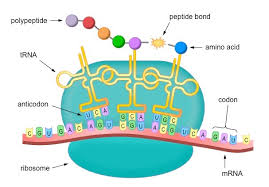
2/ Here we introduce the concept of the Codon. The DNA is made up of 4 bases with Adenine, Guanine, Cytosine and Thymine. They have to encode 20 different amino acids. To do so, the DNA uses a codon. Its a combination of 3 nucleotides.
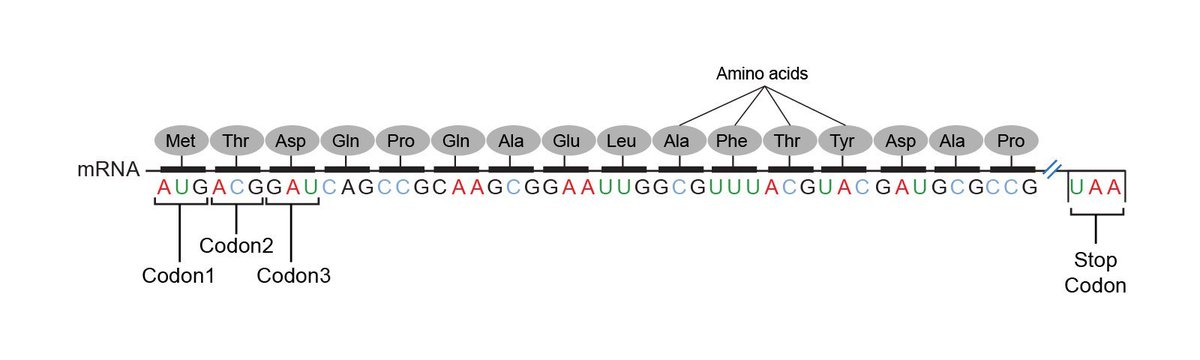
3/ The DNA only contains 4 basic bases, but it has to code at least 20 amino acids. This only works with at least 3 bases making up a single codon to encode an amino acids. If you look at the math, 4*4*4 = 64 possible combinations. There are only 20 amino acids.
4/ This leads to many of the combinations coding the same amino acid. This level of redundancy in the code allows for some variation without bad effects. Here is a copy of the Codon Chart.
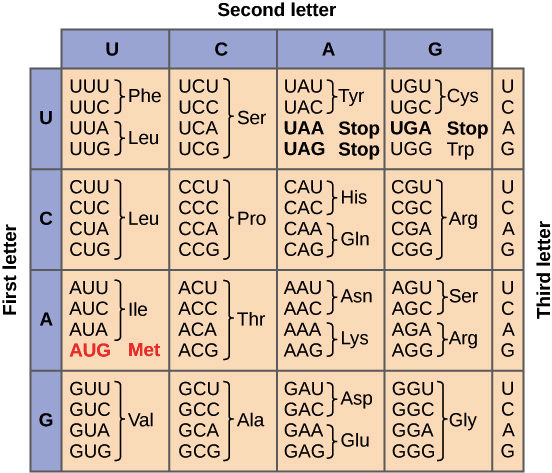
5/ The start codon is always AUG (Adenine, Uracil and Guanine) and codes for the amino acid Methionine. Each 3 bases of nucleotides is one codon and encodes one amino acid until it reaches the stop codon. There are actually 3 different stop codons with UAA, UAG and UGA.
6/ The Ribosome takes the RNA and begins with coding the start codon with Methionine and continues to read each and every codon until it reaches the stop codon. It will use transfer RNAs (tRNAs) to build a chain of amino acids from the mRNA.
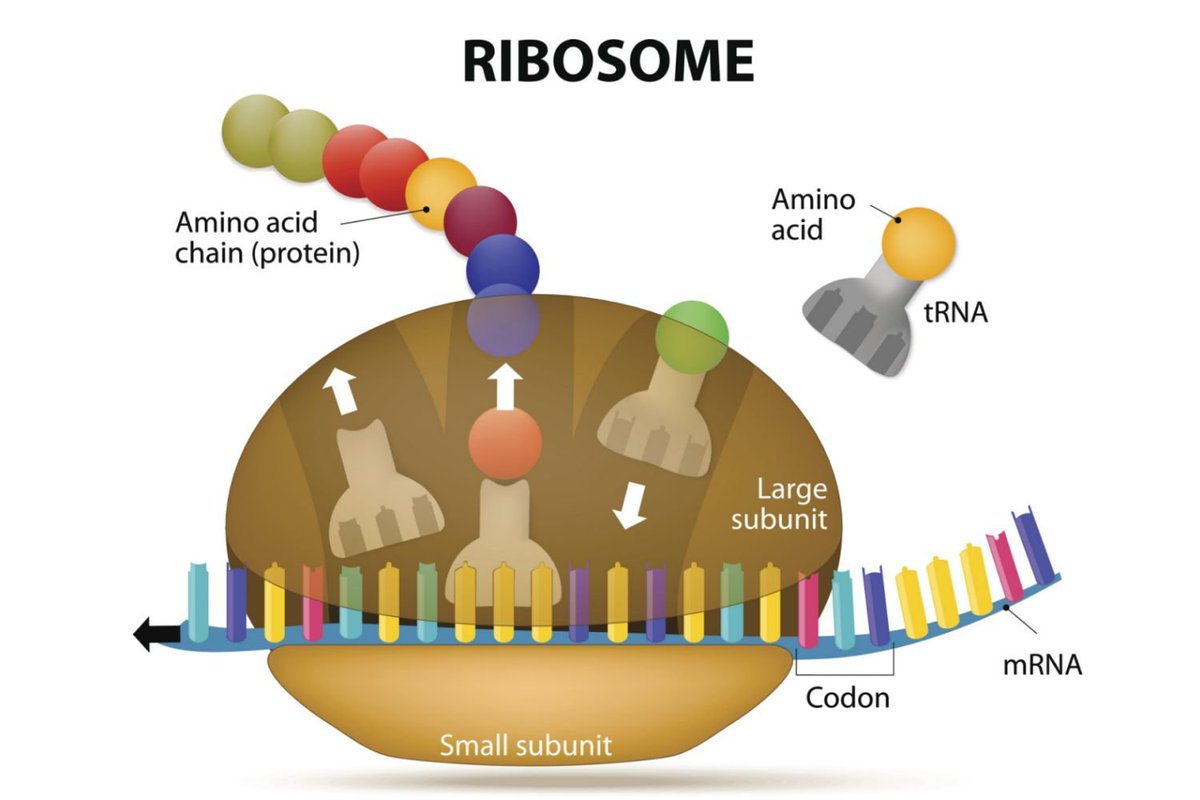
7/ The Transfer RNA (tRNA) has an anticodon on one end and the amino acid on the other end. The tRNA will match the mRNA codon with its equal opposite anticodon. When it finds a match, it will add its amino acid to the chain of amino acids being built.
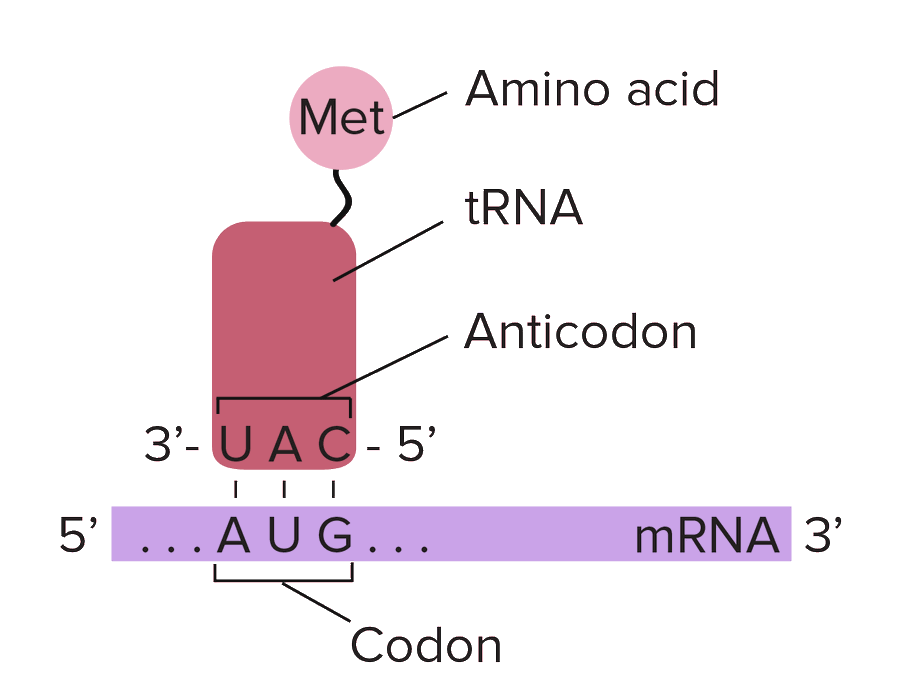
8/ The Ribosome will continue to progress along the mRNA template matching the anticodons of the tRNA to the codons of the mRNA. It will add the amino acids to the chain of amino acids its building until it reaches the stop codon.
9/ Mutations in the DNA can cause some very serious damage to the final product which is the protein. Since 3 nucleotides come together to make one codon and produce one amino acid, you can get some dramatic changes from even a single nucleotide mutation.
10/ These changes in the DNA can be called Point Mutations or Single Nucleotide Polymorphisms (SNP). The big difference to which term we use is the result. We typically use SNP when its a benign mutation. Point mutation tends to be used when change in the DNA causes disease.
11/ Point mutations can come in two kinds. The first is it might not cause any change. As you seen on the codon chart, some changes might just end up coding the same amino acid. These mutations that lead to no change are called Silent Mutations.
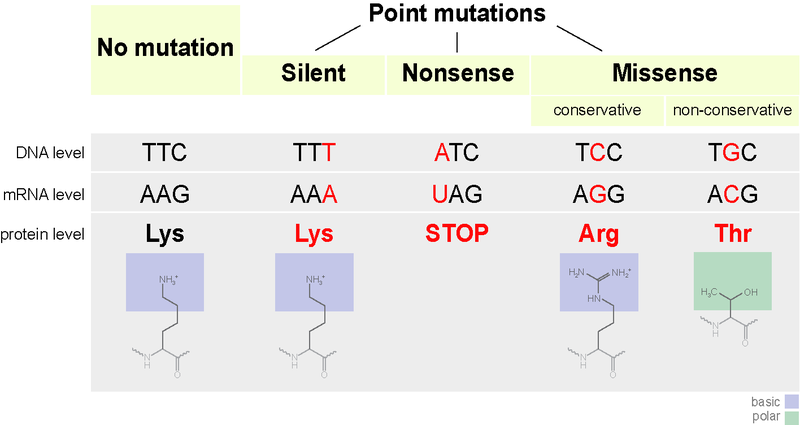
12/ When a single point mutation causes the Ribosome to code a different amino acid, we call these Missense mutations. These are the mutations that often lead to disease. Sickle Cell disease is one example of a single nucleotide mutation leading to a changed amino acid.
13/ This missense mutation leads to another amino acid being coded. The two different amino acids can have dramatically different behaviors. Such as, the one is hydrophobic while the other is hydrophilic.
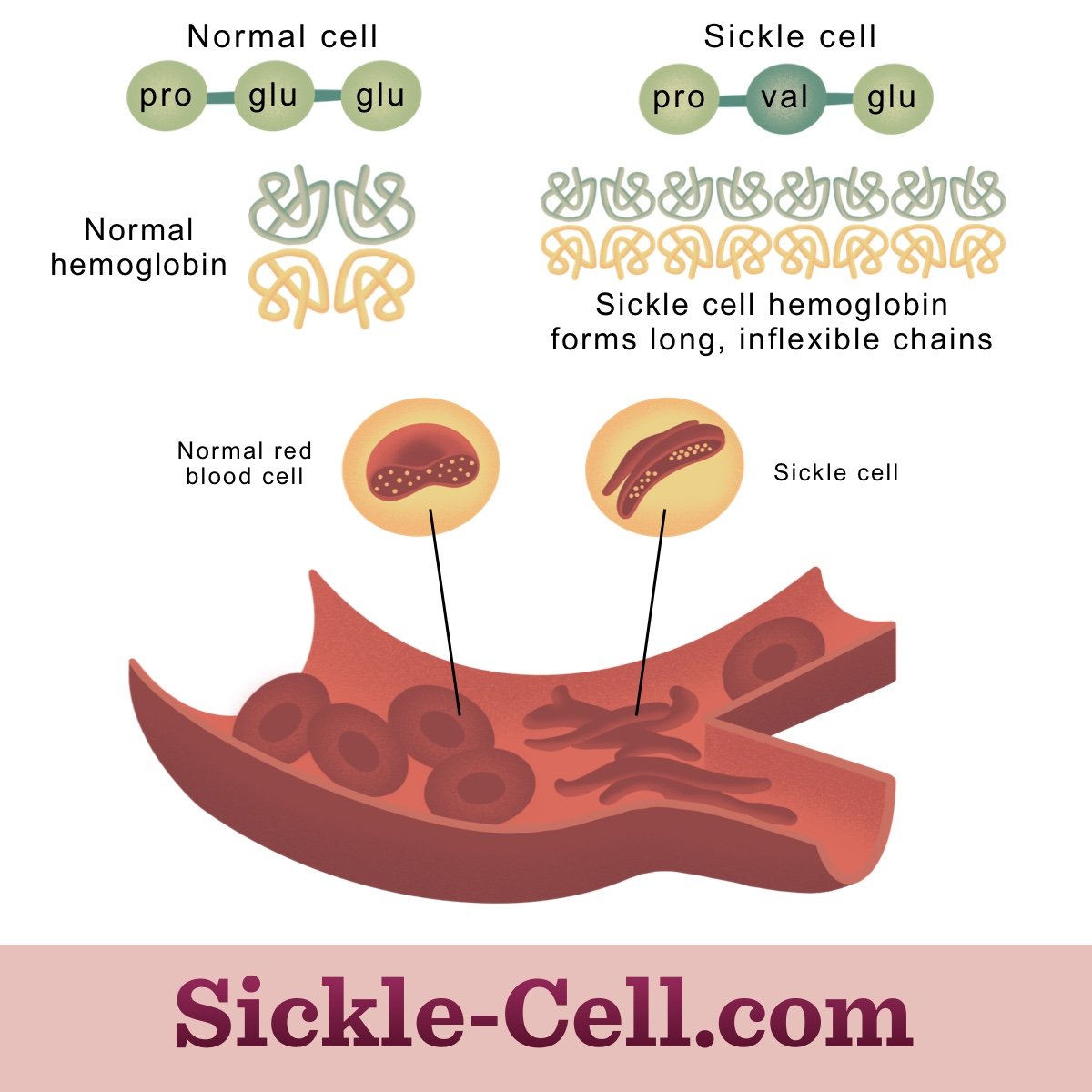
14/ That simple change will change the entire shape of the protein. In proteins, shape determines function. When you change the shape of the protein due to the change of a single amino acid, you can end up with a dramatically different protein in function.
15/ The next type of point mutation is the nonsense mutation. This is where a mutation changes the codon from encoding an amino acid to a stop codon. This terminates the production of the protein early.
16/ A nonsense mutation will make a truncated version of the protein. In some cases, the shorter proteins are still functional or partially functional. In many cases, they lose complete function of that protein.
17/ The insertion of a stop codon into a gene has actually become a tool used today in gene editing to insert a stop codon early into the gene sequence which acts like a gene suppression.
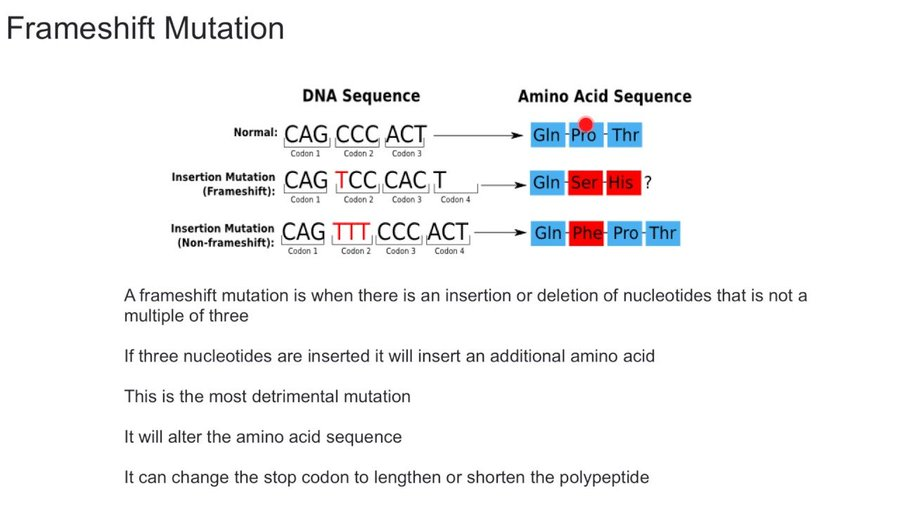
18/ The last mutation is called the frame shift mutation. That is when a single nucleotide gets inserted or deleted (Indel). That causes every codon in that gene to get shifted. None of the codons will be right when they all get shifted by one extra or one less nucleotide.
19/ Next we will look at protein folding.
Loading suggestions...