

Understanding your dopamine triggers is the first step to breaking bad habits.
Yet most people don't even know how triggers are formed.
Here's how dopamine is tricking you:
Yet most people don't even know how triggers are formed.
Here's how dopamine is tricking you:
The mental process that explains this is called 𝙏𝙝𝙚 𝙍𝙚𝙬𝙖𝙧𝙙 𝙋𝙧𝙚𝙙𝙞𝙘𝙩𝙞𝙤𝙣 𝙀𝙧𝙧𝙤𝙧.
It is the reason that the triggers that lead you down the slippery slope of bad habits get formed in the first place.
And to better understand this, let's tell a story:
It is the reason that the triggers that lead you down the slippery slope of bad habits get formed in the first place.
And to better understand this, let's tell a story:
Imagine you're part of an ancient hunter-gatherer group and you're out searching for food.
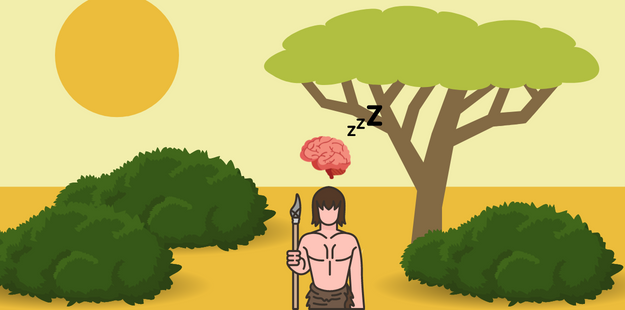
You're passing the same boring bushes you always have.
At this moment your brain is expecting everything to remain the same as it always has.
You're passing the same boring bushes you always have.
At this moment your brain is expecting everything to remain the same as it always has.
Except this time, you catch a glimpse of other colors you've never seen before.
Berries!
Your brain has realized it's made a mistake because it wasn't expecting berries to be there.
Resulting in a spike of dopamine to start rushing through the reward pathway of your brain.
Berries!
Your brain has realized it's made a mistake because it wasn't expecting berries to be there.
Resulting in a spike of dopamine to start rushing through the reward pathway of your brain.
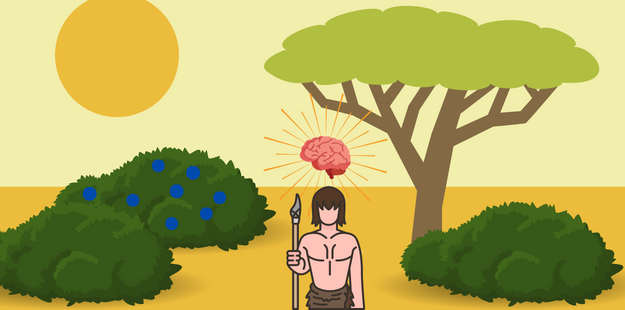
This rush of dopamine is giving your brain a signal:
"Remember This"
Now every time you run across these bushes,
You'll get a bit excited in anticipation of finding more berries.
This is the reward prediction error at work.
"Remember This"
Now every time you run across these bushes,
You'll get a bit excited in anticipation of finding more berries.
This is the reward prediction error at work.
Everyday occurrences in life don't excite dopamine very much.
Dopamine thrives on novelty,
On the new and unexpected.
While scavenging for food, your brain predicted you wouldn't find anything in those bushes.
So dopamine was low and you were uninterested.
Dopamine thrives on novelty,
On the new and unexpected.
While scavenging for food, your brain predicted you wouldn't find anything in those bushes.
So dopamine was low and you were uninterested.
But big surprise, our brain isn't right about everything.
And when the expected outcome wasn't met,
It rushed dopamine through your brain and told it to change its expected outcome.
(Dopamine plays a key role in learning/pattern recognition in our brains.)
And when the expected outcome wasn't met,
It rushed dopamine through your brain and told it to change its expected outcome.
(Dopamine plays a key role in learning/pattern recognition in our brains.)
And now anytime we come across these same bushes (Even if they don't have any berries.)
We will begin to drool with anticipation.
Thus the trigger is born,
With each time strengthening the correlation in our brains.
We will begin to drool with anticipation.
Thus the trigger is born,
With each time strengthening the correlation in our brains.
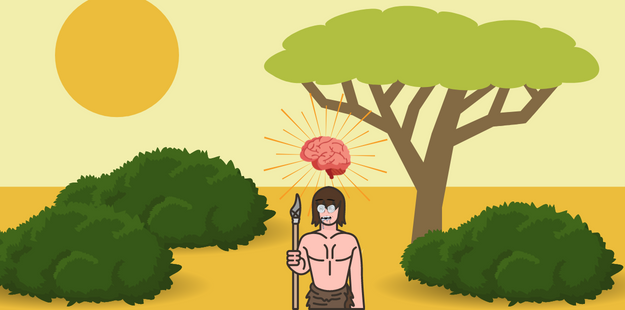
This happens in modern-day civilization too.
When your brain is caught off guard by something pleasurable or new,
It gets flooded by dopamine and tries its best to understand why and how in order to make sure it happens again.
When your brain is caught off guard by something pleasurable or new,
It gets flooded by dopamine and tries its best to understand why and how in order to make sure it happens again.
It will particularly take note of the time, location, and other unique properties of the unexpected occurrence.
These will often be what become your dopamine triggers,
The alcoholic gets thirsty driving by a bar,
The smoker gets cravings when he goes to break at work,
Etc,
These will often be what become your dopamine triggers,
The alcoholic gets thirsty driving by a bar,
The smoker gets cravings when he goes to break at work,
Etc,
These are the results of your brain's expectations getting rewired by dopamine to expect "rewards" when certain signals occur.
Knowing this can help you begin reclaiming control over your bad habits by better understanding what's making you want to partake in them.
Knowing this can help you begin reclaiming control over your bad habits by better understanding what's making you want to partake in them.
TLDR;
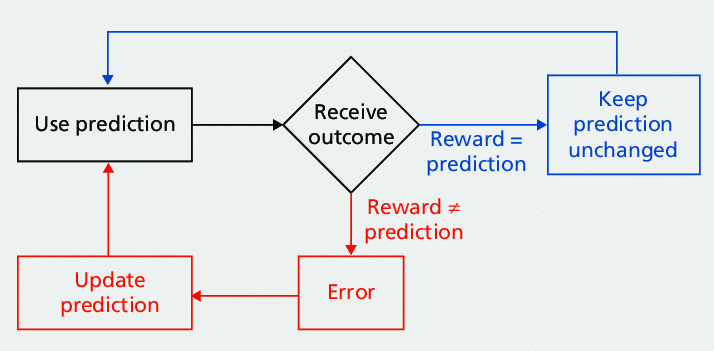
The reward prediction error occurs whenever your brain fails to predict an outcome.
Which results in dopamine rushing through the reward pathway of your brain.
The brain then rewires/changes its expectations to include the new outcome.
The reward prediction error occurs whenever your brain fails to predict an outcome.
Which results in dopamine rushing through the reward pathway of your brain.
The brain then rewires/changes its expectations to include the new outcome.
Done.
If you found value in this thread:
1) Retweet the first tweet so it can reach as many people as possible.
2) Follow me @zenconqueror for more threads and tweets on reaching self-mastery.
If you found value in this thread:
1) Retweet the first tweet so it can reach as many people as possible.
2) Follow me @zenconqueror for more threads and tweets on reaching self-mastery.
How you start and end the day could be drastically draining your discipline.
To help make sure this doesn't happen to you I wrote an Ebook to show you how to properly maximize your willpower each day.
Get it while it's FREE here:
zenconqueror.gumroad.com
To help make sure this doesn't happen to you I wrote an Ebook to show you how to properly maximize your willpower each day.
Get it while it's FREE here:
zenconqueror.gumroad.com
Loading suggestions...