

Epigenetics
A overview of epigenetics.
A overview of epigenetics.
1/ Epigenetics means on top of genetics. The study of Genetics is all about the DNA. Its about how its structured and packaged. Epigenetics is about how Genes are expressed and regulated.
2/ We are born with our Genetics, but our Epigenetics is acquired by experiences and environmental exposure. I don't want to get too deep into epigenetics, but I think there are a few concepts that are important to understand.
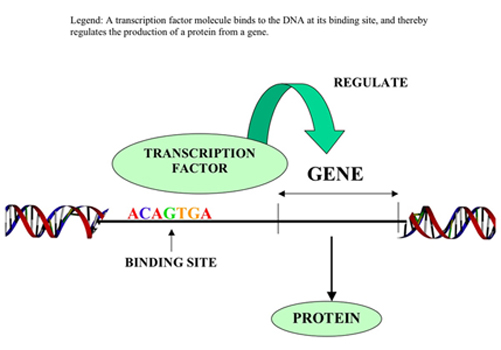
3/ The first one is the process of gene methylation and gene silencing. Each gene has a promoter in front of the gene where the transcription factors bind and activate transcription of that gene.
4/ The promoter of the gene will often have Cytosine and Guanine rich regions called CpG islands. That stands for Cytosine, Phosphate, and Guanine. These CpG rich regions can become methylated.
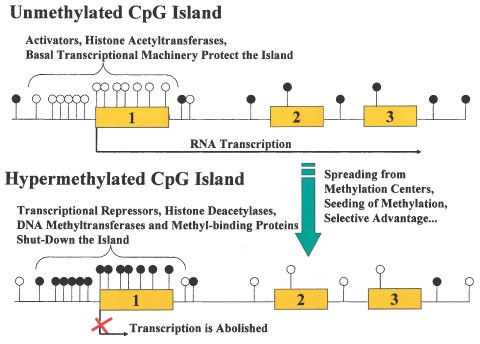
5/ Methylation of these CpG regions of the promoter can come from environmental factors like UV exposure, chemicals, radiation, smoking and so many other things. This exposure can cause the methylation of the promoter and eventual silencing of the gene.
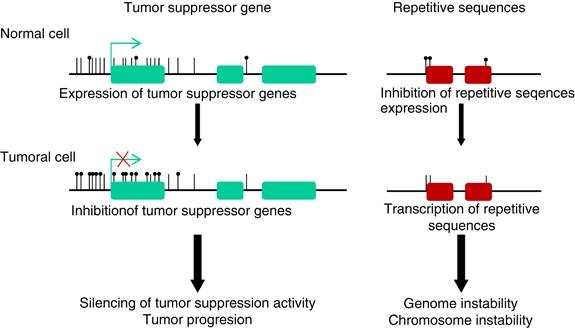
6/ The silencing of a gene plays a big role in understanding tumor genesis in cancer. The loss of tumor suppressor genes don't always come from a mutation of the DNA which renders them ineffective. It will often come from gene silencing by epigenetic forces.
7/ The second concept of epigenetics is the Acetylation and Deacetylation of the Histones which package the DNA. I mentioned these enzymes before in DNA packaging.
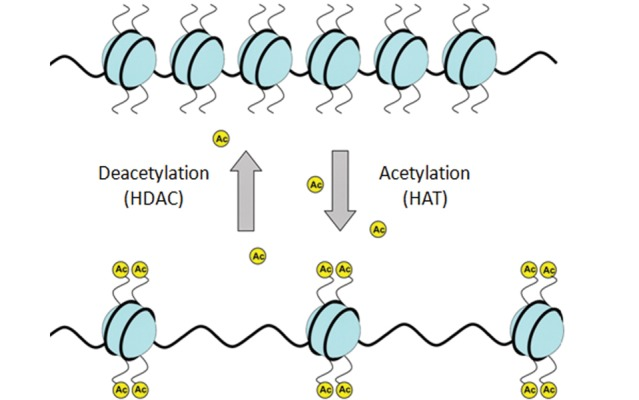
8/ We learned in the packaging thread that the DNA gets wrapped twice around each histone. While the DNA is packaged like this, it is transcriptionally inactive. The proteins and enzymes that do transcription can not access packaged genes.
9/ For a gene to be transcribed, it has to be exposed to the transcription machinery. This is controlled by acetylation or deacetylation of the histones. When the acetyl groups are added the DNA opens up.
10/ The DNA normally has a slight negative charge. The histone has a slight positive charge. They like to electrostatically bond to each other. By adding or removing a acetyl group to the tails of the histone, the charge can change allowing the DNA to be unwound.
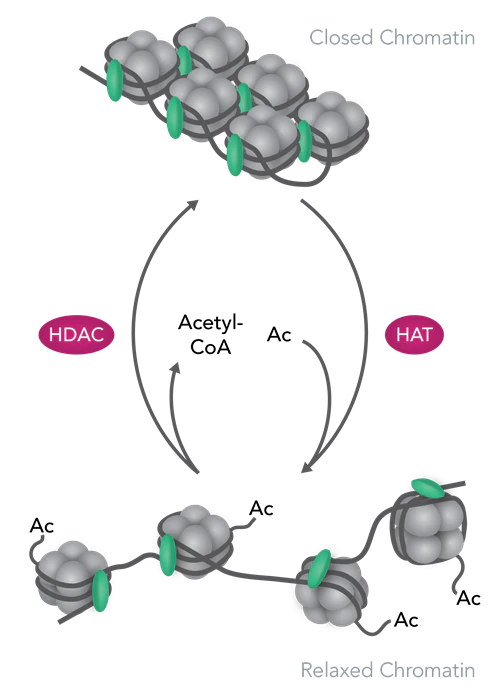
11/ This is an important concept to understand as a gene needs to be exposed to be active. Some areas of the DNA are always inactive and densely packaged like round the centromere and the telomeres. There is no genes encoded in this region.
12/ One cell might have a gene active as it uses it all the time while another cell will keep that gene packaged as it never uses that gene. Each cell only uses genes specific to that cells role and functions.
13/ Some oncology drugs will target the acetylation or deacetylation of histones to suppress the transcription of genes in cancer. Some other oncology drugs will target the demethylation of the DNA to attempt to remove the suppression of the tumor suppressor gene.
Loading suggestions...