

When people talk about "Gothic architecture" we tend to think of cathedrals and churches.
But the Middle Ages were also full of beautiful town halls, universities, hospitals, and bridges.
So here is a journey through the world of secular Gothic architecture...
But the Middle Ages were also full of beautiful town halls, universities, hospitals, and bridges.
So here is a journey through the world of secular Gothic architecture...

The word "Gothic" wasn't how people during the Middle Ages referred to their buildings.
It was Renaissance scholars who, with their interest in the architecture of Antiquity, called the Medieval style "Gothic" as a pejorative reference to the Goths who had sacked Rome:
It was Renaissance scholars who, with their interest in the architecture of Antiquity, called the Medieval style "Gothic" as a pejorative reference to the Goths who had sacked Rome:

Even "Middle Ages" is a strange term, defining Europe from 500-1500 as existing between the classical world and its revival during the Renaissance, like a centuries-long, unenlightened mistake.
Perhaps secular Gothic buildings can tell a different story...
Perhaps secular Gothic buildings can tell a different story...
So the best place to start is with town halls.
By their very nature they speak to a time when power was shifting, new classes were emerging, and politics were changing.
Like the Palazzo Vecchio, built in the 1300s for the council that governed the Republic of Florence:
By their very nature they speak to a time when power was shifting, new classes were emerging, and politics were changing.
Like the Palazzo Vecchio, built in the 1300s for the council that governed the Republic of Florence:

Or, on the other side of Europe, the town hall of Tallin, completed in 1404.
Tallinn was part of the Hanseatic League, an economic and diplomatic alliance of merchant cities, and so the town hall represents Tallinn's legislative independence from foreign, imperial rulers.
Tallinn was part of the Hanseatic League, an economic and diplomatic alliance of merchant cities, and so the town hall represents Tallinn's legislative independence from foreign, imperial rulers.

Perhaps the greatest of all Gothic town halls were built in the Low Countries, as cities in modern-day Belgium and Netherlands became booming mercantile centres who needed large legislative and administrative buildings.
Like Leuven's extraordinary Town Hall, completed in 1469:
Like Leuven's extraordinary Town Hall, completed in 1469:

Beyond legislative centres, towns in the Low Countries also built great bell towers to mark the hours of the day, to celebrate festivities, to sound the alarm; to regulate the city's burgeoning civic life.
Such as the huge Belfry of Bruges (13th-15th centuries):
Such as the huge Belfry of Bruges (13th-15th centuries):

And the exchanges: for with the rise of commerce trading centres were needed.
Like the Cloth Hall of Ypres, a warehouse and marketplace.
When completed in the 1304 it was the largest commercial building in Europe; after being destroyed during WW1 it was rebuilt in 1967.
Like the Cloth Hall of Ypres, a warehouse and marketplace.
When completed in the 1304 it was the largest commercial building in Europe; after being destroyed during WW1 it was rebuilt in 1967.

And then there's the extraordinary Llotja de la Seda (Silk Exchange) in Valencia, started in 1482 and finished in 1533 in an unusual Late Gothic style.
Though it may look like a church, this hall was a place where merchants signed contracts and did their business.
Though it may look like a church, this hall was a place where merchants signed contracts and did their business.

But, moving beyond commerce and trade, there were plenty of other civic Gothic buildings.
Including Medieval hospitals, like that of St. John in Bruges (1200s) or that of Santa Creu, built by the Council of One Hundred in Barcelona in 1402:
Including Medieval hospitals, like that of St. John in Bruges (1200s) or that of Santa Creu, built by the Council of One Hundred in Barcelona in 1402:


And, of course, universities started appearing around Europe, first in Bologna in 1088 and then all around Italy, France, and Britain in the 12th century: the Dark Ages were over.
From 13th century quadrangles in Oxford to late Gothic plateresque stonework in Salamanca:
From 13th century quadrangles in Oxford to late Gothic plateresque stonework in Salamanca:


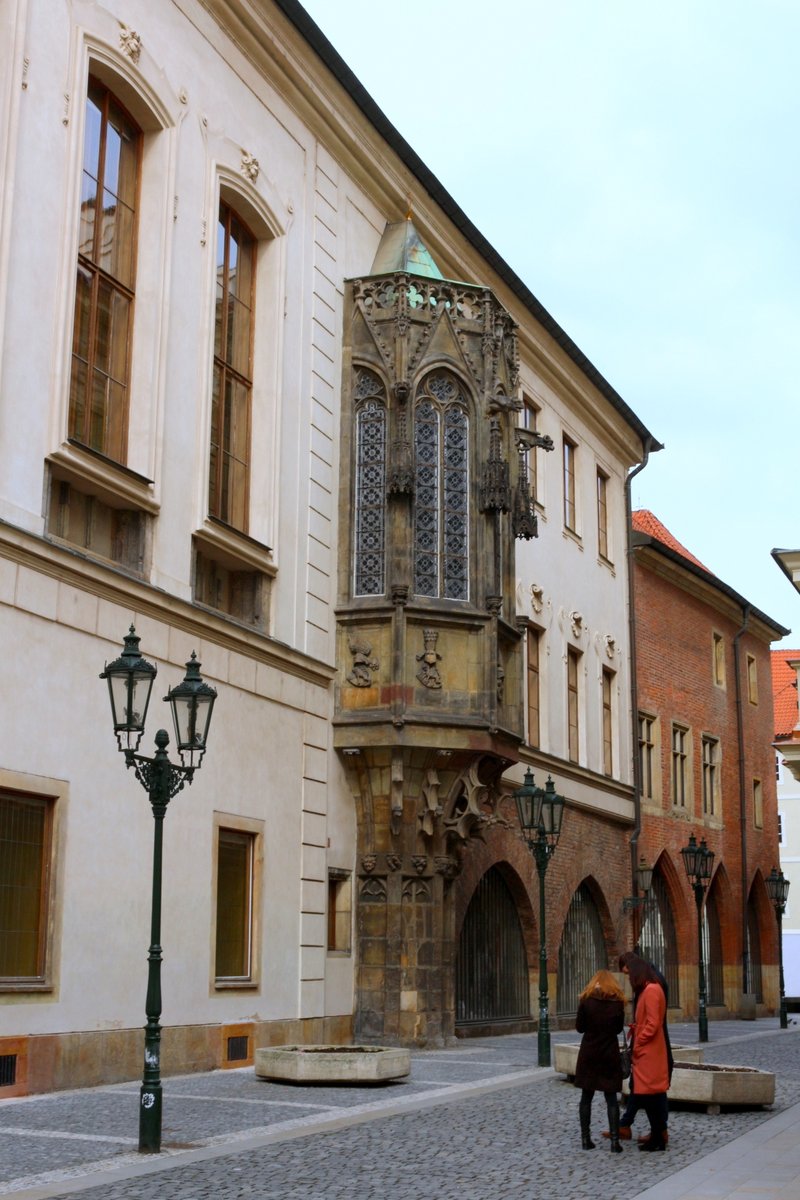
And from the 14th century cloisters of the Jagiellonian University in Krakow to the windows of the Karolinum (a dormitory) in Charles University, Prague, first built around the year 1400:

Gothic castles need to no introduction.
They varied in style from Bellver Castle in Mallorca (1311) through to Mir Castle in Belarus, built in the late "Brick Gothic" style in 1568 and a veritable monument of the Polish-Lithuanian Commonwealth.
They varied in style from Bellver Castle in Mallorca (1311) through to Mir Castle in Belarus, built in the late "Brick Gothic" style in 1568 and a veritable monument of the Polish-Lithuanian Commonwealth.


Or Belém Tower in Lisbon, from 1519, in the glorious Manueline Style.
This was an incredibly specific strand of Late Gothic which incorporated the motifs of Portugal's seafaring identity - ropes, sea creatues, navigation instruments - into its sculptures and design.
This was an incredibly specific strand of Late Gothic which incorporated the motifs of Portugal's seafaring identity - ropes, sea creatues, navigation instruments - into its sculptures and design.

And, beyond castles, many cities had defensive fortifications such as walls and towers.
Like the instantly recognisable Holsten Gate in Lübeck, the de facto capital of the Hanseatic League, built in the 1400s and another soaring achievement of late Gothic architecture:
Like the instantly recognisable Holsten Gate in Lübeck, the de facto capital of the Hanseatic League, built in the 1400s and another soaring achievement of late Gothic architecture:


Nor can we forgotten the many Gothic palaces.
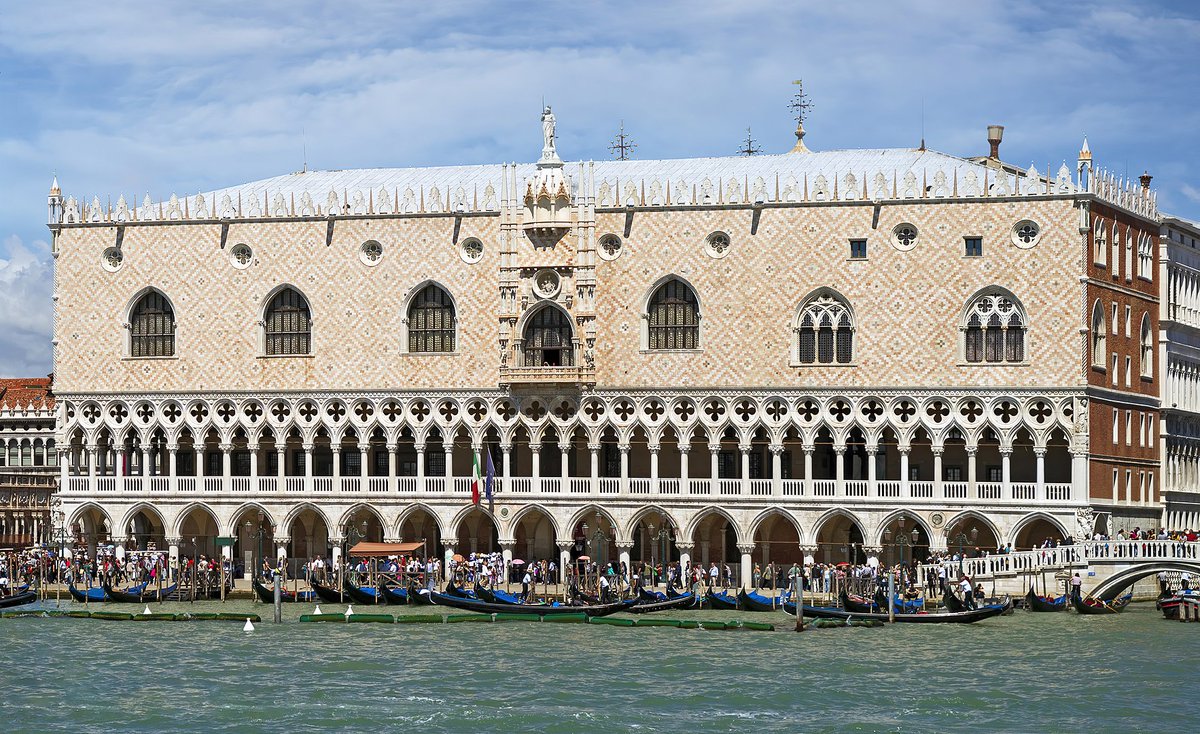
In Venice a unique offshoot of the Gothic style had arisen, influenced by both Byzantine and Islamic architecture. This palace was built in the 1340s for the Doge - a ruler elected for life by the Venetian nobility.
In Venice a unique offshoot of the Gothic style had arisen, influenced by both Byzantine and Islamic architecture. This palace was built in the 1340s for the Doge - a ruler elected for life by the Venetian nobility.
And then there's something like Vladislav Hall, built inside Prague Castle in 1502 as a vast chamber for royal events.
The unusually cursive vaulting is a feature of the "Sondergotik" style unique to parts of modern-day Austria, Germany, and the Czech Republic.
The unusually cursive vaulting is a feature of the "Sondergotik" style unique to parts of modern-day Austria, Germany, and the Czech Republic.

There are many other examples of secular Gothic architecture, such as large stone bridges to replace older wooden ones, representing huge leaps forward in engineering.
Like the Pont Valentré in France, completed in 1350:
Like the Pont Valentré in France, completed in 1350:

Or private houses, like that of Jacques Coeur (1395-1456) a French merchant whose wealth was quasi-mythical.
His home in Bourges is basically a palace, and a testament to how much Medieval society had changed, now that private citizens could amass such riches.
His home in Bourges is basically a palace, and a testament to how much Medieval society had changed, now that private citizens could amass such riches.

To end, it's worth briefly noting the Gothic Revival in the 19th and early 20th centuries for use in secular architecture.
Like the Palace of Westminster in London, home of the Houses of Parliament, built between the 1850s and 70s.
Like the Palace of Westminster in London, home of the Houses of Parliament, built between the 1850s and 70s.

While Neo-Gothic was also popular in the USA, whether for great train stations, universities, or even skyscrapers - like the Woolworth Building, from 1912:

And that's a brief overview of secular Gothic architecture.
The Middle Ages may have been dominated by religion, but part of their story is also about commerce, urbanisation, and scholarship: architecture lent itself to those needs, too.
The Middle Ages may have been dominated by religion, but part of their story is also about commerce, urbanisation, and scholarship: architecture lent itself to those needs, too.
The town hall of Leuven, the Silk Exchange in Valencia, the home of Jacques Coeur in Bourges, the Holstentor in Lübeck, the Belfry in Bruges, the Jagiellonian University in Krakow - these great Gothic buildings tell a different story of the Middle Ages.
Loading suggestions...