

HOW TO MAKE TEAM MEETINGS MORE ENGAGING AND EFFECTIVE
I've recently published a full guide on the topic; here are some highlights
I've recently published a full guide on the topic; here are some highlights
Coach your people to speak more clearly and concisely.
If meetings feel boring, it’s often because participants take five minutes to communicate what could have been said in sixty seconds or because they discuss abstract concepts that aren’t actionable for their audience.
If meetings feel boring, it’s often because participants take five minutes to communicate what could have been said in sixty seconds or because they discuss abstract concepts that aren’t actionable for their audience.
Poor communication skills are a bottleneck to engagement and effectiveness.
Teach your people how to talk more clearly, concisely, and concretely. It’s well worth the time investment.
Teach your people how to talk more clearly, concisely, and concretely. It’s well worth the time investment.
Sports coaches know that most of their team’s game performance in a game depends on the skills and habits taught during practice, not on the coach’s actions during the game.
Similarly, much of running meetings effectively takes place outside of the meeting.
Similarly, much of running meetings effectively takes place outside of the meeting.
It consists of a manager teaching his team how to participate effectively – for example, how to ask better questions, how to give better project updates, and so on.
• Unless team members know how to speak concisely, meetings will be boring.
• Unless people know how to ask concrete questions, doubts will go unanswered.
• And unless the manager explains why an idea is bad, ideas won’t get better over time.
• Unless people know how to ask concrete questions, doubts will go unanswered.
• And unless the manager explains why an idea is bad, ideas won’t get better over time.
Some highlights from the video above
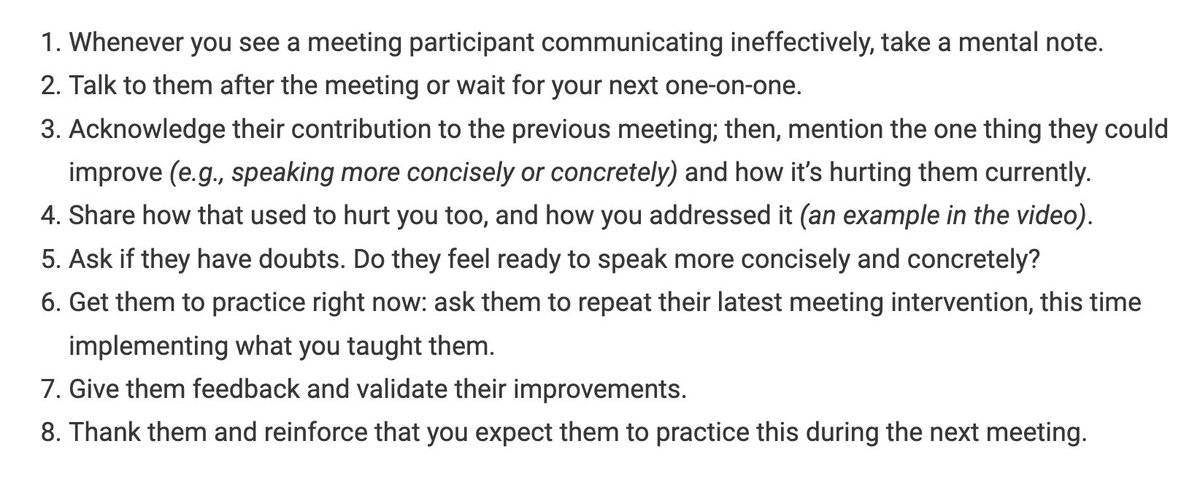
Here is some advice to avoid common mistakes in implementing the above:
• Resist the temptation to organize a group training session.
Unless you have a history of engaging and effective group sessions consisting not only of theory but also of practice and feedback, you might not achieve the results you hope. Instead, go for one-on-ones.
Unless you have a history of engaging and effective group sessions consisting not only of theory but also of practice and feedback, you might not achieve the results you hope. Instead, go for one-on-ones.
• Avoid trying to change too many people at once. After each meeting, focus on coaching one person, not two or three
Don’t put too much on your plate at once to prevent it from becoming a task you try to complete as efficiently as possible rather than as effectively as possible
Don’t put too much on your plate at once to prevent it from becoming a task you try to complete as efficiently as possible rather than as effectively as possible
• Do not rush the “acknowledgment part.” We have seen that you should first acknowledge their contribution to the last meeting and only afterward mention something they could improve. Do not rush the first step.
Do not say anything generic such as “thank you for your contribution last week.” Instead, be specific – for example, “thank you for having raised the quality assurance problem.” Say something that makes them feel listened to.
• Do not just share what to do better; also explain why it matters and what happens if they don’t improve. For example, “if you keep taking so long to share your updates, people will disengage.”
• Do not just share why it matters; also explain why it’s better. Most people already know that speaking concisely is important. If they’re not doing it yet, it might be because they think that being precise is more important than being concise.
They do not need you to tell them that conciseness is important. They need you to tell them that conciseness is more important than precision.
• Do not remain abstract; get concrete. Share visual and practical examples. If possible, explain how you also had the same problem as them, why it hurt you, how you addressed it, and how your life is better now.
• Give benchmarks. Everyone knows that “concise is good.” But do they know what that means concretely? Tell them. For example, “concise means sharing a project update in less than 60 seconds.” Help them improve by providing benchmarks.
Did you notice how concrete this thread is?
Aim for something similar.
Aim for something similar.
• Give attainable targets. If they currently take five minutes to share a project update, ask them to cut it down to three minutes, not one.
Do this even if the benchmark is one minute – mention that that’s where you eventually want them to get, but for now, it is okay.
Do this even if the benchmark is one minute – mention that that’s where you eventually want them to get, but for now, it is okay.
Your job is to give people concrete and attainable objectives they feel motivated to achieve and thus take action towards.
Then, timely acknowledge their results to prevent them from doubting that their efforts went unnoticed (but always only acknowledge results, not efforts).
Then, timely acknowledge their results to prevent them from doubting that their efforts went unnoticed (but always only acknowledge results, not efforts).
• Ask if they have doubts. Ask them if they feel ready. Ask them if they can commit to being more concise. If they have reservations, you want to know now. This way, you can address them before they prevent action.
• Get them to practice right now.
Not during the next meeting. Right now. You want them to practice while the topic is fresh in their memory.
And you want to be able to give them immediate feedback.
These two are the requirements to translate know-what into know-how.
Not during the next meeting. Right now. You want them to practice while the topic is fresh in their memory.
And you want to be able to give them immediate feedback.
These two are the requirements to translate know-what into know-how.
• Give them feedback on their practice.
If they managed to speak more concisely, praise them. Validate their improvements. Let them know it’s now clearer, even though there are fewer details.
If they managed to speak more concisely, praise them. Validate their improvements. Let them know it’s now clearer, even though there are fewer details.
• Don’t give up if there’s no improvement.
If they didn’t manage to speak more concisely, ask them to try again and again until there is an improvement.
Aim for smaller improvements – instead of asking them to rephrase their whole speech, ask them to practice w/ a single point
If they didn’t manage to speak more concisely, ask them to try again and again until there is an improvement.
Aim for smaller improvements – instead of asking them to rephrase their whole speech, ask them to practice w/ a single point
Identify the one most important improvement they can make, quantify the smallest quantity they can improve at, and ask for that.
For example, “your progress update was useful, but the last point on the possible delays was too long. Can you please rephrase it in 1-2 sentences?”
For example, “your progress update was useful, but the last point on the possible delays was too long. Can you please rephrase it in 1-2 sentences?”
• Conclude reinforcing expectations.
Do not just let the coaching session fizzle out. Instead, say that you expect them to practice what they just learned during the next team meeting.
Do not just let the coaching session fizzle out. Instead, say that you expect them to practice what they just learned during the next team meeting.
• Follow up
During the next meeting, pay attention to whether they do indeed speak more concisely. If so, send them a quick note of acknowledgment after the meeting. Don’t let them feel like their improvements went unnoticed.
During the next meeting, pay attention to whether they do indeed speak more concisely. If so, send them a quick note of acknowledgment after the meeting. Don’t let them feel like their improvements went unnoticed.
• Don’t reward effort but result.
If they show effort but still don’t speak more concisely, acknowledge effort but do not reward it. Instead, acknowledge effort and request results.
The key is to ask for small improvements.
If they show effort but still don’t speak more concisely, acknowledge effort but do not reward it. Instead, acknowledge effort and request results.
The key is to ask for small improvements.
Some additional notes
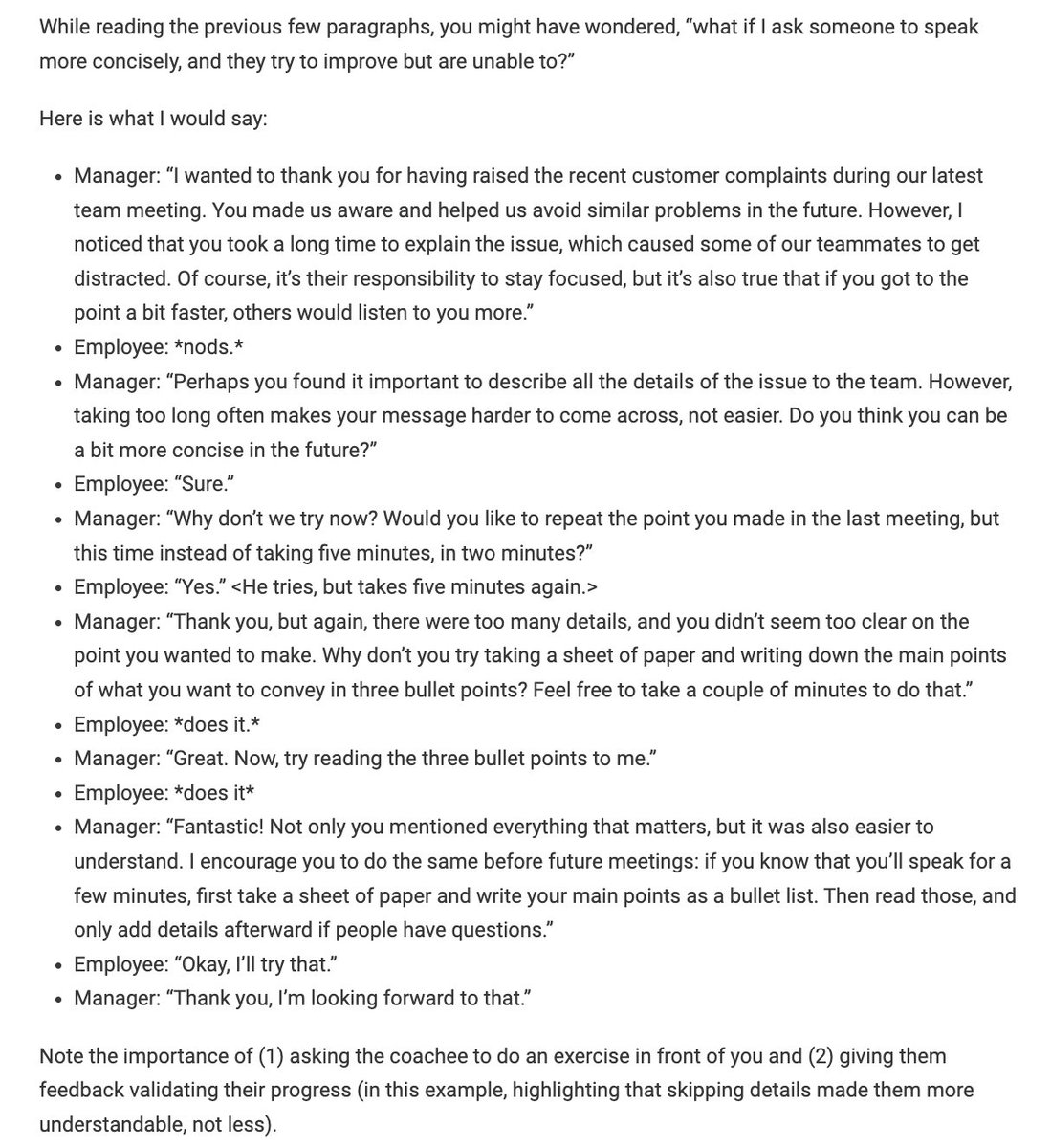
Here is a quiz to put in practice what we've seen so far
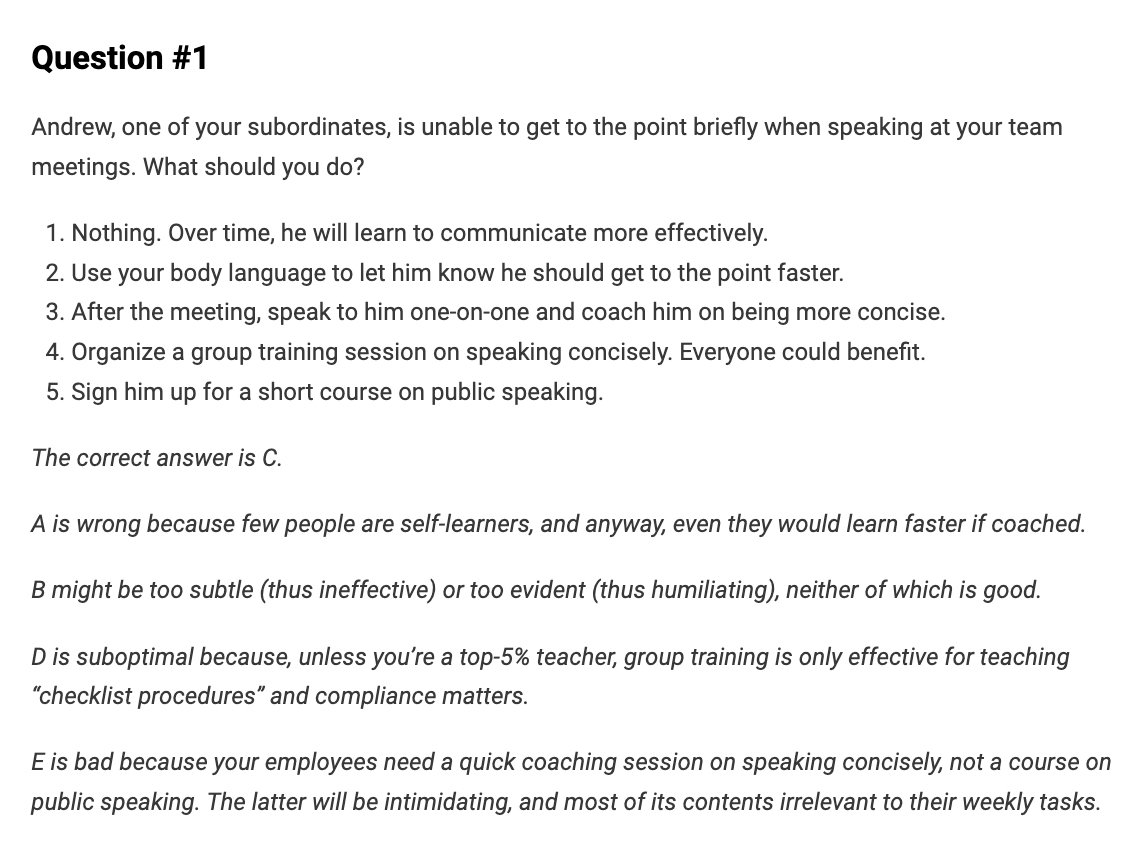
Question 1/5
Question 1/5
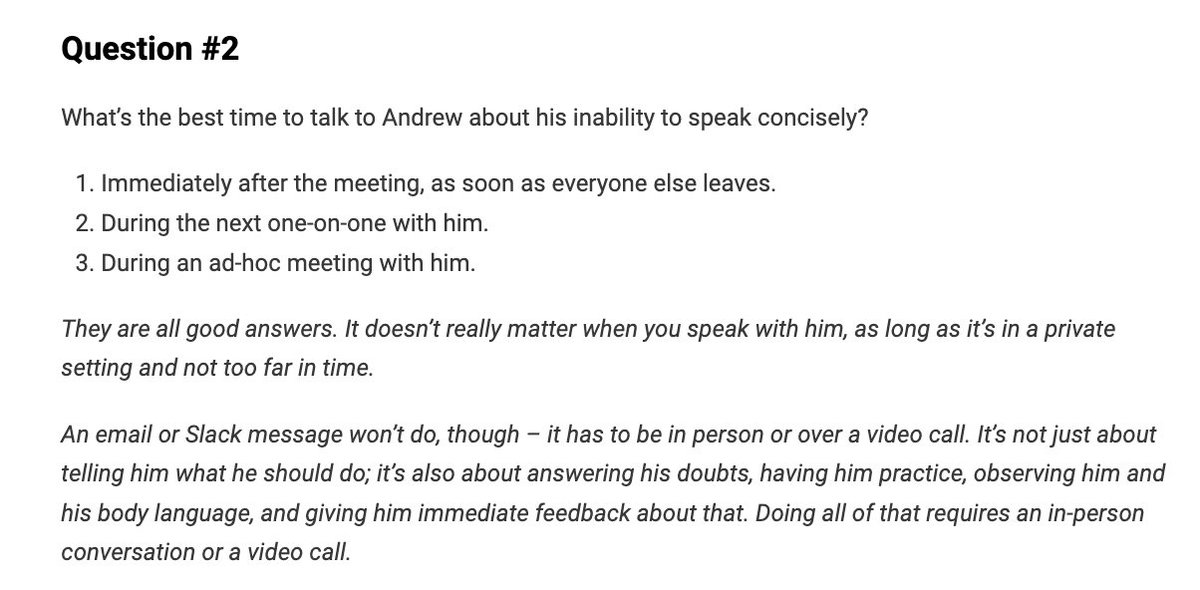
Question 2/5
Question 3/5
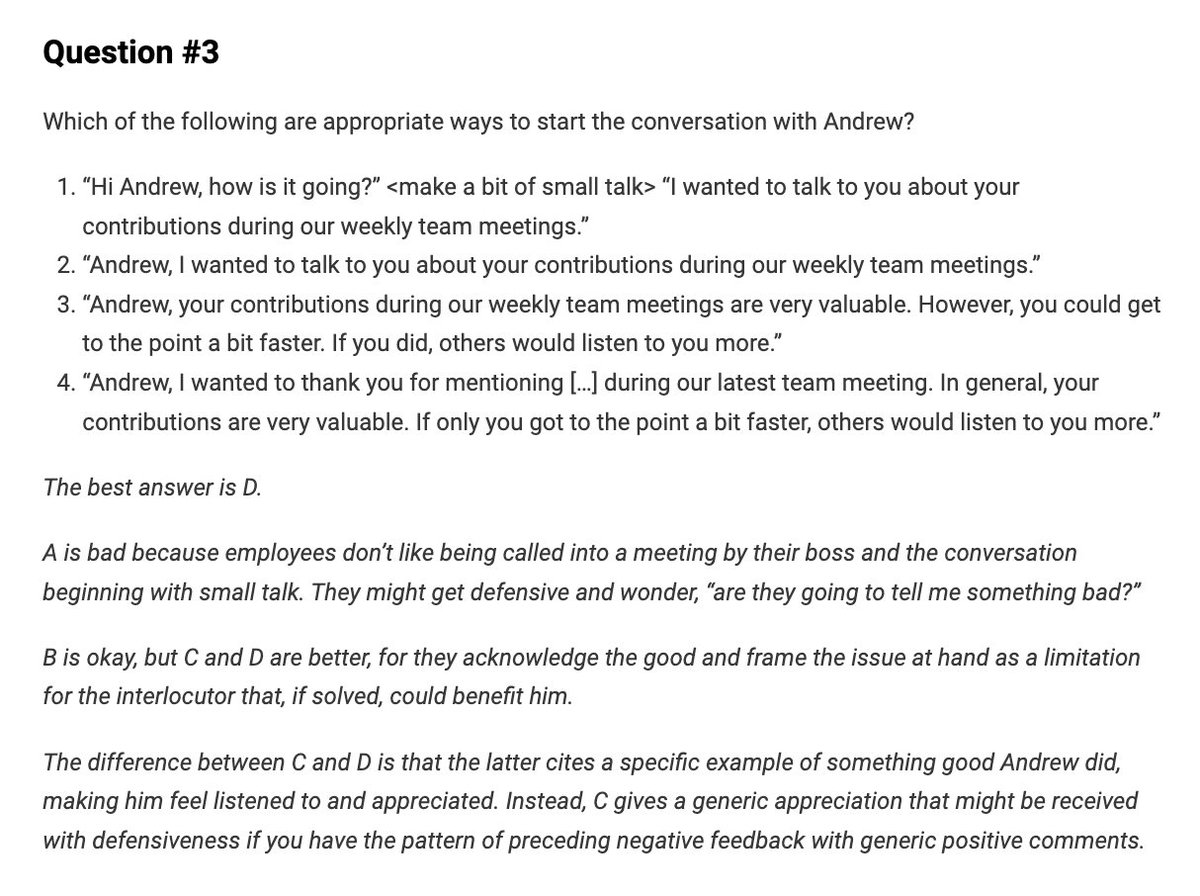
Question 4/5
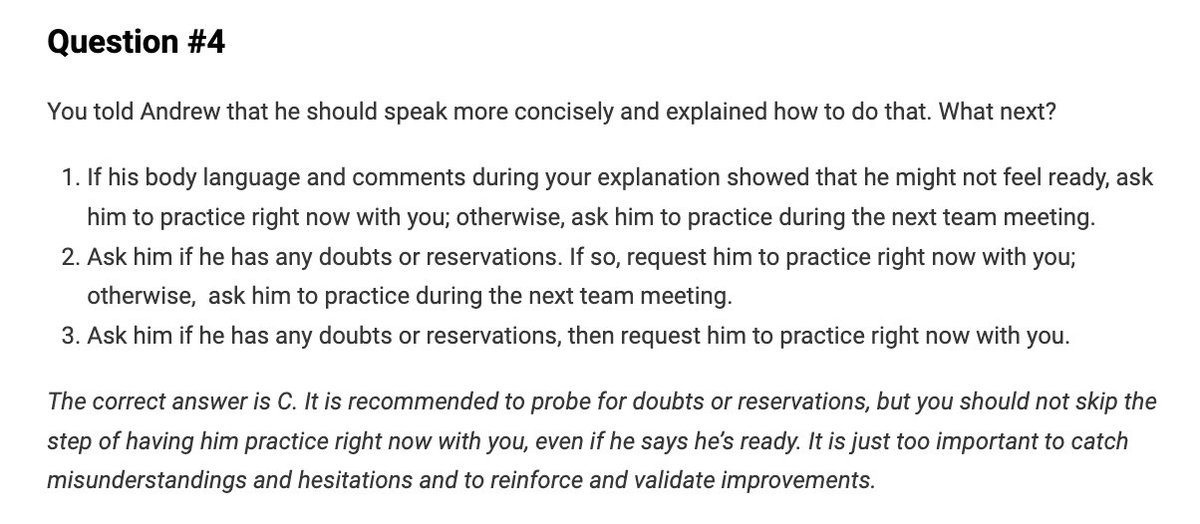
Question 5/5
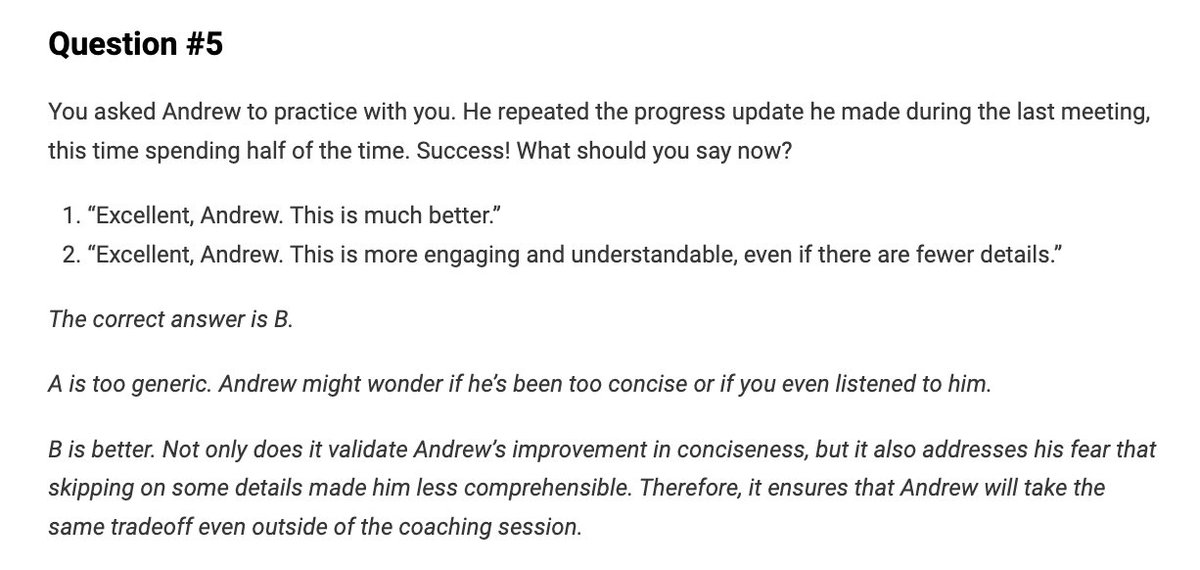
Summary
The communication skills of your people are a major bottleneck to how effective and engaging your team meetings can be.
Coach them outside of the meetings to speak more concisely and concretely.
The communication skills of your people are a major bottleneck to how effective and engaging your team meetings can be.
Coach them outside of the meetings to speak more concisely and concretely.
The guide continues with a lot of additional points; over time, I'll write here on Twitter about them.
Meanwhile, you can find the full guide here: Luca-dellanna.com
Meanwhile, you can find the full guide here: Luca-dellanna.com
Loading suggestions...