

As a Cardiology fellow, we get a lot of consults for Cardiogenic Shock.
Part 2: Diagnostic Studies/Management
*Not to use as medical advice, just tips, and always discuss with your fellow/attending*
-thread 🧵-
#MedTwitter #MedEd #Cardiotwitter #IMG
Part 2: Diagnostic Studies/Management
*Not to use as medical advice, just tips, and always discuss with your fellow/attending*
-thread 🧵-
#MedTwitter #MedEd #Cardiotwitter #IMG
Diagnostic Studies:
- Lab studies: elevated lactic acid, acute renal failure, transaminitis, electrolyte abnormalities (Na, K), reactive WBC
- EKG: Can see infarction, diffuse ischemia, evidence of larger prior MI. Remember both NSTEMI & STEMI can present w/ cardiogenic shock!
- Lab studies: elevated lactic acid, acute renal failure, transaminitis, electrolyte abnormalities (Na, K), reactive WBC
- EKG: Can see infarction, diffuse ischemia, evidence of larger prior MI. Remember both NSTEMI & STEMI can present w/ cardiogenic shock!
Diagnostic Studies:
- CXR: Can see pulmonary congestion
- RHC: Used to measure CO/CI and estimate SVR & PVR
- TTE: One of the most useful and quickest; can identify mechanical complications of MI & other causes (aortic dissection, tamponade, or PE).
- CXR: Can see pulmonary congestion
- RHC: Used to measure CO/CI and estimate SVR & PVR
- TTE: One of the most useful and quickest; can identify mechanical complications of MI & other causes (aortic dissection, tamponade, or PE).
Management:
- Early revascularization limits infarct size and improves mortality
- Primary PCI is preferred method of revascularization in shock (rather than multi-vessel PCI, which has higher mortality rates)
- Early revascularization limits infarct size and improves mortality
- Primary PCI is preferred method of revascularization in shock (rather than multi-vessel PCI, which has higher mortality rates)
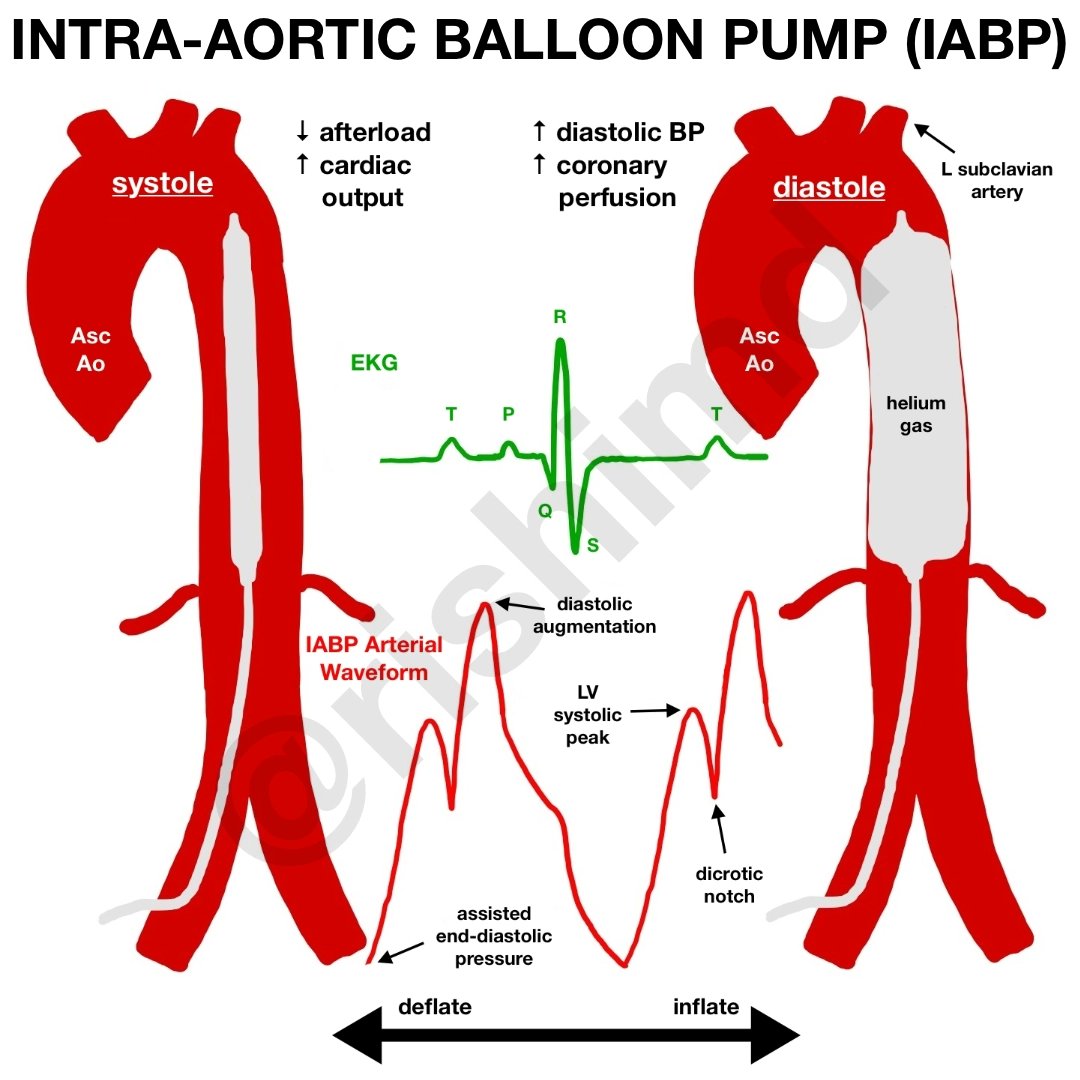
Intra-Aortic Balloon Pump:
- Reduces afterload
- Improves coronary & peripheral perfusion
- Decreases myocardial O2 requirement
- Contraindicated in significant PVD, aortic dissection, and > moderate AI
- *Not shown to have mortality benefit, but more time for decision-making*
- Reduces afterload
- Improves coronary & peripheral perfusion
- Decreases myocardial O2 requirement
- Contraindicated in significant PVD, aortic dissection, and > moderate AI
- *Not shown to have mortality benefit, but more time for decision-making*
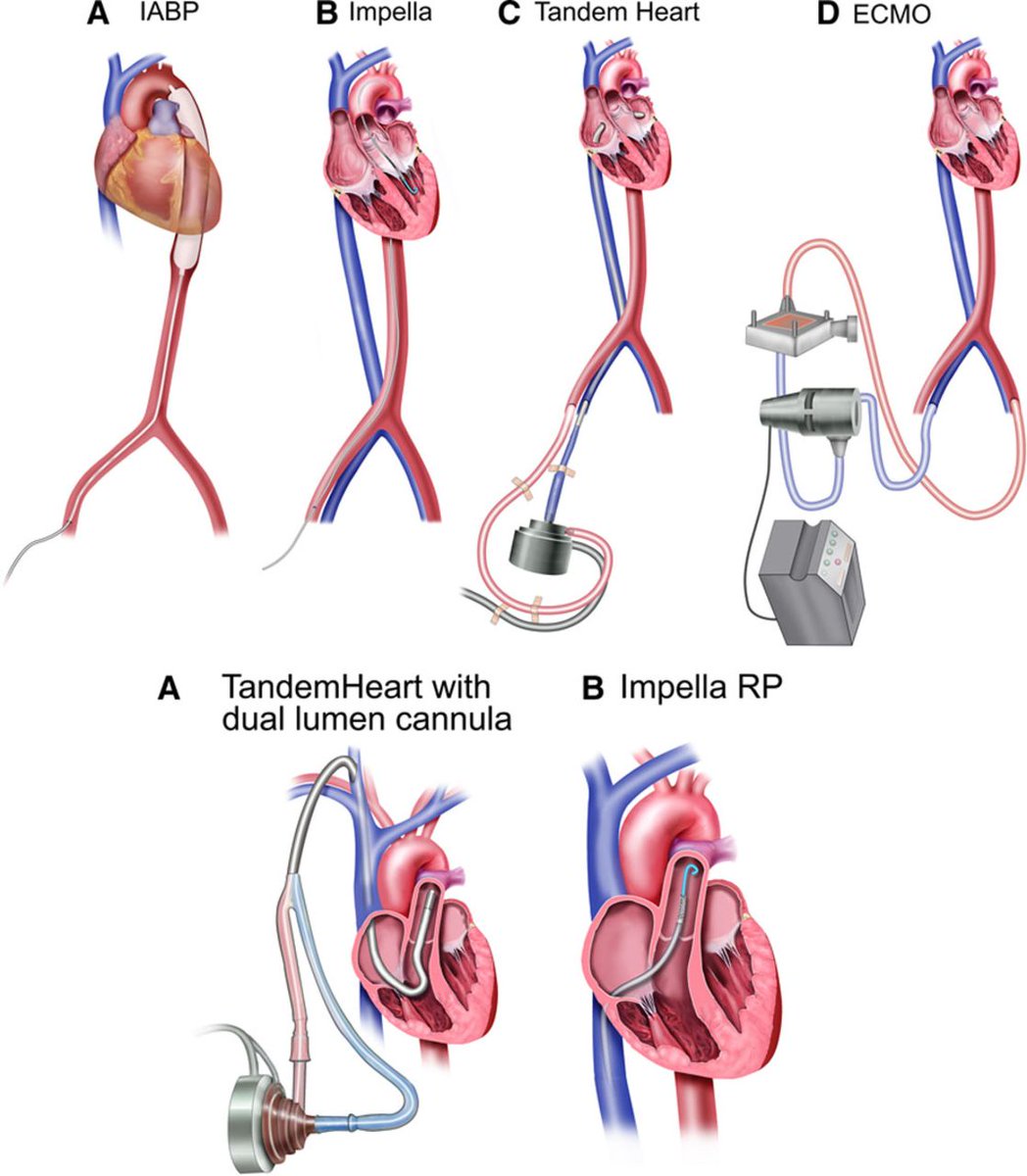
Percutaneous LV Assist Devices
- Impella is commonly used
- Can provide 2.5-4.0 L/minute of support
- Directly unloads the LV
- Placed before/after revascularization
ECMO:
- Used in veno-arterial configuration for full hemodynamic support if lung function is also compromised
- Impella is commonly used
- Can provide 2.5-4.0 L/minute of support
- Directly unloads the LV
- Placed before/after revascularization
ECMO:
- Used in veno-arterial configuration for full hemodynamic support if lung function is also compromised
Vasopressors:
- Norepinephrine: Pressor of choice
- Dopamine: Useful if chronotropic incompetence; has a higher mortality in cardiogenic shock when compared to NE when titrated to maintain an effective MAP
- Norepinephrine: Pressor of choice
- Dopamine: Useful if chronotropic incompetence; has a higher mortality in cardiogenic shock when compared to NE when titrated to maintain an effective MAP
Inotropic Agents:
- Increases myocardial oxygen demand, worsens ischemia, and provokes arrhythmias.
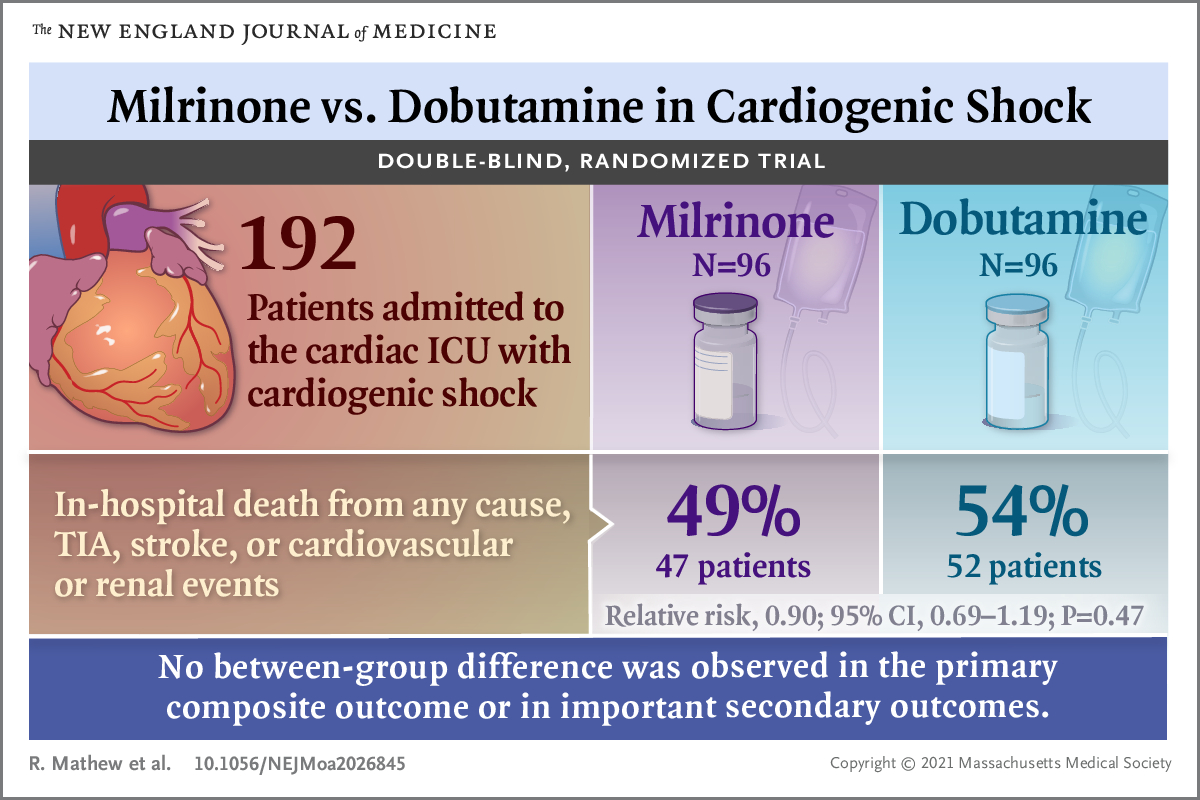
- Dobutamine (B1 agonist) & Milrinone (PDE Inhibitor) are most commonly used
- Studied in NEJM article w/o significant group differences
- Increases myocardial oxygen demand, worsens ischemia, and provokes arrhythmias.
- Dobutamine (B1 agonist) & Milrinone (PDE Inhibitor) are most commonly used
- Studied in NEJM article w/o significant group differences
Cardiogenic shock is one of the most feared complications in Cardiology.
Always discuss patients with your fellow/attending if you are concerned, especially if they are pre-shock!
Let me know what you think 👇
Always discuss patients with your fellow/attending if you are concerned, especially if they are pre-shock!
Let me know what you think 👇
Loading suggestions...