

🧵CRISPR CAS9
Here we will look at the CAS9 enzyme.
Here we will look at the CAS9 enzyme.
1/ The CAS9 system comes with 2 components. The first is the guide RNA and the second is the CAS9 enzyme itself. The CAS9 is made up of a few key domains with the two nucleases that are the HNH and RuvC domains.

2/ Both the nucleases will activate and make a double stranded break at the exact same location in the DNA on both strands. Some CAS9 enzymes have one of these 2 nucleases mutated to be inactive. These are called a Nickase as they will only cut 1 strand of DNA.

3/ The next key domain of the CAS9 is the PAM sequence. This matches a specific sequence of the DNA. Each CAS enzyme has a different PAM site which it recognizes. The CAS9 PAM will recognize the sequence N-G-G. This stands for Anything-Guanine-Guanine.
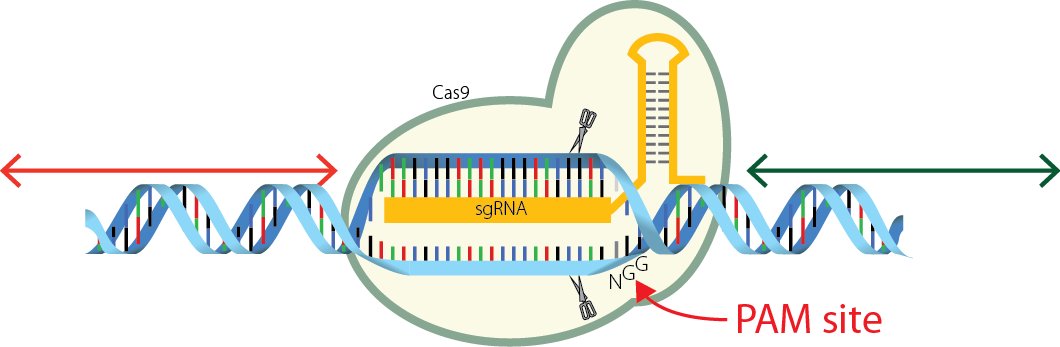
4/ The CAS9 nucleases will cut about 3 to 4 bases away from its PAM sequence. This is important as this short distance makes it difficult for CAS9 to do multiple edits. Once an edit occurs, the site for the guide and PAM matching will be disrupted by the edit.
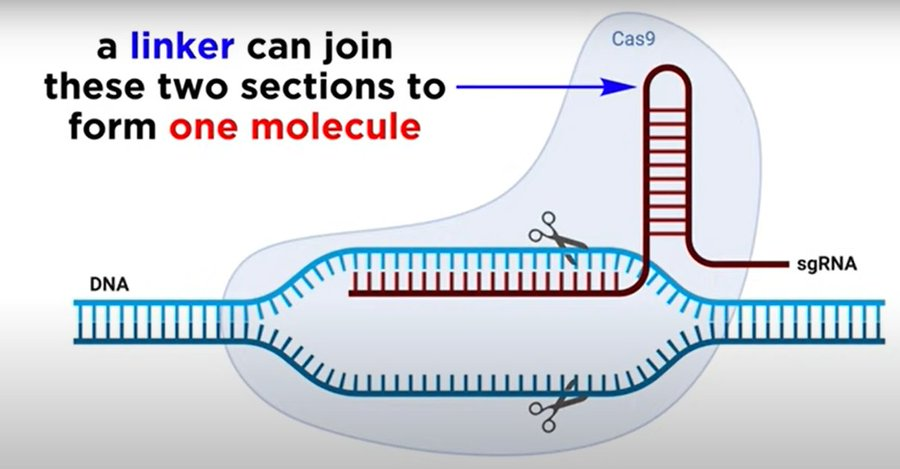
5/ The last part of the CAS9 system is the guide RNA (gRNA). If you recall, the wild type guides where made up of 2 segements in the crRNA and the tracrRNA. They would come together to form the complete guide RNA.
6/ This would be too complex for use in gene editing so they use a single guide RNA which basically links them together. This is shown below and its called a single guide RNA (sgRNA).
7/ The sgRNA is installed in the delivery vector as RNA, but the CAS9 is often installed into the vector as a messenger RNA. Some of the newer RNP packaging will include the CAS9 as a full enzyme.
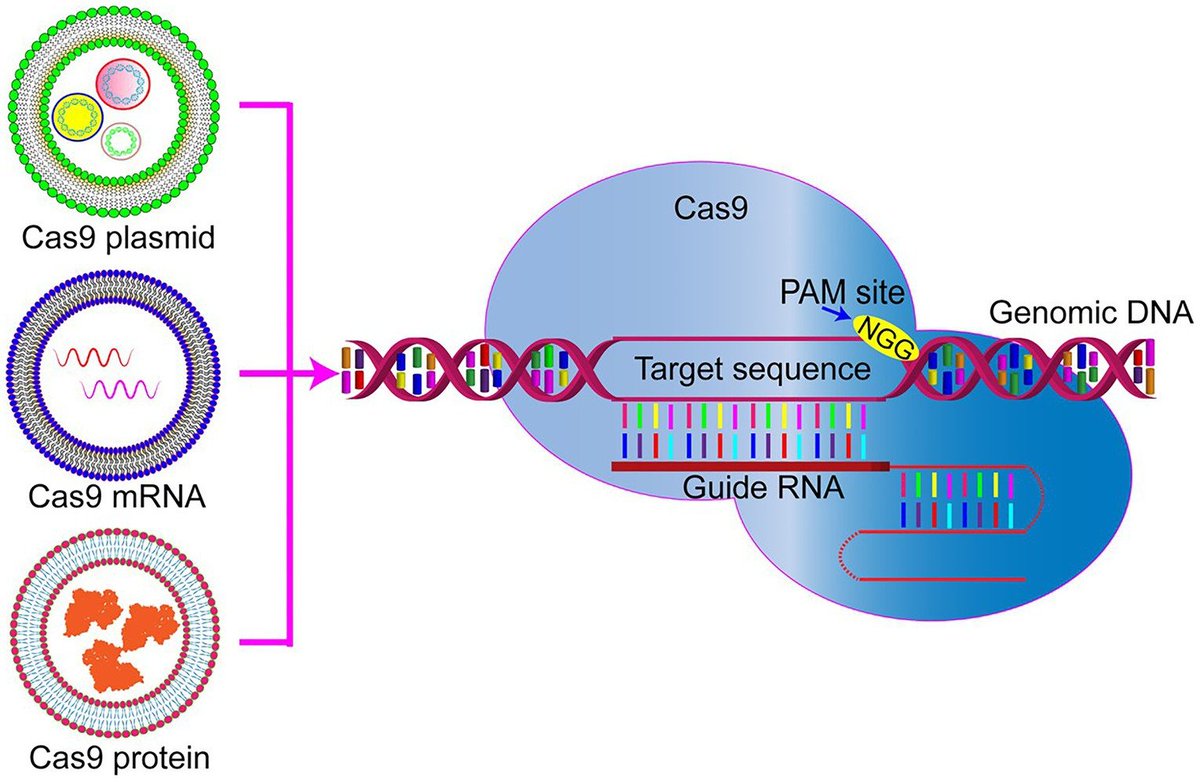
8/ When its used as a mRNA, its about 4,100 bases in length and encodes a enzyme about 1,368 amino acids long. This is a very big package for most traditional vectors. Most companies have moved toward LNP technology for delivery.
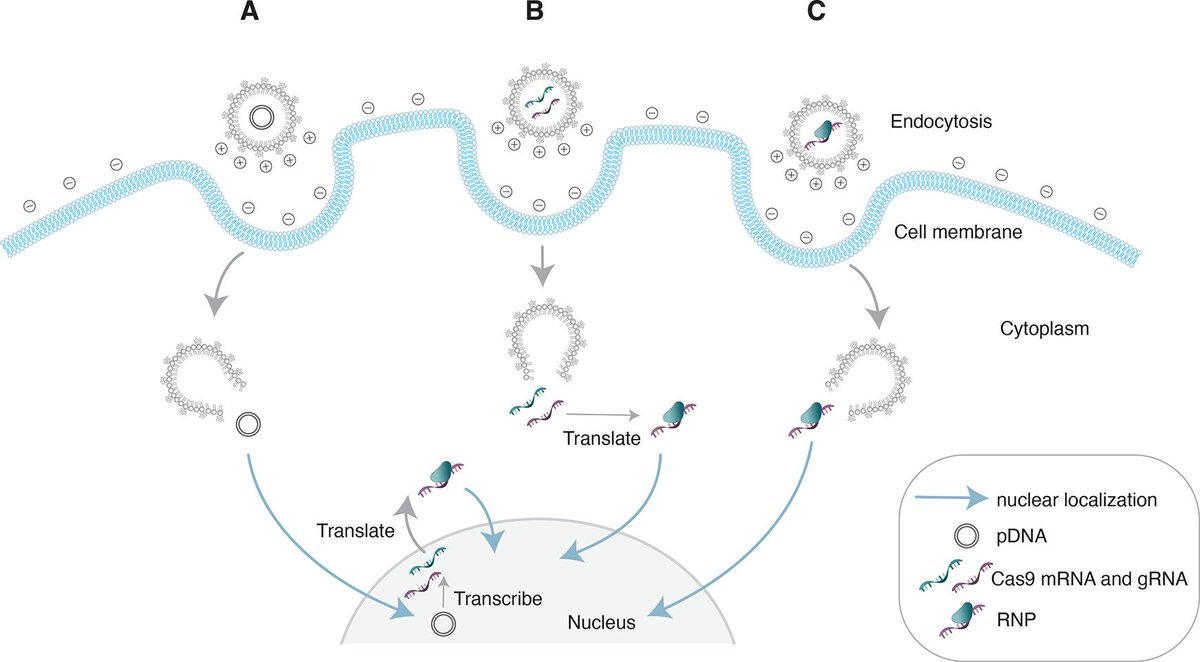
9/ The CAS9 will load the guide RNA when inside the cell. It enters the nucleus where it will bind to the DNA. The CAS9 opens the DNA and runs the 20 base guide along the DNA until it finds its match. Once the guide and PAM have a match, the nucleases will cut the DNA.
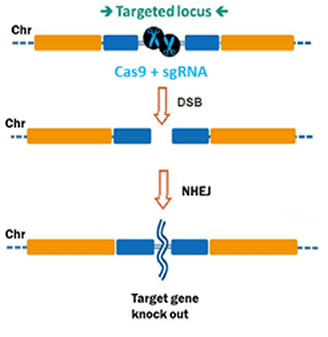
10/ This system can be used for Disruptions, Deletions or Insertions of genes. The disruption is done by causing Double Stranded Breaks at the target site to cause mutations that prevent reading of that gene.
11/ This effectively knocks out the gene. This works really well in-vivo as we have some very strong clinical data so far.
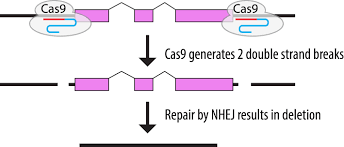
12/ The second use is gene deletion. This can be created using 2 CAS9 enzymes along with 2 guides to attempt to cut and remove an entire section of the DNA. I don't think this has ever been attempted in-vivo, and I don't think I would want it to be.
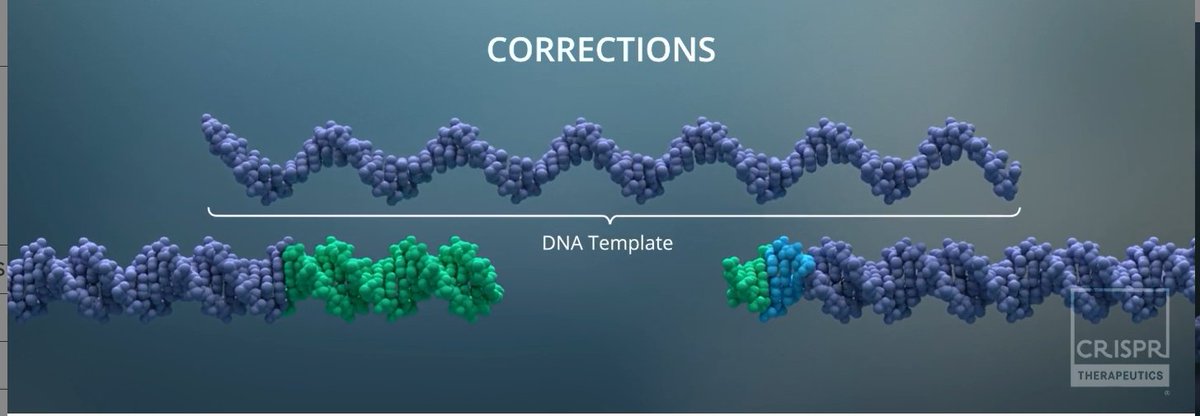
13/ The last use is gene insertion using homology directed repair using a template strand that gets included with the CAS9 and guide RNA at the time of delivery. The CAS9 does the DNA cutting and the template strand guides the repair.
14/ The biggest concern with the CAS9 system is the Double Stranded Breaks. When DNA is cut like this, it can repair in unexpected ways. You can end up with insertions or deletions (Indels) of bases.
15/ The other big concern is chromosomal rearrangements when used for multiple edits at once. Typically they have to do an edit and run the cell through the cell cycle to ensure the first edit was good before they can do the next.
16/ This covers the basics of the CAS9 system along with it uses and possible limitations. Next we will look at the CAS12 system.
Loading suggestions...