

10 mental concepts that will make you way smarter:
The Resistance Paradox
When we accept resistance, resistance disappears.
When we accept our challenges, we’re able to start solving them.
When we face the fire, the fire can be extinguished.
Our resistance is an opportunity, or an ever-growing thorn in our side.
When we accept resistance, resistance disappears.
When we accept our challenges, we’re able to start solving them.
When we face the fire, the fire can be extinguished.
Our resistance is an opportunity, or an ever-growing thorn in our side.
Introspection Illusion
We think we understand our motivations and desires, our likes and dislikes.
We believe we know ourselves and why we are the way we are.
In reality, when asked to explain our emotional states, we typically make something up.
Dig deeper, reflect more.
We think we understand our motivations and desires, our likes and dislikes.
We believe we know ourselves and why we are the way we are.
In reality, when asked to explain our emotional states, we typically make something up.
Dig deeper, reflect more.
Focalism
We place too much focus or emphasis on a single factor or piece of information when making judgments or predictions.
“Nothing in life is quite as important as you think it is while you are thinking about it.”
Step back, welcome alternative data, and then decide.
We place too much focus or emphasis on a single factor or piece of information when making judgments or predictions.
“Nothing in life is quite as important as you think it is while you are thinking about it.”
Step back, welcome alternative data, and then decide.
Moral Credential Effect
Greater confidence and security in our self-image tend to make us worry less about the consequences of immoral behavior.
This makes us more likely to make immoral choices.
Remember: No one individual is ever above the human condition.
Greater confidence and security in our self-image tend to make us worry less about the consequences of immoral behavior.
This makes us more likely to make immoral choices.
Remember: No one individual is ever above the human condition.
Time-Saving Bias
We misestimate the time that could be saved (or lost) when increasing (or decreasing) speed.
Speeding in a car over a short distance doesn’t actually save that much time.
Lesson: Always consider the influence and importance of speed on your outcome.
We misestimate the time that could be saved (or lost) when increasing (or decreasing) speed.
Speeding in a car over a short distance doesn’t actually save that much time.
Lesson: Always consider the influence and importance of speed on your outcome.
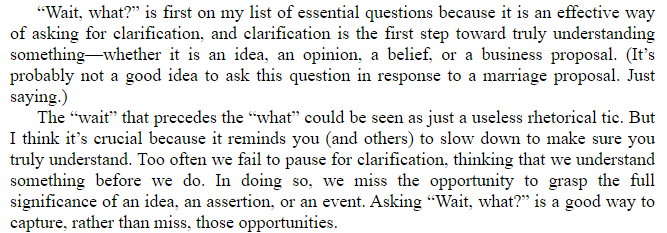
Wait, What?
A method to avoid jumping to conclusions or making snap judgements.
When someone presents an idea, opinion, or a belief, ask "Wait, What?"
It reminds you to slow down.
To make sure you truly understand and can respond thoughtfully.
h/t James E. Ryan
A method to avoid jumping to conclusions or making snap judgements.
When someone presents an idea, opinion, or a belief, ask "Wait, What?"
It reminds you to slow down.
To make sure you truly understand and can respond thoughtfully.
h/t James E. Ryan
Luck Razor
If stuck with 2 equal options, pick the one that feels like it will produce the most luck later down the line.
Should I stay in tonight or should I go and meet this interesting stranger?
Choose to increase your surface area of luck when you have the choice.
If stuck with 2 equal options, pick the one that feels like it will produce the most luck later down the line.
Should I stay in tonight or should I go and meet this interesting stranger?
Choose to increase your surface area of luck when you have the choice.
10/10/10 Rule
We're all guilty of making decisions without thinking about long term consequences.
To avoid this, ask:
• How will I feel about this 10 minutes from now?
• 10 months from now?
• 10 years from now?
This helps clarify the decision that results in a win/win/win.
We're all guilty of making decisions without thinking about long term consequences.
To avoid this, ask:
• How will I feel about this 10 minutes from now?
• 10 months from now?
• 10 years from now?
This helps clarify the decision that results in a win/win/win.
Do Nothing Tendency
We are more bothered by harm that comes from action than harm that comes from inaction, so we default to no action.
"Most of us have two lives: the life we live, and the unlived life within us"—
@SPressfield
Don't resort to no action as a means of comfort.
We are more bothered by harm that comes from action than harm that comes from inaction, so we default to no action.
"Most of us have two lives: the life we live, and the unlived life within us"—
@SPressfield
Don't resort to no action as a means of comfort.
The Knowing Paradox
The more you admit you don’t know, the more you will know.
It’s the curiosity and humility to admit you don’t know that allows you to ask the questions that lead to knowing.
A willingness to look dumb in the moment makes you smarter tomorrow.
The more you admit you don’t know, the more you will know.
It’s the curiosity and humility to admit you don’t know that allows you to ask the questions that lead to knowing.
A willingness to look dumb in the moment makes you smarter tomorrow.
That's a wrap!
Follow me @_alexbrogan for more content like this.
Follow me @_alexbrogan for more content like this.
If you like improving your thinking, you will love my weekly newsletter.
I share mental models (weekly), high-quality links to the best content I find (monthly), and exclusive subscriber resources (a few times per year).
You can join here: alexbrogan.beehiiv.com
I share mental models (weekly), high-quality links to the best content I find (monthly), and exclusive subscriber resources (a few times per year).
You can join here: alexbrogan.beehiiv.com
Loading suggestions...