

Learning from others’ mistakes is valuable.
After all, you can't live long enough to make them all yourself.
If you avoid some common SIP mistakes, you can create a 70% bigger corpus.
What are these mistakes? Let’s find out.
A thread 🧵
After all, you can't live long enough to make them all yourself.
If you avoid some common SIP mistakes, you can create a 70% bigger corpus.
What are these mistakes? Let’s find out.
A thread 🧵
• Mistake 1: Skipping SIPs
Say, you are doing a monthly SIP of Rs. 10,000 for 15 years in NIFTY50.
Now, skipping a few SIPs in 15 years may not look like a big deal. Right?
Surprisingly, skipping only 1 SIP every year can reduce your returns by nearly 9%.
See table below 👇
Say, you are doing a monthly SIP of Rs. 10,000 for 15 years in NIFTY50.
Now, skipping a few SIPs in 15 years may not look like a big deal. Right?
Surprisingly, skipping only 1 SIP every year can reduce your returns by nearly 9%.
See table below 👇

• Mistake 2: Not giving your SIP an increment
All of us get an increment every year.
Often we use it to improve our lifestyle and ignore our SIPs.
But if you give your investments a hike, you can build a 71% bigger corpus starting with a monthly SIP of Rs 10,000 for 15 years.
All of us get an increment every year.
Often we use it to improve our lifestyle and ignore our SIPs.
But if you give your investments a hike, you can build a 71% bigger corpus starting with a monthly SIP of Rs 10,000 for 15 years.

• Mistake 3: Not picking Growth option
In mutual funds, there are 2 popular options.
1. Growth: Returns are reinvested
2. IDCW: Returns are distributed
If you select IDCW, returns are distributed, which breaks compounding.
Besides, you may pay higher tax.
In mutual funds, there are 2 popular options.
1. Growth: Returns are reinvested
2. IDCW: Returns are distributed
If you select IDCW, returns are distributed, which breaks compounding.
Besides, you may pay higher tax.
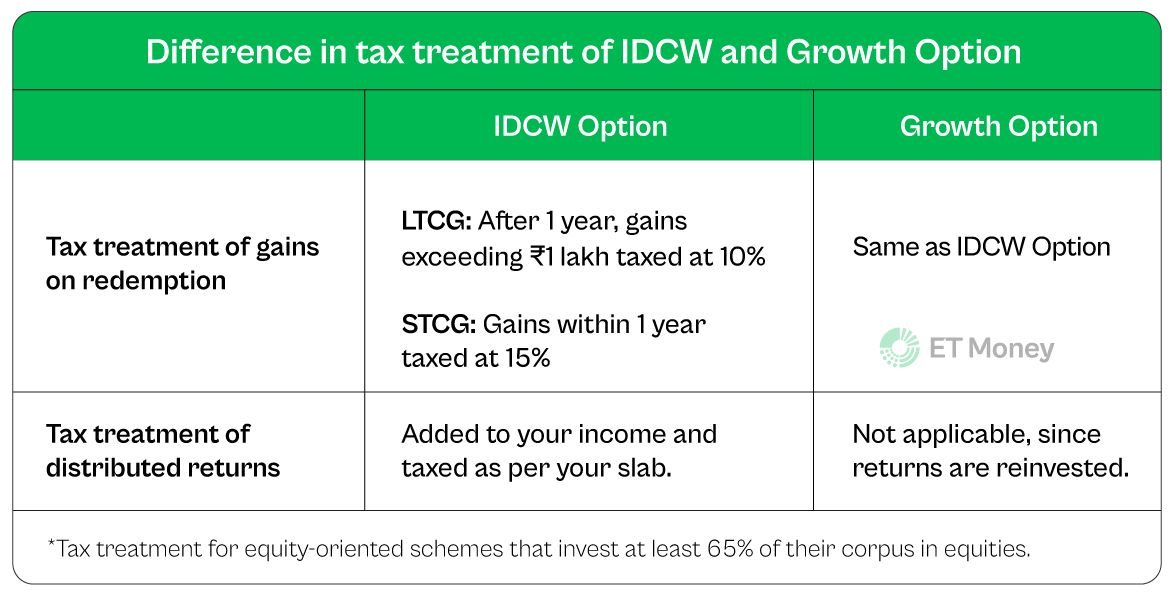
In both Growth and IDCW, you pay tax when you redeem.
But in addition to that, in the IDCW plan, you need to pay taxes whenever the fund manager decides to distribute returns.
As these returns are taxed at your slab rate, tax outgo could be higher in the IDCW plan.
See table 👇
But in addition to that, in the IDCW plan, you need to pay taxes whenever the fund manager decides to distribute returns.
As these returns are taxed at your slab rate, tax outgo could be higher in the IDCW plan.
See table 👇
• Mistake 4: Not having a goal attached to SIPs
Data from fund houses show that nearly 43% retail investors don’t hold equity assets for more than 2 years.
So why do these investors redeem their money early?
Not having a goal attached to SIPs could be a major reason.
Data from fund houses show that nearly 43% retail investors don’t hold equity assets for more than 2 years.
So why do these investors redeem their money early?
Not having a goal attached to SIPs could be a major reason.
When you have a goal attached to SIPs, it brings discipline.
It also helps in taking crucial investing decisions:
• Where to invest
• How much to invest
• How long to invest and
• When to exit
Investing for goals instills discipline and helps you earn better returns.
It also helps in taking crucial investing decisions:
• Where to invest
• How much to invest
• How long to invest and
• When to exit
Investing for goals instills discipline and helps you earn better returns.
• Mistake 5: Not reviewing and rebalancing SIPs
Ideally, you shouldn’t track your investments daily.
But neither should you invest and forget.
So, what should you do?
Review your investments once a year.
Ideally, you shouldn’t track your investments daily.
But neither should you invest and forget.
So, what should you do?
Review your investments once a year.
An annual review will help in course correction.
You can put underperformers under watch or weed them out altogether.
Besides, you can also rebalance to your defined asset allocation.
You can put underperformers under watch or weed them out altogether.
Besides, you can also rebalance to your defined asset allocation.
We put a lot of effort into creating such informative threads.
So, if you find this useful, show some love. ❤️
Please like, share, and retweet the first tweet.
For more threads, follow us.
Also, click on the bell icon in the profile section, so you don't miss any threads.🔔
So, if you find this useful, show some love. ❤️
Please like, share, and retweet the first tweet.
For more threads, follow us.
Also, click on the bell icon in the profile section, so you don't miss any threads.🔔
Loading suggestions...