

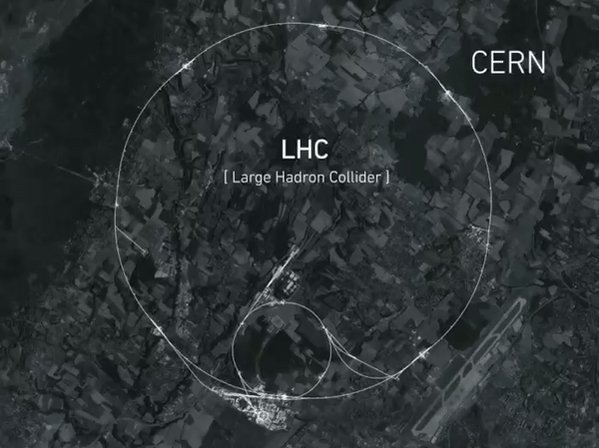
The Large Hadron Collider is the world’s largest, most powerful particle accelerator: in a way it's the world's largest single machine. It consists of a 27-km ring excavated between the lake of Geneva and the Jura mountain range at an average depth of 100 m. Let's see some facts
Each of the 6000-9000 superconducting filaments of niobium-titanium coiled between them to make up the LHC cables is 0.007 mm thick, about 10 times thinner than a normal human hair. If put one after another they would stretch from the Earth to the Sun and back six times

The protons accelerated are obtained from standard hydrogen. Although proton beams are very intense (1.15x10¹¹ protons in a beam size of 3.5 micrometres), only 2 nanograms of hydrogen are accelerated each day. It would take about 1 million years to accelerate 1 gram of hydrogen.

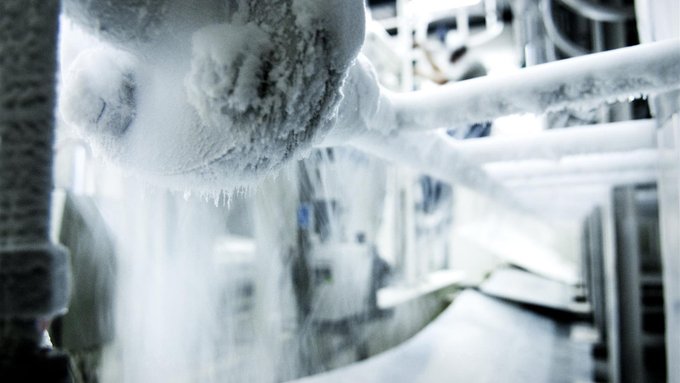
The central part of the LHC is the world’s largest fridge. At a temperature colder than the deep outer space, it contains iron, steel and the superconducting coils. 120 tons of helium are required by the LHC machine to keep the magnets at their operating temperature of 1.9 K
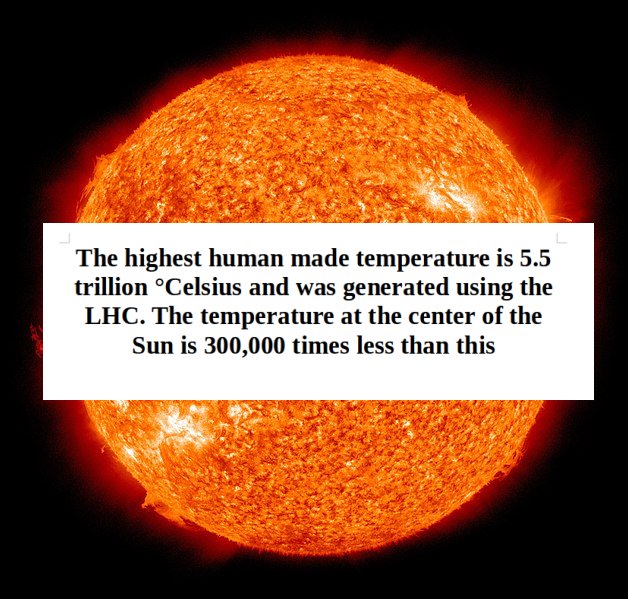
At the same time, LHC can reach unbelievably hot temperatures, > 100,000 times the temperature measured at the center of the Sun. This is achieved by accelerating and colliding together two beams of heavy ions, an epic event that takes place every day, 40 million times per second
The ultrahigh vacuum achieved in the LHC beam pipes is comparable to the atmosphere of the Moon. The beam vacuum pressure is 10⁻¹³ atm, low enough to to avoid collisions between the beam protons and the spurious gas molecules in the beam.

Protons in the LHC travel at 0.999999991 times the speed of light (at the design energy). Each proton goes around the 27 km ring more than 11.000 times a second. A beam circulating for more than 10 hours, travels more than 10 billion km, enough to get to Neptune and back again

The particles are so tiny that the task of making them collide is like firing two needles 10 kilometers apart with such precision that they meet halfway.

At full energy, each of the two proton beams in the LHC has a total energy equivalent to a 400 tons train (like the French TGV) traveling at 150 km/h. This is enough energy to melt 500 kg of copper

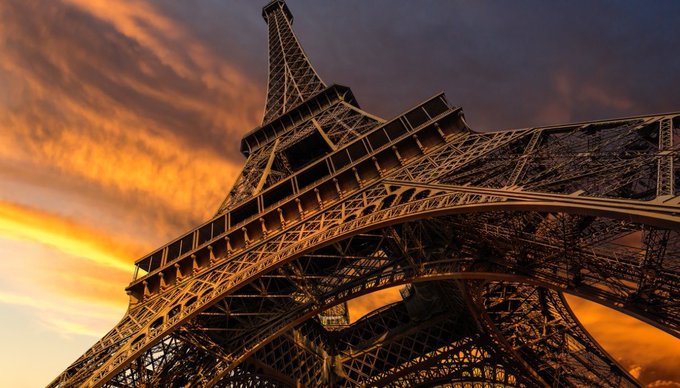
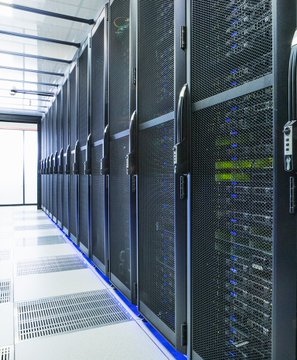
The CMS magnet system contains about 10000 tons of iron, which is more iron than in the Eiffel Tower. The data recorded by the big experiments at the LHC are enough to fill every year around 50.000 hard disks with 1 TByte memory each

Loading suggestions...