

African Kings Who Were Exiled To Seychelles For Their Bravery In Fighting European Colonialists.
By the 19th century, after the Berlin conference, there was great European hunger for the resources and lands of Africa.
By the 19th century, after the Berlin conference, there was great European hunger for the resources and lands of Africa.
The transatlantic slave trade was no more profitable for the Europeans and Americans, and they had to focus on other resources that would enrich their countries and thrones.
Between 1820 and 1911 in the 19th and 20th centuries respectively, the Europeans waged a full-blown war on African kingdoms, kings, indigenous peoples. But among the European countries that took the resolutions of the Berlin conference, the British sent more armies into Africa,
and fought more wars, in a bid to rule over Africa’s ancient kingdoms. As the British embarked and continued on their conquest of Africa, some weaker kingdoms surrendered, while other stronger African kingdoms gave them a fight to the finish.
These kings/leaders/rulers were courageous and resisted the British for as long as they could. After long fighting, the British exiled many of these African kings and leaders into Seychelles, where they were left to live out their days
Below are some of these brave and noble African kings who were exiled by the uninvited British (Europeans), for not allowing their kingdoms to be colonized.
1. King Nana Prempeh I – Asantehene of the Ashanti Kingdom of Ghana
1. King Nana Prempeh I – Asantehene of the Ashanti Kingdom of Ghana
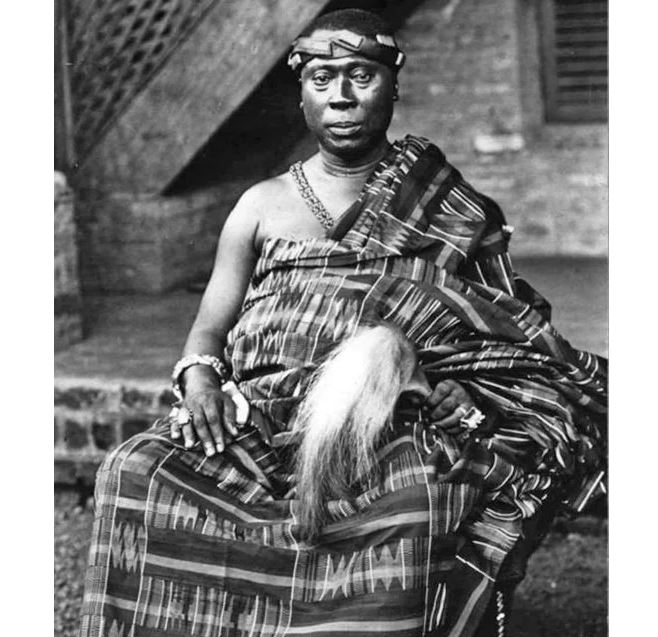
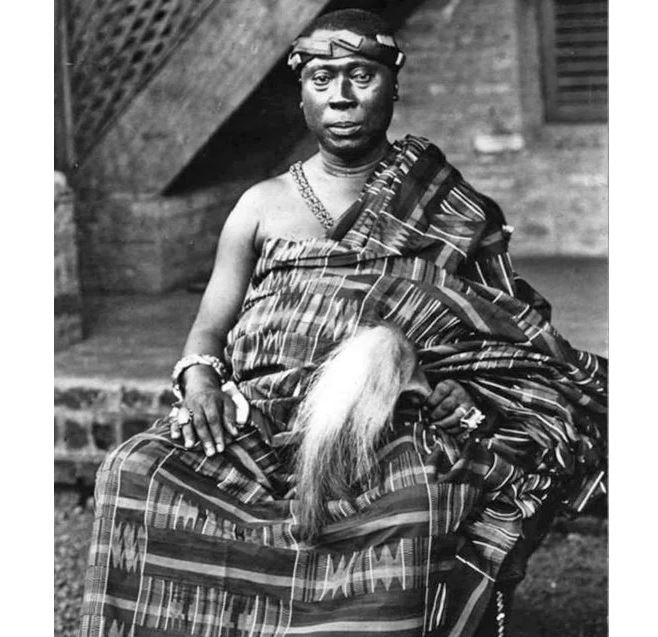
The Ashanti Kingdom was one of the strongest kingdoms in Africa. King Prempeh I was the 13th ruler and was 16 years old when he took over the throne in 1888. Till today, he is remembered as one of the strong-willed and fiercest rulers in the history of the Ashanti Empire.
He is also the very last king of the Ashanti kingdom before it came under British rule. By the 19th century, the British Empire had laid claim to Ghana and named it Gold Coast Colony. Led by their king, Nana Prempeh 1, the Ashanti fought the British fiercely to protect their
ancient Kingdom. The British and the Ashanti had trading relations. The king was willing to maintain it but refused to be ruled by the British.
He was labeled a notorious leader, because of his campaign against the British – because of his resolve to defend his people. Most,
He was labeled a notorious leader, because of his campaign against the British – because of his resolve to defend his people. Most,
unfortunately, King Prempeh I and his Ashanti army were defeated by the British in the fourth Anglo-Ashanti war that was fought from 1894 to 1896.
After his defeat, the British in their usual manner looted the Ashanti Kingdom of its treasures. King Nana Prempeh I was
After his defeat, the British in their usual manner looted the Ashanti Kingdom of its treasures. King Nana Prempeh I was
captured together with his mother and other relatives and chiefs. They were then forcefully taken out of the Ashanti kingdom to live in exile in Seychelles.
Other leaders of the indigenous people of Ghana such as Yaa Asantewaa joined him in exile in 1901.
Other leaders of the indigenous people of Ghana such as Yaa Asantewaa joined him in exile in 1901.
King Nana Prempeh, in 1924 was allowed to return to Ghana, where he reigned as king until he died in 1931.
2. King Chwa II – Kabelega of Bunyoro Kingdom, of Uganda
Chwa II Kabalega was the ruler of the Bunyoro kingdom from 1879 to 1899. He was a visionary and strong ruler. He was very interested in economic and infrastructural development, and this led him to create policies
Chwa II Kabalega was the ruler of the Bunyoro kingdom from 1879 to 1899. He was a visionary and strong ruler. He was very interested in economic and infrastructural development, and this led him to create policies

that brought wealth to his kingdom. Just like other kings around Africa, he resisted vehemently the attempt of the British to overthrow him and take over the Bunyoro kingdom.
The British declared war on the Bunyoro kingdom in 1894, for their refusal to be annexed by the land-and-resources-grabbing British. King Kabalega Chwa II went into hiding, to enable him and his army to plan multiple attacks on the British.
Their offensives at the British were known as the Nyangire rebellion. The king successfully defeated the British for 5years, with the help of Somalia and Nubia.
The British discovered King Kaalega’s base in 1899 and shot him. After that, he was captured and exiled to Seychelles
The British discovered King Kaalega’s base in 1899 and shot him. After that, he was captured and exiled to Seychelles
where he lived for 24years. In 1923, he was granted freedom to return to the Bunyoro kingdom, but most, unfortunately, died before reaching the border of his kingdom.
3. Danieri Basammula-Ekkere Mwanga II Mukasa – King of Buganda, Uganda
Mwanga II Mukasa was king of the Buganda Kingdom, in Uganda. He was the 31st king of the not very large but strong Kingdom and reigned as king from 1884 until 1897.
Mwanga II Mukasa was king of the Buganda Kingdom, in Uganda. He was the 31st king of the not very large but strong Kingdom and reigned as king from 1884 until 1897.
He became king at the age of 16 in 1884 shortly after the untimely death of his father, the King. And he was an ally of King Chwa II Kabelega of Bunyoro Kingdom.
He was opposed to the infiltration of Christian missionaries and British rule. So, he teamed up with his friend and ally Chwa II Kabalega of Bunyoro, in resisting the British. After considerable resistance by his people, his kingdom was weakened.
Due to lack of resistance, he was forced to sign a treaty with Lord Lugard which gave the British control over trade, administration, justice, and revenue in the Buganda Kingdom.
But that was not the end of his resistance. Because of their hold on trade, commerce and administration, the British gained full control in 1893. After that, Mwanga II declared war on the British empire in 1897 to take back control of his kingdom.
He was defeated after years of battle and fled to German East Africa. From there he planned and carried out several attacks on the British. He attacked first in 1897 and was defeated. He fled and returned to Buganda in 1898 with an army,
but was defeated again, and finally captured in 1899, by the plundering and uninvited British. He was taken on exile to Seychelles and died in 1903 due to a brief illness. His body was repatriated in 1910 and was buried in Uganda.
4. Sheikh Khalid bin Barghash Al-Busaid of Zanzibar, of Tanzania
Sheikh Khalid bin Barghash Al-Busaid was the 6th ruler of Zanzibar, and he was known as ‘Sultan’. Like many African kings in his time, he was very powerful and influential. He was respected and feared.
Sheikh Khalid bin Barghash Al-Busaid was the 6th ruler of Zanzibar, and he was known as ‘Sultan’. Like many African kings in his time, he was very powerful and influential. He was respected and feared.
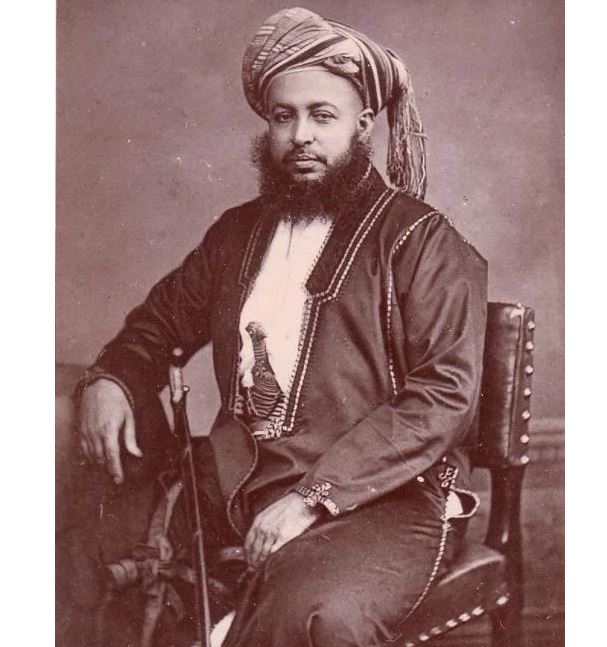
In the late 19th century, the British had already settled in the beautiful Island of Zanzibar. They started to exert full control of the Island while refusing to acknowledge the kingdom and its ruler. By 1866, the British empire created and put forward a treaty that demanded
the Sultan rule Zanzibar with the permission of the British. Just like any African king or nobleman, Sheik Khalid was greatly insulted by the proposals of the British and this led to the Anglo-Zanzibar War of 1886.
The war was fierce, and when the British were invading his palace, the sultan escaped into a German East African territory, where he was given asylum. But in 1916, he was captured by the British, and taken to Seychelles, where he lived for 7 years in exile.
He was released later but was never allowed to return to Zanzibar. He lived out the rest of his life and died in Mombasa, Kenya in 1927.
Conclusion
This list is actually small compared to the number of kingdoms in Africa that were sacked and looted by the British. To date, the British still have in their possession, gold, treasures, and ancient Artifacts
This list is actually small compared to the number of kingdoms in Africa that were sacked and looted by the British. To date, the British still have in their possession, gold, treasures, and ancient Artifacts
belonging to African empires and kingdoms that were handed down over centuries. In the nearest future, we will post more of these looted kingdoms and how their kings were ousted.
Loading suggestions...