

A blockchain processes over 7,000 transactions on average per second
Here is a completed guide on how a Blockchain like Bitcoin or Ethereum works 🧵
Here is a completed guide on how a Blockchain like Bitcoin or Ethereum works 🧵
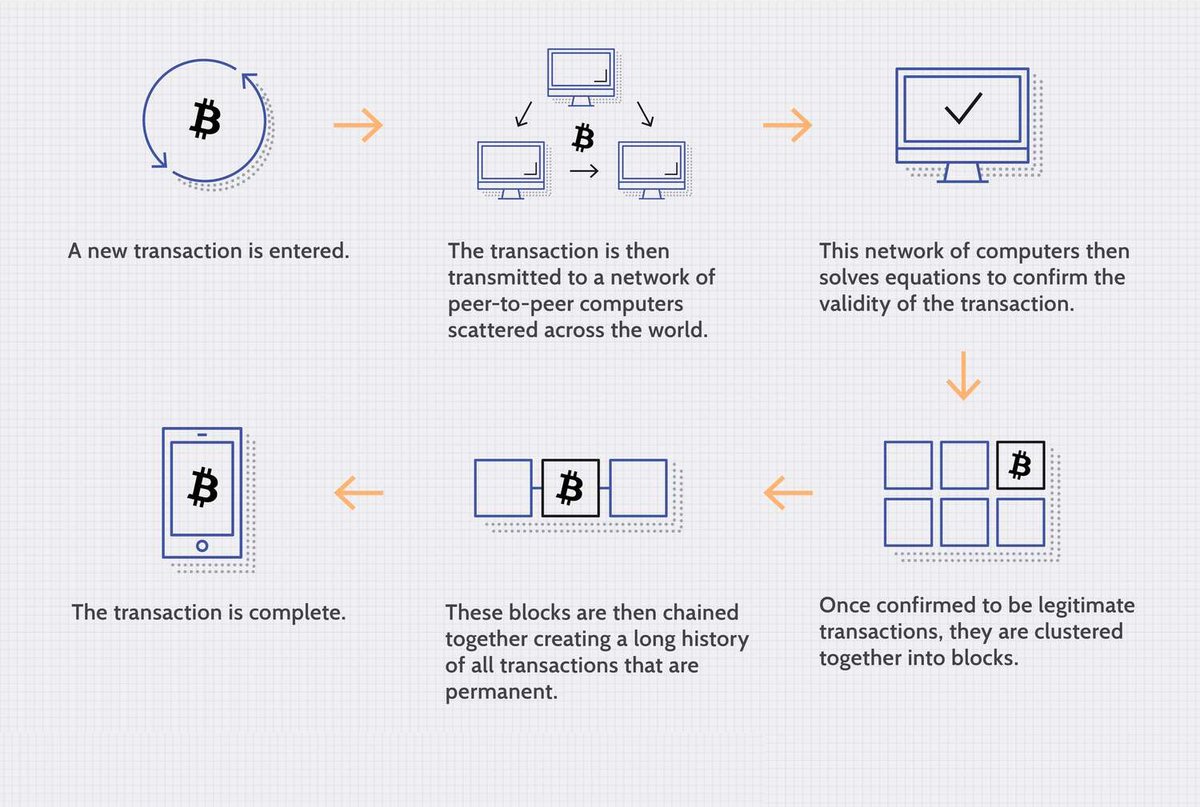
A transaction is requested: let's say Alice wants to send some digital currency to Bob. She uses her digital wallet to create a transaction request, which includes the amount of currency she wants to send and Bob's public address, which is like his bank account number.
2/7
2/7
The transaction is represented as a block: this block contains all the necessary information about the transaction, such as the amount being sent, the addresses of the sender and recipient, and a unique code called a "hash" that identifies the block.
3/7
3/7
The block is broadcasted to all nodes in the network: all nodes, or computers, on the network receive a copy of the block. These nodes are run by volunteers from around the world who help maintain the network and process transactions.
4/7
4/7
The network approves the transaction: each node independently verifies that the transaction is valid, using complex algorithms and cryptography. This ensures that the sender has the necessary funds and that the transaction follows the network's rules.
5/7
5/7
The block is added to the existing blockchain: once a transaction is verified, it is added to the existing chain of blocks in a linear, chronological order. This creates a permanent and transparent record of the transaction.
5/7
5/7
The transaction is completed: once the block is added to the blockchain, the transaction is considered complete and cannot be reversed. The digital currency is transferred from Alice's wallet to Bob's, and the transaction is recorded on the public ledger for all to see.
6/7
6/7
In this way, blockchain technology allows for secure, transparent, and decentralized transactions without the need for a third-party intermediary, such as a bank. This makes it a powerful tool for applications beyond just digital currencies.
Image credit: Investopedia
Image credit: Investopedia
Loading suggestions...