

Picture this:
A patient presents with a headache, and you find this 👇 on your evaluation.
Why (and how) is this an emergency?
🧵 1/8
A patient presents with a headache, and you find this 👇 on your evaluation.
Why (and how) is this an emergency?
🧵 1/8


To guide our thoughts, here are 2 scleroderma renal crisis (SRC) facts-
1) SRC is a syndrome of kidney injury, elevated blood pressure, +/- hemolysis
2) 🔑 Prior to modern therapy, one-year mortality for SRC was 85-100%
🧵 2/8
1) SRC is a syndrome of kidney injury, elevated blood pressure, +/- hemolysis
2) 🔑 Prior to modern therapy, one-year mortality for SRC was 85-100%
🧵 2/8

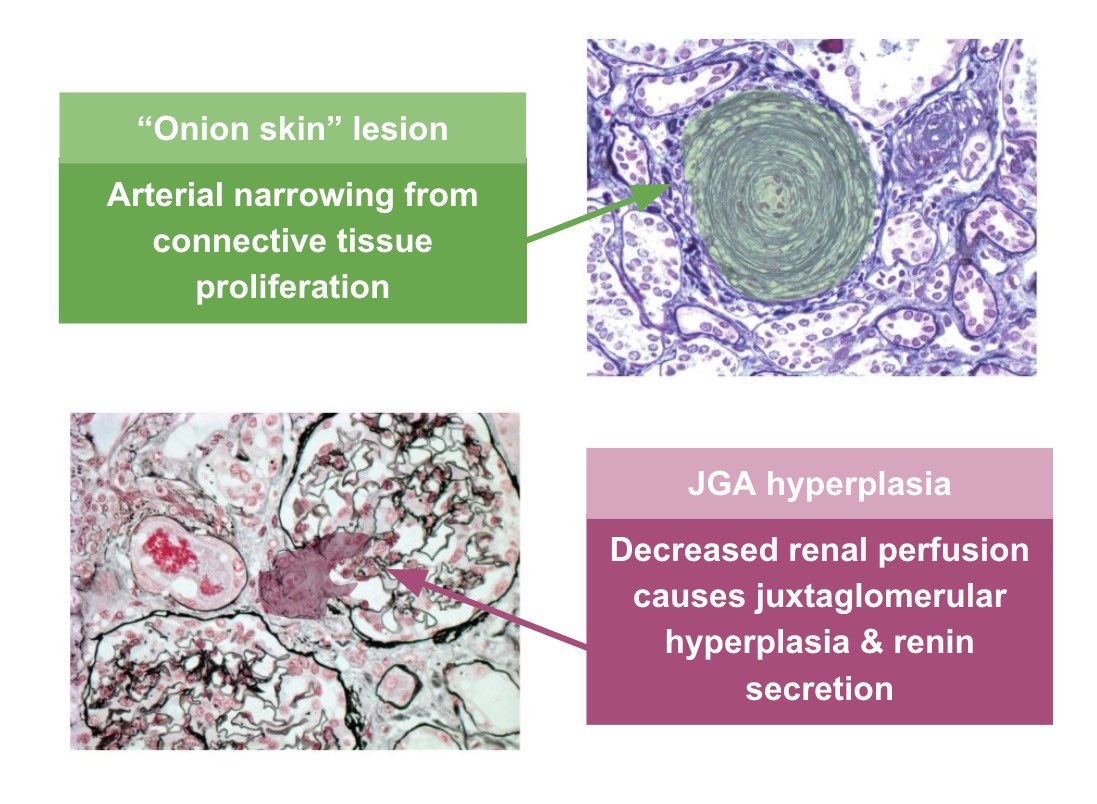
Let’s break down the clinical triad -
1️⃣ Kidney injury
- from sclerosis of glomelular arterioles
👉 decreases renal perfusion
2️⃣ Elevated blood pressure
- from decreased perfusion sensed by JGA
👉 activates RAAS
With 3️⃣ hemolysis in mind…
🧵 3/8
1️⃣ Kidney injury
- from sclerosis of glomelular arterioles
👉 decreases renal perfusion
2️⃣ Elevated blood pressure
- from decreased perfusion sensed by JGA
👉 activates RAAS
With 3️⃣ hemolysis in mind…
🧵 3/8
🔑 About 50% of SRC cases are complicated by hemolysis due to thrombotic microangiopathy (TMA)
How does scleroderma renal crisis lead to TMA? 🤔
🧵 4/8
How does scleroderma renal crisis lead to TMA? 🤔
🧵 4/8
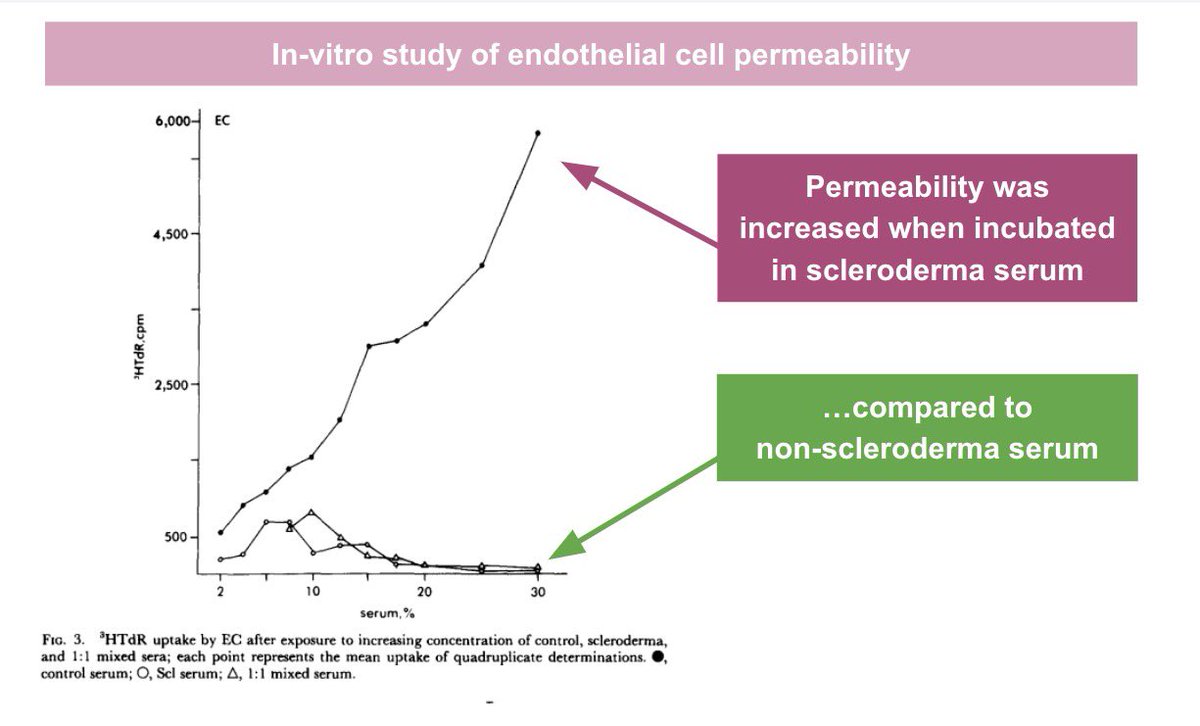
🔑 Scleroderma (and hypertension) directly causes endothelial disruption👇
This puts endothelial tissue factor in direct contact with coagulation cascade…
… leading to TMA 🤯
🧵 5/8
This puts endothelial tissue factor in direct contact with coagulation cascade…
… leading to TMA 🤯
🧵 5/8
For treatment-
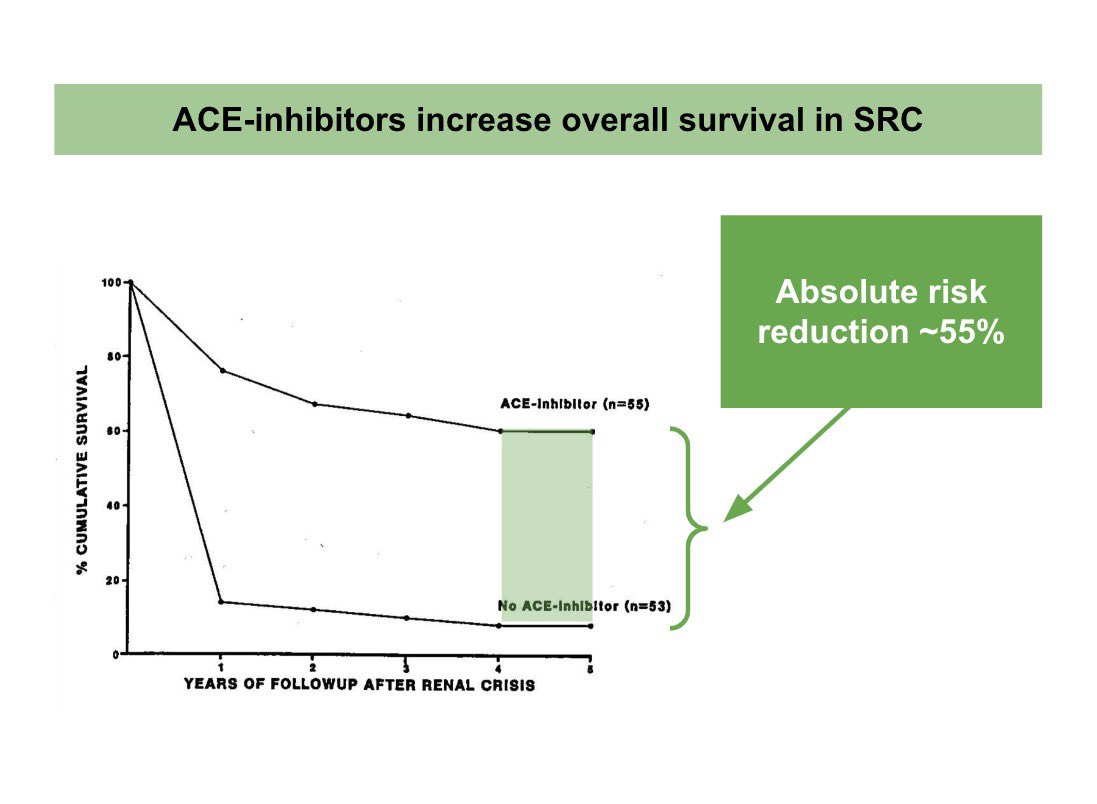
🔑 ACE inhibitors increase 5-year overall survival by ~55% 🤯
These dilate efferent glomerular arterioles, which then:
- ⬇️ glomerular pressure
- leading to ⬇️ RAAS and blood pressure
🧵 6/8
🔑 ACE inhibitors increase 5-year overall survival by ~55% 🤯
These dilate efferent glomerular arterioles, which then:
- ⬇️ glomerular pressure
- leading to ⬇️ RAAS and blood pressure
🧵 6/8
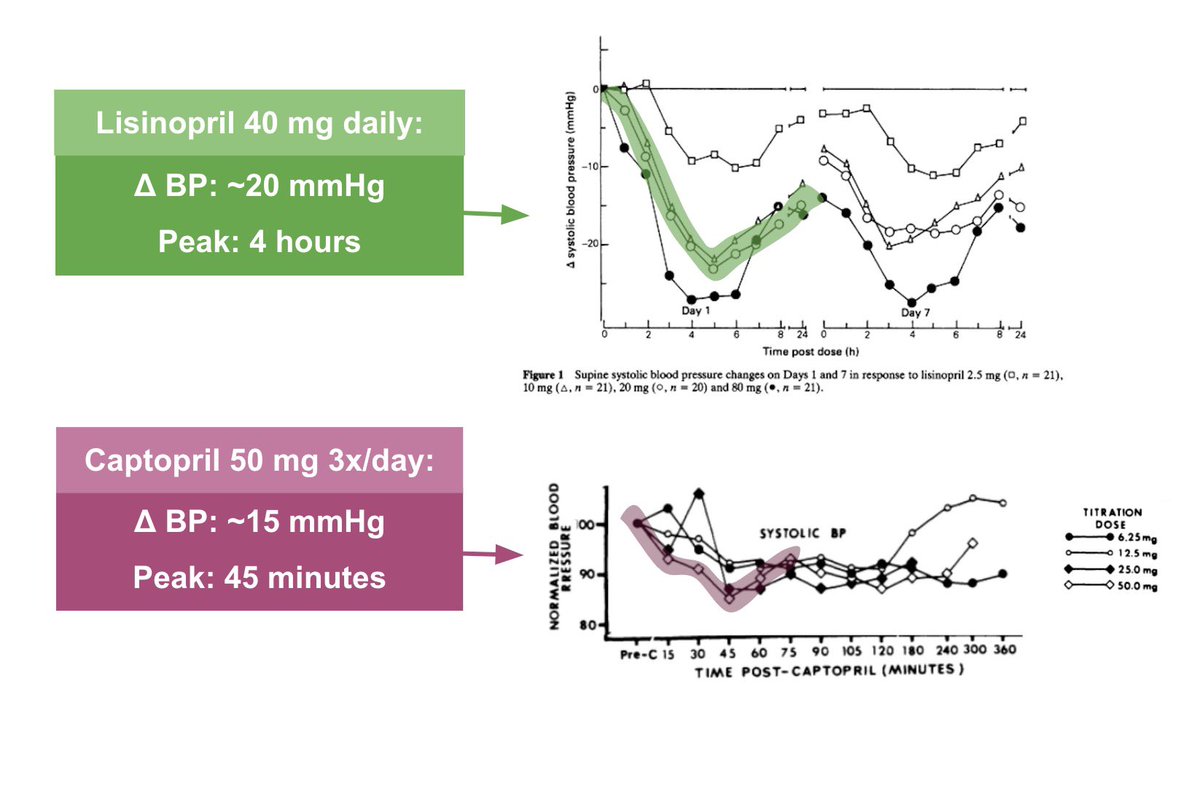
🔑 Captopril’s fast onset and short duration allows for faster titration
- Peak effect in 45 minutes
- Duration of action is 6-8 hours
Much faster than other ACE inhibitors 👇
🧵 7/8
- Peak effect in 45 minutes
- Duration of action is 6-8 hours
Much faster than other ACE inhibitors 👇
🧵 7/8
Key takeaways:
🤯 Prior to ACE inhibitor therapy, one-year mortality for SRC was 85-100%
🔑 ACE inhibitors increase 5-year overall survival by ~55%
🔑 SRC causes hemolysis by endothelial disruption 👉 TMA
🧵 8/end
🤯 Prior to ACE inhibitor therapy, one-year mortality for SRC was 85-100%
🔑 ACE inhibitors increase 5-year overall survival by ~55%
🔑 SRC causes hemolysis by endothelial disruption 👉 TMA
🧵 8/end
Thanks for sticking around- I hope we all learned something new!
Thank you to @SophieClaudel and @AshuNephro for the review 🙏
Looking forward to hearing what the experts would add!
@kidney_boy @tony_breu @Bloodman @makhan1390 @waikarss @asupadh @JoshuaPGilman @SSchneiderMD
Thank you to @SophieClaudel and @AshuNephro for the review 🙏
Looking forward to hearing what the experts would add!
@kidney_boy @tony_breu @Bloodman @makhan1390 @waikarss @asupadh @JoshuaPGilman @SSchneiderMD
For a deeper dive, here are the articles below-
pubmed.ncbi.nlm.nih.gov
pubmed.ncbi.nlm.nih.gov
pubmed.ncbi.nlm.nih.gov
pubmed.ncbi.nlm.nih.gov
pubmed.ncbi.nlm.nih.gov
pubmed.ncbi.nlm.nih.gov
and images-
clinicalconnection.hopkinsmedicine.org
imagebank.hematology.org
pubmed.ncbi.nlm.nih.gov
pubmed.ncbi.nlm.nih.gov
pubmed.ncbi.nlm.nih.gov
pubmed.ncbi.nlm.nih.gov
pubmed.ncbi.nlm.nih.gov
pubmed.ncbi.nlm.nih.gov
and images-
clinicalconnection.hopkinsmedicine.org
imagebank.hematology.org
Loading suggestions...