

When your team encounters a problem, everyone has a solution.
Unfortunately, most of them do more harm than good.
Here's a 6-step playbook to solve the right problems permanently:
Unfortunately, most of them do more harm than good.
Here's a 6-step playbook to solve the right problems permanently:
At Bridgewater (the world's largest hedge fund), we ran this process as a group. And like all managers, I was asked to lead them.
After 100s of sessions, I could see the patterns. Or hear them, actually.
You see, that's the key: intentional listening.
After 100s of sessions, I could see the patterns. Or hear them, actually.
You see, that's the key: intentional listening.
Two quick warnings:
- If you're a player in the problem, have someone else facilitate the session until your team trusts the process.
- Don't skip steps. Some will seem trivial. But ask if people agree. Often they won't, and that's your hint.
Here we go:
- If you're a player in the problem, have someone else facilitate the session until your team trusts the process.
- Don't skip steps. Some will seem trivial. But ask if people agree. Often they won't, and that's your hint.
Here we go:
1/ Name the Suboptimal Outcome(s)
Critical as everything cascades from here.
Tip: Think of your process like a car factory
- Cars missing a wheel: quality
- Cars too expensive: cost
- Too few cars: volume
- Factory workers upset: morale
Listen for: The biggest bottleneck
Critical as everything cascades from here.
Tip: Think of your process like a car factory
- Cars missing a wheel: quality
- Cars too expensive: cost
- Too few cars: volume
- Factory workers upset: morale
Listen for: The biggest bottleneck
2/ Identify the Responsible Party
Someone owns achieving that goal. And it's usually a manager or supervisor.
If you don't have the person responsible for combining people, processes & technology in the room, stop.
Listen for: Disagreement on ownership
Someone owns achieving that goal. And it's usually a manager or supervisor.
If you don't have the person responsible for combining people, processes & technology in the room, stop.
Listen for: Disagreement on ownership
3/ Describe how it should have worked
People will often tell you what happened. Don't let them.
In this stage, you want them to describe how it was designed to happen.
If they're making it up on the fly, that's your answer.
Listen for: Questionable design choices
People will often tell you what happened. Don't let them.
In this stage, you want them to describe how it was designed to happen.
If they're making it up on the fly, that's your answer.
Listen for: Questionable design choices
4/ Describe what broke
It won't be just one thing.
Big problems tend to be an accumulation of small, unresolved issues.
Or there will be overreactions to bad decisions.
Park the possibilities and use your judgment to explore the biggest.
Listen for: Delflection & Frustration
It won't be just one thing.
Big problems tend to be an accumulation of small, unresolved issues.
Or there will be overreactions to bad decisions.
Park the possibilities and use your judgment to explore the biggest.
Listen for: Delflection & Frustration
5/ Ask Why to find the root cause
They'll get right to the heart if you have a self-aware team.
For others, you'll have to nudge them along.
A few variants on Why:
- Why not?
- What were the alternatives?
- It could be A or B. Which sounds right?
Listen for: The aha moment
They'll get right to the heart if you have a self-aware team.
For others, you'll have to nudge them along.
A few variants on Why:
- Why not?
- What were the alternatives?
- It could be A or B. Which sounds right?
Listen for: The aha moment
6/ Identify the changes required to address the issue
You can change 4 things:
- Process
- Technology
- People
- Culture
You want to leave with an understanding of:
Who will do what differently by when?
Listen for: Agreement & Support
You can change 4 things:
- Process
- Technology
- People
- Culture
You want to leave with an understanding of:
Who will do what differently by when?
Listen for: Agreement & Support
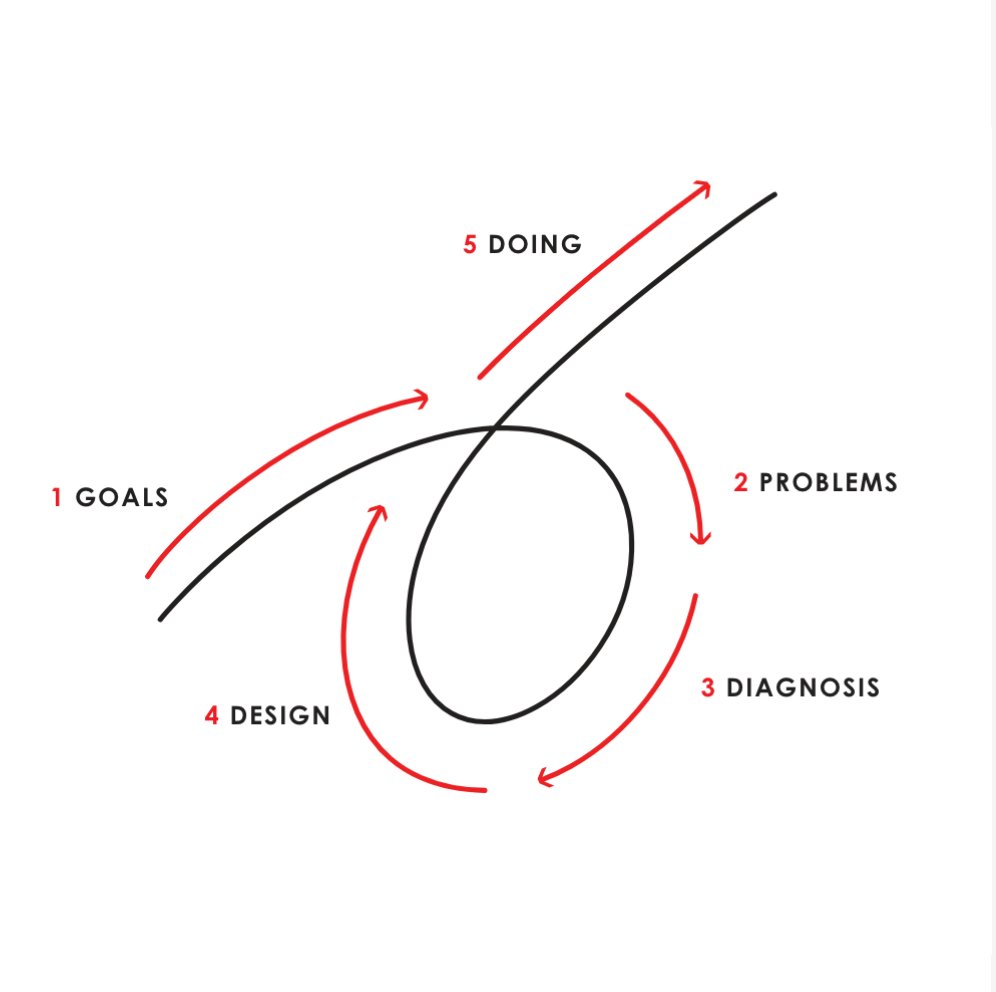
Ray Dalio credits much of his success to his 5-step evolution engine.
Why is the diagnosis stage so critical?
- It's the moment when progress stalls
- It dictates if you start compounding or repeat the issue
- Problem-solving well realigns the team; poorly leads to dysfunction
Why is the diagnosis stage so critical?
- It's the moment when progress stalls
- It dictates if you start compounding or repeat the issue
- Problem-solving well realigns the team; poorly leads to dysfunction
The most common objection to this ritual:
My company is different.
Can this process work without a culture of radical truth? 100%
You simply need 15-20 minutes and an open-minded team to get most of the value from this process.
My company is different.
Can this process work without a culture of radical truth? 100%
You simply need 15-20 minutes and an open-minded team to get most of the value from this process.
Start simple.
A shared ritual of continual improvement is what matters.
Borrow from other high-performing teams:
- Agile Development (Retrospective)
- Navy Seals (After Acton Review)
- Blue Angels (Debriefing)
- Toyota (Kaizen)
The best solutions start with the right problems.
A shared ritual of continual improvement is what matters.
Borrow from other high-performing teams:
- Agile Development (Retrospective)
- Navy Seals (After Acton Review)
- Blue Angels (Debriefing)
- Toyota (Kaizen)
The best solutions start with the right problems.
If you enjoyed this thread, please give me a follow @dklineii and RT the tweet below to share this thread with your audience.
Loading suggestions...