

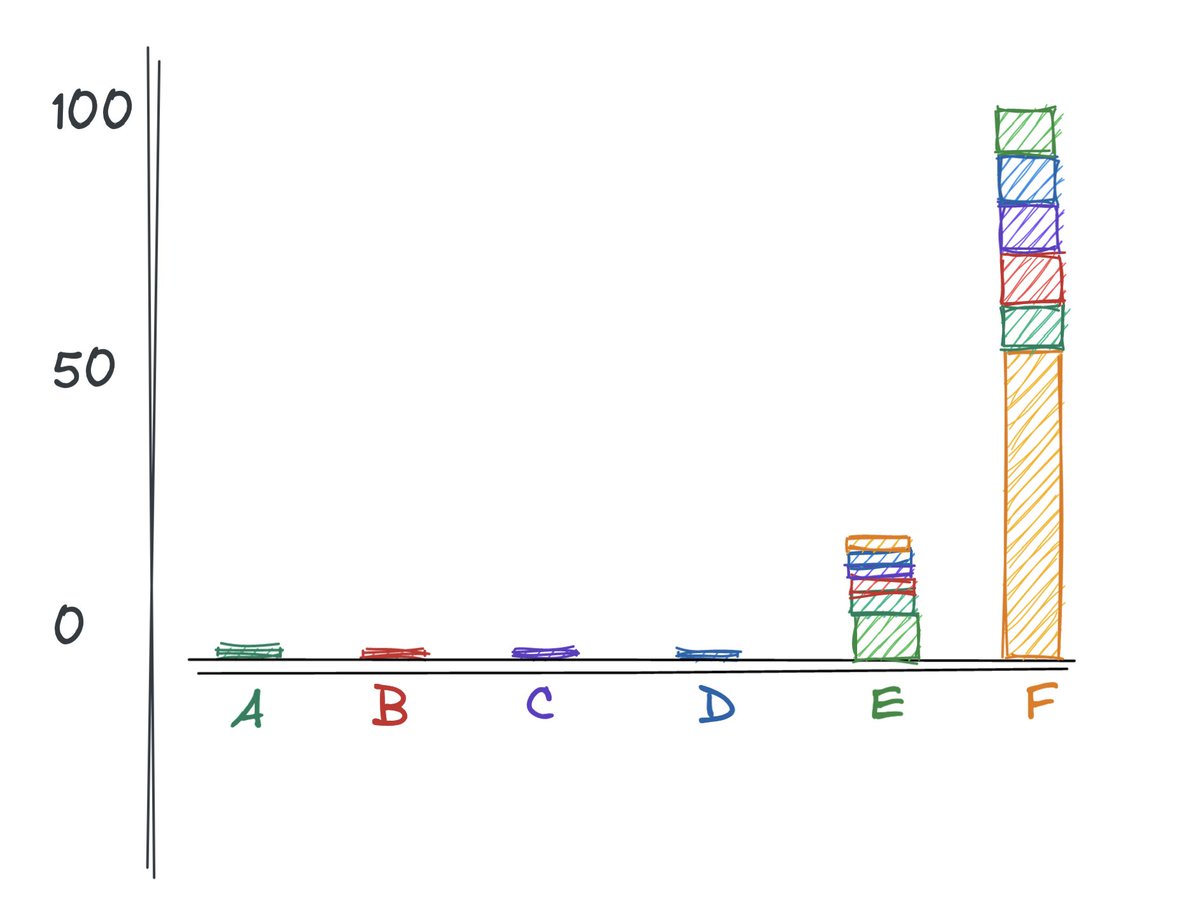
Imagine there are 6 founders, A, B, C, D, E and F.
They all invest $10M each into their own startups.
What is a very likely outcome, 5 years later is, 4 have shut down, one remains a $10M sized company, company, and one becomes a $100M sized company.
They all invest $10M each into their own startups.
What is a very likely outcome, 5 years later is, 4 have shut down, one remains a $10M sized company, company, and one becomes a $100M sized company.


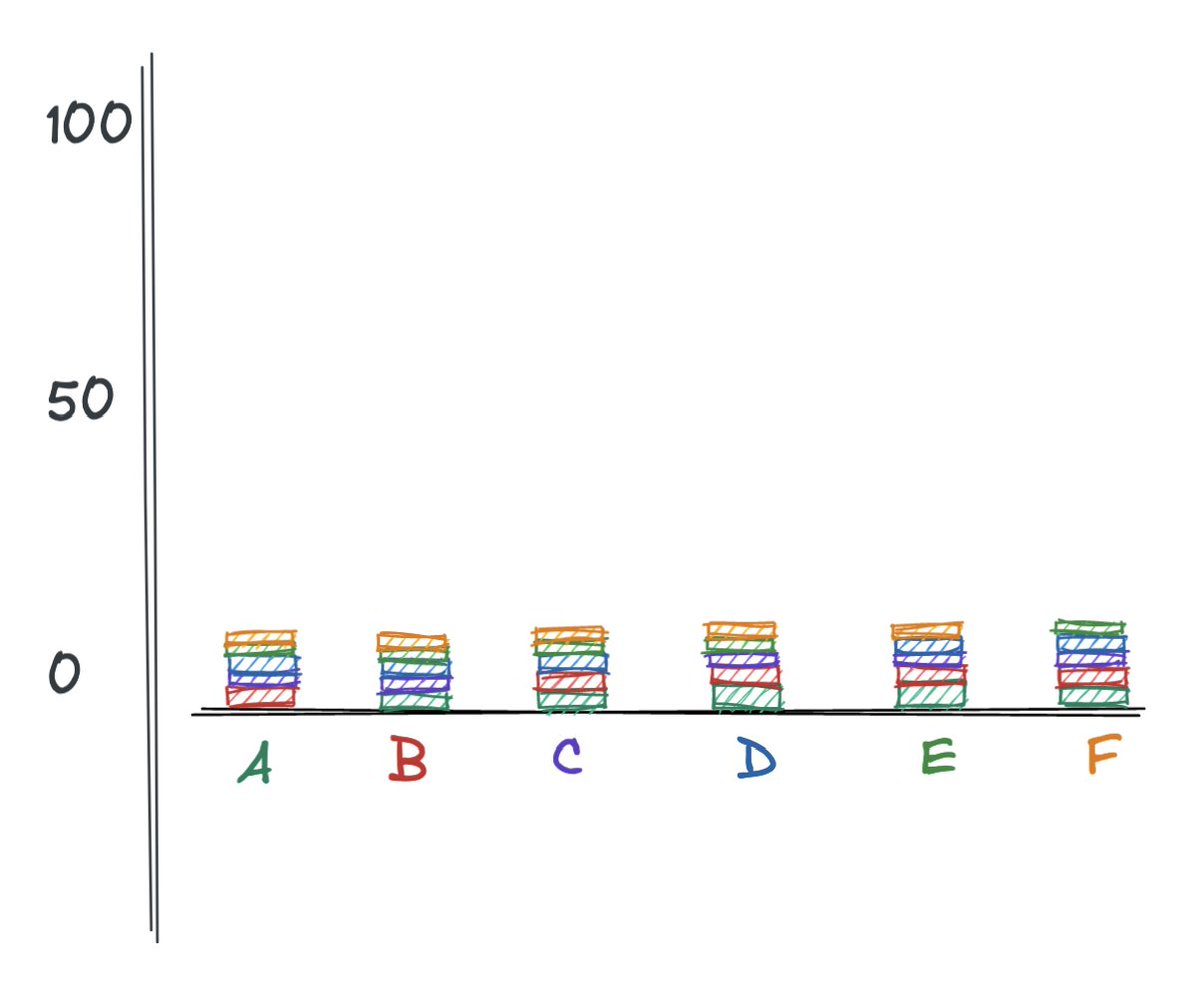
Now, what if instead of each of them investing $10M into their own companies, they all invest $5M into their own company and $1M into the other 5 companies their friends have founded.
With similar company outcomes, the final result is different now.
With similar company outcomes, the final result is different now.

5 years later, with similar success rates across startups playing out, now the net worth of the six individuals looks different 5 years later for this case
case1 case2
A $0 $11M
B $0 $11M
C $0 $11M
D $0 $11M
E $10M $15M
F $100M $51M
case1 case2
A $0 $11M
B $0 $11M
C $0 $11M
D $0 $11M
E $10M $15M
F $100M $51M
This, ladies and gentlemen, is the reason you'll see that when new startups raise seed rounds, you'll find bunch of other startup founders in the first roll-up, even though their own companies are venture funded and they have not made any profits yet.
Who ends up not making any money though, in both case 1 and case 2?
You guessed it - the early employees of companies A, B, C, D and E.
(Sure they make cash, though that's most likely much less that fair market comp, but they make $0 on their ESOPs/shares).
You guessed it - the early employees of companies A, B, C, D and E.
(Sure they make cash, though that's most likely much less that fair market comp, but they make $0 on their ESOPs/shares).
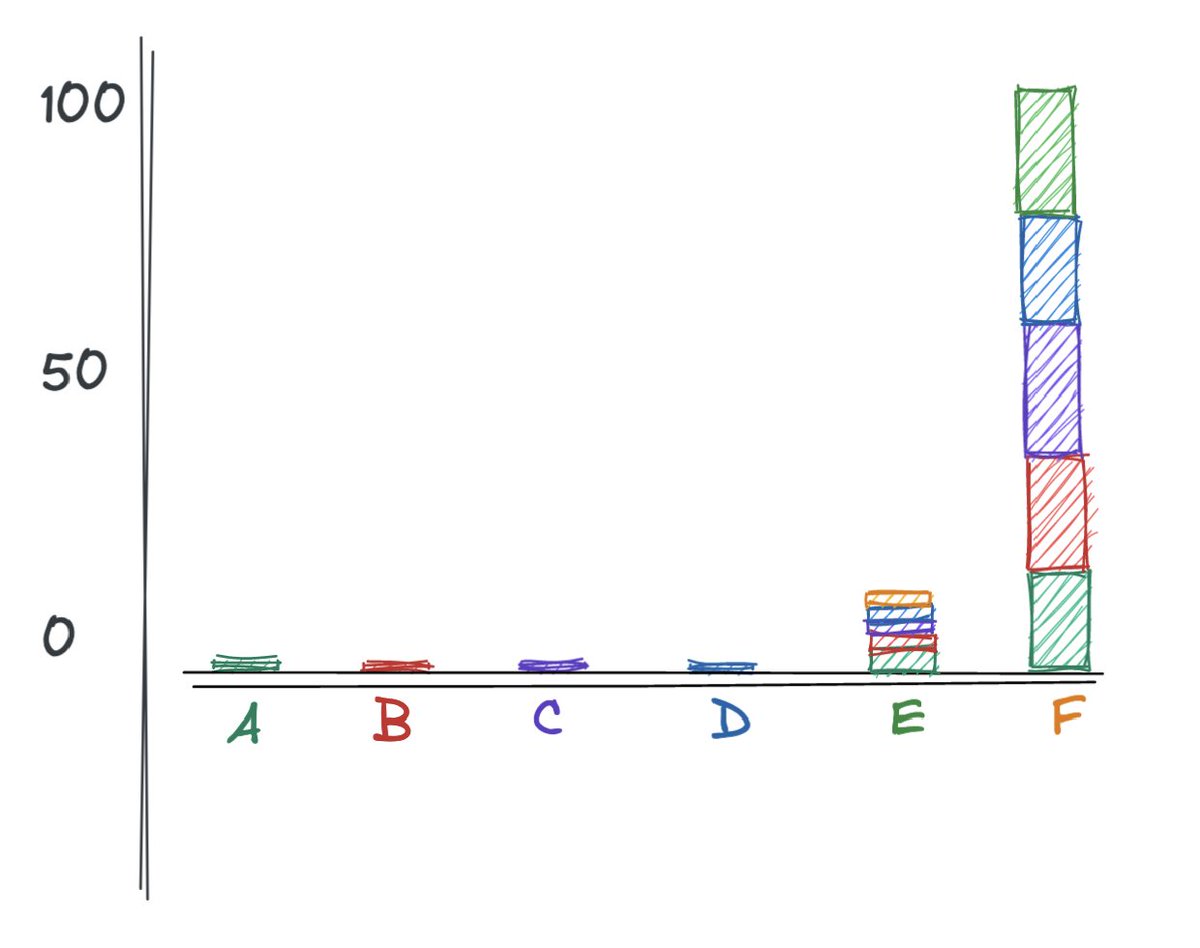
To simulate yet another scenario (just for lulz this one).
Imagine they all invest $0 in their own startup 😅, but $2M each into their friends' startups.
5 years later
A $12M
B $12M
C $12M
D $12M
E $10M
F $2M
although, E and F, only ones who didn't fail actually 😂
Imagine they all invest $0 in their own startup 😅, but $2M each into their friends' startups.
5 years later
A $12M
B $12M
C $12M
D $12M
E $10M
F $2M
although, E and F, only ones who didn't fail actually 😂
Anyway, jokes aside (that was just to point out that 0 skin in the game makes you loose out on your own success), one might ask why would E and F prefer the 'case 2' scenario even?
Well that's because, on day 0, none of them have any clue who will get to $100M and who $0.
Well that's because, on day 0, none of them have any clue who will get to $100M and who $0.
Loading suggestions...