

7 million men aged 25-54 in the USA are not working
What are they doing?
Volunteering? Worship? Care-work?
“Playing Call of Duty stoned”
They report 2000 hours a year of screen time (w/ pain meds)
This phenomenon is far less severe in Western Europe
wsj.com
What are they doing?
Volunteering? Worship? Care-work?
“Playing Call of Duty stoned”
They report 2000 hours a year of screen time (w/ pain meds)
This phenomenon is far less severe in Western Europe
wsj.com

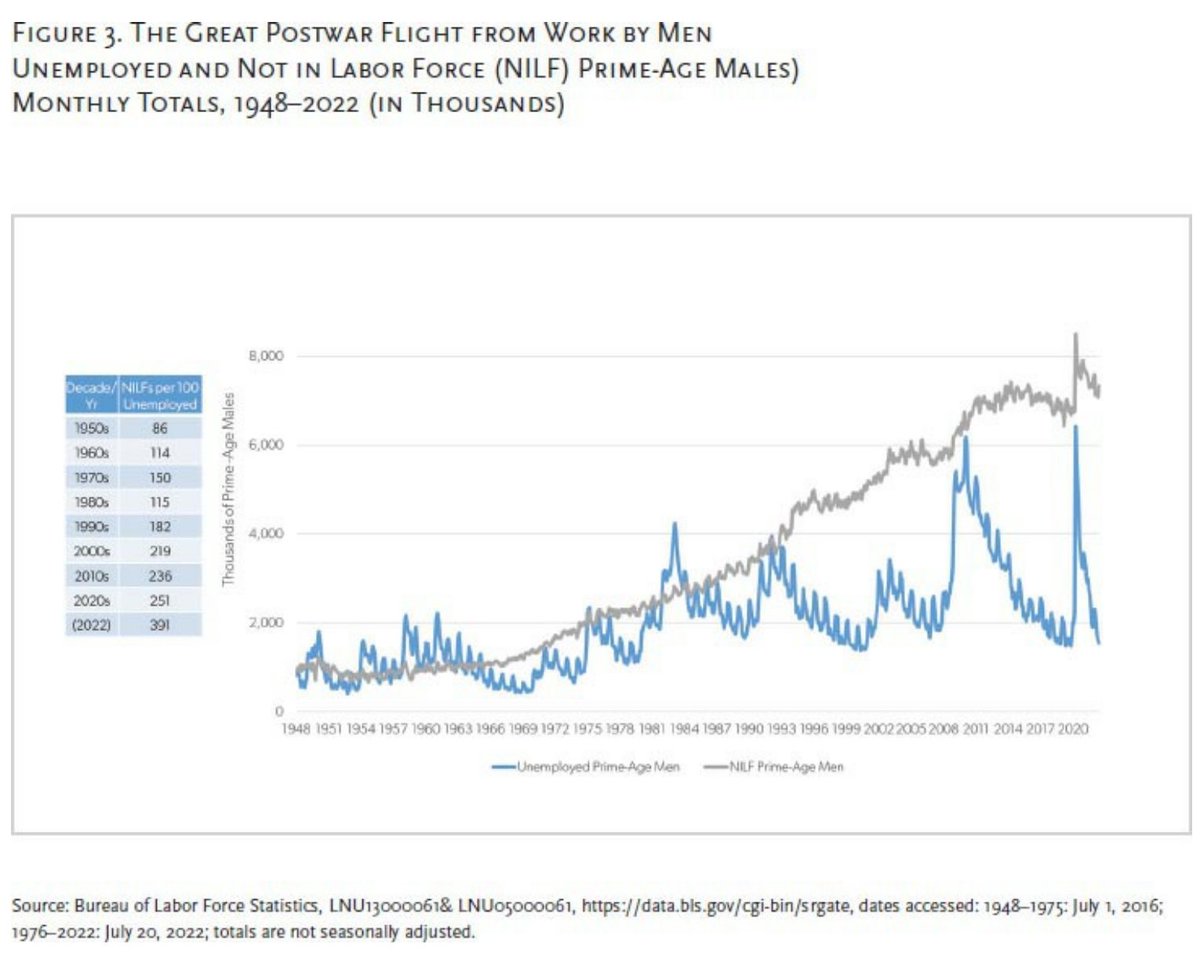
Eberstadt argues that labour supply was suppressed by pandemic insurance
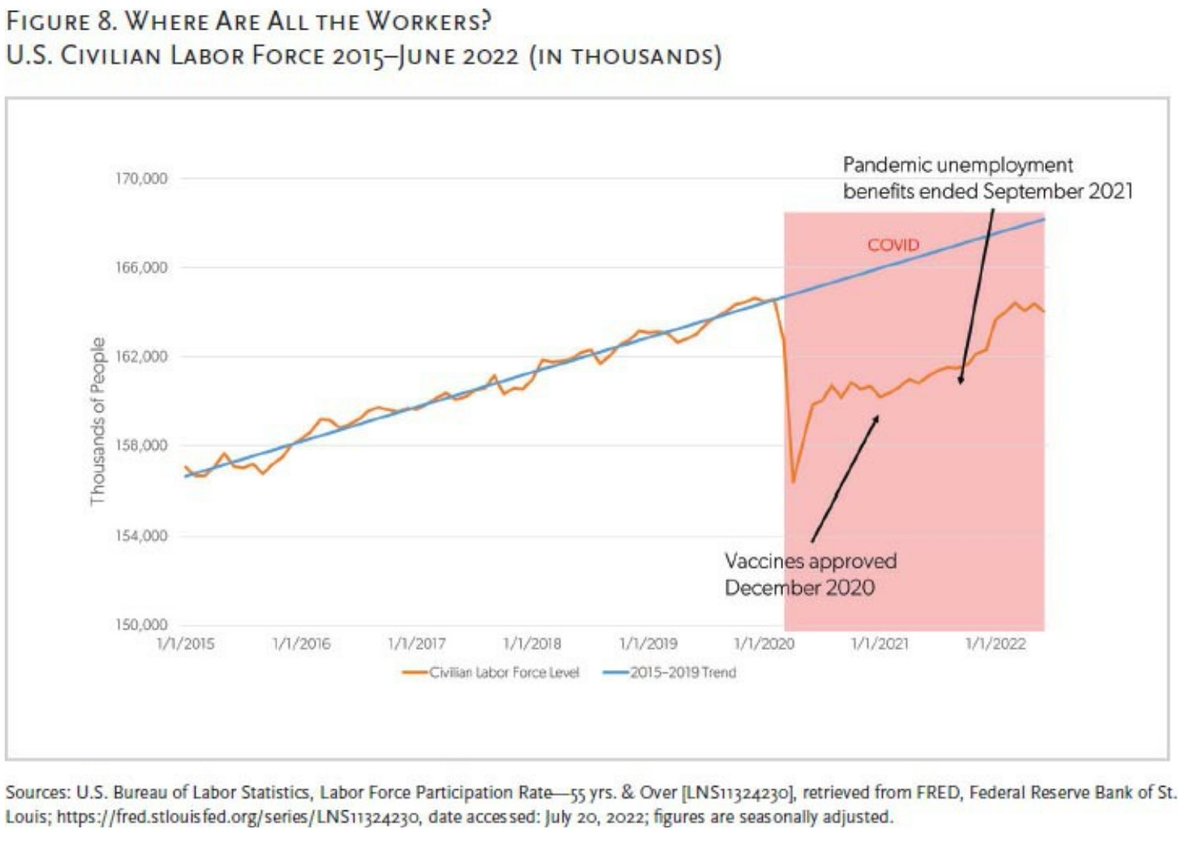
The unconditional $600 a week (and later ($300 a week) ‘unemployment’ benefit included 17 million people who were not technically unemployed
[Ofc others may think this benefited public health]
The unconditional $600 a week (and later ($300 a week) ‘unemployment’ benefit included 17 million people who were not technically unemployed
[Ofc others may think this benefited public health]

Returns to work increased when the $300-a-week pandemic unemployment benefits were shut off,
But have not returned to the 2015-19 trend
But have not returned to the 2015-19 trend
Eberstadt does not provide cross-country comparative data on pandemic unemployment insurance.
So I had a quick look.
instituteforgovernment.org.uk
So I had a quick look.
instituteforgovernment.org.uk

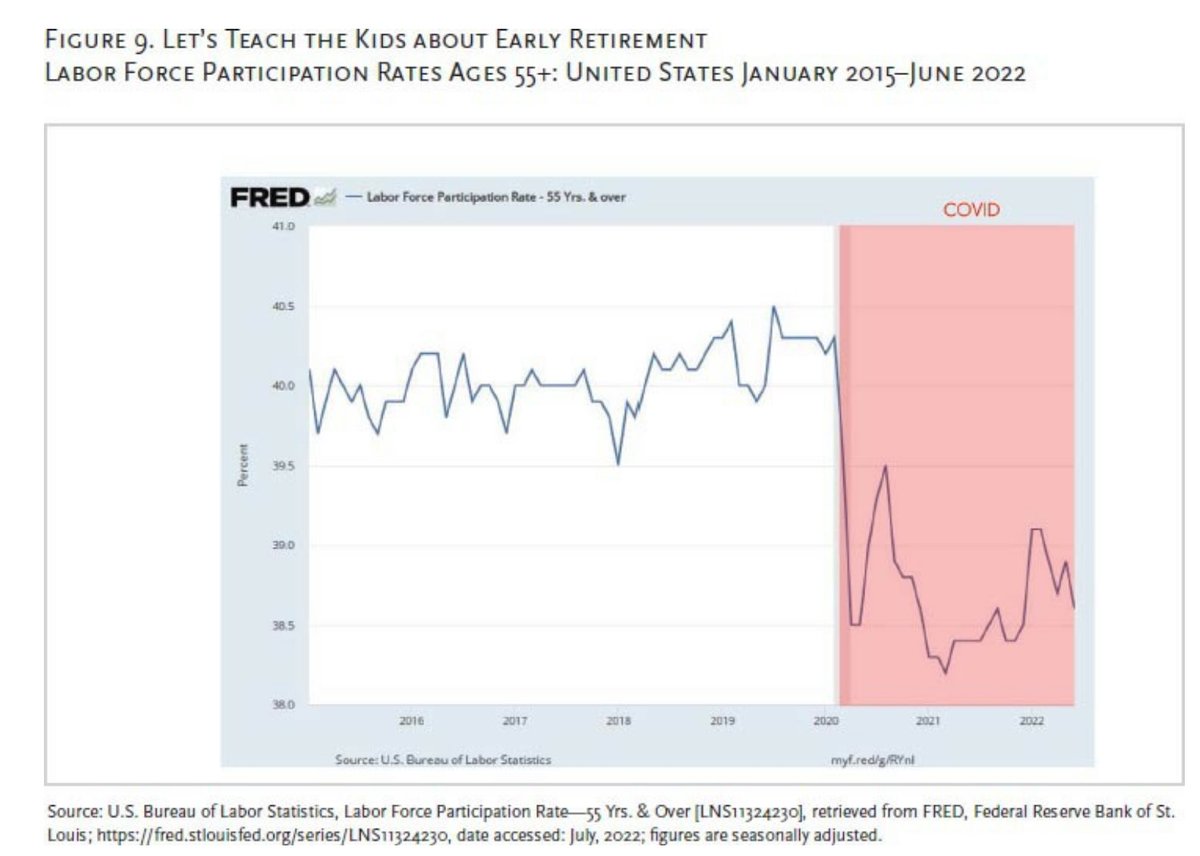
It’s older Americans (over 55) who have seriously dropped out of the labour force.
Perhaps they really enjoyed leisure and now think they can afford an early retirement.
Perhaps they really enjoyed leisure and now think they can afford an early retirement.
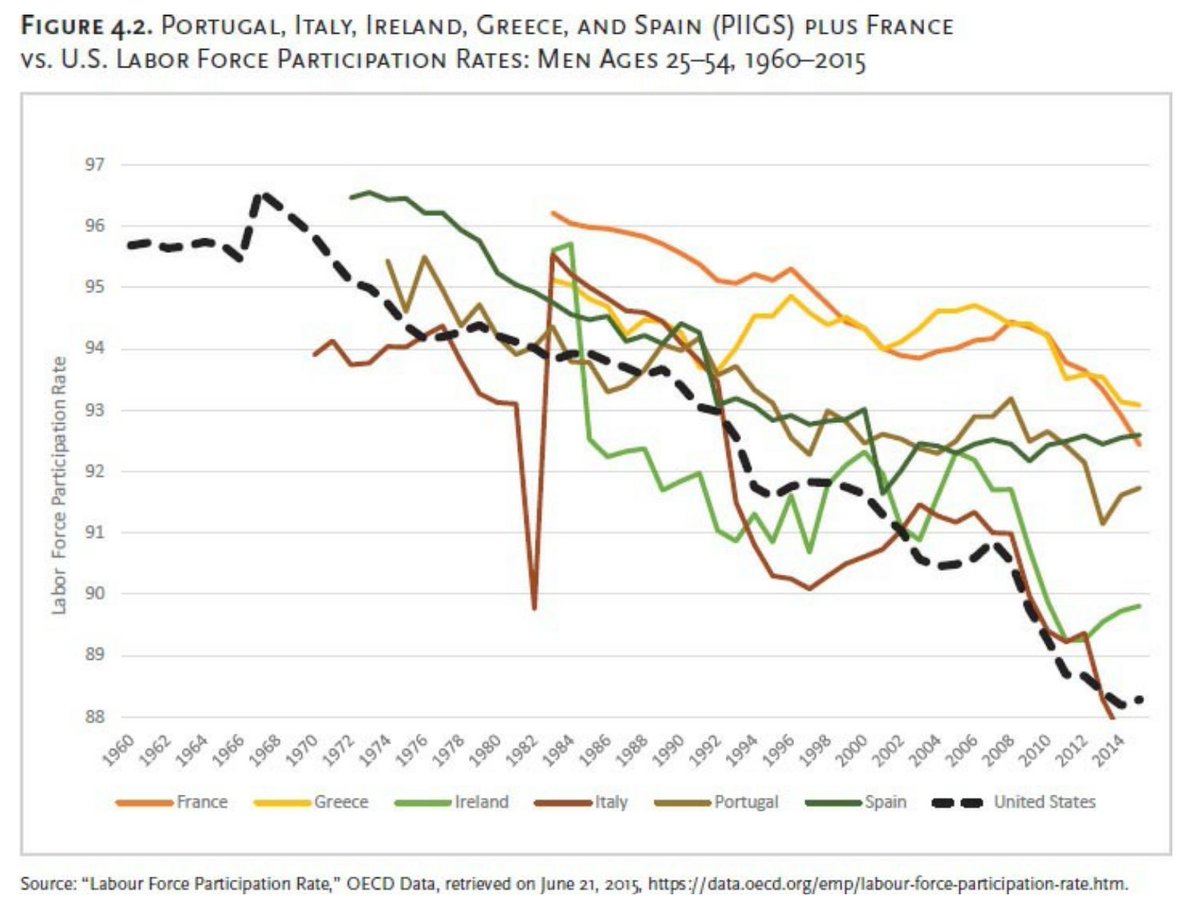
Why is the USA an outlier?
The USA had near universal labour force participation in the 1960s, but now has the lowest in the OECD
[dotted black line]
The USA had near universal labour force participation in the 1960s, but now has the lowest in the OECD
[dotted black line]

It’s a puzzle!
Compared to Western Europe, the USA has strong labour demand, a flexible labour market, and a more limited welfare state!
So why are US men staying at home???
Compared to Western Europe, the USA has strong labour demand, a flexible labour market, and a more limited welfare state!
So why are US men staying at home???
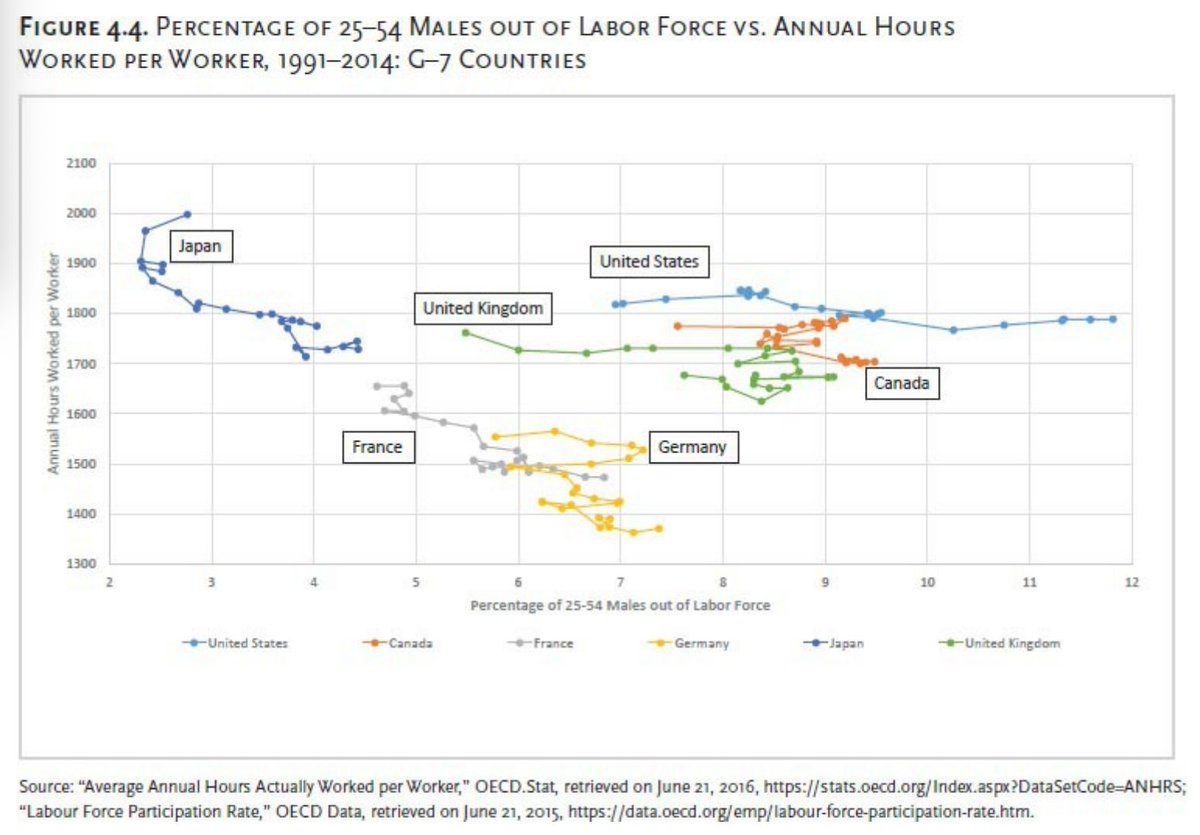
In Europe, employees spend less time on the job and this has declined over time.
In the USA, average annual hours worked per worker has remained constant. You either work long hours or not at all.
Is dropping out seen as the only way to have fun?
In the USA, average annual hours worked per worker has remained constant. You either work long hours or not at all.
Is dropping out seen as the only way to have fun?

In G-7 countries with lower annual work hours per worker, fewer men are absent from the labour force.
Eberstadt merely notes this correlation.
He does not test it causally.
Eberstadt merely notes this correlation.
He does not test it causally.
Personally,
I don’t think it’s so helpful to look at *average* annual hours per worker.
I’d like to know whether and why the specific kinds of men who have dropped out of the labour force feel that they cannot work part-time.
Why don’t they pursue European work-life balance?
I don’t think it’s so helpful to look at *average* annual hours per worker.
I’d like to know whether and why the specific kinds of men who have dropped out of the labour force feel that they cannot work part-time.
Why don’t they pursue European work-life balance?
Economists, please feel free to correct me and point to data that I’m missing.
I’d like to know why the USA is an outlier!
Eberstadt doesn’t explain it at all.
I’d like to know why the USA is an outlier!
Eberstadt doesn’t explain it at all.
Married men raising a family work more
(Regardless of their education or ethnicity)
(It’s hard to know whether non-marriage is primarily a cause or effect of non-work)
(Regardless of their education or ethnicity)
(It’s hard to know whether non-marriage is primarily a cause or effect of non-work)

If low marriage predicts non-work, you’d expect the US to have a low share of marriage.
So I just checked @OurWorldInData
US marriage rates are relatively high
But ofc we need to look at the distribution!
Is marriage low among poorer groups in Europe (as in the USA)?
So I just checked @OurWorldInData
US marriage rates are relatively high
But ofc we need to look at the distribution!
Is marriage low among poorer groups in Europe (as in the USA)?

Almost a THIRD of prime age US men not in the labour force reported taking illegal drugs (2004)
Compared to the working, married man, this is a totally different culture..
Compared to the working, married man, this is a totally different culture..

Women typically do more care work than men
Some speculate that this is because they have more free time
But even when women are employed, they do a LOT more care work than men who are not in the labour force or unemployed
Some speculate that this is because they have more free time
But even when women are employed, they do a LOT more care work than men who are not in the labour force or unemployed

UBI was a popular idea a few years ago, as championed by Andrew Yang.
Some utopian idealists claimed it would enable people to volunteer and join community associations 🌸🕊☮️
The data is pretty clear that this is NOT what jobless men choose to do!
Some utopian idealists claimed it would enable people to volunteer and join community associations 🌸🕊☮️
The data is pretty clear that this is NOT what jobless men choose to do!

Some theorise that the downturn in male work rates reflects China low demand.
But there’s a gender twist!
Female work rates are unaffected by recessions!
But there’s a gender twist!
Female work rates are unaffected by recessions!

[Based on my knowledge of the research on the USA, I think this is because marriage rates are low among working class Americans.
Couples have kids, but men leave
Women get lumbered with the responsibility, then continue to work as single mothers]
Couples have kids, but men leave
Women get lumbered with the responsibility, then continue to work as single mothers]
Forgive me for deviating from the book, but you know I’m a comparativist…
The USA has the highest rate of single-parent homes!
23%
Idk if this is a cause or effect of the USA’s exceptionally high rate of male joblessness. Also pretty high in the UK.
The USA has the highest rate of single-parent homes!
23%
Idk if this is a cause or effect of the USA’s exceptionally high rate of male joblessness. Also pretty high in the UK.

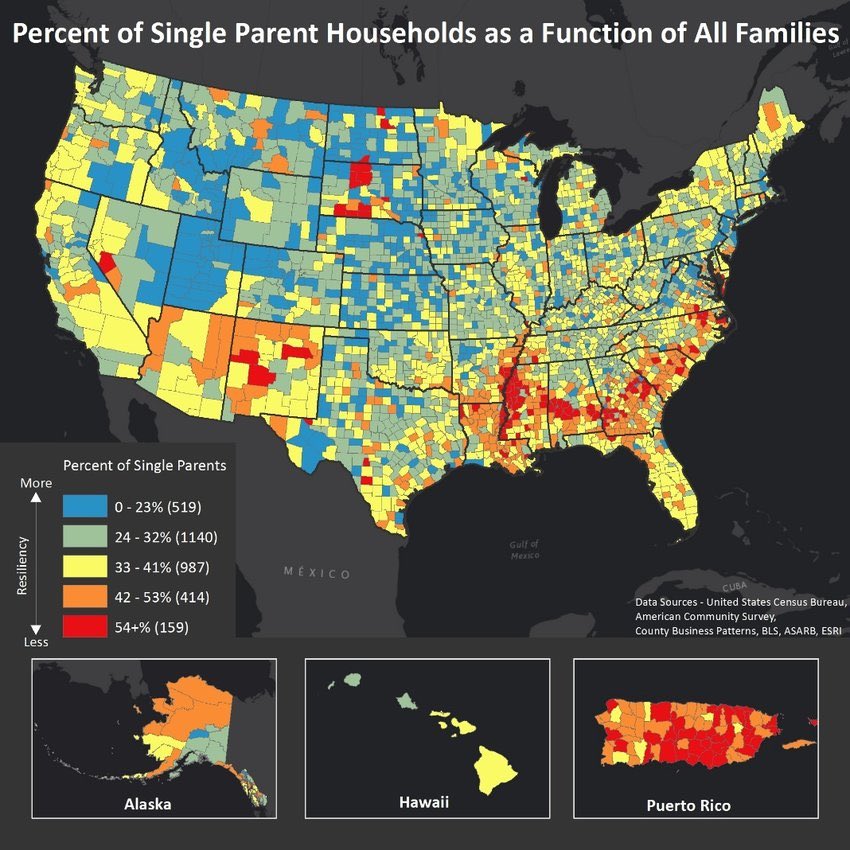
Single parent households are highest in the US South
In some counties, single parents comprise 54%+
In some counties, single parents comprise 54%+
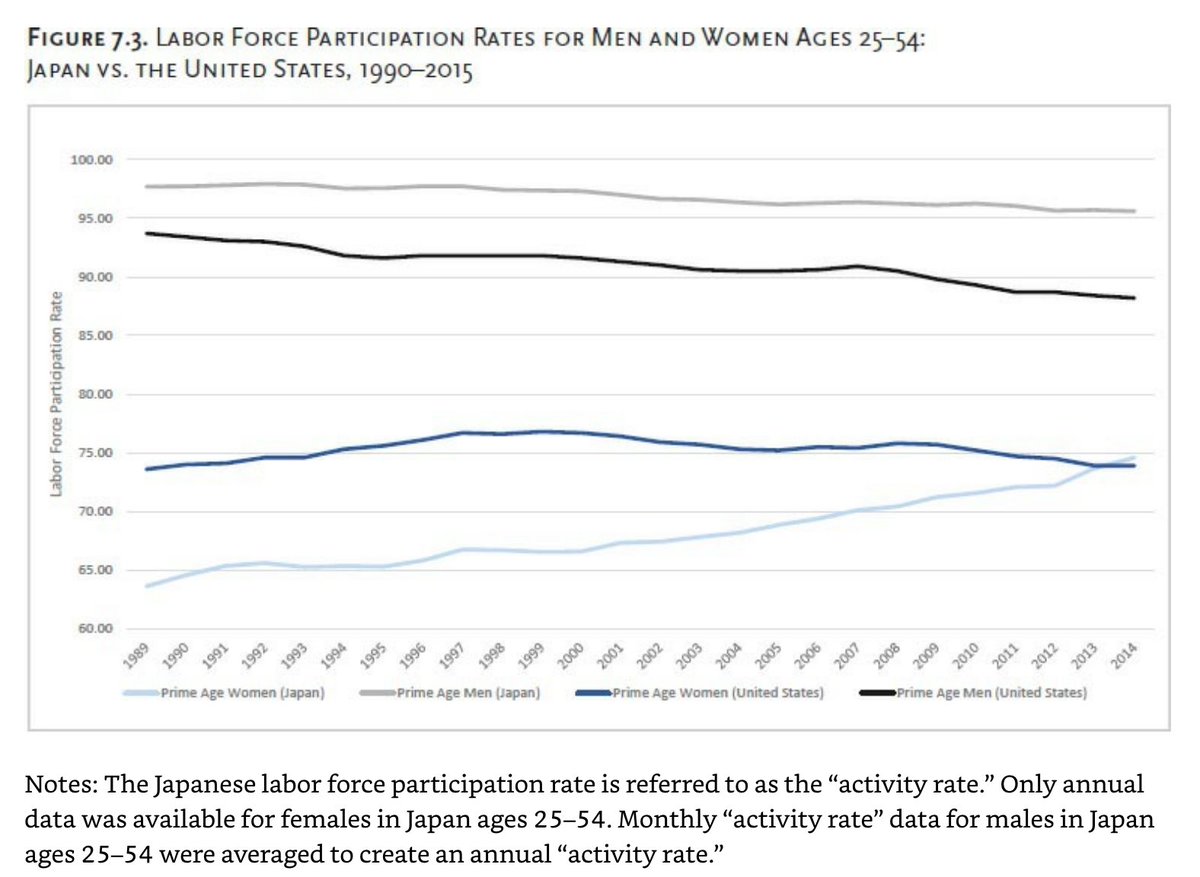
Japan has maintained high rates of male employment
Eberstadt could have added that single mothers are virtually non-existent.
Only 2.3% of children born in Japan are born to unmarried mothers.
This may help explain why Japanese men still work - to provide for their families
Eberstadt could have added that single mothers are virtually non-existent.
Only 2.3% of children born in Japan are born to unmarried mothers.
This may help explain why Japanese men still work - to provide for their families
[This book is GREAT but I find it sliiiiightly surprising that there are sooo many obvious connections to gender that are omitted!
Yo! Economists of male employment! Talk to gender scholars! They might know useful things! 😛]
Yo! Economists of male employment! Talk to gender scholars! They might know useful things! 😛]
Does male joblessness reflect supply or demand?
That’s the main question.
Eberstadt is pretty sure it’s a cultural aversion to work,
As indicated by native men’s far lower and falling LFP
That’s the main question.
Eberstadt is pretty sure it’s a cultural aversion to work,
As indicated by native men’s far lower and falling LFP

Segue:
I strongly recommend “Promises I Can Keep: Why Poor Women Put Motherhood Before Marriage”
It’s about why working class women want kids and would rather raise them alone than tolerate abusive/ disrespectful/ unkind/ non-committed fathers.
I strongly recommend “Promises I Can Keep: Why Poor Women Put Motherhood Before Marriage”
It’s about why working class women want kids and would rather raise them alone than tolerate abusive/ disrespectful/ unkind/ non-committed fathers.

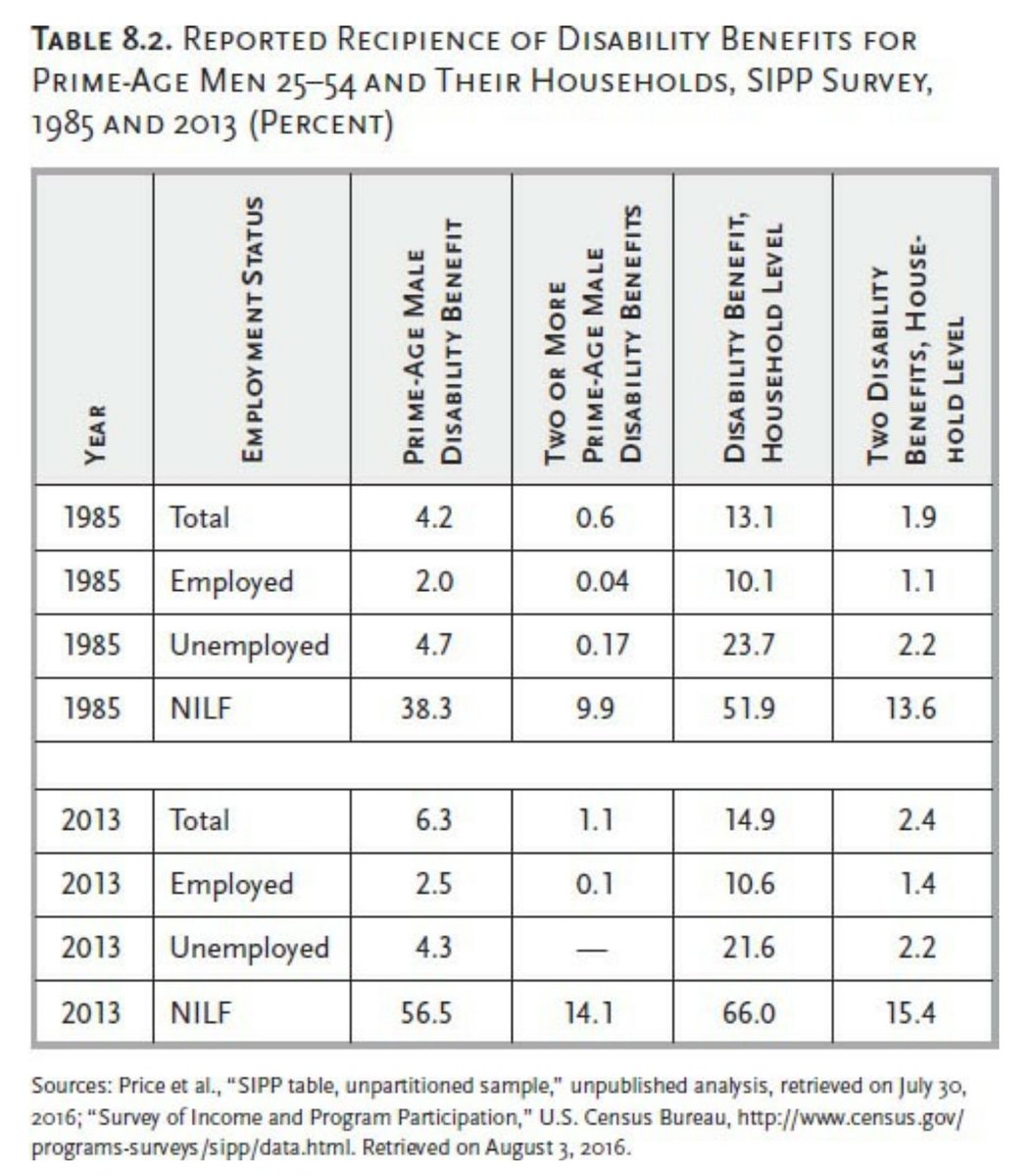
Eberstadt argues that US men’s cultural aversion to work partly has been facilitated by growing social insurance, including disability benefits
57% of US men not in the labour force receive disability benefits.
57% of US men not in the labour force receive disability benefits.

What’s going on?
Has there been an actual increase in US male disability?
Are disability payments stingier or narrower elsewhere in the OECD?
Quick check: the USA does not have an unusually high percentage of disability benefit recipients
Has there been an actual increase in US male disability?
Are disability payments stingier or narrower elsewhere in the OECD?
Quick check: the USA does not have an unusually high percentage of disability benefit recipients
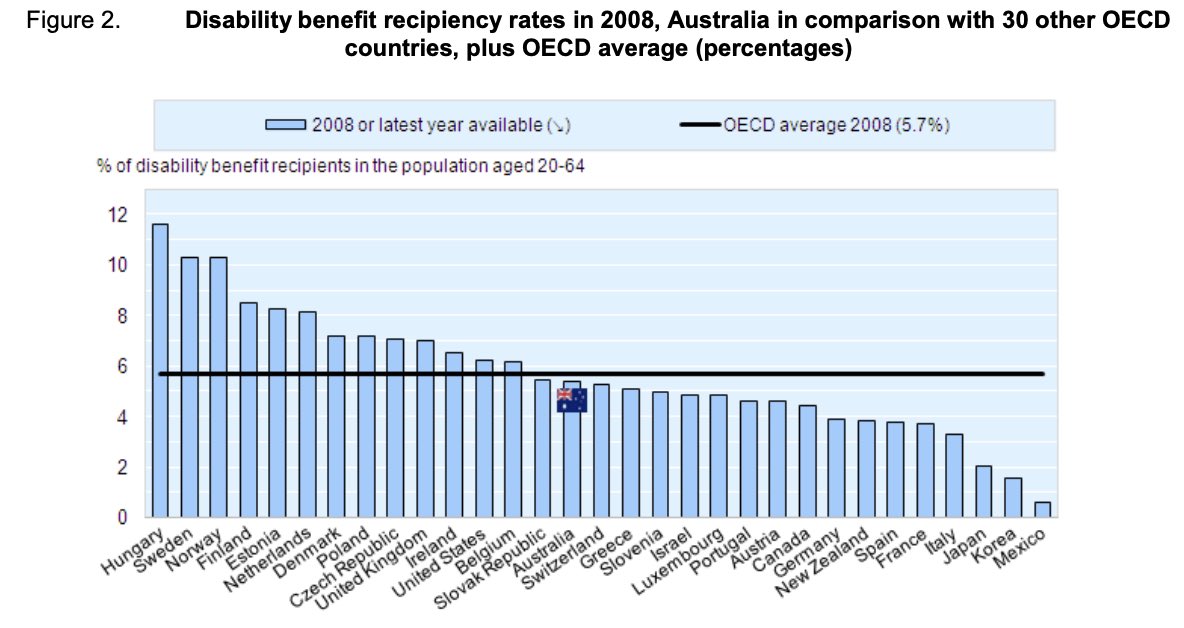
When I look at OECD data on unemployment benefits, the USA does not seem unusually generous.
#indicator-chart" target="_blank" rel="noopener" onclick="event.stopPropagation()">data.oecd.org
Maybe Eberstadt would say there’s a difference in definitions or scope.
But this should be discussed!!
#indicator-chart" target="_blank" rel="noopener" onclick="event.stopPropagation()">data.oecd.org
Maybe Eberstadt would say there’s a difference in definitions or scope.
But this should be discussed!!

Methodological meta-point:
I wish scholars of the USA would test their hypotheses through comparative research with the OECD!
You say it’s a problem of social insurance, well then compare & contrast!
To quote Fukuyama,
“He who only knows one country knows none”
I wish scholars of the USA would test their hypotheses through comparative research with the OECD!
You say it’s a problem of social insurance, well then compare & contrast!
To quote Fukuyama,
“He who only knows one country knows none”

In evaluating disability payments, Eberstadt says
Dont just include SSDI (the Social Security Disability Insurance), which in 2014 had 10m beneficiaries
Also:
Supplemental Security Insurance: 8m claimants
Veterans: 3.5m claimants
He thinks there are more.
Dont just include SSDI (the Social Security Disability Insurance), which in 2014 had 10m beneficiaries
Also:
Supplemental Security Insurance: 8m claimants
Veterans: 3.5m claimants
He thinks there are more.
To show that social security deters labour force participation, Eberstadt compares California and Texas.
Hispanic immigrants in California can more easily obtain welfare payments.
Their labour force participation is also lower in California
Hispanic immigrants in California can more easily obtain welfare payments.
Their labour force participation is also lower in California

Surely the obvious label for non-working US men is
“Gaming Alone”
😜
“Gaming Alone”
😜
37% of jobless men are unmarried
But they’re not the poorest of the poor.
They’re much better off than single mothers.
They live with friends and relatives who help them get by.
But they’re not the poorest of the poor.
They’re much better off than single mothers.
They live with friends and relatives who help them get by.

That’s another gender element to this puzzle!
Eberstadt says US welfare is too generous
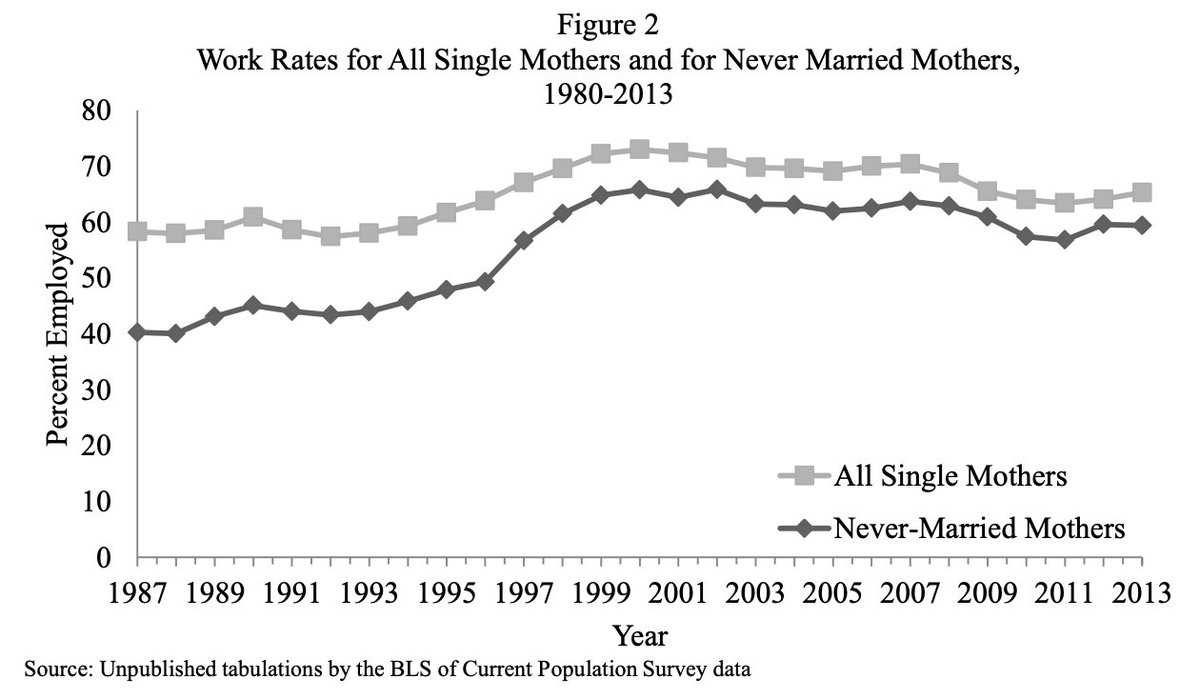
But how come single mothers’s LFP is so high?
Many are poor, get benefits, struggle to juggle care, yet continue to work at high rates.
Does it reflect benefit stinginess or what?
Eberstadt says US welfare is too generous
But how come single mothers’s LFP is so high?
Many are poor, get benefits, struggle to juggle care, yet continue to work at high rates.
Does it reflect benefit stinginess or what?
“Having a criminal record is a key missing piece in explaining why work rates and LFPRs have collapsed much more dramatically in America than other affluent Western societies”
- Eberstadt
[NB. his chapter on criminality provides zero data on other countries]
- Eberstadt
[NB. his chapter on criminality provides zero data on other countries]
4 reasons to think incarcerations are to blame for blame joblessness:
1) The US has an unusually large population of ex/current felons (16m in 2004)
2) States with more felons have higher male joblessness
1) The US has an unusually large population of ex/current felons (16m in 2004)
2) States with more felons have higher male joblessness

3) The probability of incarceration has massively increased
[Coinciding with rising male joblessness]
[Coinciding with rising male joblessness]

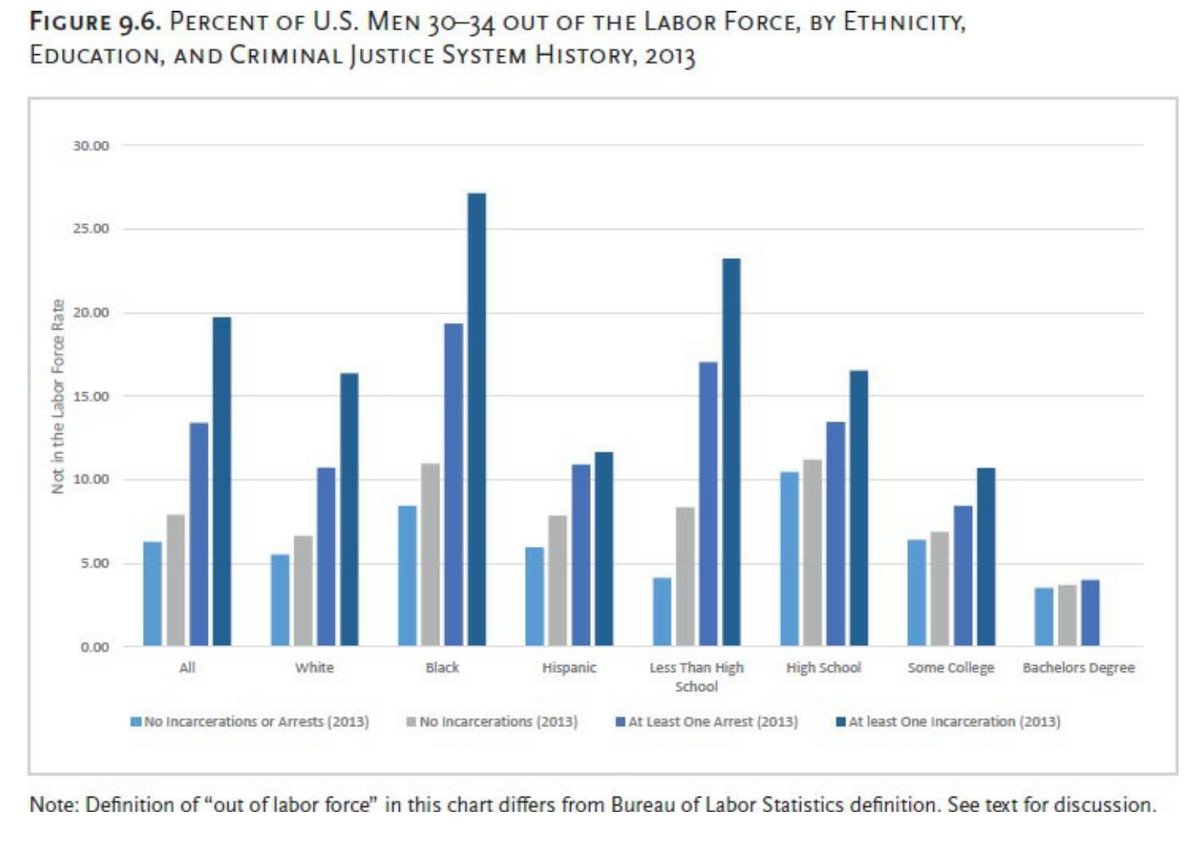
4a) Men with one or more incarceration are highly likely to be out of the labour force.

4b) Men with one or more incarceration are highly likely to be out of the labour force.
This holds for every ethnicity and educational background.
This holds for every ethnicity and educational background.
If rising convictions are a major cause of jobless, unmarried men,
I would be curious to know how this strong push for “law and order” relates to the legacy of slavery and Jim Crow.
Paging @AlthoffLukas
What’s the geography of this trend?
I would be curious to know how this strong push for “law and order” relates to the legacy of slavery and Jim Crow.
Paging @AlthoffLukas
What’s the geography of this trend?


So if incarcerations are the big exogenous shock, affecting both marriages and joblessness,
I wonder if there’s subnational heterogeneity in incarcerations and the background historical political economy of those subnational differences?
Rid me of my ignorance if you know!
I wonder if there’s subnational heterogeneity in incarcerations and the background historical political economy of those subnational differences?
Rid me of my ignorance if you know!
64% OF UNEMPLOYED MEN HAVE BEEN ARRESTED
46% HAVE BEEN CONVICTED
Over time, there is also a negative correlation between rising criminal convictions and falling male labour force participation
ncbi.nlm.nih.gov Bushway et al (2022)
46% HAVE BEEN CONVICTED
Over time, there is also a negative correlation between rising criminal convictions and falling male labour force participation
ncbi.nlm.nih.gov Bushway et al (2022)


Now, is male joblessness really a problem?
Eberstadt notes:
- slower economic growth
- welfare dependence, budgetary pressures
- family breakdown
- very high poverty among children of single mothers
- social disengagement (or as I call it “Gaming Alone”)
Eberstadt notes:
- slower economic growth
- welfare dependence, budgetary pressures
- family breakdown
- very high poverty among children of single mothers
- social disengagement (or as I call it “Gaming Alone”)
What’s the solution?
First, I think we need a better, more comparative diagnosis of the problem!
I want to understand heterogeneity within the USA, the underlying political economy, and cross-country comparisons!
Those seem like big important unanswered questions to me!
😀
First, I think we need a better, more comparative diagnosis of the problem!
I want to understand heterogeneity within the USA, the underlying political economy, and cross-country comparisons!
Those seem like big important unanswered questions to me!
😀
Anyway!
Eberstadt suggests 3 solutions:
1) supporting business creation for job creation
2) a “work first” principle of social welfare
3) better re-entry policies for ex-felons
Eberstadt suggests 3 solutions:
1) supporting business creation for job creation
2) a “work first” principle of social welfare
3) better re-entry policies for ex-felons
Sounds sensible!
Though I think this still omits many potential causes of jobless
1) By Eberstadt’s own data, there’s a X-country correlation between working hours & LFP.
Why isn’t a work-life balance possible in the USA?
Does it relate to health insurance?
Though I think this still omits many potential causes of jobless
1) By Eberstadt’s own data, there’s a X-country correlation between working hours & LFP.
Why isn’t a work-life balance possible in the USA?
Does it relate to health insurance?
(3) Better re-entry policies for ex-felons are of course valuable.
But that omits what he himself identifies as the underlying exogenous shock: rising incarcerations.
So I’d want to better understand its background historical political economy and subnational heterogeneity.
But that omits what he himself identifies as the underlying exogenous shock: rising incarcerations.
So I’d want to better understand its background historical political economy and subnational heterogeneity.
We really need a test of all these competing hypotheses..
As done by @kearney_melissa & @kgahome!
Contra Eberstardt, they emphasise LABOUR DEMAND
Less weight to SSDI & incarceration
nber.org
As done by @kearney_melissa & @kgahome!
Contra Eberstardt, they emphasise LABOUR DEMAND
Less weight to SSDI & incarceration
nber.org

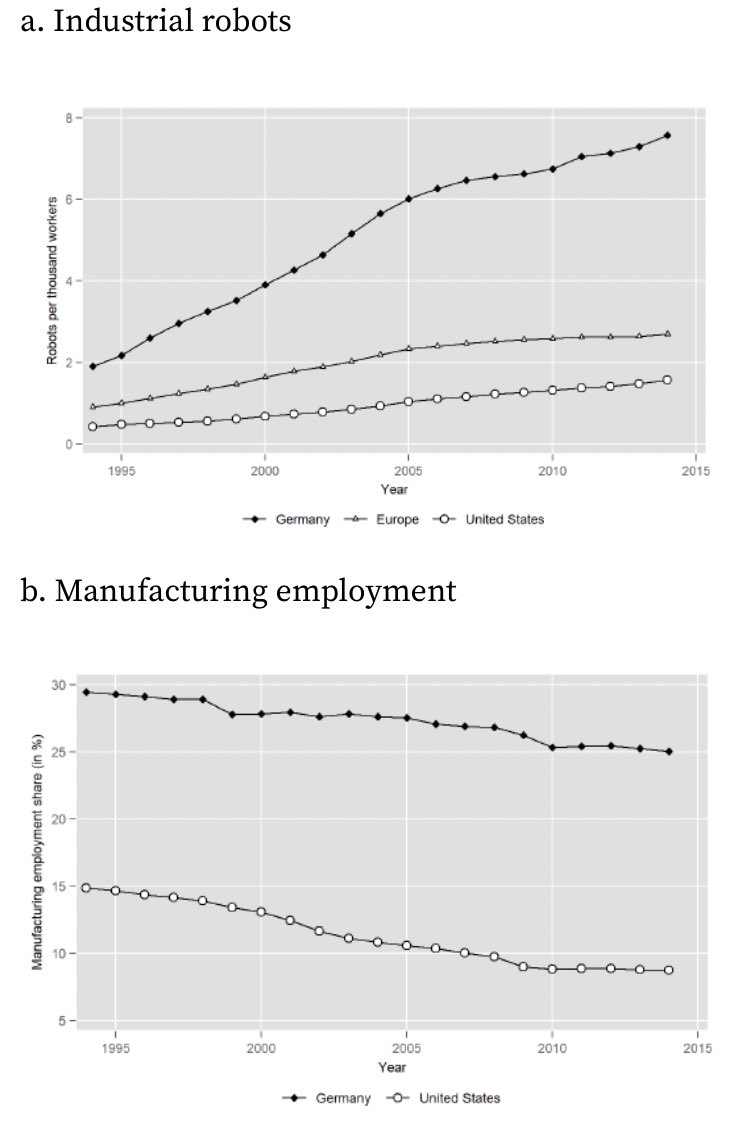
“When Work Disappears” by @davidautor @ProfDavidDorn & @gordon_h_hanson provides strong evidence for this emphasis on labour demand:
Trade shocks reduce young adult males’ employment and earnings.
This leads to more unwed mothers and children in poor single parent families.
Trade shocks reduce young adult males’ employment and earnings.
This leads to more unwed mothers and children in poor single parent families.

“The Impact of Economic Conditions on Participation in Disability Programs” shows that when labour demand is high, participation in disability programs falls.
This is consistent with an emphasis on labour demand.
This is consistent with an emphasis on labour demand.

Germany’s unemployment system also has different design.
🇩🇪’s “Kurzarbeit” pays businesses to retain employees. Workers also agreed to reduce their hours
Whereas in 🇺🇸 , many workers were simply cut loose
propublica.org
🇩🇪’s “Kurzarbeit” pays businesses to retain employees. Workers also agreed to reduce their hours
Whereas in 🇺🇸 , many workers were simply cut loose
propublica.org

Loading suggestions...