

Fusion – There have been some major announcements recently so it’s worth clarifying what has actually been achieved. 🧵
Quick recap: fusion is the energy source powering stars. It’s virtually limitless, non-polluting, and its development is a likely prerequisite for humanity to venture out far beyond our earthly cradle. Harnessing fusion will usher in a new age of technological development.
For the past 70 yrs, scientists have been making important fusion advances yet commercial fusion power still remains a ways away.
But contrary to popular belief, fusion isn’t that hard to achieve. In fact, you can DIY a fusion reactor (‘fusor’) in your basement for under $1,000.
But contrary to popular belief, fusion isn’t that hard to achieve. In fact, you can DIY a fusion reactor (‘fusor’) in your basement for under $1,000.
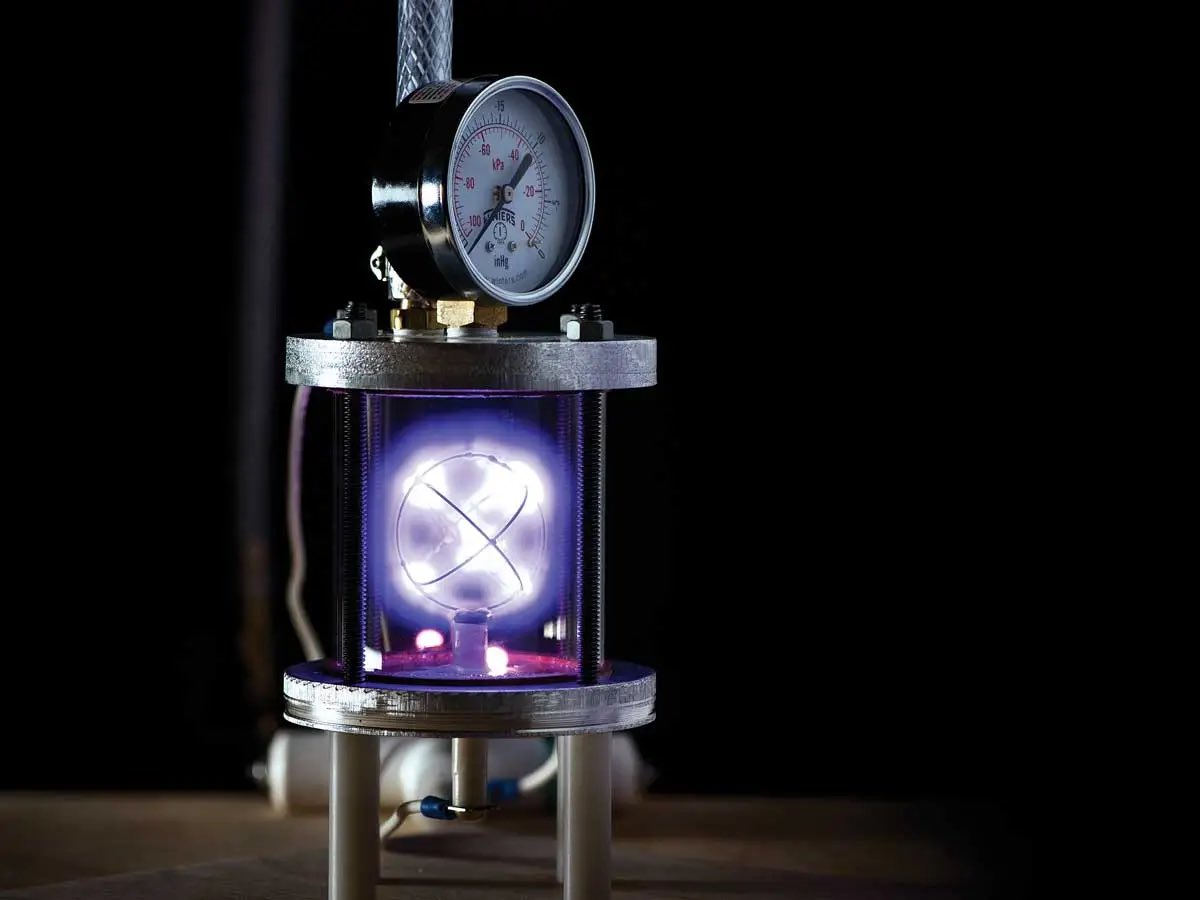

The challenge is not simply creating fusion, it’s initiating and sustaining a fusion reaction that yields more energy than the reaction requires. And ideally *a lot* more to be commercially viable.
Doing this is hard because nuclei will not fuse unless they’re forced close enough together to overcome their mutual repulsion. The sun does this easily through its immense gravity, which creates an ultra hot dense core where fusion is sustained for billions of years.

But on earth, we can’t meaningfully manipulate gravity, and so have to force nuclei together in more creative ways. Currently, there are several different approaches to solving this highly complex problem that are being developed in parallel.
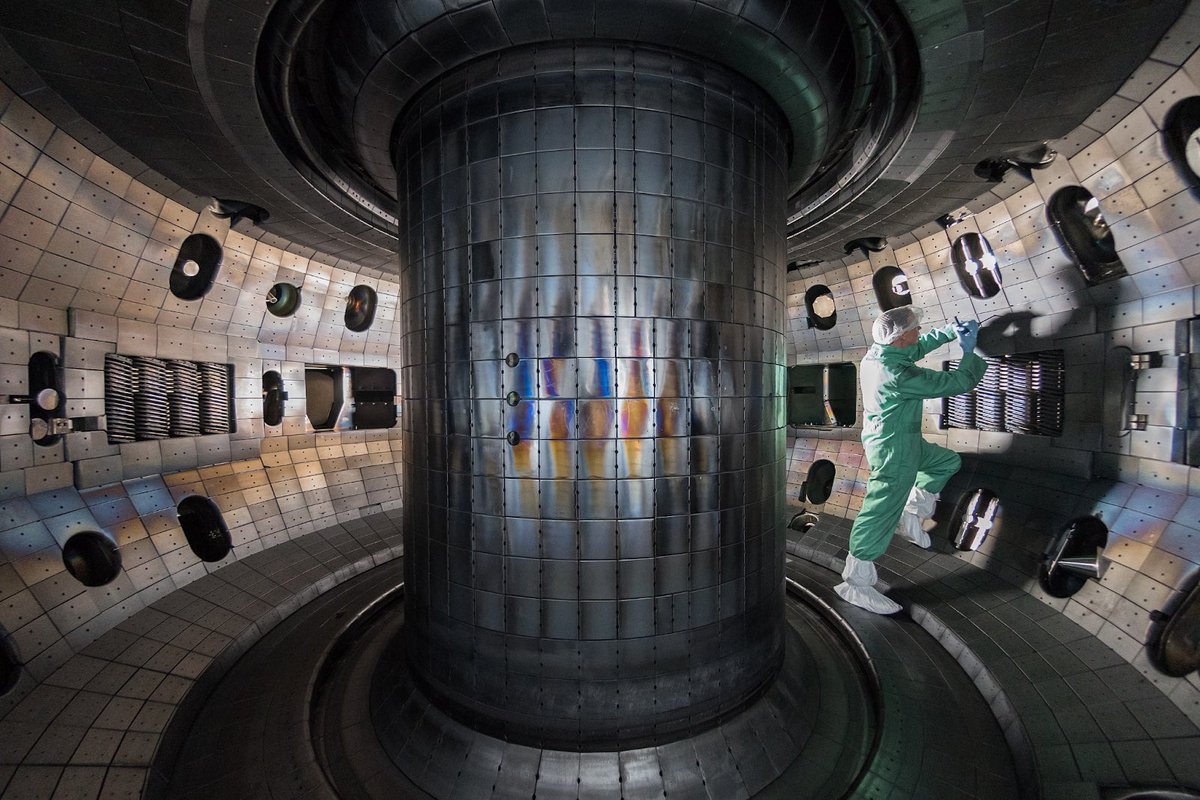
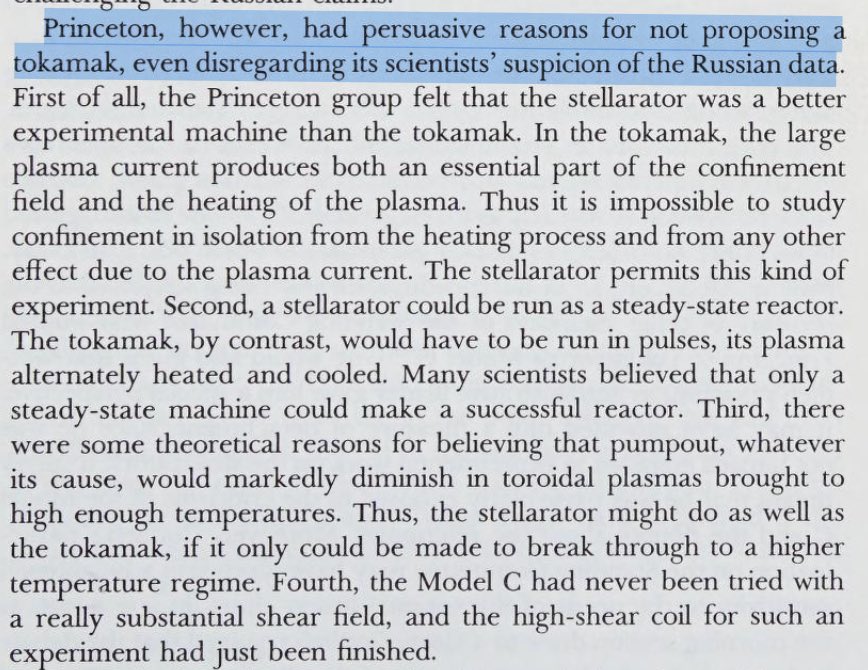
The most recognizable fusion machine is the tokamak reactor, which is a toroidal chamber that circulates a hot plasma, heating and confining it using an immense magnetic field. All tokamaks today are based on the original tokamak design developed by the USSR in the 1960s.

Arguably the most advanced alternative to the tokamak approach is called ‘inertial confinement’ fusion, which instead achieves the required high densities/temperatures by simultaneously firing an array of very powerful lasers at a small spherical target.
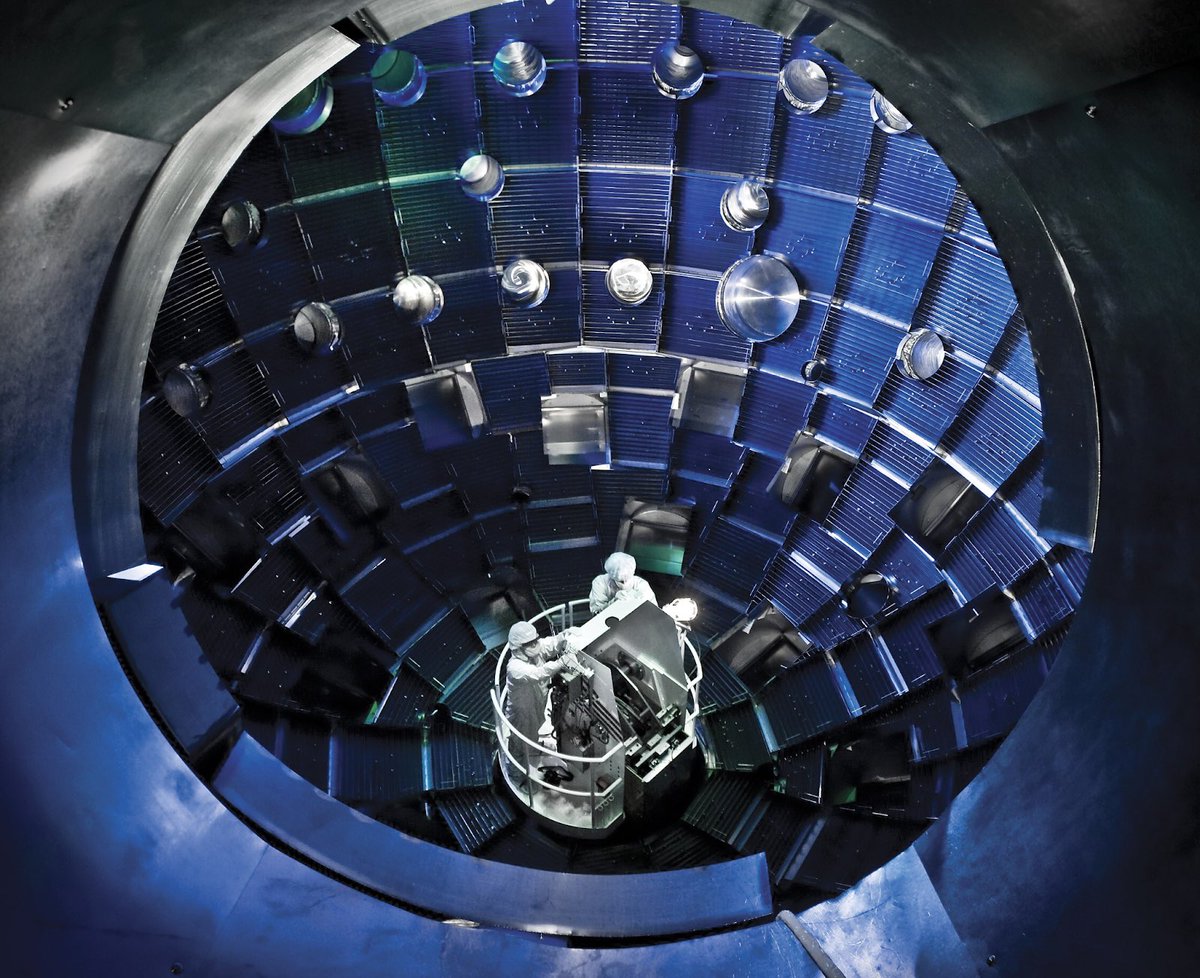

This latter approach was the focus of this week’s news from the National Ignition Facility in Livermore, CA. In essence, the milestone the NIF achieved is called ‘ignition’, which is the point at which the self-heating of the plasma was enough to “sustain” the fusion reaction.
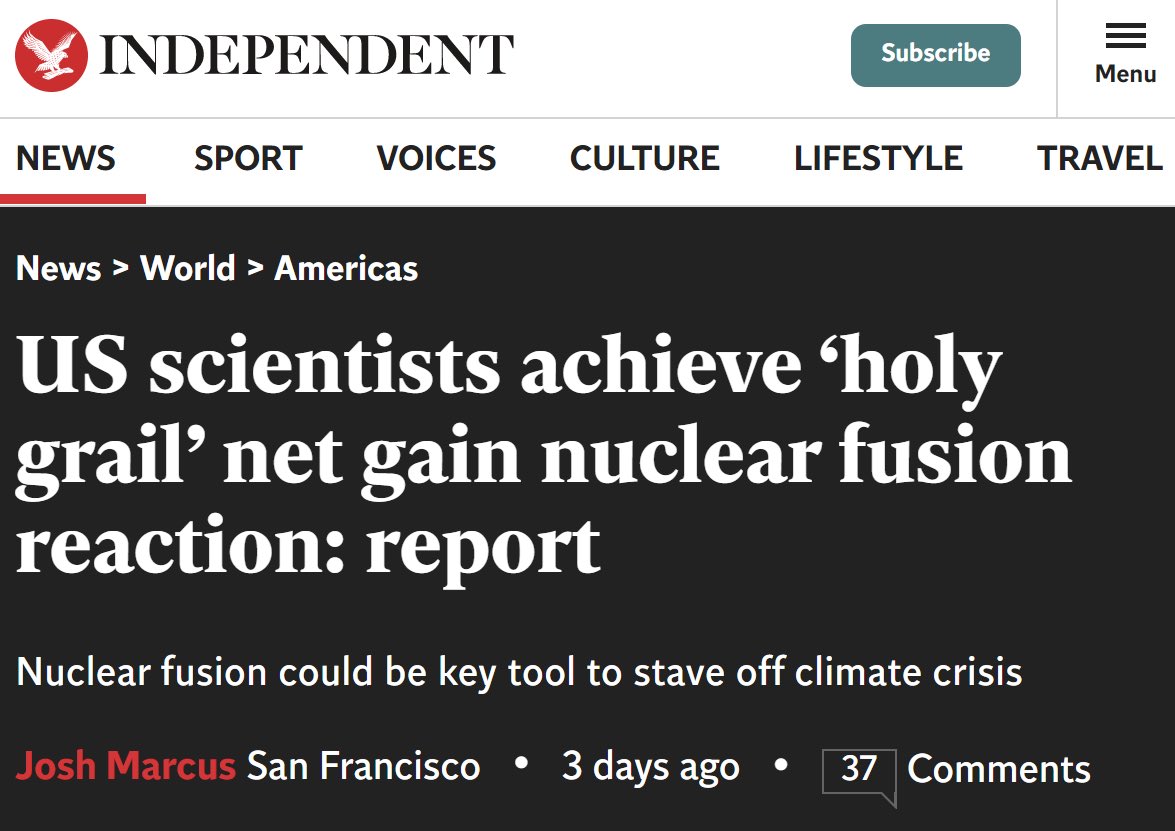
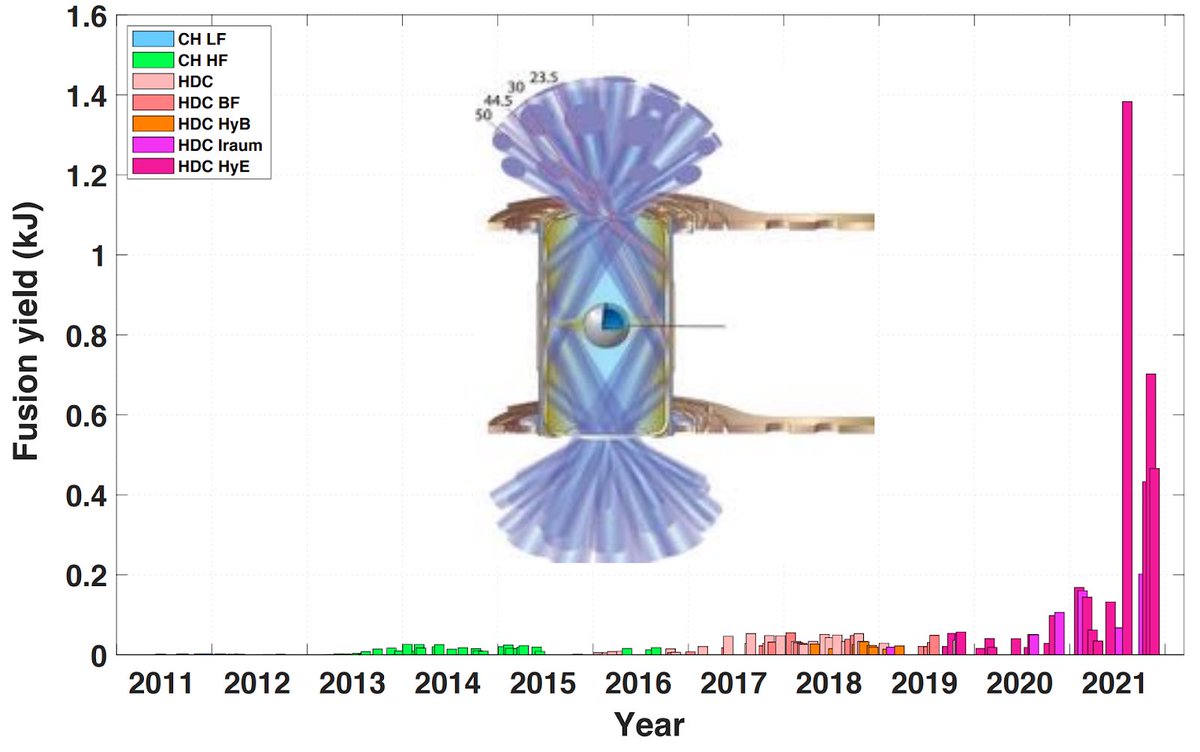
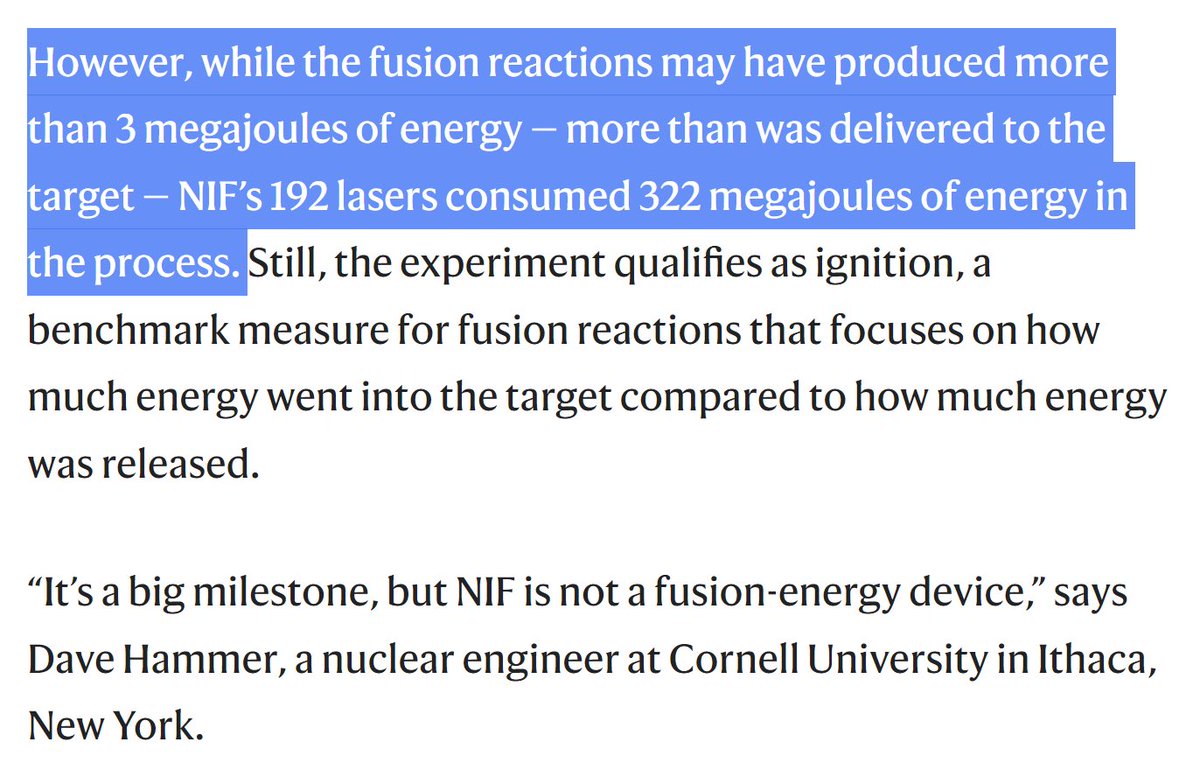
The NIF achieved a significant milestone and the effort should be celebrated for the scientific value it will provide, but it’s important not to sensationalize it. The “net gain” achieved was calculated based on the energy imparted on the target only, not the total input energy.
Put another way: if we account for the total energy to charge the lasers, the difference between the *real* input and output energies was still immense. In fact, charging the lasers took over 100x times more than was energy released by the fusion reaction itself.

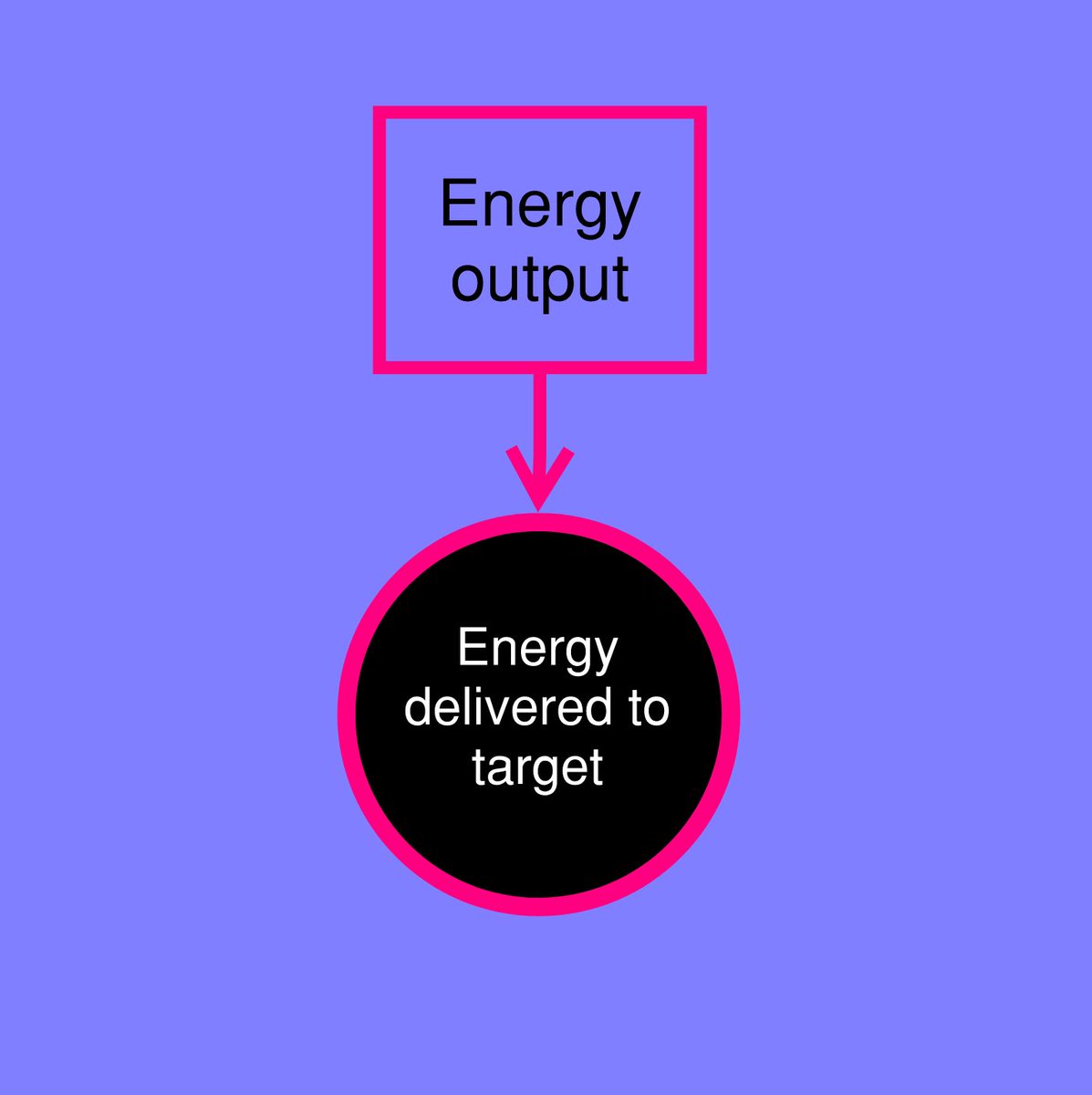
It’s analogous to the difference between the amount of energy to turn the wheels of a bicycle to summit a hill versus the calories of food you’d need to eat to provide your muscles with enough energy to pedal up the hill, with the latter being much higher.
So why might western media be somewhat overstating US/UK fusion progress?
Partly it’s because fusion is one more front in the west’s self-declared technological arms race with China, which in September announced the opening of a fusion mega lab in Chengdu.
Partly it’s because fusion is one more front in the west’s self-declared technological arms race with China, which in September announced the opening of a fusion mega lab in Chengdu.
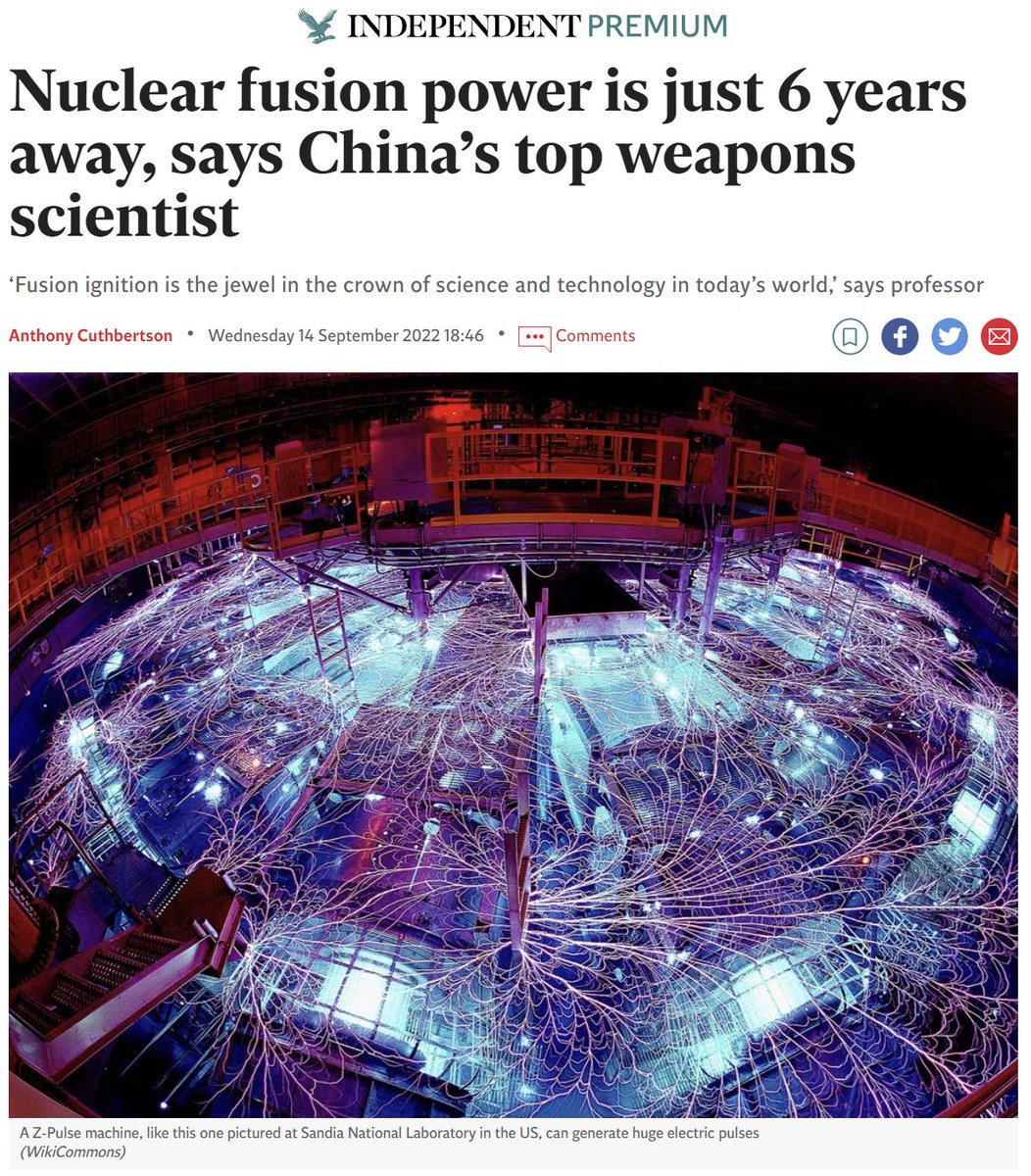
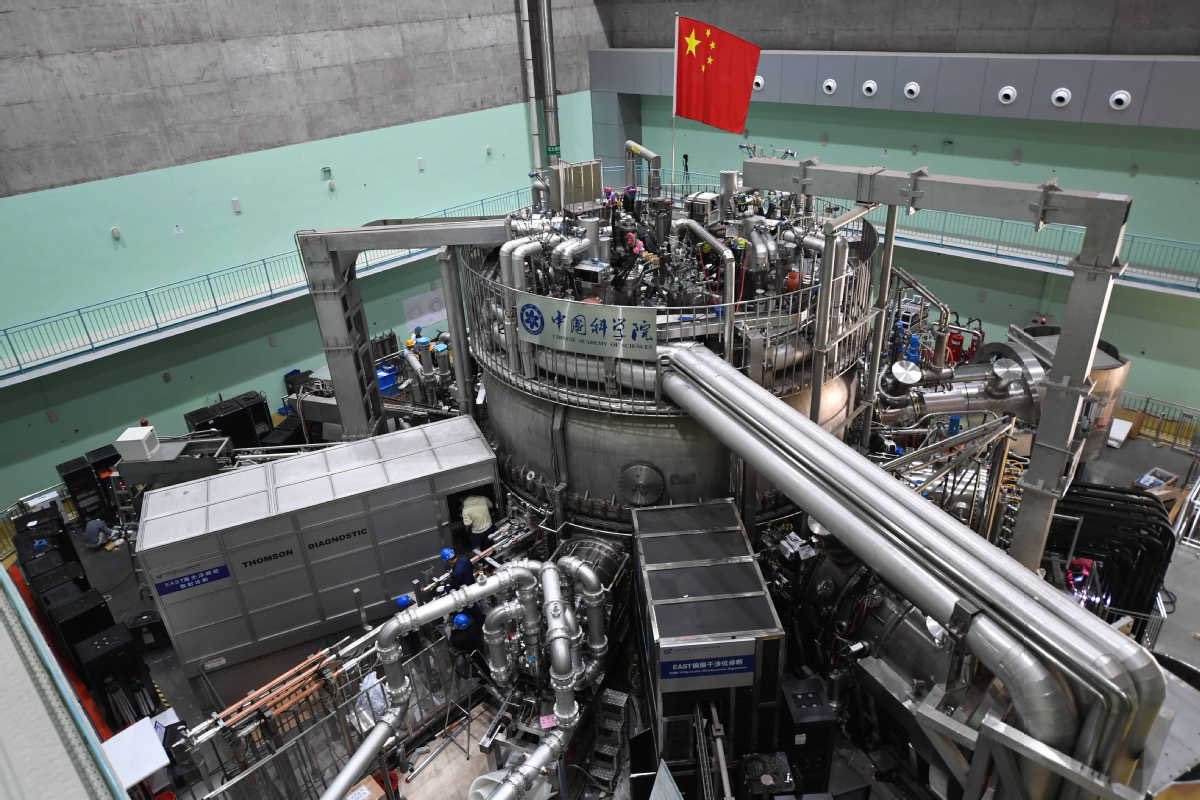
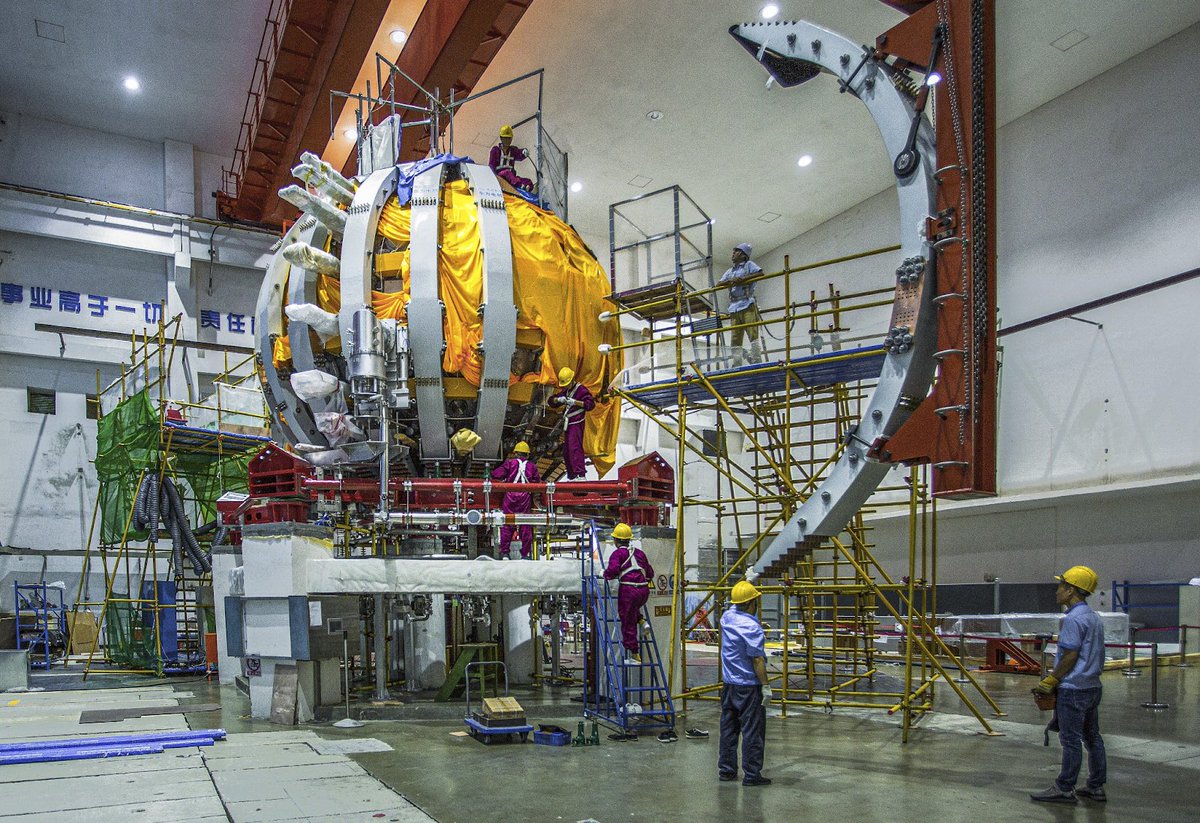
One of Chengdu’s reactors will be a Z-FFR, a hybrid approach that uses an enormous electric pulse to initiate fusion which then triggers fission in the uranium chamber walls. The plan is to complete by 2025, produce power by 2028, and have it commercially operational by 2035.
Despite these promising developments, the technological hurdles to overcome before fusion can become a viable energy source are enormous. Thus, fusion is unlikely to play a major role in our existential race to decarbonize before climate collapse.
There’s a persistent tendency in the west to elevate the process of technological progress into a deus ex machina which will swoop in and rescue us from the environmental destruction that capitalist-driven consumption has wrought.




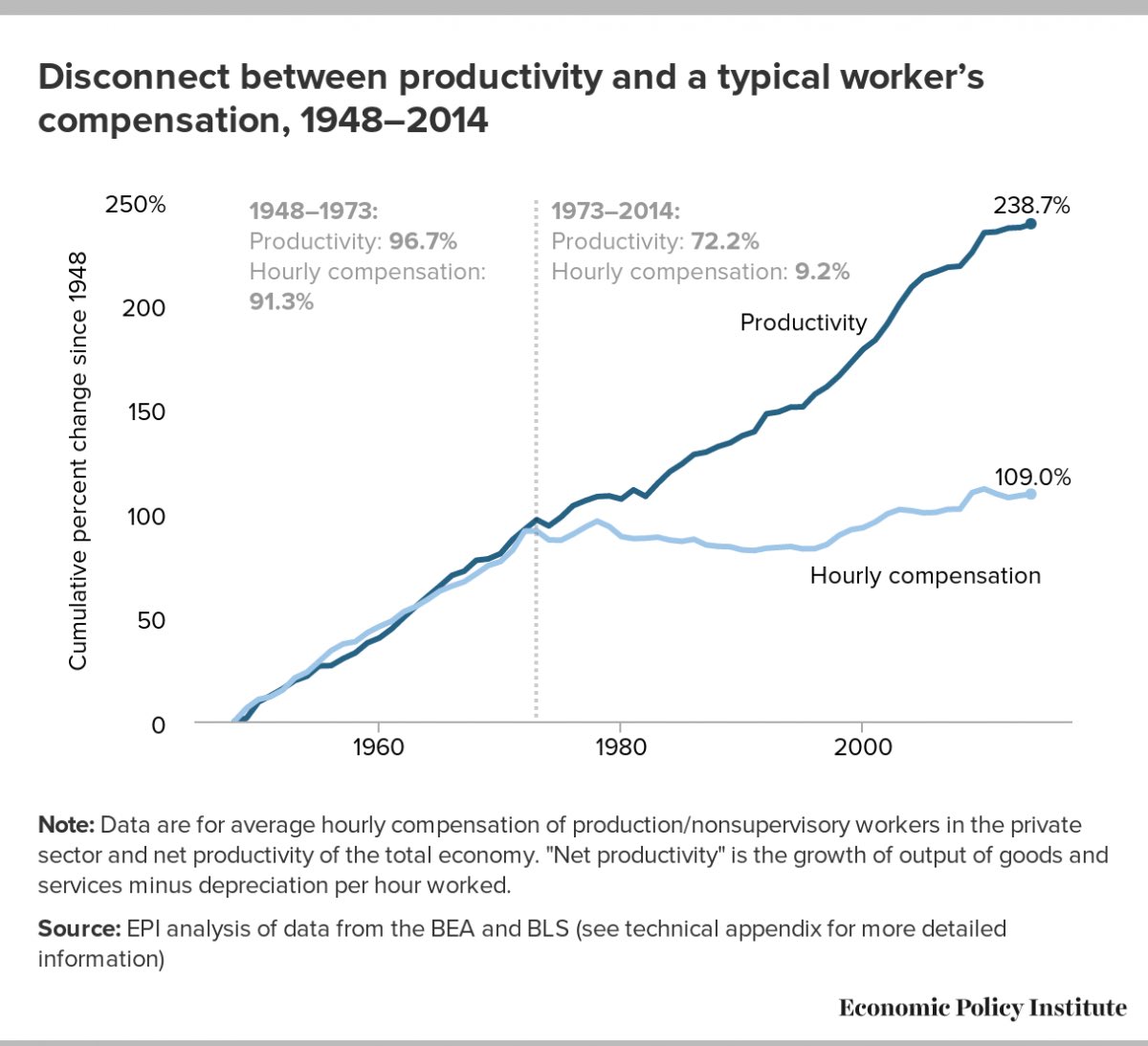
But this savior via techno-deity is both a product of the culturally embedded Christian salvation story and a reflection of how technology’s emancipatory promise is dangled like a carrot in front of the working class to distract from the true path to emancipation: class struggle.

Loading suggestions...