

I ranked 1st in my year at Cambridge University.
Here’s a monster thread of 14 study tips to help you smash your exams 👇
Here’s a monster thread of 14 study tips to help you smash your exams 👇
1 - Scope the subject
When we’re studying, we don’t always appreciate where a certain fact or branch of the subject fits within the wider scope. One of the first things I always did was map out the full subject on paper so I could have some context of what I was studying.
When we’re studying, we don’t always appreciate where a certain fact or branch of the subject fits within the wider scope. One of the first things I always did was map out the full subject on paper so I could have some context of what I was studying.
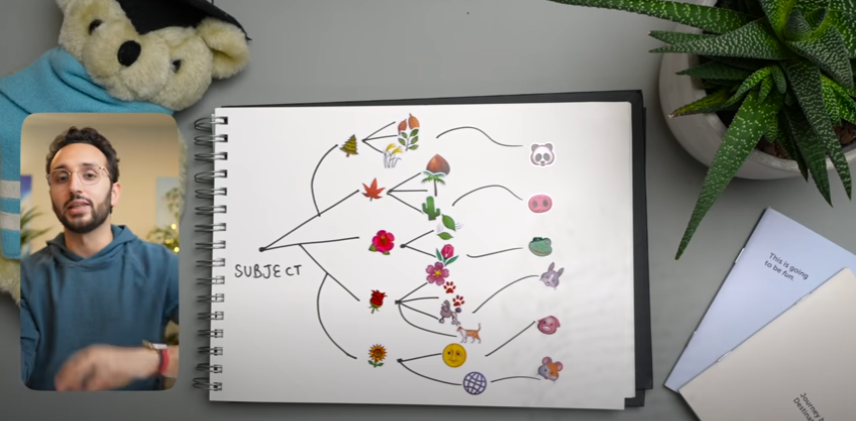
If you do this at the start of your curriculum, you can easily colour code the areas that you’re good at and highlight what you need to study more.
I used a traffic light🚦 (green, amber, red) system for this in a system like Notion to keep track of where I should spend my time.
I used a traffic light🚦 (green, amber, red) system for this in a system like Notion to keep track of where I should spend my time.
2 - Focus on your weaknesses
In real life, I’d actually say that this is bad advice, but when you’re taking exams you need to get good grades across the board.
In real life, I’d actually say that this is bad advice, but when you’re taking exams you need to get good grades across the board.
At school, there’s no point spending more time focusing on subjects you’re already good at. If you suck at maths but are great at English, you probably should be spending the most time on sums instead of Shakespeare.
3 - Use a retrospective revision timetable
I think the usual revision timetable where you plan in “next Monday I’m going to study Biology and then Music” is just an exercise in procrastination. I think it's better just to write a to-do list on the day that you're studying.
I think the usual revision timetable where you plan in “next Monday I’m going to study Biology and then Music” is just an exercise in procrastination. I think it's better just to write a to-do list on the day that you're studying.
Make your list based on what needs the most practice.
Once you've studied the subject, put the date down next to it (wherever you keep track of these things) and then colour code how well you did today.
Here's a video explaining the process: youtu.be
Once you've studied the subject, put the date down next to it (wherever you keep track of these things) and then colour code how well you did today.
Here's a video explaining the process: youtu.be
4 - Notetaking is a waste of time
One of students favourite strategies for studying is to summarise from books or lectures, but there’s a lot of research to suggest that this is a really passive way to learn.
One of students favourite strategies for studying is to summarise from books or lectures, but there’s a lot of research to suggest that this is a really passive way to learn.
Techniques that feel a bit harder like testing yourself with flashcards will form connections in your brain and help you remember the material better than regurgitating from the book.
5 - Focus on understanding
Your goal isn’t to memorise the material, it’s actually to understand it.
You may have heard someone say ‘if you can’t explain it to a 12 year old, you probably don’t understand it’.
Your goal isn’t to memorise the material, it’s actually to understand it.
You may have heard someone say ‘if you can’t explain it to a 12 year old, you probably don’t understand it’.
This is famously the Feynman Technique, where you test if you can explain a topic and then easily answer the ‘but why’ questions that will follow.
After a lecture, see if you can explain a topic to a friend or write a short paper on it. This will benefit you massively.
After a lecture, see if you can explain a topic to a friend or write a short paper on it. This will benefit you massively.
6 - Do lots of mock exams
Exams aren’t really a test of knowledge, they’re a test of exam performance. Unfortunately that’s the way the current education system is designed. So to proverbially ‘play the game’, you need to get good at actively recalling information.
Exams aren’t really a test of knowledge, they’re a test of exam performance. Unfortunately that’s the way the current education system is designed. So to proverbially ‘play the game’, you need to get good at actively recalling information.
7 - Use intentional flair
I spent a year supervising medical physiology and read a lot of papers. The best ones usually had great handwriting, added diagrams or started with an engaging introduction. The examiners are reading tons of papers a day, so you want yours to stand out.
I spent a year supervising medical physiology and read a lot of papers. The best ones usually had great handwriting, added diagrams or started with an engaging introduction. The examiners are reading tons of papers a day, so you want yours to stand out.
8 - Bank points with coursework
If your subject has a coursework option, put a good chunk of your time into that. If you get a good grade in coursework, that gives you some leverage (20% or so depending on the course) to your final grade.
If your subject has a coursework option, put a good chunk of your time into that. If you get a good grade in coursework, that gives you some leverage (20% or so depending on the course) to your final grade.
9 - Study with friends
Most people don’t do this because they’re worried about distractions. Yes, you might lose a little bit of productivity but you’ll also 1. be more motivated to turn up and 2. enjoy the act of studying more than you would being in a room alone constantly.
Most people don’t do this because they’re worried about distractions. Yes, you might lose a little bit of productivity but you’ll also 1. be more motivated to turn up and 2. enjoy the act of studying more than you would being in a room alone constantly.
When I was at medical school, I started a pomodoro group with friends.
We were all studying different things, but we sat together and worked on the same pomodoro timer, and when we’d hit a few hours we’d go for lunch together for a break. It was great vibes.
We were all studying different things, but we sat together and worked on the same pomodoro timer, and when we’d hit a few hours we’d go for lunch together for a break. It was great vibes.
10 - Test each other
I did this with my medical student friends. We would each learn one topic really well, and then test others on that subject. So we’d all turn up to a session with different knowledge and learn a lot more than we would of by ourselves.
I did this with my medical student friends. We would each learn one topic really well, and then test others on that subject. So we’d all turn up to a session with different knowledge and learn a lot more than we would of by ourselves.
11 - Read your friends essays
Form a shared google drive with friends and share all of your essays or revision notes in the drive. If you pool resources, you can benefit a lot from the economy of scale and look at things in a different way to what you might have on your own.
Form a shared google drive with friends and share all of your essays or revision notes in the drive. If you pool resources, you can benefit a lot from the economy of scale and look at things in a different way to what you might have on your own.
12 - Have a workspace
In my first year of medical school I tried learning by myself in my room. But from second year onwards I’d go to the library, grab breakfast and study with friends. I made so much more progress this way and didn’t end up procrastinating in my bedroom.
In my first year of medical school I tried learning by myself in my room. But from second year onwards I’d go to the library, grab breakfast and study with friends. I made so much more progress this way and didn’t end up procrastinating in my bedroom.
13 - Have time to unwind
There’s an over-glamourisation of over-working these days. When you finish university, you’re not going to remember the amount of sleep you lost to studying. You will remember the fun memories and great friends you made, who will be around for life.
There’s an over-glamourisation of over-working these days. When you finish university, you’re not going to remember the amount of sleep you lost to studying. You will remember the fun memories and great friends you made, who will be around for life.
14 - Enjoy the journey
When you’re a student, it can be very easy to defer your happiness until after your exams.
You’ll never again be in an environment where you’re surrounded by friends who are all doing the same thing, with frankly quite a lot of free time.
When you’re a student, it can be very easy to defer your happiness until after your exams.
You’ll never again be in an environment where you’re surrounded by friends who are all doing the same thing, with frankly quite a lot of free time.
Make sure you’re enjoying every moment of your student life, because the journey is actually so much sweeter than the destination.
If you’re itching for more study tips, I have a video where I share how I used flashcards to learn and revise: youtu.be
For more threads like this, follow me here on Twitter @AliAbdaal
For more threads like this, follow me here on Twitter @AliAbdaal
Loading suggestions...