

Here’s how to analyze a:
- Balance Sheet
- Income Statement
- Cash Flow Statement
Without a background in accounting:
- Balance Sheet
- Income Statement
- Cash Flow Statement
Without a background in accounting:
If you want to invest in stocks, you must understand a company’s financials.
The balance sheet shows a company’s net worth.
The income statement shows income during a specific period.
The cash flow statement shows how money moves.
Let’s break them down:
The balance sheet shows a company’s net worth.
The income statement shows income during a specific period.
The cash flow statement shows how money moves.
Let’s break them down:
1. Balance sheet
Assets = liabilities + shareholder equity
It shows:
- What debts a company owes
- What assets a company owns
- How much equity investors have
Here’s what it looks like:
Assets = liabilities + shareholder equity
It shows:
- What debts a company owes
- What assets a company owns
- How much equity investors have
Here’s what it looks like:

Assets are things like:
- Cash
- Patents
- Inventory
- Machinery
- Real estate
Liabilities are things like:
- Taxes
- Loans
- Paychecks
- Deferred obligations
There are both short term and long term assets and liabilities.
- Cash
- Patents
- Inventory
- Machinery
- Real estate
Liabilities are things like:
- Taxes
- Loans
- Paychecks
- Deferred obligations
There are both short term and long term assets and liabilities.
Here are 5 things to look for in a balance sheet:
- Do they have a lot of liquid assets? (yes)
- Do they have a positive net worth? (yes)
- Can they meet debt obligations? (yes)
- How much debt do they have? (little)
- Do they have a lot of inventory? (no)
- Do they have a lot of liquid assets? (yes)
- Do they have a positive net worth? (yes)
- Can they meet debt obligations? (yes)
- How much debt do they have? (little)
- Do they have a lot of inventory? (no)
2. Income Statement
Net income = (Total Revenue + Gains) - (Total Expenses + Losses)
It shows a company’s:
- Gains
- Losses
- Revenue
- Expenses
Here’s what it looks like:
Net income = (Total Revenue + Gains) - (Total Expenses + Losses)
It shows a company’s:
- Gains
- Losses
- Revenue
- Expenses
Here’s what it looks like:

Revenues are how much a company makes. (products and services)
Gains are income from non-business activities. (selling assets)
Expenses are how much it costs to run the company. (costs of goods)
Losses are costs related to anything other than making money. (lawsuits)
Gains are income from non-business activities. (selling assets)
Expenses are how much it costs to run the company. (costs of goods)
Losses are costs related to anything other than making money. (lawsuits)
Here are 4 things to look for in an income statement:
- High profit margins? (yes)
- Is revenue increasing? (yes)
- Is revenue > expenses? (yes)
- Are revenues/expenses consistent? (yes)
- High profit margins? (yes)
- Is revenue increasing? (yes)
- Is revenue > expenses? (yes)
- Are revenues/expenses consistent? (yes)
3. Cash Flow Statement
Cash from operations +(-) cash from investments +(-) cash from financing + beginning cash balance
It shows how money moves from:
- Financing
- Operations
- Investments
Here’s what it looks like:
Cash from operations +(-) cash from investments +(-) cash from financing + beginning cash balance
It shows how money moves from:
- Financing
- Operations
- Investments
Here’s what it looks like:
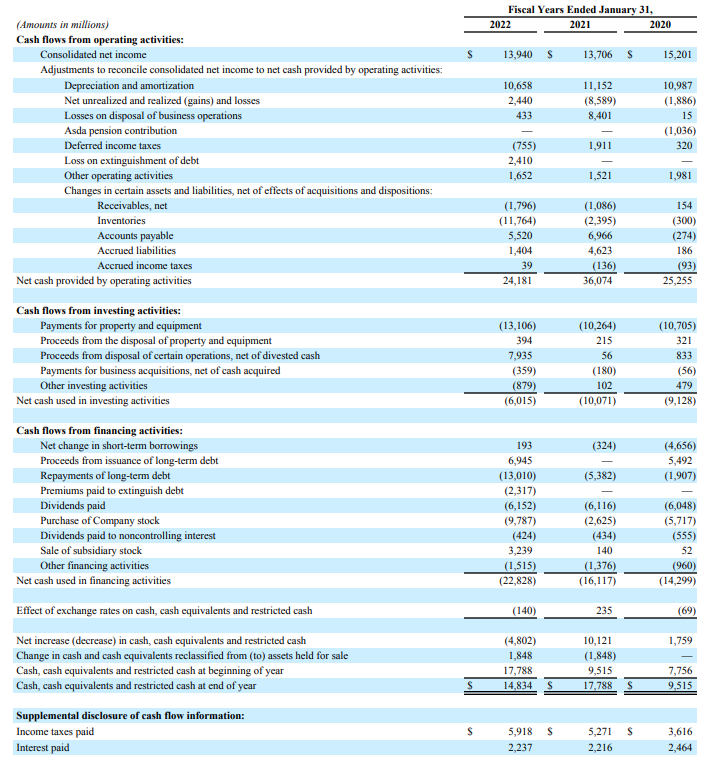
Financing is money that moves around due to debts and equity transactions.
Operations is money that moves around due to regular business activities.
Investments is money that moves around based on sales and purchases of assets.
Operations is money that moves around due to regular business activities.
Investments is money that moves around based on sales and purchases of assets.
Here are 3 things to look for:
- How much cash comes from each dollar of sales? (higher is better)
- Do they have more cash flow than expenses? (yes)
- If negative cash flow, is it for reinvesting? (yes)
- How much cash comes from each dollar of sales? (higher is better)
- Do they have more cash flow than expenses? (yes)
- If negative cash flow, is it for reinvesting? (yes)
You should never make an investment without understanding a company’s financial situation.
These 3 statements are all you need to know what you’re buying, and if you should buy it.
These 3 statements are all you need to know what you’re buying, and if you should buy it.
Thank you for reading!
Liked this thread? Follow me @WOLF_Financial for more.
You might also enjoy my free weekly newsletter where I use my experience to provide timeless investment advice:
Join here: marketmadness-newsletter.beehiiv.com
Liked this thread? Follow me @WOLF_Financial for more.
You might also enjoy my free weekly newsletter where I use my experience to provide timeless investment advice:
Join here: marketmadness-newsletter.beehiiv.com
Loading suggestions...