

Understanding how a company makes money is important
Give me 2 min to help you better understand an Income Statement:
Give me 2 min to help you better understand an Income Statement:
1/ The Income Statement is where a company lists out there Revenues (Sales) and Expenses
Some people call it a "P and L" which stands for Profit and Loss
Some people call it a "P and L" which stands for Profit and Loss
2/ It is often broken out as follows:
Revenue - Cost of Sales
= Gross Profit (Gross Margin is calculated here)
Gross Profit - Operating Expenses (Selling, General & Admin costs)
= Operating Income
Operating Income - Non-Operating Income (Interest income)
= Pre Tax Income
Revenue - Cost of Sales
= Gross Profit (Gross Margin is calculated here)
Gross Profit - Operating Expenses (Selling, General & Admin costs)
= Operating Income
Operating Income - Non-Operating Income (Interest income)
= Pre Tax Income
3/
Pre Tax Income - Income Tax
= Net Income
Dividend Net Income by Shares Outstanding to get EPS
Pre Tax Income - Income Tax
= Net Income
Dividend Net Income by Shares Outstanding to get EPS
4/ An Income Statement is required every quarter in the 10-Q and within the annual 10-K documents filed with the SEC

6/ Once you click on the 10-K document, you will open the company's actual filing
You can usually get to the Financial Statements by going to the table of contents section at the beginning of the document
You can usually get to the Financial Statements by going to the table of contents section at the beginning of the document
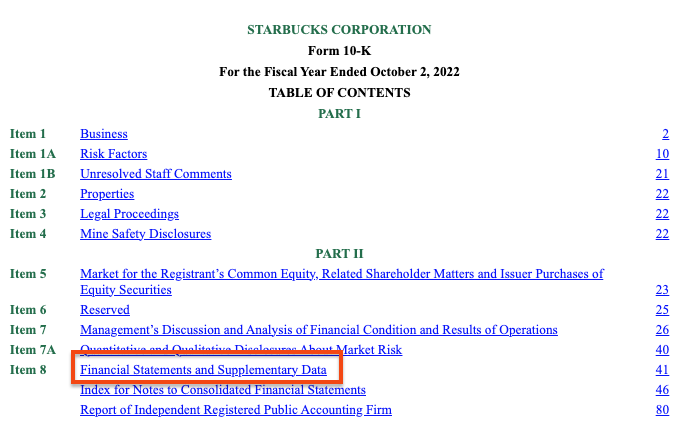
7/ Now we can easily get to the Income Statement and start analyzing it
$SBUX reported total revenues of $32.25 billion during the latest fiscal year, which was an increase of 11% over prior year
$SBUX reported total revenues of $32.25 billion during the latest fiscal year, which was an increase of 11% over prior year
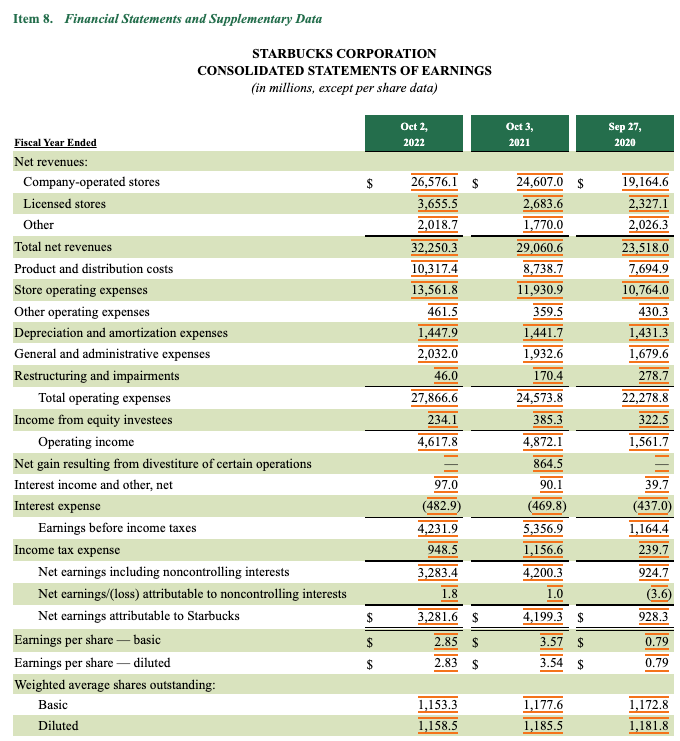
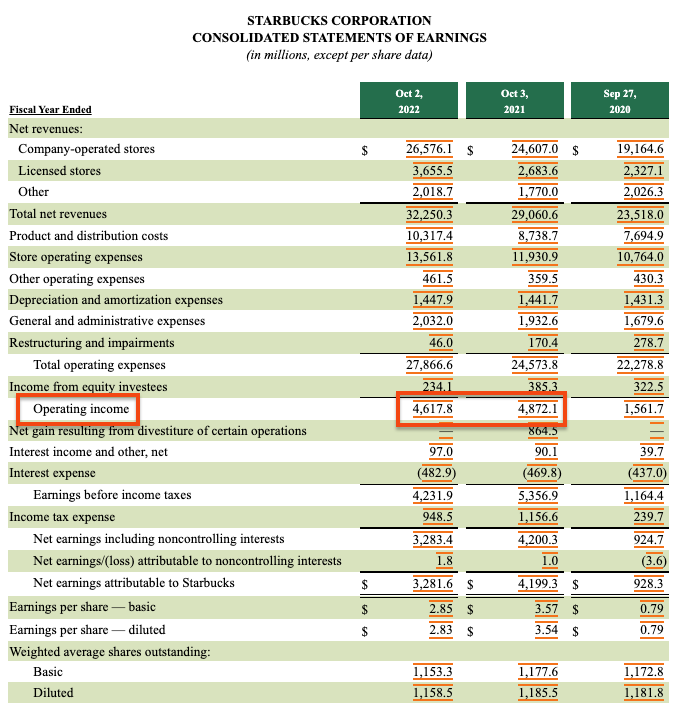
8/ Operating Costs increased $3.3 billion on the year, let's see where and why
Product & Distribution costs increased ~$1.5 b
Store Operating costs increased ~$1.6
The increase in costs, even with the increase in revenue, resulted in LOWER operating income on the year
Product & Distribution costs increased ~$1.5 b
Store Operating costs increased ~$1.6
The increase in costs, even with the increase in revenue, resulted in LOWER operating income on the year
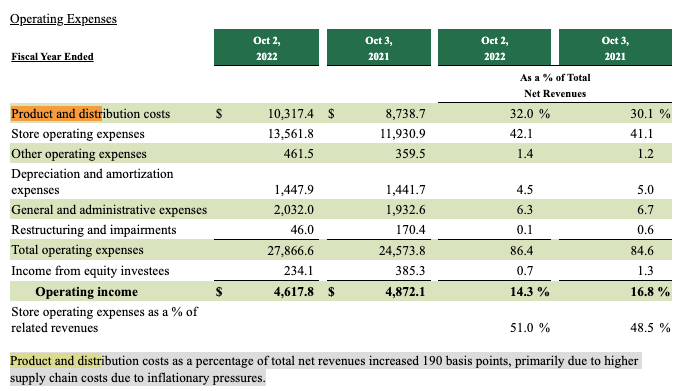
9/ Product and distribution costs as a percentage of total net revenues increased 190 basis points, primarily due to higher supply chain costs due to inflationary pressures.
Store operating costs increased primarily due to labor costs
You can find all this detail within the doc
Store operating costs increased primarily due to labor costs
You can find all this detail within the doc
10/ These "Operating Costs" are all costs required to run the business
Revenues and gross margins only tell a small piece of the story
Investors want to know OPERATING INCOME and Operating Margin, which is operating income / revenues
Revenues and gross margins only tell a small piece of the story
Investors want to know OPERATING INCOME and Operating Margin, which is operating income / revenues
11/ Below operating income is where we find the "non-operating" costs
This could include items like gain/loss on sale. These costs are not part of the day to day operations, thus they will be categorized outside of operating income
Often you will see interest income/expense
This could include items like gain/loss on sale. These costs are not part of the day to day operations, thus they will be categorized outside of operating income
Often you will see interest income/expense
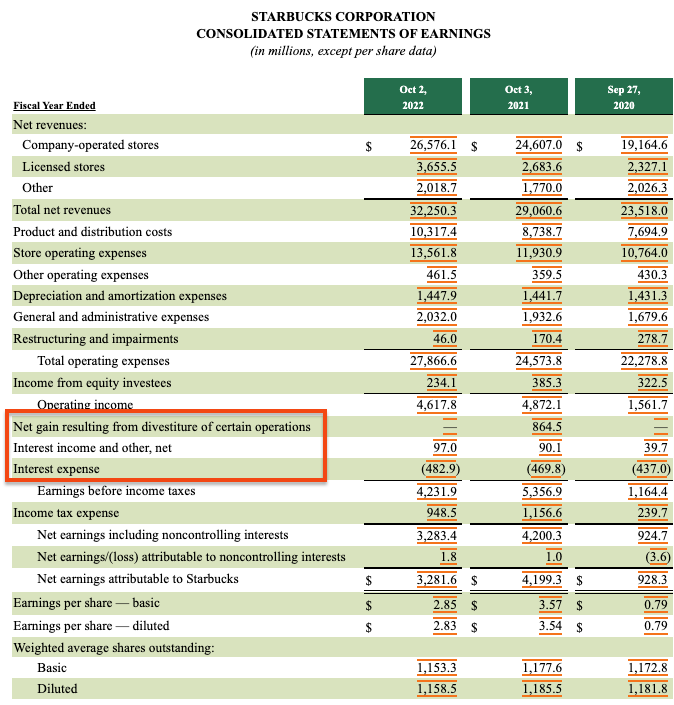
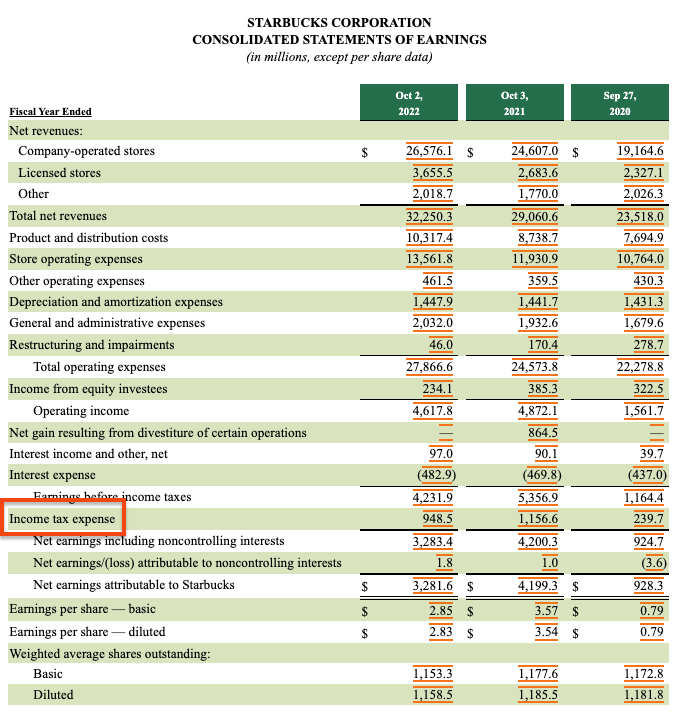
12/ After non-operating costs we get to Income Tax expense, which is just the government taxes paid (Federal, State, and Local)
13/ Last but not least is NET INCOME & EPS
This is the bottom line, what was made after everything was paid
Positive = Profit
Negative = Loss
This is the bottom line, what was made after everything was paid
Positive = Profit
Negative = Loss
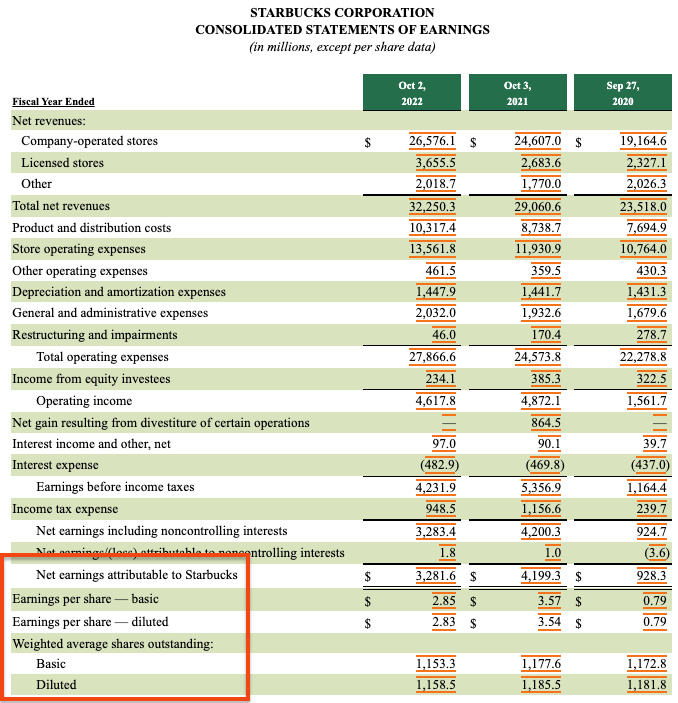
14/ Next is the EPS which will be shown on the I/S as well
Basic EPS is Net Income dividend by Common Shares outstanding
Diluted EPS is Common Shares + any Stock Based Comp Shares or Convertible shares
Diluted is the most conservative number to use
Basic EPS is Net Income dividend by Common Shares outstanding
Diluted EPS is Common Shares + any Stock Based Comp Shares or Convertible shares
Diluted is the most conservative number to use
15/ Key I/S items to review
1. Revenue Growth
2. Gross Margins
3. Operating Income
4. Operating Margin
5. Net Income/EPS
6. EBITDA (Earnings Before Income Taxes Depreciation & Amortization)
1. Revenue Growth
2. Gross Margins
3. Operating Income
4. Operating Margin
5. Net Income/EPS
6. EBITDA (Earnings Before Income Taxes Depreciation & Amortization)
Every Monday I publish a FREE newsletter focused on the happenings within the Stock Market world
Subscribe to The Dividend Investor's Edge:
roussinfinancial.substack.com
Subscribe to The Dividend Investor's Edge:
roussinfinancial.substack.com
Loading suggestions...