
On Russians and Serbs.
(Well. That is way too pompous. So let this thread better be called: On some Russians and some Serbs.)
(Well. That is way too pompous. So let this thread better be called: On some Russians and some Serbs.)
Over the past few months, Belgrade has been changing faster and more profound than at any time since the fall of Slobodan Milošević in October 2000.
According to data from MUP, the Serbian Ministry of the Interior, more than 140,000 Russian citizens registered permanent residence in Serbia between February and October 2022 alone. Also, almost 23,000 Ukrainians and around 5,500 Belarusians came. (via @dmilenkovic)
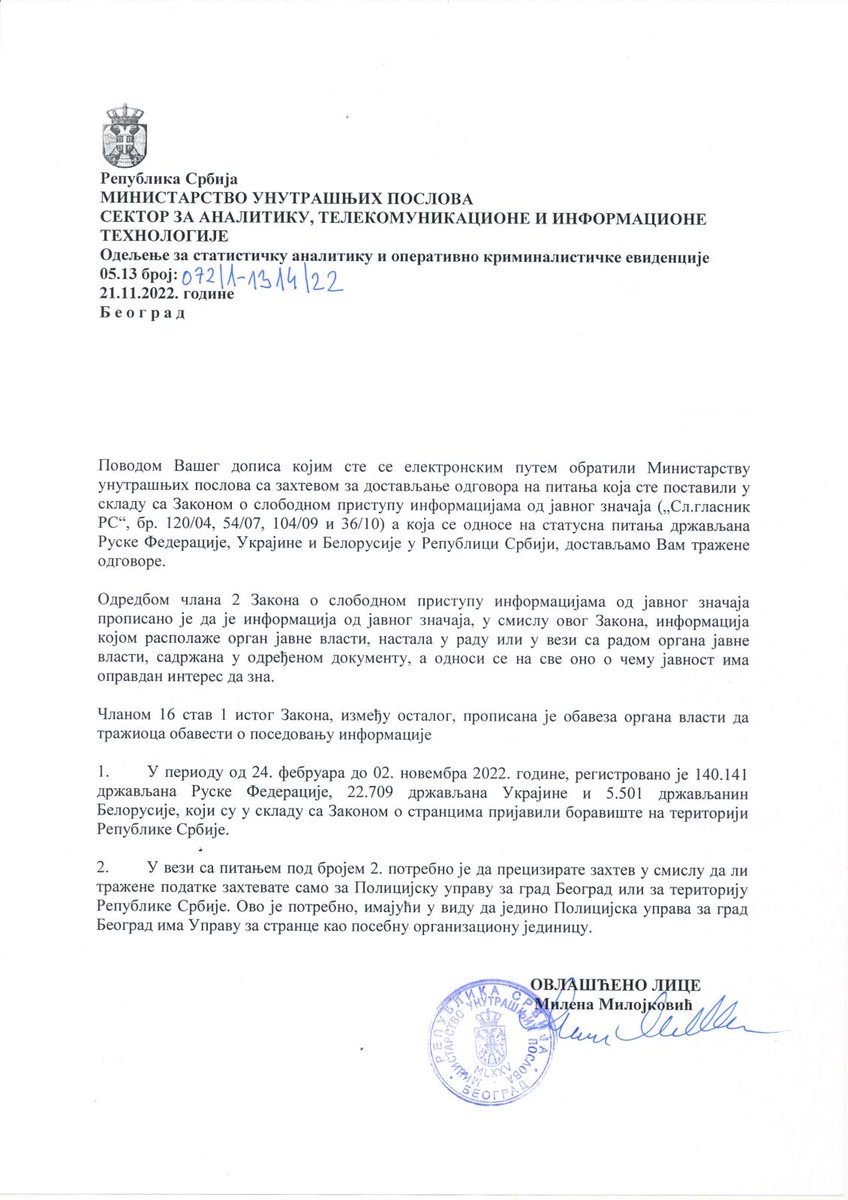
Of course, these figures do not say anything about those who might have left again after registering. But judging by the frequency of Russian you can hear being spoken in Belgrade, many Russians stayed - and many more came.
The influx of Russians to Serbia (mostly to Belgrade) is not abating, on the contrary. After Putin announced the mobilization on September 21, the number of Russian immigrants in Serbia rose significantly. It might stand already at 200,000 or more.
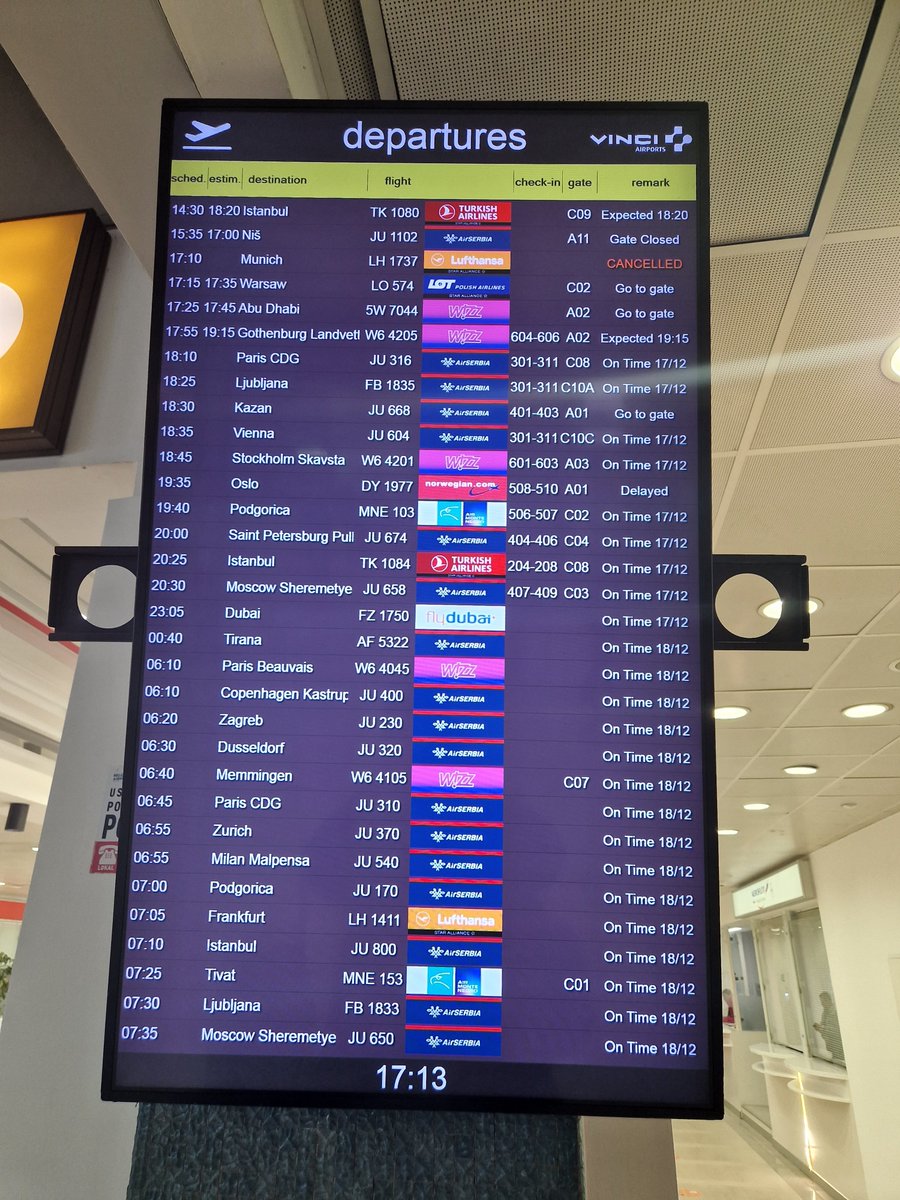
The fact that Air Serbia is the only European Airline still flying to Russia (not counting Turkish here) offering several daily flights Belgrade-Moscow + regular connections to Petersburg, Kazan, Sotchi etc certainly contributes to the growth of the numbers of Russians in Bgd.
Entire companies relocated from Russia to Serbia. Most of the Russian and Russian-speaking immigrants live in Belgrade. However, they are not evenly distributed across the city. Many are well to do, so they mainly reside in the center and in the better parts of town.
In Vračar, one of my favorite neighborhoods in Belgrade, Russians are everywhere. In shops, cafes, on the streets, you will hear Russian. "Half of the customers are Russians," a cashier in a supermarket on Ranke-Street tells me.
Russian has become the second language in Belgrade. Russians are the largest minority here now. Their presence is beginning to transform the city's sociological microclimate. It's exciting to observe what this does to Belgrade – and even more to imagine what it might still do.
A downside for many locals: rental prices are skyrocketing. "If things continue like this, we'll soon have Moscow prices here," a Serbian friend tells me only half-jokingly. (I wonder what this means for the tax revenue of the city of Belgrade.)
But the political consequences of the mass immigration are at least as interesting as the economic ones. The first wave of immigration, which began just after February 24, was highly political. Most were hard-line opponents of Putin.
The 2nd wave set in after Putin's mobilization order in September and it still continues. It is considered less political. Then again, not intending to die in a crazy war is quite a political statement as well, as this means less people are available for Putin’s war of conquest.
Some Russians move cautiously in Belgrade, they do not want to attract attention - and they have understandable reasons for doing so. Serbia's secret service is headed by Aleksandar Vulin, a staunchly pro-Russian speaking politician.
euronews.com
euronews.com
So while Russians have been and are being welcomed in Serbia with open arms, many still tread carefully. After all, if they stand up against Putin publicly, they must fear the Serbian secret service might pass on their details to Moscow.
Besides, many Russians already do understand enough Serbian to catch the overt pro-Putin slogans or the constant pro-Kremlin undercurrent in Serbian bs-media like Večernje novosti, Informer, PinkTV, HappyTV et al.
Nevertheless, other Russians in Belgrade publicly and visibly oppose Putin and the war. Take Anja Gladischev and Gleb Pushev from St. Petersburg, for example. They came to Belgrade with the first wave in February.
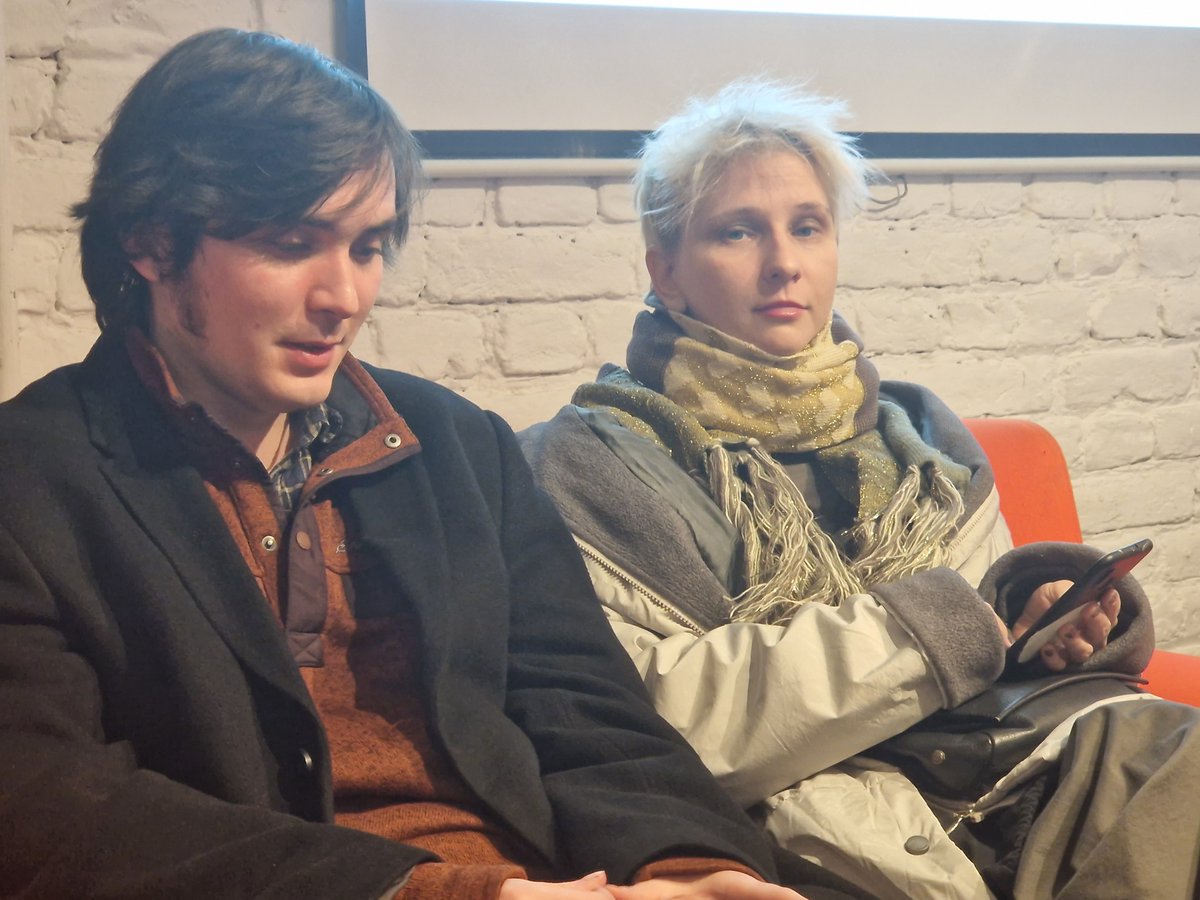
The two artists are very active in the anti-war movement. In mid-december, they painted and unveiled a mural of the Ukrainian national poet Lesya Ukrainka in cooperation with the cultural center “Krokodil” in Belgrade.
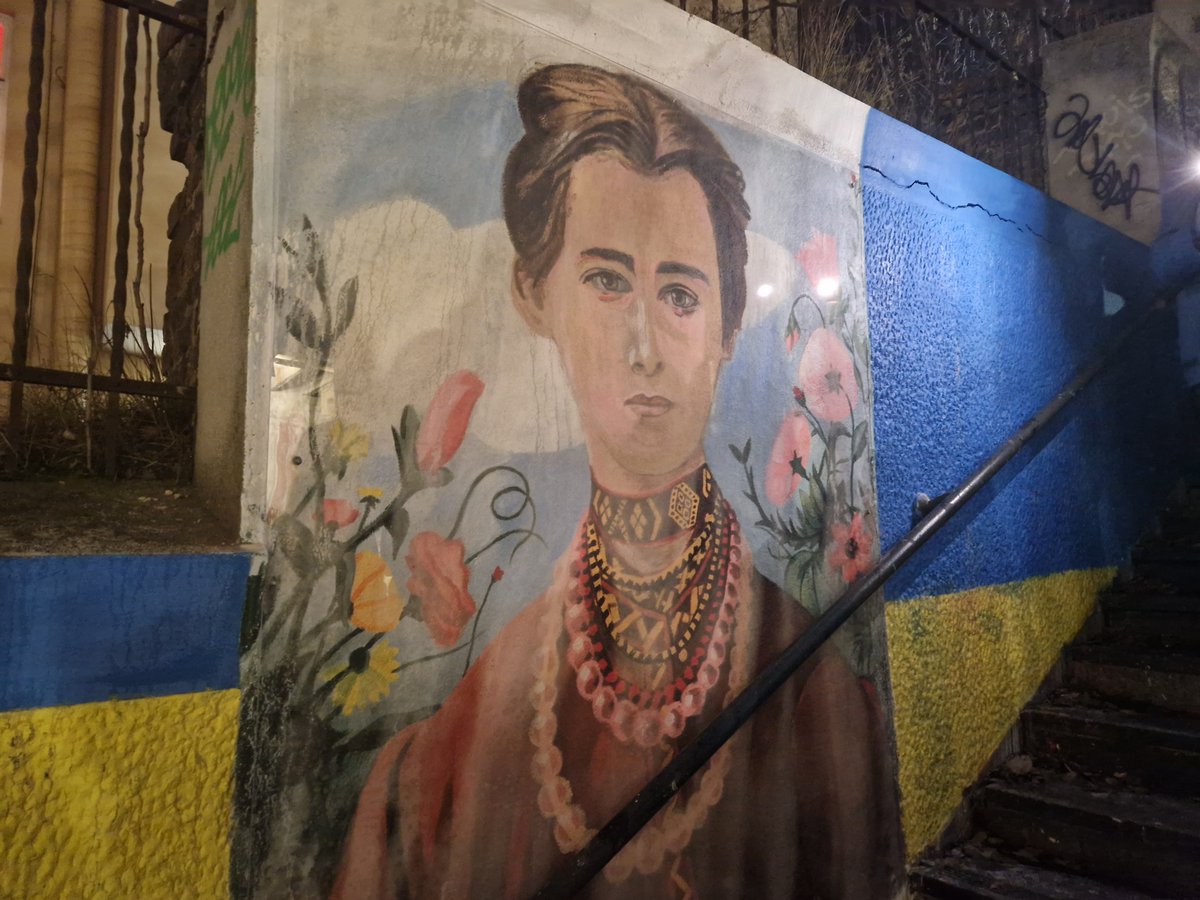
The artist couple sees their mural also as a counter-image to the portraits of the Serbian war criminal Ratko Mladić on the walls of Belgrade. Here they explain more about it. (In Russian)

Like other Russian activists in Belgrade, Gleb and Anja see their task in correcting the quirky image of Russia & Russians that many Serbs have. They try to explain to them what Putin’s Russia really is about. They do that tirelessly, every day.
Gleb, a graphic novelist, started to draw comics about his encounters and political conversations with locals in Belgrade. I recently became the proud owner of one of these strips. It describes a coincidental encounter in a Serbian fast-food shop.
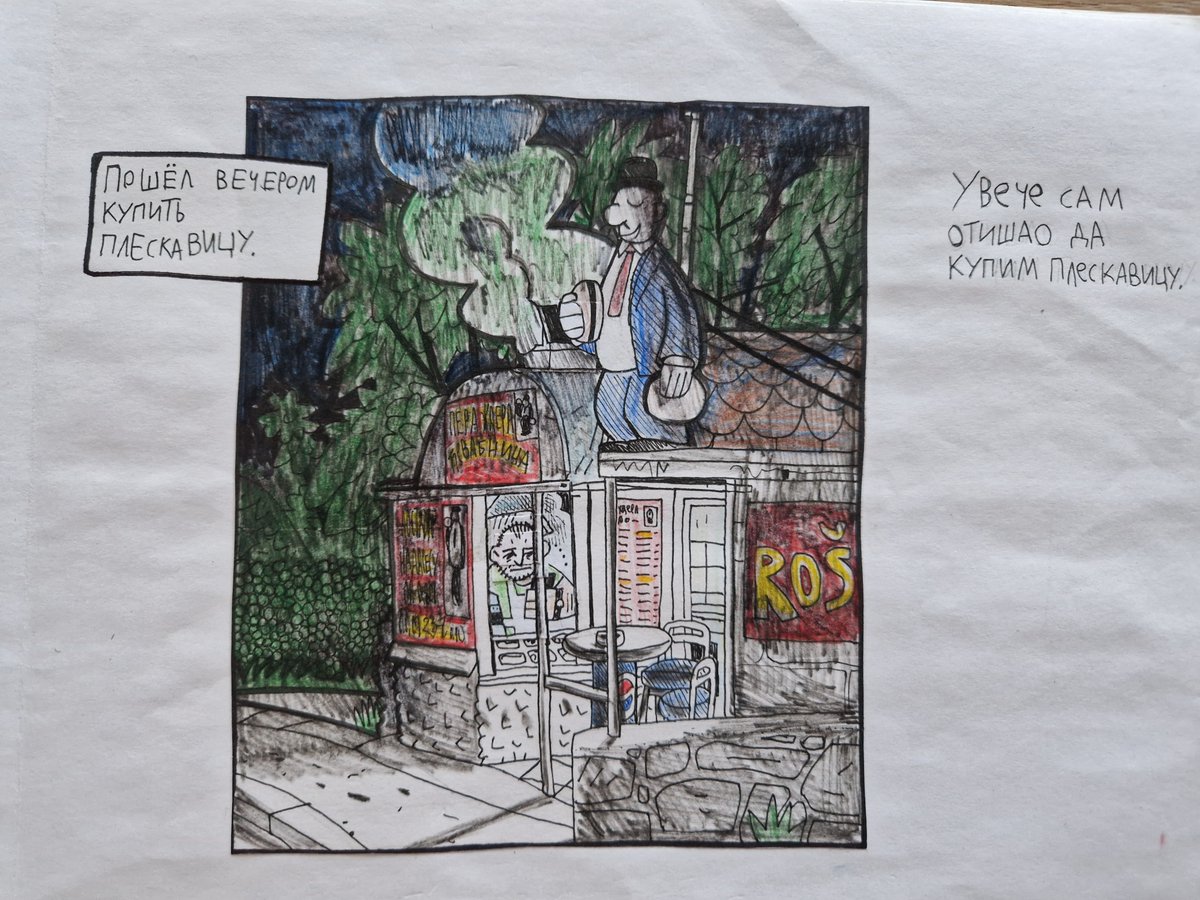
While waiting together for their Pleskavica (a type of Serbian hamburger) Gleb and a Serbian army officer begin a conversation. "I try to explain to every citizen of Serbia that I talk to what kind of shit Putin is," Pushev wrote under one of the pictures. (next one)
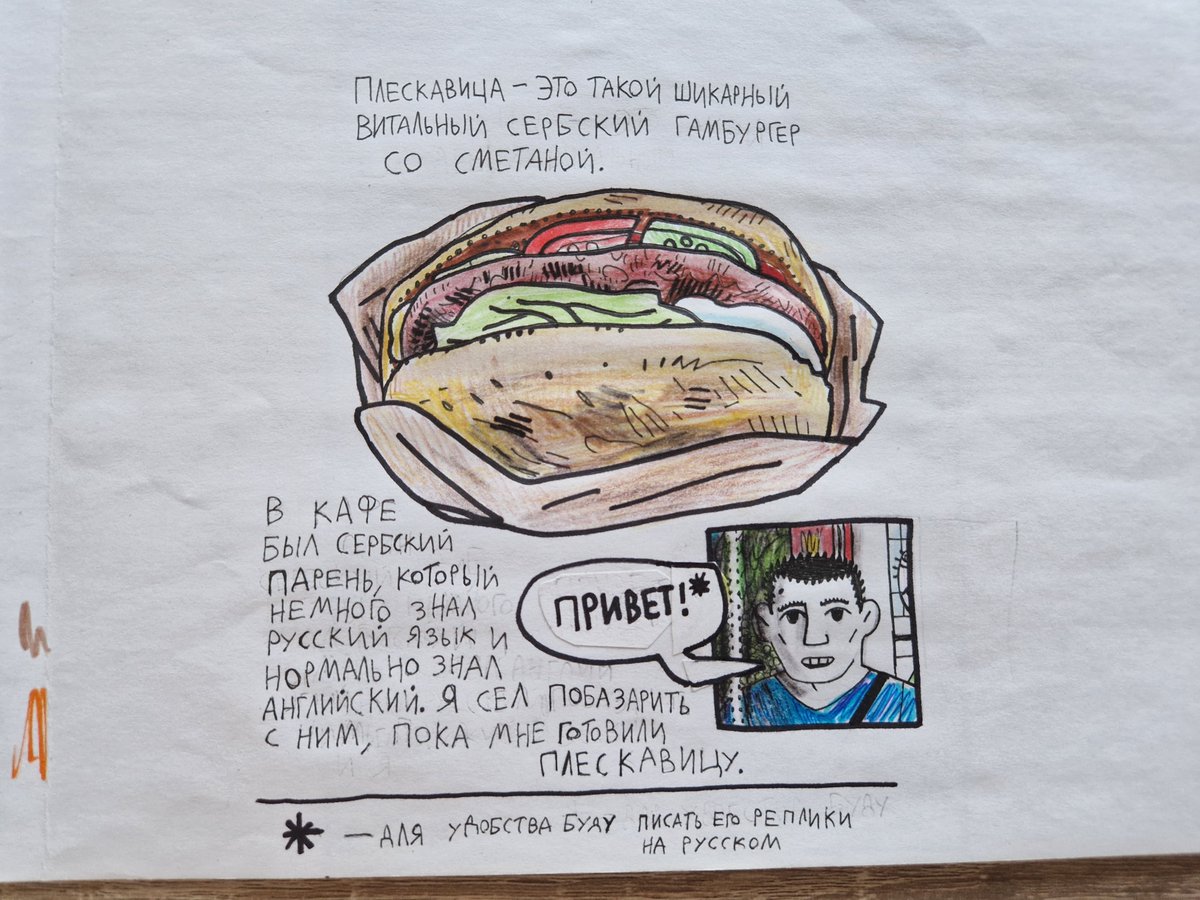
Putin, he told the officer, is the Russians' greatest enemy. Gleb's Serbian is still bad, so the fact that the word for "shit" is almost the same in Russian and Serbian (говно, just with a slightly different pronunciation and intonation) helps him when describing Putin…
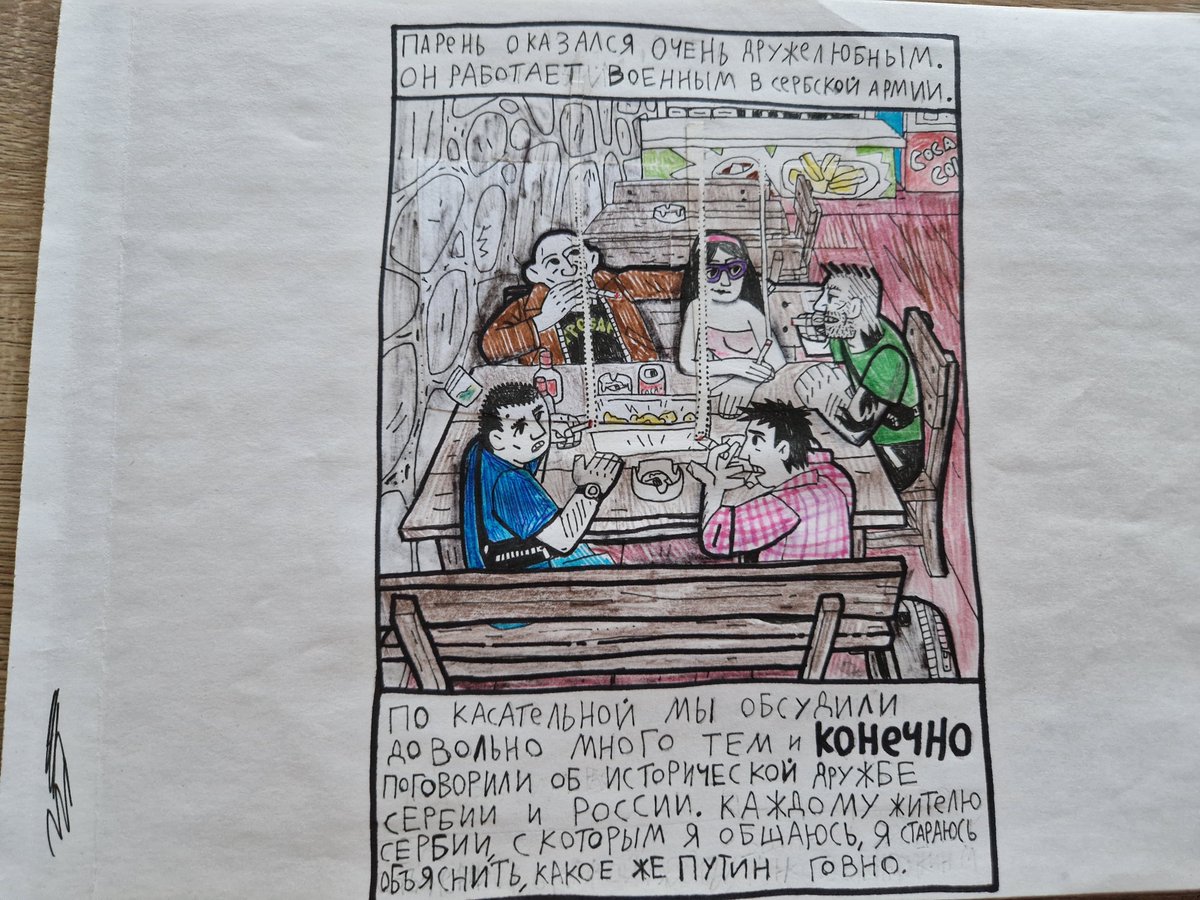
When the officer said that there were Nazis in Ukraine, Pushev, who lived in Odessa for a while, replied of course there are nationalists there, like in any country, asking back: “There are 100s of Mladić-graffiti in Belgrade – does that mean Serbia is conquered by fascists?”
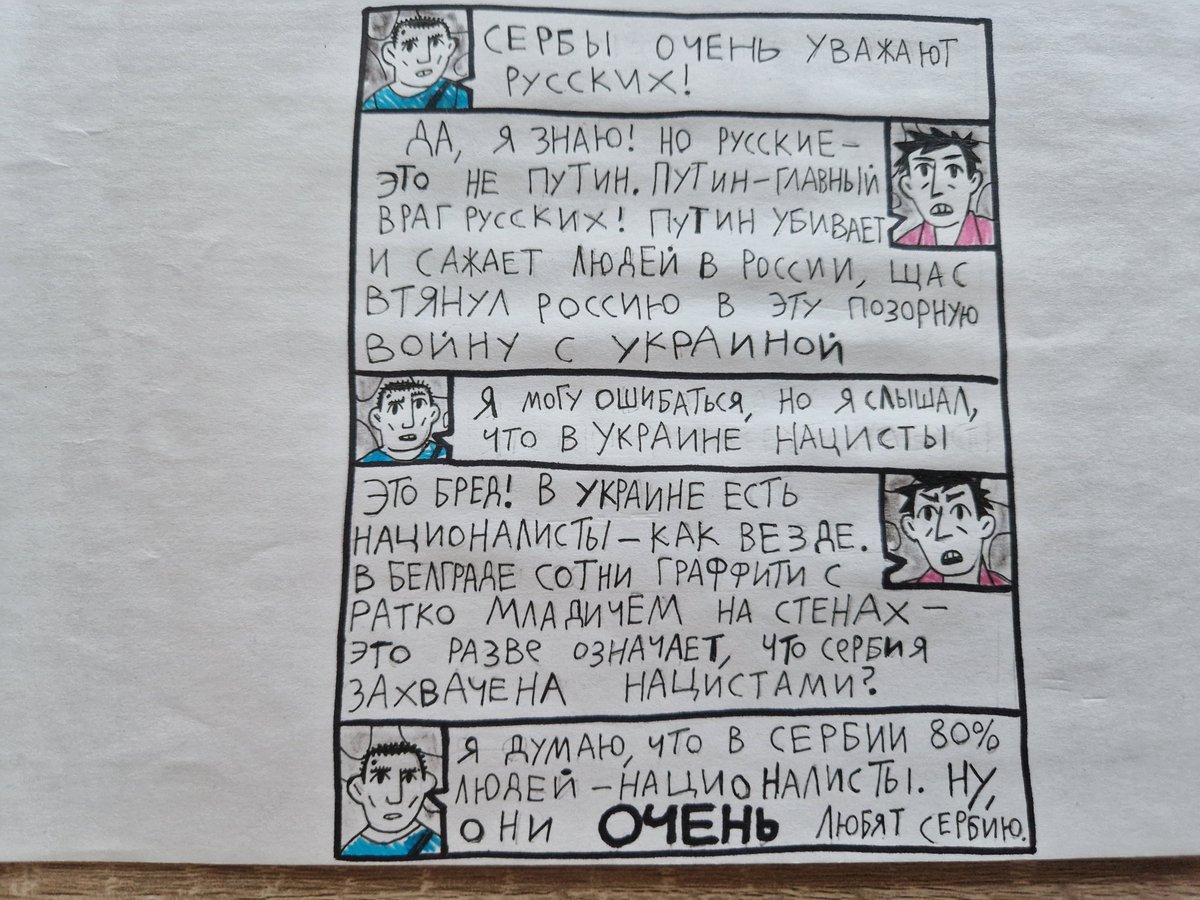
Such stories and questions unsettle nationalist Serbs. They undermine their worldview, in which Americans are always evil, Russians always are good, and Serbs are victims. When Serbs tell Gleb: "Welcome to Serbia, we love Putin here too," he calmly replies that he hates Putin.
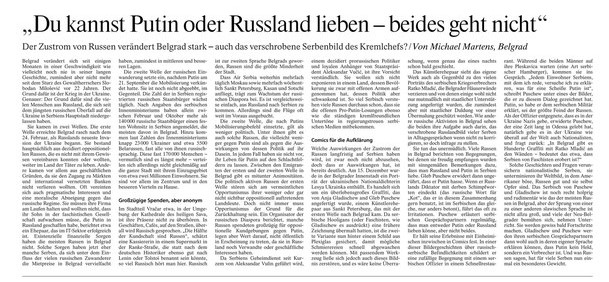
He then explains to them why you can love either Russia or Putin, but not both at. More on Russians in Belgrade via Frankfurter Allgemeine Zeitung:
Loading suggestions...